
QFIN(QFIN)

Search documents
治好信贷AI的选择困难症
虎嗅APP· 2026-01-13 10:11
Core Viewpoint - The article discusses the challenges and opportunities of integrating AI models into the financial credit assessment process, emphasizing the need for a standardized evaluation framework to measure AI performance in real-world scenarios [2][4][10]. Group 1: Challenges in AI Credit Assessment - AI models struggle with real-world data complexities, such as poor image quality and non-standardized documents, which can hinder their effectiveness in credit assessments [2][3]. - The financial industry lacks a unified benchmark to evaluate AI models, leading to anxiety among institutions when selecting appropriate tools [4][5]. - There is a misalignment between the capabilities of existing AI models and the specific requirements of credit assessment tasks, which often focus on nuanced document verification [6][8][10]. Group 2: Development of Evaluation Standards - The need for a tailored evaluation standard for AI in credit assessment is highlighted, which should be both industry-specific and technically robust [11][12]. - A collaborative effort between financial institutions and academic partners aims to create a comprehensive evaluation framework, FCMBench-V1.0, to address the unique challenges of credit assessment [16][18]. - The evaluation framework incorporates real-world data simulations to ensure that AI models are tested under conditions that closely resemble actual operational environments [18][20]. Group 3: Performance of AI Models - The FCMBench evaluation framework assesses AI models based on perception, reasoning, and robustness, ensuring they can handle complex credit assessment tasks [20][25]. - The Qfin-VL-Instruct model developed by Qifu Technology achieved the highest scores in the evaluation, demonstrating the effectiveness of specialized models over general-purpose ones in financial contexts [31][32]. - The Qfin model not only excels in accuracy but also offers improved speed and efficiency, making it suitable for real-time credit assessment scenarios [33]. Group 4: Future Outlook - The article emphasizes the importance of practical applications of AI in finance, suggesting that successful models must be grounded in real-world data and scenarios [36][37]. - Qifu Technology's initiative to open-source the FCMBench dataset and evaluation methods aims to bridge the gap between academia and industry, providing valuable resources for developing compliant and high-quality credit assessment tools [35][38].



毕马威:2025年毕马威中国金融科技企业双50报告
Sou Hu Cai Jing· 2026-01-13 01:52
Core Insights - The 2025 KPMG China FinTech Dual 50 Report marks the 10th anniversary of the selection, showcasing the industry's development during the critical period of the "14th Five-Year Plan" [1] - FinTech is transitioning from "digitalization" to "intelligentization," becoming a vital engine for serving the real economy, with "pragmatism" and "deepening" as the main themes of industry development [1][2] - The report highlights a significant concentration of companies in major urban areas, with Beijing, Shanghai, and Shenzhen leading the first tier, and the Yangtze River Delta, Guangdong-Hong Kong-Macau, and Beijing-Tianjin-Hebei regions accounting for 88% of the total [1][2] Company Composition - 90% of the listed companies have been established for over five years, while the proportion of companies founded within the last three years has increased to 6%, indicating a collaborative development between established and emerging players [1] - Over 80% of the listed companies have more than 40% of their workforce in technology roles, emphasizing the importance of core technical talent as a support for industry innovation [1][2] Technology Application - Artificial intelligence continues to lead, with 92% of the listed companies utilizing technological elements, collaborating deeply with big data and blockchain technologies, and penetrating core scenarios such as investment research and risk control [2] - The application of large models and intelligent agents is moving beyond conceptual phases, with a "collaborative model" reducing costs and improving response times, while multi-agent collaboration significantly enhances the accuracy of complex task handling [2] Industry Trends - FinTech services are penetrating the entire lifecycle of technology companies, utilizing intelligent credit assessments to meet diverse financing needs at different stages [2] - The industry is entering a 2.0 era of going global, forming a "dual market" model that promotes inclusive financial services in emerging markets while building competitive advantages through technology exports in mature markets [2] Capital Market Insights - 63% of the listed companies have IPO plans, with Hong Kong and domestic markets being the primary destinations for listings, and some companies adopting multi-location listing strategies [2] - As technological innovation deepens and regulatory frameworks improve, FinTech is expected to continue advancing in core technological breakthroughs, application scenario expansions, and enhancements in self-controllable capabilities, injecting lasting momentum into high-quality industry development [2]




奇富科技发布首个信贷多模态评测基准
Xin Lang Cai Jing· 2026-01-09 04:14
Core Insights - Qifu Technology, in collaboration with Fudan University and South China University of Technology, has launched the first multimodal evaluation benchmark for credit scenarios, named FCMBench-V1.0, aimed at enhancing AI applications in credit assessment [1][2] - The benchmark is designed to address real credit business scenarios, focusing on multi-modal evaluation tasks that reflect practical business needs, thereby promoting academic research and application in credit AI [1] - Unlike traditional evaluations that focus on single recognition or understanding capabilities, this benchmark assesses model capabilities relevant to key processes in micro-enterprise credit granting, such as multi-document recognition and risk clue discovery [1] Summary by Sections - **Benchmark Development**: The FCMBench-V1.0 provides a standardized evaluation platform to foster collaboration between academia and industry, enabling fair comparisons of AI model capabilities in the credit field [1] - **Data and Framework**: The benchmark includes a highly consistent evaluation framework with 18 core credit document types, comprising 4,043 compliant images and 8,446 test samples, covering the entire credit review process [2] - **Industry Impact**: This initiative aims to break down data and knowledge barriers within the industry, facilitating a shift from "single-point optimization" to "collaborative innovation" between academia and financial technology companies [1]
美股尾盘跳水!道指跌0.94%降息预期降温,中国资产逆势突围
Sou Hu Cai Jing· 2026-01-08 07:54
Market Overview - On January 7, U.S. stock markets experienced significant volatility, with the Dow Jones Industrial Average dropping 466 points, a decline of 0.94%, closing at 48,996.08 points [4] - The market initially showed optimism with a high opening but faced a sharp decline towards the end of the trading session, reflecting a shift in investor sentiment from anticipation of interest rate cuts to concerns over tightening policies [4] Federal Reserve Commentary - Recent statements from Federal Reserve officials have dampened expectations for interest rate cuts in 2026, with officials indicating that the current policy is close to "neutral" and that the space for rate cuts is limited [4] - Key economic indicators, including a slower pace of inflation decline and a strong labor market, have contributed to the Fed's cautious stance, reducing the likelihood of a rate cut in March [4] Chinese Assets Performance - In contrast to the U.S. market, Chinese assets showed strong performance on January 7, with several Chinese concept stocks experiencing significant gains, including a 70.83% increase in Zhongchi Chefu and a 28.53% rise in 3ENetwork Technology [5] - The Hong Kong ADR index also saw a positive trend, closing at 23,246 points, up 174.04 points, with major stocks like Tencent and HSBC contributing to the upward movement [5]






强势入围 奇富科技(QFIN.US)入选长三角民营服务业百强
智通财经网· 2026-01-05 07:59
Group 1 - The core viewpoint of the news is the recognition of Qifu Technology as one of the top 100 private service enterprises in the Yangtze River Delta for 2025, highlighting its contributions to the artificial intelligence sector and the real economy [1] Group 2 - Qifu Technology has significantly enhanced risk identification accuracy, operational efficiency, and user experience by integrating AI capabilities into the financial service chain, effectively connecting financial institutions with small and micro market entities and individual consumers [3] - As of the end of the third quarter this year, Qifu Technology has established partnerships with 167 financial institutions, providing stable and efficient digital credit support to over 62 million credit users, thereby supporting the operational development of small and micro enterprises and meeting individual consumption needs [3] - Looking ahead, Qifu Technology aims to deepen technological innovation and cultivate new productive forces centered around AI, with a commitment to improving development quality and creating new advantages for future growth [3]

奇富科技(QFIN.US)斩获首届黑灰产检测技能大赛金奖
Zhi Tong Cai Jing· 2026-01-05 07:48
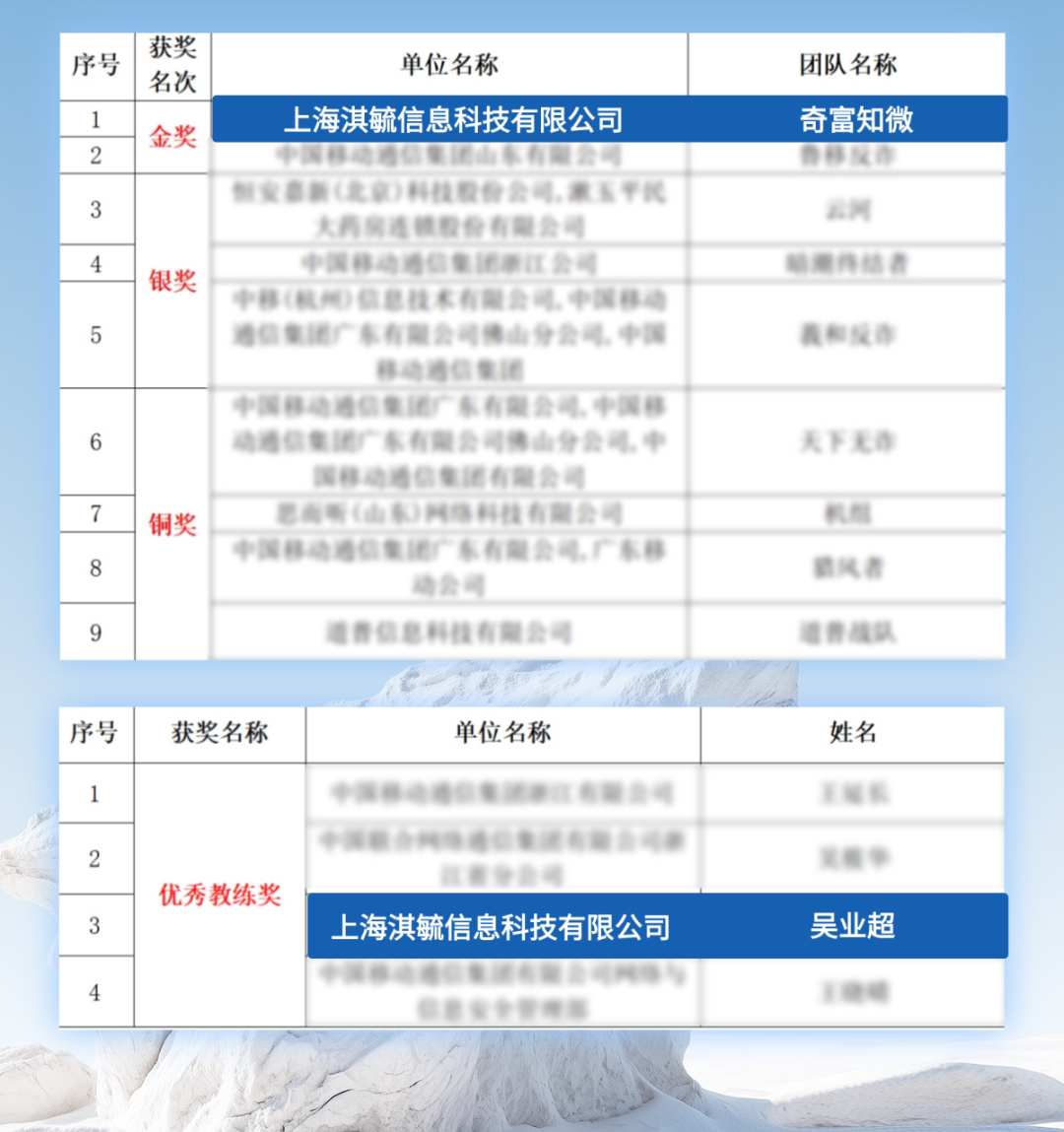
Core Insights - The 2025 Black and Gray Industry Detection Skills Competition concluded successfully, showcasing the practical capabilities in cybersecurity, with over 200 top teams participating nationwide [1] - Qifu Technology won the "Team Gold Award" in the Thunder Group of the Black and Gray Industry Technology Countermeasure Track, highlighting its strong capabilities in financial fraud prevention technology [1] - Qifu Technology's expert, Wu Yechao, received the "Outstanding Coach Award," further emphasizing the company's expertise in the field [1] Company Achievements - Qifu Technology has established a comprehensive defense system centered around the "Shanhai" anti-fraud system, integrating "domain name resolution + content features + AI risk analysis" for multi-dimensional assessment [1] - The company's model processes an average of 600,000 high-risk clues daily, has issued over 1.22 million warnings for malicious websites, and has blocked over 7,400 counterfeit websites/apps, preventing fraudulent transactions worth 287 million yuan [1][2] - The model achieves over 95% accuracy in identifying fraudulent websites, addressing industry challenges such as "zero-sample" fraud detection and incomplete risk tracing [1] Future Directions - Qifu Technology aims to deepen the application of AI large models in fraud prevention, sharing technical experiences and promoting the establishment of industry standards for fraud prevention technology [3] - The company is committed to enhancing risk control levels across the industry and contributing to the fight against financial black and gray industries, thereby maintaining social security and stability [3]
中国网贷公司进军印度,怎么全军覆没了?
商业洞察· 2025-12-30 09:23
Core Viewpoint - Chinese online lending companies have faced significant failures in India, contrary to their profitable operations in China, leading to a complete loss of investment in the Indian market [2][3][10]. Group 1: Profitability in China - Online lending is a highly profitable industry in China, with companies like Qifu Technology reporting net profits of 2.7 billion in 2021, 4.4 billion in 2022, and projected 6.264 billion in 2024 [2]. - Other platforms such as Baidu's Du Xiaoman are also profitable, with a projected net profit of 859 million in 2024 [2]. Group 2: Challenges in India - Chinese online lending companies initially viewed India as a lucrative market, expecting to profit from lending and collecting interest [6]. - However, they encountered insurmountable challenges, leading to a total loss of investment [6][10]. Group 3: Collection Difficulties - Effective debt collection is crucial for profitability in online lending. In China, aggressive collection methods, despite being controversial, yield results [6]. - In India, these methods fail due to language barriers, lack of a credit system, and cultural differences, making it difficult to enforce repayment [7][9]. Group 4: High Default Rates - The bad debt rate for Chinese online lending companies in India has soared to 80%, meaning only 20 out of every 100 units lent are recovered [9]. - This high default rate, combined with operational costs, results in significant financial losses for these companies [9][10]. Group 5: Regulatory Environment - New regulations from the Reserve Bank of India require online lending companies to limit interest rates and increase transparency, further complicating profitability for Chinese firms [11]. - The lack of a high-credit society in India makes it nearly impossible for these companies to operate profitably, leading to widespread closures [11].

奇富科技荣获“格隆汇金格奖·年度社会责任奖”
Ge Long Hui· 2025-12-23 09:50
Core Viewpoint - The event highlighted the importance of corporate social responsibility (CSR) in sustainable development and recognized companies that excel in this area [1] Group 1: Event Overview - The "Technology Empowerment · Capital Breakthrough" sharing session was held online by Gelonghui [1] - The annual list of outstanding companies was announced during the event [1] Group 2: Award Recognition - Qifu Technology-S (3660.HK) received the "Annual Social Responsibility Award" in the Gelonghui "Golden Award" annual selection [1] - The award acknowledges the company's long-term commitment to fulfilling social responsibilities and recognizes its management quality and personnel competence [1] - A strong sense of social responsibility is deemed essential for a company's sustainable development and competitiveness [1]
奇富科技(QFIN.US/03660.HK)荣获"社会责任奖",科技向善驱动ESG价值成长
Ge Long Hui· 2025-12-23 02:26
Group 1 - The core viewpoint of the article highlights that Qifu Technology has been awarded the "Social Responsibility Award" for its solid practices in social responsibility and sustainable development, reflecting the capital market's recognition of its commitment to "technology for good" [1][10] - Qifu Technology systematically applies its core financial technology capabilities to address social issues such as inclusive finance, consumer protection, and rural revitalization, thereby building strong commercial competitiveness [3][4] - The company has established partnerships with 167 financial institutions, providing stable and efficient digital credit support to over 62 million credit users, significantly aiding small and micro enterprises [4][5] Group 2 - In 2024, Qifu Technology assisted financial institutions in providing loans of 100.37 billion yuan to small and micro enterprises, accounting for 31.2% of the company's overall business scale [4] - The company also supported the rural revitalization strategy by facilitating 12.44 billion yuan in loans to the agricultural sector, benefiting 3.98 million farmers [4] - Qifu Technology integrates green concepts into its daily operations, optimizing technology to reduce energy consumption and actively participating in various public welfare projects [8][7] Group 3 - The company has established a comprehensive responsibility system, enhancing its ESG governance structure and focusing on user protection, green operations, and community building [6][7] - Qifu Technology's commitment to social responsibility is seen as a strategic investment that enhances corporate resilience, shapes brand reputation, attracts talent, and ultimately drives long-term value growth [8][10] - The recognition from the "Golden Award" signifies that companies capable of aligning their growth with social progress are more likely to gain long-term capital favor in the current business environment [10]
纳斯达克中国金龙指数升0.2% 热门中概股多数上扬 奇富科技升3.24%
Xin Lang Cai Jing· 2025-12-23 01:33
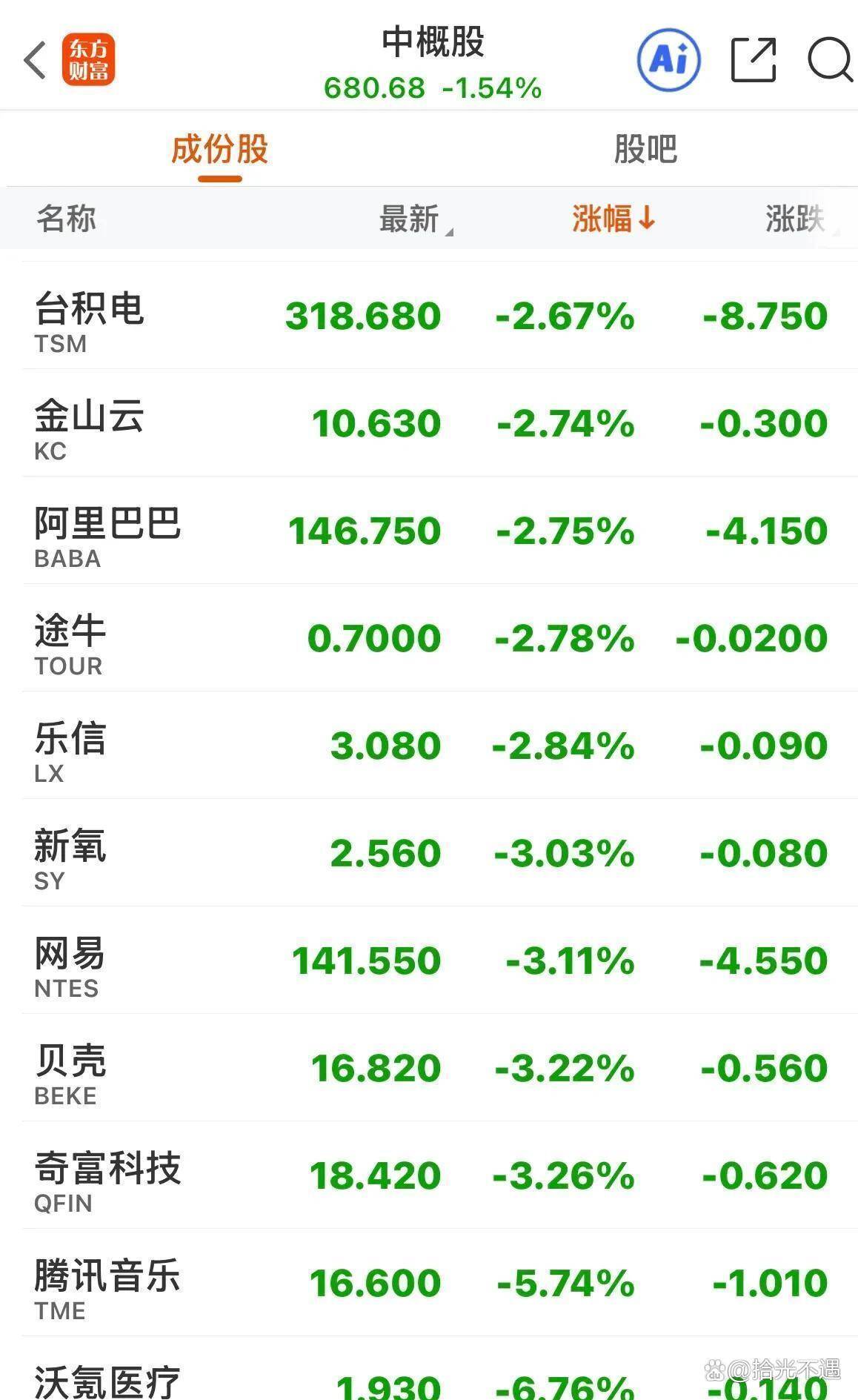
Core Viewpoint - The Nasdaq China Golden Dragon Index increased by 0.2%, with most popular Chinese concept stocks rising, indicating a positive market sentiment towards these companies [1]. Group 1: Stock Performance - Qihoo 360 Technology saw a rise of 3.24% [1] - Trip.com Group increased by 2.23% [1] - Companies such as Zai Lab, Pinduoduo, and Beike all rose by over 1.5% [1] - NetEase, JD.com, and Bilibili experienced gains of less than 1% [1]


