Rivian Automotive(RIVN)

Search documents
Better EV Stock: Rivian vs. Nio
Yahoo Finance· 2026-02-04 15:50
Core Insights - The electric vehicle (EV) market is shifting from hype-driven investments to a focus on companies with growing demand, scaling production, improving margins, and limited dilution risk. Rivian Automotive and Nio are highlighted as key contenders in this space. Rivian - Rivian is transitioning from a premium EV manufacturer to a mass-market contender with its upcoming R2 vehicle, aimed at the midsize SUV segment, directly competing with Tesla's Model Y [2] - The R2 is expected to have a starting price of $45,000, below the U.S. average new vehicle price of over $50,000, and is slated for launch in the first half of 2026, potentially expanding Rivian's addressable market [3] - Rivian's joint venture with Volkswagen is projected to provide $2.5 billion in capital, allowing the company to license its software-defined vehicle architecture, which could create a high-margin revenue stream [4] - In 2025, Rivian produced 42,284 vehicles and delivered 42,247, achieving a positive consolidated gross profit of $24 million and maintaining a cash balance of $7.1 billion, indicating financial flexibility for the R2 launch [5] Nio - Nio operates at a larger scale than Rivian, delivering 326,028 vehicles in 2025, with a strong start to 2026, achieving a 96.1% year-over-year increase in January deliveries to 27,182 vehicles [6] - The company aims for a 40% to 50% growth in deliveries for 2026, targeting 456,000 to 489,000 vehicles, which could enhance margins and demand in China's competitive EV market [6] - Nio is developing a broad EV ecosystem with three distinct brands: premium Nio, mass-market Onvo, and entry-level Firefly, alongside a dense battery-swap network that dominates the global market with over 2,300 stations [7]


Get the first look at the R2, Rivian's $45,000 SUV. CEO RJ Scaringe gave CNBC an early peek
CNBC· 2026-02-04 15:07
Core Insights - Rivian is facing challenges including the end of federal support for EVs, increased hybrid vehicle sales, and significant cash burn rates, but the CEO emphasizes that the situation is more complex than it appears [1] Vehicle Performance and Features - The R1 model is the best-selling premium electric SUV in the U.S. and has also been a top seller in California, with the R1S starting at nearly $80,000 [2] - The upcoming R2 model is designed to be a more affordable option, targeting the midsize, mid-price SUV EV market, with a starting price of $45,000 [9] - The R2 features a familiar design language, five seats, and is described as agile and capable of off-road driving, though not as extreme as the R1 [3][4][6] Cost Structure and Manufacturing - Rivian has significantly reduced the number of computing units in its vehicles from over 60 in traditional cars to seven in the R2, which has also led to a reduction in wiring length by 2 miles [7] - The company has achieved a dramatic reduction in the cost structure, enabling a ramp-up in production volume while maintaining a focus on quality and customer satisfaction [8][9] Market Outlook and Financials - Analysts are divided on Rivian's ability to compete with Tesla, with expectations of selling around 15,000 R2 units in 2026, although some believe this number could be exceeded [10] - Rivian burned through $3 billion in cash in the first three quarters of 2025, with projections of burning $5 billion in 2026, but has secured a $5 billion deal with Volkswagen that could bring in an additional $2 billion [11][12] - The company aims to capture significant market share with the R2, similar to the R1, which could lead to production challenges if demand exceeds supply [13]

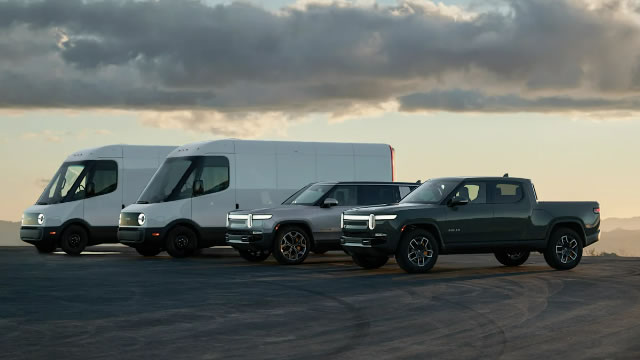
Is Rivian Stock a Buy in 2026?
Yahoo Finance· 2026-01-31 18:43
Core Insights - Rivian Automotive has experienced significant stock decline, dropping over 90% from its all-time high, despite initial success with its R1T electric truck [1] - The upcoming R2 vehicle launch is anticipated to be a pivotal moment for the company, potentially transforming its market position [2][6] Financial Performance - Rivian's gross margin has improved alongside sales growth, indicating progress towards financial sustainability [3] - The company has successfully reengineered its R1T and R1S models to lower manufacturing costs and has increased revenue from higher-margin EV regulatory credit sales and software services [4] - Free cash flow losses have decreased to less than $500 million over the past four quarters, with the company holding $7 billion in cash as a financial buffer [5] Future Projections - Analysts project Rivian's revenue to reach approximately $6.8 billion by the end of the year, with an expected increase to $11.2 billion in fiscal 2026 following the R2 launch [7] - The R2 is priced at $45,000, significantly lower than the R1S's starting price of around $78,000, which could help Rivian penetrate the mainstream automotive market [6] Investment Considerations - The stock is currently trading at a price-to-sales (P/S) ratio of 3, which is considered a bargain compared to Tesla but higher than traditional automotive companies [7] - Investing in Rivian before the R2 launch may be seen as a speculative opportunity, with potential for increased market confidence and valuation if the launch is successful [8]
Rivian Stock Is Down to Under $20. Time to Buy?
The Motley Fool· 2026-01-31 06:39
Core Viewpoint - Rivian Automotive is on track to achieve its significant goal for 2026, but the critical question remains whether consumers will purchase the vehicles it plans to produce [1] Group 1: Company Overview - Rivian specializes in manufacturing all-electric vehicles, focusing on trucks for both business and consumer markets, with a notable partnership with Amazon to support its delivery truck production [2] - The company initially targeted the high-end consumer market, which was a strategic decision to manage production costs effectively before scaling up [3] Group 2: Financial Performance - Rivian has achieved a gross profit with its R1 vehicle, indicating that it is generating more revenue from vehicle sales than the production costs, and is expected to maintain this profitability throughout 2025 [4] - Despite achieving gross profit, Rivian still faces significant costs in research and development, as well as administrative expenses, which contribute to ongoing losses [5] Group 3: Future Plans - Rivian's major goal for 2026 is to launch the R2, a lower-cost truck aimed at the mass market, supported by $7 billion in cash reserves for its development [6] - The success of the R2 is crucial for Rivian's long-term viability, as increasing production volume is necessary to achieve sustainable profitability [7] Group 4: Investment Considerations - The current stock price below $20 presents a potential buying opportunity ahead of the R2 launch, but investor confidence hinges on consumer reception of the new model [8] - Given the uncertainties surrounding the R2's market acceptance, even aggressive investors may consider waiting before making investment decisions [9]
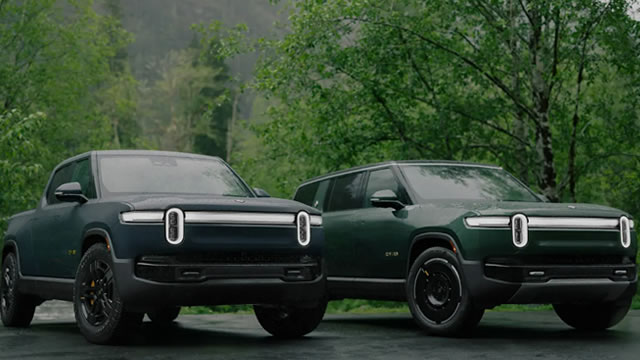
Where Will Rivian Stock Be in 5 Years?
Yahoo Finance· 2026-01-30 18:35
Core Viewpoint - Rivian's stock has significantly declined from its IPO price of $78 to $15 due to production misses, financial losses, and a lack of justification for its high valuation, raising questions about its potential recovery in the next five years [1][2]. Production and Delivery Performance - Rivian produces three types of electric vehicles: the R1T pickup truck, the R1S SUV, and custom electric delivery vans for Amazon and others [4]. - In 2022, Rivian aimed to produce 50,000 vehicles but only managed to produce 24,337 and deliver 20,332 due to supply chain issues [5]. - Production increased to 57,232 vehicles in 2023, with 50,122 deliveries as supply chain constraints were resolved [5]. - In 2024, production decreased to 49,476 vehicles, but deliveries rose to 51,579 despite challenges like inflation and competition [6]. - For 2025, Rivian expects to deliver between 40,000 to 46,000 vehicles due to ongoing macro and microeconomic headwinds [6]. Future Growth Prospects - Rivian anticipates growth as it ramps up production of the R2 SUV in 2026 and 2027, alongside selling clean energy regulatory credits and generating revenue from upgrades and services [7]. - Analysts project a 31% compound annual growth rate (CAGR) for Rivian's revenue from 2024 to 2027, with expectations of narrowing net losses [8]. - If Rivian achieves its targets and grows revenue at a 20% CAGR through 2031, its stock could potentially increase more than sixfold if it trades at a 5x sales multiple by 2031 [8].
Could a Ballot Measure Open Direct EV Sales for Rivian in Washington?
ZACKS· 2026-01-29 17:36
Core Insights - Rivian Automotive, Inc. is supporting a citizen-led ballot initiative in Washington state to allow electric vehicle manufacturers to sell directly to consumers, aiming to compete with Tesla's unique advantage in the market [1][8] - The initiative is backed by the Washington Coalition for Consumer Choice and Innovation, which seeks to extend direct sales rights to more EV companies [2] - Current state law mandates vehicle purchases through dealerships, limiting direct sales by manufacturers like Rivian and Lucid Group, with Tesla being the only exception for over a decade [3][8] Initiative Details - The coalition must gather at least 308,911 valid voter signatures by early July to qualify for the ballot, with a recommendation to collect around 390,000 signatures to account for potential invalid entries [5] - The specific organizations behind the coalition have not been disclosed, but they have hired Winner & Mandabach Campaigns, a consulting firm with a 90% success rate in ballot campaigns [4] Legislative Context - Previous efforts to pass legislation allowing direct sales by companies like Rivian and Lucid stalled in the state House, with arguments that such changes would accelerate EV adoption and help meet carbon reduction targets [6] Company Performance - Rivian has underperformed compared to the Zacks Automotive-Domestic industry, with shares gaining 16.7% over the past six months, while the industry grew by 35.4% [7] - From a valuation perspective, Rivian is trading at a forward sales multiple of 2.69, which is below the industry's 3.22, indicating it may be undervalued [10] Financial Estimates - The Zacks Consensus Estimate for Rivian's loss per share for 2025 has widened by a penny in the past week, and the estimate for 2026 has also widened by a penny in the past month [12]

Rivian vs. NIO: Which EV Manufacturer Stock Is Worth Buying?
ZACKS· 2026-01-28 16:41
Core Insights - Rivian Automotive, Inc. (RIVN) and NIO Inc. (NIO) are both electric vehicle (EV) manufacturers with different market strategies and geographic focuses [1] - Rivian operates primarily in the U.S. with a direct-to-consumer sales model, while NIO focuses on the Chinese market and is expanding into Europe and Asia [1] Rivian Overview - Rivian's vehicle deliveries decreased to 42,247 in 2025 from 51,579 in 2024, with production also down to 42,284 units from 49,476 [6] - The company is producing validation units of the R2 electric SUV, expected to start at around $45,000, aiming for customer deliveries in the first half of the year [7] - Rivian anticipates that the R2 launch will enhance profitability and reduce fixed costs per unit due to higher production volumes [10] - A significant investment from Volkswagen, up to $5.8 billion by 2027, is expected to bolster Rivian's financial outlook and support the R2 model development [11] - Rivian's material costs for the R2 are projected to be nearly 50% lower than the R1 models, contributing to improved profitability [12] - Rivian's cash balance decreased to $7.1 billion at the end of Q3 2025, with a high capital expenditure forecast of $1.8-$1.9 billion [13] NIO Overview - NIO delivered 326,028 vehicles in 2025, a 46.9% increase year-over-year, with Q4 deliveries reaching 124,807, up 71.7% [14] - A strategic partnership with Contemporary Amperex Technology Co., Ltd. aims to develop advanced long-life battery technologies, enhancing customer value [15] - NIO's vehicle margins improved to 14.7% in Q3 2025 from 13.1% in Q3 2024, with plans to launch three new large SUV models in 2026 [16] - NIO's SG&A expenses increased by 1.8% year-over-year, which may impact margins due to rising operational costs [17] - NIO's total debt-to-capitalization ratio stands at 79.8%, indicating higher leverage compared to Rivian's 46.6% [18] Valuation and Investment Outlook - NIO trades at a more attractive price-to-sales multiple than Rivian, suggesting a more reasonable stock price [19] - Despite cash burn and high capital spending, Rivian is viewed as a more compelling investment opportunity due to its upcoming R2 launch and stronger balance sheet [20] - NIO's strong growth is tempered by competitive pressures in the Chinese market and high operating expenses [21] - Both companies currently hold a Zacks Rank 3 (Hold), but Rivian is seen as the stronger choice for investors focused on financial resilience and long-term margin expansion [22]
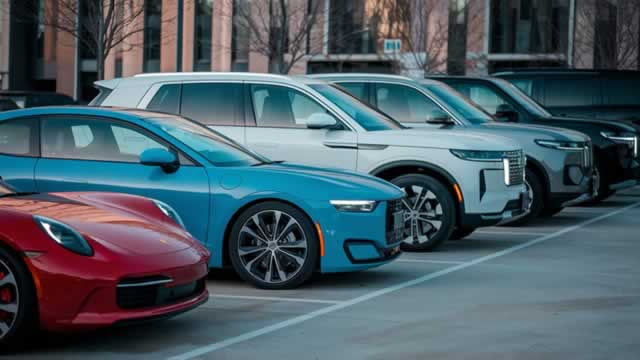
Rivian Automotive (NASDAQ: RIVN) Stock Price Prediction for 2026: Where Will It Be in 1 Year (Jan 28)
247Wallst· 2026-01-28 13:15
Core Viewpoint - Shares of Rivian Automotive Inc. (NASDAQ: RIVN) have decreased by 7.3% compared to a week ago [1] Company Summary - Rivian Automotive Inc. is currently experiencing a decline in its stock price, reflecting a 7.3% drop over the past week [1]
Is Rivian Stock a Buy Before Feb. 12?
Yahoo Finance· 2026-01-27 20:25
Core Viewpoint - Rivian Automotive is set to announce its fourth-quarter earnings on February 12, with investors keenly observing the company's efforts to diversify its business model beyond traditional vehicle sales to include software and services as potential growth drivers [1] Group 1: Production and Delivery Performance - Rivian's fourth-quarter deliveries fell 31% year over year to 9,745 vehicles, primarily due to demand being pulled forward to the third quarter, where 13,201 vehicles were delivered [2] - The decline in deliveries reflects broader trends in the electric vehicle (EV) sector, with management indicating that they anticipated this volume decline [3] Group 2: Tax Credit and Market Position - Rivian vehicles are not eligible for the tax credit in 2025 due to failure to meet domestic battery sourcing requirements, which may limit their appeal to potential buyers [3] - The starting price of Rivian's flagship R1S is $76,990, targeting wealthier households who may not qualify for EV incentives, further complicating the company's market position [3] Group 3: Business Model Diversification - The uncertainty surrounding the tax credit is impacting Rivian and the broader EV industry, highlighting the necessity for the company to diversify its business model beyond just manufacturing and delivering vehicles [4] - Rivian's partnership with Volkswagen, established in late 2024, focuses on software and vehicle electronics, which may become a more significant aspect of its business strategy [5] Group 4: Financial Implications of Partnerships - The joint venture with Volkswagen is expected to provide Rivian with an infusion of cash, with Volkswagen committing to invest up to $5.8 billion by 2027 [6] - This partnership will also allow Rivian to achieve economies of scale by purchasing components in larger volumes, potentially reducing costs [6]
Rivian: I Covered My Short Position Following 27% Drop In One Month (Rating Upgrade)
Seeking Alpha· 2026-01-26 14:43
Core Viewpoint - Rivian Automotive's stock has experienced a significant decline over the past month, attributed to concerns regarding the company's capital requirements for the upcoming R2 production ramp [1]. Group 1: Company Analysis - Rivian's need for additional capital is critical as it prepares for the production ramp of its R2 model [1]. - The recent stock performance reflects investor apprehension about Rivian's financial health and ability to meet production goals [1]. Group 2: Market Context - The article highlights the broader implications of Rivian's capital needs within the electric vehicle industry, emphasizing the challenges faced by companies in scaling production while managing financial stability [1].