Shell Global(SHEL)

Search documents
直冷+浸没!壳牌×清安联合发布储能新品
中关村储能产业技术联盟· 2025-09-28 09:17
Core Insights - Shell (Shanghai) Technology Co., Ltd. and Chongqing Qing'an Energy Co., Ltd. signed a strategic cooperation agreement to deepen their existing collaboration in the energy storage sector, focusing on core technologies and market demands [2] - The partnership will emphasize the development and promotion of lithium-ion battery immersion energy storage systems, including technical collaboration, product compatibility testing, industry standard formulation, joint brand promotion, and global supply chain support [2] - A new product, the world's first direct cooling immersion energy storage system, was launched, addressing industry pain points such as high costs, limited efficiency, and safety concerns through technological innovation [3] Summary by Sections - **Strategic Cooperation Agreement**: The agreement aims to create a comprehensive collaborative development system in the energy storage field, focusing on lithium-ion battery technologies and market needs [2] - **Product Launch**: The direct cooling immersion energy storage system was developed to tackle prevalent industry challenges, providing innovative solutions for energy storage equipment upgrades [3] - **Industry Context**: The energy storage equipment market is highly competitive, with significant challenges that the new product aims to resolve [3]


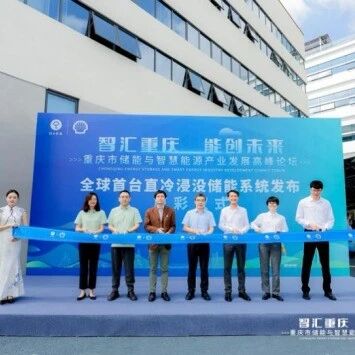
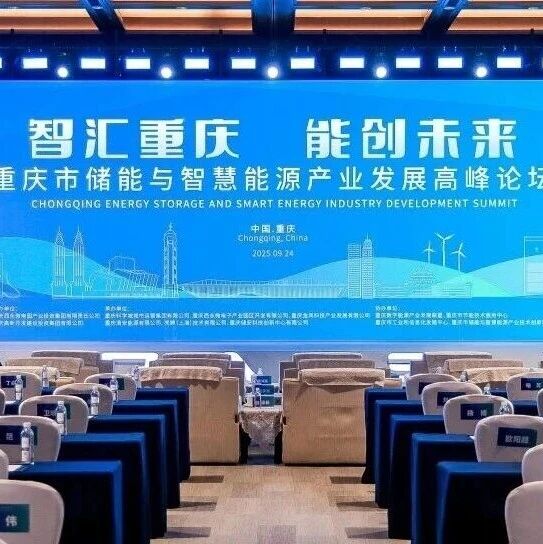
智汇重庆 能创未来丨壳牌X清安发布全球首款直冷浸没储能系统
中国能源报· 2025-09-27 11:11
Core Viewpoint - The forum held in Chongqing marks a significant step towards the development of the energy storage and smart energy industry, emphasizing collaboration and innovation in technology and product development [2][10]. Collaboration and Strategic Partnerships - A strategic cooperation agreement was signed between Shell (Shanghai) Technology Co., Ltd. and Chongqing Qing'an Energy Co., Ltd. to enhance existing collaborations in the field of lithium-ion battery energy storage systems [4][10]. - The partnership will focus on the development and promotion of fully immersed energy storage systems, including technical innovation, product compatibility testing, industry standard formulation, and global supply chain support [4][10]. Product Launch and Innovations - Qing'an and Shell launched the world's first direct cooling immersion energy storage system, addressing common industry challenges such as high costs, limited efficiency, and safety concerns [7][10]. - The new product utilizes Shell's single-phase immersion cooling liquid, achieving a 60% reduction in auxiliary energy consumption, maintaining a temperature difference of less than 1°C for battery cells, and enhancing battery cycle life by 20% [8][9]. Future Prospects and Industry Impact - The successful forum signifies a new phase for the energy storage and smart energy industry in Chongqing, transitioning towards technological breakthroughs, result transformation, and ecological co-construction [10]. - The collaboration aims to bring more innovative solutions to the global energy storage industry, contributing to the advancement of the smart energy era [10].
Oil giant BP quietly steps out of the takeover spotlight
CNBC· 2025-09-25 23:10
Core Viewpoint - BP has seen a significant increase in its share price, rising over 32% since early April, moving away from earlier takeover speculation [1][2]. Group 1: Share Price Performance - BP's shares have outperformed many U.S. and European rivals, indicating a positive market sentiment [1]. - The company's stock performance marks a stark contrast to earlier in the year when it was a prime takeover candidate [2]. Group 2: Factors Contributing to Improved Sentiment - The positive sentiment is attributed to BP's strategic reset, leadership changes, cost-cutting progress, and recent oil discoveries [2]. - The selection of a new chair with experience in successful turnarounds has been identified as a recent catalyst for the improved share performance [4]. Group 3: Takeover Speculation - Earlier in the year, BP was the subject of intense takeover speculation involving major companies like Shell, ADNOC, Exxon Mobil, and Chevron [2]. - Shell has denied any intentions to acquire BP, stating it had "no intention" of making a blockbuster offer [3].

Nigeria agrees to TotalEnergies' $510 million stake sale to Shell, Agip
Reuters· 2025-09-25 19:52
Core Insights - Nigeria's oil regulator has approved TotalEnergies' $510 million deal to divest its entire 12.5% stake in oil mining lease 118 to Shell and Agip [1] Company Summary - TotalEnergies is selling its complete 12.5% interest in oil mining lease 118 [1] - The transaction is valued at $510 million [1] Industry Summary - The deal involves major players in the oil sector, specifically TotalEnergies, Shell, and Agip [1] - This transaction reflects ongoing consolidation and investment activities within Nigeria's oil industry [1]

Why Big Oil has its eye on APAC’s EV charging market
Yahoo Finance· 2025-09-25 12:22
Group 1: Industry Trends - The oil and gas industry is undergoing transformation due to the electrification of the transport sector, with significant investments in EV charging stations being a notable strategy [2][4][5] - GlobalData forecasts that EVs will account for nearly 50% of all global light vehicle sales by 2035, with a compound annual growth rate of 6.7% for hybrid and electric vehicle sales between 2025 and 2037 [7] - The market for EV charging infrastructure was estimated to be worth $32.26 billion in 2024, projected to grow to $125.39 billion by 2030 [7] Group 2: Regional Insights - The Asia-Pacific (APAC) region is seen as an attractive investment opportunity due to growing populations, developing economies, and the need for affordable energy sources [3][12] - EVs currently make up 42% of auto sales in APAC, expected to reach 77% by 2037, while in Europe, EVs currently account for around 58% of auto sales, projected to jump to 99% by 2037 [10] - APAC is experiencing rapid increases in disposable incomes, leading to a forecast that the region will account for over 60% of the 115 million EVs sold worldwide over the next five years [13] Group 3: Company Strategies - Major oil companies like Shell, bp, and TotalEnergies are investing in EV charging infrastructure to adapt to the changing market [4][8] - Shell has prioritized investment in seven leading markets for EV adoption, including China, Germany, and the UK, due to their advanced pace of electrification [18][19] - European oil companies are reducing investment in EV charging infrastructure while maintaining a focus on Western markets, with Shell lowering its emissions reduction target for 2030 [17][19]
国际石油巨头削减清洁能源投资
Zhong Guo Hua Gong Bao· 2025-09-24 02:57
Group 1 - The United States has become the global center of the anti-ESG movement, with a significant increase in anti-ESG legislation proposed across 40 states from 2021 to 2024, totaling 370 bills [1][2] - The passage rate of anti-ESG bills in 2024 is notably higher than in previous years, indicating improved legislative drafting capabilities among proponents [1][2] - The Trump administration has further fueled the anti-ESG sentiment by revoking climate action policies and signing an executive order banning ESG investments [2] Group 2 - Since Trump's re-election, an estimated $28 billion worth of wind, solar, electric vehicle, and battery projects have been delayed or canceled, affecting approximately 19,000 jobs [2] - International oil giants are reducing their clean energy investments, with ExxonMobil announcing plans to abandon a major low-carbon hydrogen project unless federal tax incentives are provided [3] - BP has adopted a more conservative decarbonization strategy, focusing on higher-margin hydrogen, biofuels, and offshore wind, while abandoning its hydrogen development goals [3][4] Group 3 - Shell has canceled plans for a low-carbon hydrogen plant in Norway, citing insufficient demand, a sentiment echoed by Equinor shortly after [4]

Is Shell plc (SHEL) a Good Option for Dividend Income?
Yahoo Finance· 2025-09-24 02:12
Core Viewpoint - Shell plc (NYSE:SHEL) is recognized as one of the top dividend stocks in the natural gas and oil sector, highlighting its strong cash generation and commitment to shareholder returns [1][2]. Financial Performance - Shell announced a $3.5 billion share buyback program in August, marking the 15th consecutive quarter with buybacks of $3 billion or more [2]. - The company declared an interim dividend of $0.358 per share in July [2]. - As of the end of Q2 2025, Shell's rolling shareholder distributions were 46% of its Cash Flow from Operations (CFFO), aligning with its target range of 40% to 50% [2]. Cost Management and Efficiency - To maintain high cash flows and payouts in a low-price environment, Shell is focused on reducing costs and improving efficiency [3]. - The company has achieved $3.9 billion in structural cost reductions since 2022, aiming for a target of $5 billion to $7 billion by the end of 2028 [3]. Company Overview - Shell plc operates as a global group of energy and petrochemical companies, employing 96,000 people across more than 70 countries [3].
Energy and Financials Dominate This Week’s Value Screen
Acquirersmultiple· 2025-09-24 00:31
Group 1: Energy Sector Insights - Energy companies such as Petrobras (PBR), Equinor (EQNR), Shell (SHEL), TotalEnergies (TTE), and Ecopetrol (EC) exhibit strong cash generation capabilities, with Petrobras showing an Acquirer's Multiple (AM) of 4.1 and a free cash flow (FCF) yield of approximately 35.4% [1][2] - Equinor has an AM of 2.6 and an FCF yield of around 11.8%, while Shell and TotalEnergies have AMs of 7.6–7.8 with FCF yields of approximately 12.7% and 8.5%, respectively [2][3] - Ecopetrol rounds out the energy group with an AM of about 8.0 and an FCF yield of approximately 14.0%, indicating a market perception of declining demand [3] Group 2: Financial Sector Insights - In the financial sector, Synchrony Financial (SYF) leads with an AM of 2.4 and an FCF yield of around 35.1%, reflecting concerns over the credit cycle [3] - Bank of New York Mellon (BK) also has an AM of 2.4 with an FCF yield of approximately 3.1%, while Prudential PLC (PUK) shows an AM of 3.7 and an FCF yield of about 3.8% [3] Group 3: Broader Market Trends - The clustering of high cash returns in energy and financial sectors suggests that these industries are undervalued despite strong fundamentals, with energy being perceived as a sunset industry [4] - The current market environment, characterized by concentrated fear, may provide opportunities for patient investors seeking high cash returns, buybacks, and dividends [4][5] - The analysis indicates that energy continues to lead in deep-value opportunities, with financials closely following, presenting a favorable scenario for long-horizon investors [5]



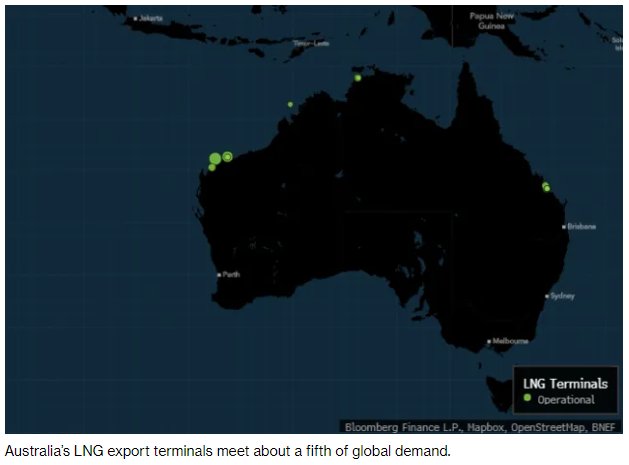
平衡出口暴利与国内短缺 澳大利亚天然气预留政策获行业支持
智通财经网· 2025-09-23 06:31
Core Viewpoint - Australia is seeking to balance domestic gas supply shortages with lucrative export opportunities, leading to widespread support in the energy sector for a new policy requiring gas producers to reserve a portion of their output for the domestic market [1] Group 1: Industry Response - Major companies like Santos Ltd., Shell Group, and Woodside Energy Group have submitted evaluations to the government, advocating for the domestic gas reservation policy to be combined with supply incentives and infrastructure investment support [1] - Santos supports a "reasonable" gas reservation scheme for new projects, while Shell is open to a well-designed system if it aligns with broader regulatory reforms [1] - Woodside emphasizes that any related policy should be tailored to local conditions based on regional specifics [1] Group 2: Current Market Context - Australia is the world's largest LNG exporter, accounting for about 20% of global exports, primarily to Asian buyers [1] - LNG producers are projected to earn approximately AUD 67 billion (USD 44 billion) through exports by the fiscal year ending June 2025, facing criticism for prioritizing higher profits from exports over domestic supply [1] - There are currently 10 gas export projects in Australia, with 4 located in Western Australia, the only state implementing a gas reservation policy, which mandates a maximum of 15% of production for the domestic market [2] Group 3: Government Review - The Australian government is reviewing core domestic gas market rules, including sales mechanisms to local buyers and export quota controls for East Coast LNG producers [2] - The review aims to explore long-term policy adjustments to encourage industry investment and ensure national energy security, with a final report expected by the end of the year [2]