Sandisk Corporation(SNDK)

Search documents
Samsung unveils Galaxy S26; lifts prices in key markets amid chip price surge
Reuters· 2026-02-25 18:02
Core Viewpoint - Samsung Electronics has launched its Galaxy S26 smartphones with increased prices in key markets, responding to rising memory chip costs that are impacting profit margins [1] Group 1: Product Launch and Pricing - The base Galaxy S26 is priced at $899 in the United States, reflecting a 4.7% increase from the previous model, while the S26 Plus is priced at $1,099, up 10% [1] - In South Korea, the base model price has been raised by 8.6% [1] - The S26 Ultra's price remains unchanged [1] Group 2: Market Context and Challenges - Samsung's smartphone leadership was lost to Apple last year, attributed to strong iPhone demand in China and India [1] - The company has warned of a worsening chip shortage driven by the AI boom, which is increasing memory demand and affecting its smartphone and display units [1] - A global push by companies like Meta, Google, and Microsoft for AI infrastructure is absorbing much of the memory supply, leading to higher prices as chipmakers focus on higher-margin data center components [1] Group 3: Technological Features and Innovations - The Galaxy S26 models will feature in-house Exynos processors, a shift from Qualcomm's Snapdragon chips used in the S25, which may enhance Samsung's chip design business and mobile margins [1] - The S26 Ultra includes what Samsung claims is the industry's first built-in mobile privacy display, which limits side viewing angles [1] Group 4: Market Predictions - Market tracker TrendForce anticipates conventional DRAM contract prices to surge by 90% to 95% in the January to March period of this year compared to the last quarter of 2025 [1] - Apple has indicated expectations of a sharp increase in memory chip prices but has not confirmed whether it will raise its product prices in response [1]


The Rally No One Saw Coming: Is It Too Late to Buy SanDisk Stock?
Yahoo Finance· 2026-02-25 17:11
While most AI and tech stocks have taken a hit this month, SanDisk (SNDK) has staged a powerful comeback that’s turning heads across Wall Street. Fueled by explosive demand for high-performance storage required for artificial intelligence workloads, the stock has surged 166% so far this year while many high-valuation AI names have dipped. Now the question is, is SNDK stock done soaring, or is this breakout just getting started? More News from Barchart www.barchart.com AI Is Driving a Structural Shift ...
美股异动 | 存储概念涨势扩大 西部数据(WDC.US)涨超7%
Xin Lang Cai Jing· 2026-02-25 15:16
Group 1 - The storage sector is experiencing significant gains, with Western Digital (WDC.US) rising over 7%, Seagate Technology (STX.US) up over 4%, Micron Technology (MU.US) increasing over 3%, and SanDisk (SNDK.US) gaining over 1% [1] - Citron Research, a well-known short-selling firm, has announced a short position on SanDisk, warning that the current market conditions are misleading and that the apparent prosperity is merely an illusion [1] - Some market analysts believe that Citron's short-selling logic targets the core issues of cyclical stocks, but the timing may be approximately two years early [1] Group 2 - There is a growing belief that AI-driven structural demand growth may help mitigate traditional cyclical fluctuations in the storage market, suggesting that the current shortages are not entirely illusory [1] - SK Hynix has indicated strong signals during a Goldman Sachs conference call, stating that price increases for storage products are inevitable due to the confluence of AI demand and supply bottlenecks [1] - The company revealed that current DRAM and NAND inventory levels are only about four weeks, with no customers able to fully meet their demand [1]


存储概念涨势扩大 西部数据(WDC.US)涨超7%
Zhi Tong Cai Jing· 2026-02-25 15:10
Core Viewpoint - The storage sector is experiencing significant gains, with companies like Western Digital (WDC) rising over 7%, Seagate Technology (STX) over 4%, and Micron Technology (MU) over 3%, amidst a backdrop of short-selling activity by Citron Research targeting SanDisk (SNDK) [1] Group 1: Market Reactions - The storage concept's upward trend is highlighted by substantial stock price increases among key players in the industry [1] - Citron Research's short position on SanDisk raises concerns about the sustainability of the current market conditions, suggesting that the apparent prosperity may be misleading [1] Group 2: Supply and Demand Dynamics - Market analysts indicate that Citron's short-selling rationale effectively addresses the cyclical nature of the sector, although the timing may be premature by approximately two years [1] - There is a belief among some investors that AI-driven structural demand growth could mitigate traditional cyclical fluctuations, suggesting that the current shortages are not entirely illusory [1] Group 3: Industry Insights - SK Hynix has signaled strong expectations for rising storage prices due to a confluence of AI demand surges and supply constraints, indicating a critical inventory situation with DRAM and NAND stocks lasting only about four weeks [1] - The company reports that no customers are able to fully meet their demand, further emphasizing the tight supply conditions in the market [1]
Sandisk: The Street Still Needs To Catch Up
Seeking Alpha· 2026-02-25 09:04
Core Viewpoint - The individual investor adopts a contrarian investment style, focusing on stocks that have recently experienced sell-offs due to non-recurrent events, particularly when insiders are buying shares at lower prices [1] Group 1: Investment Strategy - The investment portfolio is split approximately 50%-50% between shares and call options, indicating a balanced approach to risk and return [1] - The investor's timeframe for holding positions typically ranges from 3 to 24 months, suggesting a medium-term investment horizon [1] - Fundamental analysis is employed to assess the health of companies, including their leverage and financial ratios compared to sector and industry averages [1] Group 2: Stock Selection Criteria - The investor screens thousands of stocks, primarily in the US, looking for those that have undergone recent sell-offs [1] - A key criterion for stock selection is insider buying at the new lower price, which may indicate confidence in the company's future [1] - Professional background checks are conducted on insiders who purchase shares after sell-offs, adding a layer of due diligence [1] Group 3: Technical Analysis - Technical analysis is utilized to optimize entry and exit points, with a focus on support and resistance levels on weekly charts [1] - Multicolor lines are used for visualizing support and resistance, and trend lines are drawn to identify patterns [1]

大空头突然发声!宣布做空这家龙头
Ge Long Hui· 2026-02-25 07:32
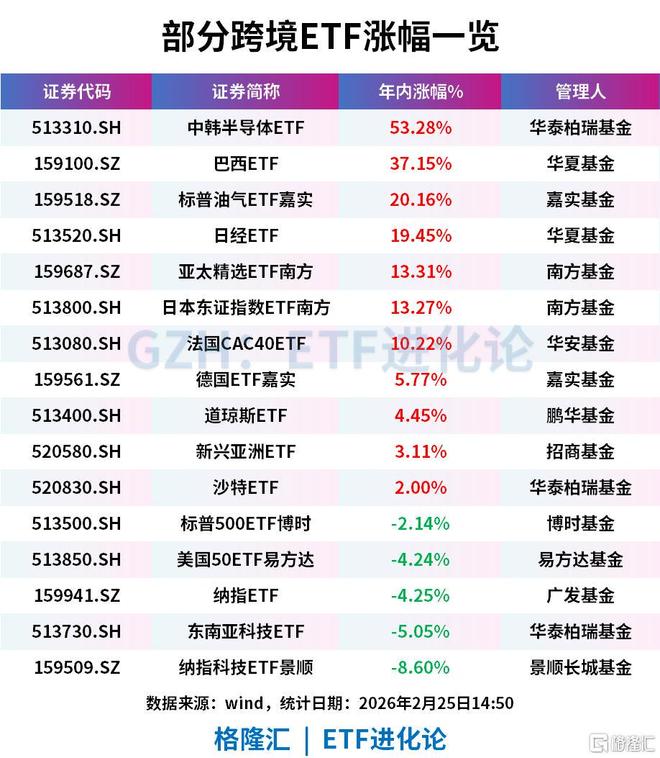
Core Viewpoint - The U.S. stock market is experiencing significant capital outflows as investors shift their focus from domestic equities to global markets, marking a transition from the "buy America" strategy to a "bye America" approach [2][3]. Group 1: Capital Outflows - U.S. investors have withdrawn approximately $75 billion from domestic stock products over the past six months, with $52 billion flowing out in the first eight weeks of 2026, the highest for this period since 2010 [2]. - Despite a weakening dollar increasing the cost of overseas asset allocation, capital continues to flow out of the U.S. [3]. - Hedge funds and institutional clients are significantly reducing their exposure to U.S. stocks, with active managers' stock exposure dropping to an eight-month low [3]. Group 2: Performance of Global Markets - The appeal of technology stocks is declining, and overseas markets are performing well, prompting funds to seek new directions [5]. - Over the past year, the Korean Composite Index has risen over 120%, while the Nikkei 225 and Brazil's IBOVESPA have both increased by over 50%, significantly outperforming the S&P 500's approximately 14% gain [5]. - Emerging markets and Europe have become the primary destinations for capital, with U.S. investors allocating about $26 billion to emerging market equities this year, primarily in Korea and Brazil [7]. Group 3: Specific Company Insights - Sandisk (SNDK) faced a significant stock price drop after a short-seller report from Citron Capital, which argued that the current tight supply of storage chips is a temporary phenomenon and that the market's pricing logic is fundamentally flawed [8][11]. - Sandisk's stock had previously surged 12-fold over the past year, driven by high demand for AI computing and data center expansion, but concerns about the sustainability of these profits have emerged [9][14]. - Citron's report highlighted that the storage industry is cyclical, and the current supply tightness may be an illusion of a peak rather than a long-term structural shortage [11][12]. Group 4: Industry Dynamics - The report from Citron described Samsung as a dominant player in the industry, indicating that its entry into the high-end SSD market could significantly alter the competitive landscape [11]. - The report also noted that industry insiders appear to be reducing their positions at high levels, suggesting that those who understand the industry cycle may be quietly lowering their risk exposure [11][12]. - TSMC's stock reached a historic high, with a market capitalization exceeding $2 trillion, reflecting strong investor confidence in companies with long-term competitive advantages in the AI supply chain [15].
这家空头狙击芯片巨头,曾预言“恒大结局已定”
Guan Cha Zhe Wang· 2026-02-25 06:20
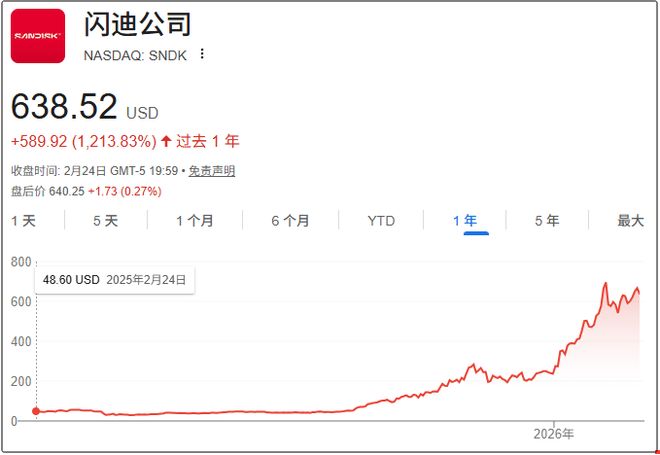
【文/羽扇观金工作室 陶立烽】 在存储芯片行业一路高歌的当下,华尔街知名空头机构香橼资本(Citron Capital,也叫香橼研究)昨日 (2月24日)突然向闪迪(SNDK.US)挥出做空重拳,为这只一年涨幅超1200%的牛股蒙上阴影。 这并非香橼的首次出手,从创立之初的"股票柠檬"到狙击中概股的 "空中猎手",再到被散户反杀、遭 监管起诉的跌宕,创始人安德鲁・莱福特的二十余年做空生涯,交织着精准狙击的传奇与游走灰色地带 的争议,成为华尔街资本市场的一道特殊风景。 闪迪年内涨幅超175%,香橼直指芯片周期泡沫 受益于存储芯片超级周期,闪迪的股价在资本市场一路狂飙,2026年不到两个月涨幅已达175%,过去 12个月累计涨幅更是突破1200%,成为市场追捧的"明星股"。但这份火热,却让香橼资本嗅到了"泡沫" 的味道,这家以做空著称的机构毅然出手,在社交媒体上公开宣布建立闪迪空头头寸,直言市场对闪迪 的定价存在"严重误判"。 闪迪在过去一年股价涨幅达1213%,2026年以来上涨175% 香橼的做空理由直击闪迪的核心软肋。在其看来,市场错误地将闪迪与英伟达等同看待,却忽略了二者 商业模式的本质差异:"英伟达拥有 ...
全球科技:AI 提振 NAND 需求,但亚洲模组厂商利润率或很快承压-Global Technology-AI boosts NAND demand, but Asian module maker margins may soon compress
2026-02-25 04:08
Summary of Conference Call on NAND Market Dynamics Industry Overview - The conference call focuses on the NAND memory market, highlighting the impact of AI on demand and pricing dynamics, particularly for module makers in Asia such as Phison and Longsys [1][2][4][5]. Key Points 1. NAND Demand and Pricing Dynamics - AI demand and tight supply have significantly shifted bargaining power within the memory supply chain, with consensus EPS for the memory supply chain increasing by 279% year-over-year, compared to 37% for global tech coverage [2]. - NAND OEMs have seen stock prices surge by 566% since September 2025, while module makers have only increased by 219% [2][14]. 2. Challenges for Module Makers - Module makers like Phison and Longsys are facing margin pressures due to constrained supply and weakening consumer SSD demand amid rising NAND prices [1][4][5]. - Low-cost inventory for module makers is expected to be depleted by the second half of 2026, leading to margin normalization [4][15]. 3. Downgrades and Valuation Concerns - Phison and Longsys have been downgraded to Equal-Weight (EW) due to less attractive risk-reward profiles compared to fab-owning OEMs [5][51]. - EPS forecasts for 2027 are projected to be 25-30% below consensus for these module makers, with Phison's valuation appearing stretched at 18x 2027e EPS [5][15]. 4. Preferred Investment Exposure - The report suggests a preference for fab owners and AI storage leaders over module makers, indicating that the pricing power of NAND OEMs is expected to surprise positively [6][15]. - KIOXIA's ASP outlook for 2026 has been raised from +75% YoY to over +100% YoY, supported by strong OEM negotiations [3][47]. 5. Future Outlook and Risks - The outlook for enterprise SSD (eSSD) is positive, with significant growth expected, particularly from companies like SanDisk and Micron, which are gaining market share in this segment [39][41]. - Risks include the potential for greater value capture by module makers from AI-driven enterprise SSD demand, resilient consumer demand, and the possibility of memory being viewed as a secular AI infrastructure theme rather than a cyclical commodity [34][36][37]. 6. Competitive Landscape - Phison is characterized as a technology-focused company with strong capabilities in NAND controller IC design, while Longsys is more brand-focused with a broader product range [63][64][65]. - Both companies face challenges in maintaining margins and market share as the NAND market evolves, particularly with the increasing importance of AI applications [56][65]. Additional Insights - The memory group has been re-rated due to the supercycle driven by AI demand, with fab owners benefiting more than module makers [16][17]. - The report emphasizes that while module makers may initially benefit from low-cost inventories, this advantage is not sustainable as inventories deplete [17][18]. This summary encapsulates the critical insights from the conference call regarding the NAND market, focusing on the challenges faced by module makers, the shifting dynamics due to AI demand, and the overall outlook for the industry.

数据中心收益:生成式 AI 相关标的多资产强劲吸纳,支撑 2026 年及长期数据中心需求-Data Center GAINs Gen AI Names Multi-Asset Strong Absorption Supports Solid 2026 and LT Data Center Demand


2026-02-25 04:08
Summary of Key Points from the Conference Call Industry Overview - The conference call focuses on the **Data Center** industry, particularly the impact of **Artificial Intelligence (AI)** on data center demand and infrastructure investments. Core Insights and Arguments - **AI Demand Surge**: The demand for power driven by AI is exceeding previous expectations, leading to an increase in projected IT load demand for 2026 by **4.3 GW** to **14.5 GW**, which represents a **23% year-over-year growth**. The total IT load demand is now estimated at approximately **77 GW** [7][38]. - **Long-term Projections**: The average annual incremental demand for IT load between **2027 and 2030** is raised to about **19.9 GW**, with a forecast for global IT load to reach **156 GW** by **2030**, reflecting a **5-year CAGR of 20%** [7][38]. - **Capex Growth**: Global capital expenditures (capex) for AI workloads are projected to grow at a **46% CAGR** from **2025 to 2030**, slightly ahead of the **44% CAGR** for AI IT load [7][38]. - **Hyperscaler Investments**: Capex from major hyperscalers like **Amazon (AMZN)**, **Google (GOOGL)**, and **Meta** is expected to grow at a **28% CAGR** from **2025 to 2030**, with a combined projected spend of approximately **$251 billion** in **2026** [7][51][57]. Demand and Supply Dynamics - **Data Center Demand**: AI workloads are anticipated to represent over **70%** of total data center power demand by **2030**. The overall data center market is expected to grow at a **CAGR of 20%** to **156 GW** by **2030** [21][26][38]. - **Colocation Market**: The total tracked colocation capacity is estimated at **39,339 MW** with a supply of **45,248 MW**, indicating an **87% utilization rate** across **81 markets** [13][26]. - **Absorption Rates**: The global market is expected to absorb between **14-21 GW** per year through **2030**, with approximately **78%** of this coming from the colocation market [26][38]. Risks and Considerations - **Digestion Phase Risk**: There is a potential risk of a digestion phase for hyperscalers due to the large capacity expected to be deployed for AI workloads. This phase may occur around **2028-2029** [7][38]. - **Market Pricing Trends**: Pricing trends in primary markets remain strong, with a **5% growth** in primary markets and **10% growth** in secondary markets, while other markets are experiencing a decline [35][38]. Notable Companies Mentioned - **Digital Realty (DLR)**: Buy rating with a target price of **$190** [8]. - **Equinix (EQIX)**: Buy rating with a target price of **$1070** [8]. - **NVIDIA (NVDA)**: Buy rating with a target price of **$270** [8]. - **Microsoft (MSFT)**: Buy rating with a target price of **$635** [8]. - **Amazon (AMZN)**: Buy rating with a target price of **$265** [8]. - **Oracle (ORCL)**: Buy rating with a target price of **$370** [8]. Additional Insights - **AI Workload Dynamics**: AI training and inference workloads have distinct requirements compared to traditional data center workloads, with training being more power-intensive and requiring higher peak power levels [49]. - **Investment Returns**: The return on investment from AI infrastructure is reflected in high cash returns on cash invested (CROCI) at hyperscalers, indicating a favorable environment for continued investment in AI infrastructure [47]. This summary encapsulates the key points discussed in the conference call, highlighting the significant growth and investment trends in the data center industry driven by AI demand.
Anthropic不再带崩美股?香橼做空SNDK三大逻辑
3 6 Ke· 2026-02-25 03:32
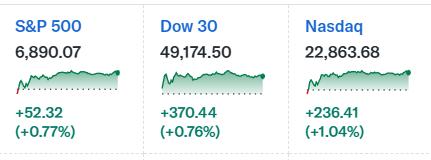
Group 1 - Anthropic has become a central variable in the volatility of the US SaaS sector, causing software stocks to drop significantly in response to its product developments [1] - Following a recent live event, market sentiment improved as Anthropic clarified that its Claude Cowork AI tool is designed to enhance existing enterprise software rather than replace traditional software vendors [2][4] - The S&P 500, Dow 30, and Nasdaq all saw gains, with the Nasdaq rising over 1%, indicating a recovery in technology stocks, particularly those that had heavy short positions [3][6] Group 2 - The market narrative shifted from concerns about AI tools undermining traditional SaaS revenues to viewing AI as a means to enhance customer engagement and pricing [4][5] - Anthropic's partnerships with companies like FactSet, LSEG, Salesforce, and Thomson Reuters suggest that AI will augment rather than replace existing business models, leading to significant stock price increases for these firms [4] - The recent rally was driven by a short squeeze, with heavily shorted stocks rising nearly 4%, indicating that prior risk hedging had reached high levels [6][8] Group 3 - The semiconductor sector also contributed to the market's recovery, with AMD's stock rising approximately 9% due to a large AI chip procurement agreement with Meta, potentially exceeding $10 billion [9][10] - Overall, improving consumer confidence and stable real estate prices have alleviated recession fears, contributing to a recovery in risk appetite [10] Group 4 - Despite the short-term recovery, concerns remain about the long-term structural impacts of AI on the SaaS industry, particularly regarding efficiency gains and job displacement [13][14] - Anthropic's valuation has reached approximately $380 billion, indicating that its product launches will continue to influence market perceptions of software companies [14] Group 5 - The market is now focused on Nvidia's upcoming earnings report and any policy statements that may impact the sector [12] - The current situation reflects a temporary easing of risks rather than a resolution of long-term structural issues within the industry [13]