Uber(UBER)

Search documents
X @TechCrunch
TechCrunch· 2025-09-10 13:06
Lyft is trying to carve out a presence in the autonomous vehicle market. But the ride-hailing company still lags far behind Uber. https://t.co/ObyxVyyKtX ...


Uber partners with fintech firm Pipe to offer loans to small businesses
CNBC· 2025-09-10 13:00
Fintech company Pipe is partnering with Uber in a new effort to help small businesses acquire loans with fewer barriers to access, CNBC has learned.Pipe is teaming up with Uber Eats to add its embedded technology to the company's restaurant manager app. Eligible restaurants will see pre-approved capital offers from Pipe that are customized based on the businesses' revenue and cash flow.The new partnership will start rolling out widely this week on Uber Eats, according to Pipe.The Uber Eats Manager app for r ...

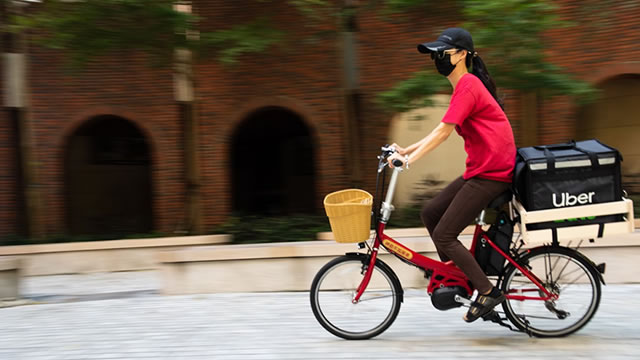
Joby, Uber to bring Blade’s air mobility services to Uber app (JOBY:NYSE)
Seeking Alpha· 2025-09-10 12:22
Group 1 - Joby Aviation and Uber Technologies plan to integrate Blade's air mobility services into the Uber app as early as next year [5] - The integration will allow passengers to book Blade flights directly through the Uber platform [5] - This move follows Joby's acquisition of Blade's passenger business, indicating a strategic expansion in urban air mobility [5]

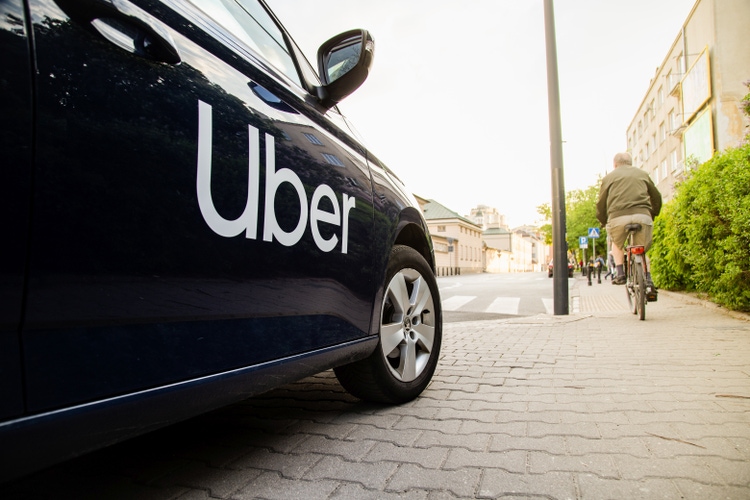
Turbo Energy Delivers Advanced Solar Energy Storage Solution to Power Uber’s Electric Fleet in Spain
Globenewswire· 2025-09-10 12:00
Core Insights - Turbo Energy S.A. has signed a significant agreement to power Uber's electric vehicle fleet in Spain, utilizing its AI-optimized solar energy storage technologies [1][4] - The project features Turbo Energy's SUNBOX Industry system, which addresses grid constraints and enables large-scale charging for electric vehicle fleets [2][3] Company Overview - Turbo Energy, founded in 2013, specializes in solar energy storage technologies and solutions, leveraging artificial intelligence to optimize energy management [6] - The company offers scalable, modular energy storage systems aimed at reducing dependence on traditional energy sources and lowering electricity costs [6] Project Details - The project includes the installation of SUNBOX Industry systems to create a 1 MW / 2 MWh smart storage hub, capable of charging over 300 vehicles despite limited grid supply [3] - The SUNBOX Industry system adds 1,000 kW of flexible storage capacity, increasing total available power to 1.6 MW, ensuring uninterrupted charging operations [3] Strategic Partnerships - Turbo Energy collaborated with INSOLEN, a Spanish engineering firm, to deliver integrated energy solutions for the Uber project, focusing on energy efficiency and sustainable operations [5]


Turbo Energy Delivers Advanced Solar Energy Storage Solution to Power Uber's Electric Fleet in Spain
Globenewswire· 2025-09-10 12:00
Core Insights - Turbo Energy S.A. has signed a significant agreement to power Uber's electric vehicle fleet in Spain, showcasing its advanced solar energy storage technologies [1][4] - The project utilizes Turbo Energy's SUNBOX Industry system, which is designed to facilitate large-scale charging and address grid constraints for electric mobility [2][3] Company Overview - Turbo Energy, founded in 2013, specializes in AI-optimized solar energy storage solutions, aiming to reduce dependence on traditional energy sources and lower electricity costs [6] - The company is a subsidiary of Umbrella Global Energy, S.A., which focuses on solar energy solutions globally [6] Project Details - The project involves the installation of SUNBOX Industry systems to create a 1 MW / 2 MWh smart storage hub, enabling the charging of over 300 vehicles despite limited grid supply [3] - The system adds 1,000 kW of flexible storage capacity, increasing total available power to 1.6 MW, ensuring uninterrupted charging operations [3] Strategic Partnerships - Turbo Energy collaborated with INSOLEN, a Spanish engineering firm, to deliver integrated energy solutions for the Uber project, focusing on energy efficiency and sustainable operations [5]
Uber will launch Blade helicopter rides next year through expanded Joby partnership
CNBC· 2025-09-10 12:00
Core Insights - Uber is set to launch helicopter rides through its app in partnership with Joby Aviation by 2026, marking a new venture into air transportation [1][4] - Joby Aviation recently completed a $125 million acquisition of Blade, which chartered over 50,000 passengers last year from 12 urban terminals [2][3] - The integration of Blade into the Uber app is seen as a significant step in their partnership, aiming to introduce quiet, zero-emissions aircraft in the future [3] Company Developments - Joby Aviation's acquisition of Blade does not include its medical organ transplant division, focusing instead on air transportation [2] - Uber has a long-standing interest in air transportation, having first partnered with Joby in 2019 and sold its Elevate flying taxi division to Joby in 2020 [3] - Uber's leadership believes this partnership will lead to a "next generation of travel," with more details on booking expected closer to the launch date [4] Industry Context - The air taxi market is competitive, with various companies seeking regulatory approval from the Federal Aviation Administration to bring their solutions to market [5] - Proponents of air taxi technology argue it can alleviate traffic congestion and reduce emissions, highlighting its potential benefits for urban transportation [5]
Rapido Expands Lead In Rideshare With More Users Than Peer Uber
NDTV Profit· 2025-09-10 09:45
Core Insights - Rapido has surpassed Uber in active users, with over five crore Android users compared to Uber's three crore, indicating a significant lead in the Indian ride-hailing market [1] - The majority of mobile phones in India operate on Android, which supports Rapido's growth in high-volume categories like bike taxis and autorickshaws [2] - Rapido, founded in 2015, initially gained traction with its bike-taxi service and has since expanded to include three-wheelers and cab services [3] - Uber's CEO acknowledged Rapido as its primary competitor, especially after Ola faced various operational challenges [4] Company Overview - Rapido was established in 2015 as theKarrie by founders Aravind Sanka, Pavan Guntupalli, and SR Rishikesh, and quickly became the first company to offer two-wheeler taxi services in India [3] - The company has effectively captured market share from 2015 to 2018 and has diversified its offerings to include three-wheelers and cab services [3] Competitive Landscape - Uber has recognized Rapido as its main rival, particularly in light of Ola's struggles with product issues and service complaints [4] - The competitive dynamics in the Indian ride-hailing market are shifting, with Rapido gaining a stronger foothold against established players like Uber and Ola [4]

Prediction: 2 Artificial Intelligence (AI) Stocks Will Be Worth More Than Palantir Technologies by 2030
The Motley Fool· 2025-09-10 08:02
Group 1: Market Capitalization Outlook - Shopify and Uber Technologies are projected to potentially match Palantir's current market capitalization of $369 billion within five years [1][2] - Shopify's current market value is $189 billion, requiring a 96% increase to reach $370 billion, which would yield over 14% annual returns [7] - Uber's current market value is $197 billion, needing an 88% increase to hit $370 billion, resulting in over 13% annual returns [7] Group 2: Shopify Financial Performance - Shopify reported a 31% increase in revenue to $2.6 billion in Q2, surpassing estimates [4] - Non-GAAP net income for Shopify rose 35% to $0.35 per diluted share [4] - Wall Street anticipates Shopify's earnings to grow at 34% annually over the next three to five years, potentially reducing its price-to-earnings multiple from 81 to 38 [9] Group 3: Shopify Strategic Focus - Shopify is a leader in e-commerce software, providing a platform for merchants to manage both physical and digital storefronts [5] - The company is focusing on business-to-business (B2B) commerce, which is three times larger than business-to-consumer (B2C) commerce, with B2B sales increasing 101% in Q2 [6] - Shopify is integrating artificial intelligence features, such as Shopify Magic, to automate various merchant tasks [8] Group 4: Uber Financial Performance - Uber's revenue increased 18% to $12.7 billion in Q2, with GAAP net income rising 34% to $0.63 per diluted share [10] - Wall Street expects Uber's earnings to grow at 22% annually over the next three to five years, which could lower its price-to-earnings ratio from 16 to 12 [13] Group 5: Uber's AI and Autonomous Driving Strategy - Uber utilizes AI for pricing, driver-rider matching, and route optimization, positioning itself as a key player in the autonomous driving sector [11] - The company has partnered with 20 autonomous driving firms and has deployed robotaxis in four markets, with plans for further deployments [12] - Uber's extensive mobility dataset is crucial for developing advanced AI systems for autonomous driving [13]


This Analyst Was Right About Uber Technologies (UBER)
Yahoo Finance· 2025-09-09 21:26
Core Insights - Uber Technologies, Inc. (NYSE: UBER) is highlighted as a strong investment opportunity, with positive analyst sentiment and robust financial performance [1][3] - The company reported significant growth in key metrics, including gross bookings and revenue, indicating strong demand across its services [3] Financial Performance - Gross bookings increased by 18% year-over-year to $44.2 billion, while revenue grew by 20% to $12.0 billion [3] - Adjusted EBITDA surged by 44% to $1.8 billion, driven by record demand in both Mobility and Delivery segments [3] - Free cash flow reached $1.7 billion, showcasing a strong cash generation capability [3] Market Position and Future Outlook - Uber is positioned well for continued growth in EBIT, cash flow, and margin expansion, supported by confident management [1] - The company has exceeded its three-year financial targets and is entering 2025 with accelerating momentum, particularly with emerging opportunities in autonomous vehicles [3] - The stock has appreciated by 16% since the beginning of May, reflecting positive market sentiment [2]
Uber Technologies, Inc. (UBER) Presents At Goldman Sachs Communicopia + Technology Conference 2025 Transcript
Seeking Alpha· 2025-09-08 20:05
PresentationEric SheridanMD & US Internet Analyst Okay. I think in order to keep us on track, we're going to get started with our next fireside chat. It's always my pleasure to host Dara Khosrowshahi, he's the CEO of Uber Technologies. Dara, thank you so much for being part of Communacopia Technology again. ...