Uber(UBER)

Search documents
未知机构:中信证券科技Robotaxi跟踪260322GTC大会密集落地Robota-20260323
未知机构· 2026-03-23 02:25
Summary of Conference Call Records Industry Overview - The focus is on the **Robotaxi** industry, highlighting advancements in autonomous driving technology and partnerships among key players in the market. Key Companies Mentioned - **Uber** - Announced a partnership with NVIDIA to develop a full-stack L4 autonomous Robotaxi fleet based on the DRIVE Hyperion platform and the new Alpamayo AI model, with plans to launch in Los Angeles and San Francisco in the first half of 2027 and expand to 28 cities globally by 2028 [1] - Plans to invest up to **$1.25 billion** in Rivian, with an initial investment of **$300 million** to procure **10,000** fully autonomous Robotaxis based on the R2 platform, set to launch in San Francisco and Miami in 2028 and expand to 25 cities in the US, Canada, and Europe by 2031 [2] - **文远知行 (WeRide)** - Entered the Slovak market and established a strategic partnership with ELEVATE Slovakia to launch the country's first autonomous driving project, with testing planned to start in Bratislava in the first half of 2026 [3] - **Waymo** - Completed the testing phase for its autonomous driving service in Nashville and is preparing for a passenger launch [4] - **小马智行 (Pony.ai)** - Delivered the first batch of over **100** seventh-generation Robotaxis to Guangzhou Qichen Travel, which will operate on the Qichen travel platform [5] Core Insights and Arguments - The commercialization of Robotaxis is accelerating due to advancements in algorithms and clearer regulatory frameworks, which are expected to significantly enhance vehicle utilization rates and reduce costs, thereby increasing the penetration of ride-hailing services in the transportation market [6] Investment Recommendations - **Overseas Focus**: - Strongly recommend investing in **Uber** for its robust positioning in the shared mobility market, along with monitoring progress from companies like Google and Tesla [6] - **Domestic Investment Targets**: - Leading Robotaxi companies: Recommend **Pony.ai** and **WeRide** - Advanced manufacturers in Robotaxi development: Recommend **Xpeng Motors** and **BAIC BluePark** - Leading component suppliers: Recommend companies such as **Jingwei Hirain**, **Desay SV**, **Nexteer**, **Hesai Technology**, **RoboSense**, **Hengshun**, **Bertel**, and **Black Sesame Technologies**, with a suggestion to pay attention to **Zhejiang Shibao** [6]

Uber Technologies (UBER) Turns to Autonomous Vehicle Partnerships to Accelerate Growth
Yahoo Finance· 2026-03-22 20:04
Core Viewpoint - Uber Technologies, Inc. is considered a strong investment opportunity due to its strategic partnerships in autonomous vehicles, which are expected to enhance its growth prospects in the rideshare and robotaxi markets [1][2]. Group 1: Investment Ratings and Price Target - Analysts at BTIG have reiterated a Buy rating on Uber with a price target of $100, reflecting confidence in the company's future growth [1]. Group 2: Autonomous Vehicle Partnerships - Uber has established several strategic partnerships in autonomous vehicles, including a deal with Nvidia, aiming to launch autonomous vehicles in 28 cities by 2028 [2]. - The collaboration with Nvidia focuses on leveraging Uber's network in Los Angeles and San Francisco by 2027, and the company has already initiated a robotaxi service with Motional in Las Vegas [3]. - Uber is also working with Zoox to deploy purpose-built autonomous vehicles in Las Vegas during the summer [3]. Group 3: Financial Projections - BTIG projects that Uber's rideshare EBITDA will grow by high single digits through 2030, supported by the deployment of 150,000 autonomous vehicles, with a 50% third-party network [3]. Group 4: Company Overview - Uber Technologies, Inc. operates as a technology platform connecting users with transportation and delivery services via a mobile app, offering ride-hailing, food/grocery delivery through Uber Eats, and freight booking [4].
Rivian, Uber stocks struggle, but robotaxi deal may change the story
Yahoo Finance· 2026-03-22 15:49
Core Viewpoint - Rivian and Uber are facing profitability concerns and slowing growth expectations, leading to significant stock declines for both companies [1][2]. Company Performance - Rivian's stock has decreased over 33% from its December 52-week high and is down approximately 24.3% year to date [1]. - Uber's stock has fallen about 9% this year and around 22% since its earnings report on November 4 [1]. - Both companies are underperforming compared to the S&P 500, which has declined about 5% year to date [1]. Partnership Announcement - On March 19, Rivian and Uber announced a significant robotaxi partnership, with Uber planning to invest up to $1.25 billion in Rivian [3]. - The partnership aims to deploy up to 50,000 fully autonomous R2 vehicles on Uber's platform, launching in San Francisco and Miami in 2028, with potential expansion to 25 cities by 2031 [3][4]. Financial Results - Rivian reported an adjusted loss of 54 cents per share for the fourth quarter, which was narrower than the expected 68-cent loss, with revenue reaching $1.29 billion, surpassing estimates of $1.26 billion [5]. - For the full year 2025, Rivian's revenue rose 8% to approximately $5.4 billion, and the company reported its first annual gross profit of $144 million, primarily from its software and services segment [6]. - Rivian's automotive business incurred losses of $432 million, and the company is expected to remain unprofitable as it ramps up production of its lower-cost R2 vehicle [6]. Future Expectations - Rivian has revised its expectations, stating it no longer anticipates adjusted EBITDA to turn positive by 2027 due to increased R&D spending related to its autonomous driving roadmap [7]. - The company now expects an adjusted EBITDA loss between $2.1 billion and $1.8 billion in 2026 [9].

Why Uber's Hybrid Network Could Win the Robotaxi Race
The Motley Fool· 2026-03-22 13:30
Core Viewpoint - The future of ride-hailing may not be a choice between human drivers and autonomous vehicles (AVs), but rather a hybrid model that combines both to better meet fluctuating demand [2][8]. Demand and Supply Dynamics - Ride-hailing demand is highly unpredictable, influenced by various factors such as time of day, day of the week, weather, and local events [3]. - Uber's data shows significant demand fluctuations; for instance, demand in Austin on a typical Monday is about 45% of Saturday's peak, with troughs dropping to 5% of peak demand [4]. Challenges for Robotaxi-Only Fleets - Robotaxi operators would need a large fleet to handle peak demand, leading to inefficiencies during off-peak hours when many vehicles could remain idle [5]. - A robotaxi-only network risks being unreliable during demand surges and inefficient during slower periods [5]. Advantages of Hybrid Networks - Uber's hybrid model allows AVs to manage baseline demand while human drivers can respond to spikes, providing flexibility that robotaxis lack [7][8]. - Human drivers can quickly adapt to sudden increases in demand due to events or weather, while AVs represent a fixed supply that cannot scale instantly [8]. Early Evidence Supporting Hybrid Model - Initial data from cities like Austin and Atlanta indicate that AVs integrated into Uber's platform achieve 30% more trips per vehicle per day and offer 25% faster pickup times compared to standalone AV fleets [9][10]. - Uber's existing infrastructure and algorithms facilitate real-time supply-demand matching, giving AVs immediate access to ride requests [10]. Reliability Over Technology - The long-term success in the AV space may hinge more on the reliability of service rather than the sophistication of the technology [11]. - Riders prioritize price, availability, and wait time over whether their vehicle is driven by a human or an AV [12]. Implications for Investors - The integration of human drivers with AVs could create a more efficient and dependable network than either system alone, potentially keeping Uber central to the mobility ecosystem as AVs scale [14][15].


Uber's deal blitz to stop a robotaxi monopoly
Business Insider· 2026-03-22 11:28
Core Insights - The future of robotaxis is characterized by multiple vendors, with Uber positioned as the demand gatekeeper, ensuring a diversified supplier base to mitigate risks from dominant players like Waymo and Tesla [1][4][9] Partnerships and Strategy - Uber has formed three new robotaxi partnerships recently with Zoox, Wayve-Nissan, and Rivian, bringing its total to at least a dozen partnerships in less than five years [2] - The partnerships are aimed at creating a multiplayer market rather than relying on a single dominant player, allowing Uber to maintain a stake in the robotaxi economy [4][6] - Uber's strategy includes partnerships with companies that do not intend to develop their own apps, such as Nuro and Motional, to shape the market landscape [6] Investment and Market Dynamics - By investing in various partners, Uber enhances its credibility, attracting additional investors to support smaller companies in the robotaxi space [7] - The investments made by Uber are relatively small compared to its market cap, allowing the company to leverage these investments to attract further capital [8] - A larger number of partners can provide Uber with better negotiating leverage, as fewer players could demand more aggressive terms [11] Challenges and Future Outlook - Despite numerous partnerships, only a few have launched fully driverless, paid services, indicating a significant gap between partnership agreements and operational deployment [12][13] - The ability to scale operations safely and cost-effectively will be crucial for the success of Uber's partners in the robotaxi race [12] - The competitive landscape remains uncertain, with no clear indication of which companies will survive and thrive in the evolving robotaxi market [13]
This Time, the Hype Around Self-Driving Cars Feels Real
Yahoo Finance· 2026-03-22 11:00
Group 1 - The recent surge in autonomous vehicle (AV) deals, particularly by Uber Technologies, indicates a revival of interest in the AV sector reminiscent of 2016 [1][2] - Uber has formed partnerships with several AV companies, including Amazon's Zoox and Motional, and is considering an investment of up to $1.25 billion in electric vehicle maker Rivian for its autonomous vehicle plans [1] - The return of key figures like Travis Kalanick and Anthony Levandowski to the AV scene signals a renewed excitement and potential for innovation in the industry [2][4] Group 2 - The previous hype cycle for AVs saw significant investment and optimism, but the technology faced challenges that hindered mass adoption, leading to a decline in excitement [3][8] - Laura Major, CEO of Motional, noted that the current environment is filled with buzz and many players are re-entering the market, similar to the previous hype cycle [7] - The challenges of logistics and costs associated with making robotaxis operational have been recognized as significant barriers to the widespread implementation of AV technology [8]
Uber's Advertising Business May Be Bigger Than Investors Think
The Motley Fool· 2026-03-21 22:15
Core Insights - Uber Technologies is evolving beyond its traditional ride-hailing and food delivery services, with advertising emerging as a significant profit driver [1][3] - The advertising segment, initially seen as a limited monetization tool, is now recognized for its larger-than-expected potential [2][3] Advertising Business Potential - Uber's advertising penetration in delivery has surpassed the previously estimated 2% of gross bookings, achieving an annualized revenue run rate exceeding $2 billion [3] - Management's revised outlook on advertising indicates that early results are exceeding expectations, suggesting a promising growth trajectory [4] Advantages of Advertising - Advertising does not require additional resources like drivers or vehicles, allowing Uber to monetize existing demand on its platform [5] - The advertising business is expected to have significantly higher margins compared to Uber's core operations, similar to the successful model seen in companies like Amazon [6] Data-Driven Advertising - Uber's transaction-driven environment provides unique data that enhances the effectiveness of targeted advertising, creating strong commercial intent among users [8] - The ability to deliver relevant ads at the moment of transaction is a compelling advantage for advertisers seeking high returns on investment [8] Growth Opportunities - The advertising business is still in its early stages, with small and medium-sized businesses showing high adoption rates, while enterprise advertising is growing rapidly [9] - There is potential for advertising to expand beyond food delivery into areas such as grocery, retail, and mobility, which could unlock new revenue streams [10][11] Impact on Profitability - While advertising may not dominate revenue in the short term, it is expected to enhance overall profitability and earnings quality for Uber [13] - The introduction of high-margin revenue streams like advertising can significantly improve margins and contribute to long-term shareholder value [14]
Uber co-founder catches ride out of California amid exodus
Youtube· 2026-03-21 18:00
Core Viewpoint - There is a notable exodus of billionaires from high-tax states like California and Washington, driven by increasing taxes targeting the wealthy and upper middle class, which is part of a broader issue of rising healthcare costs and inefficient spending [1][2][3]. Group 1: Billionaire Exodus - Travis Kanic, co-founder of Uber, has relocated from California to Texas, joining a growing list of billionaires leaving the state [1]. - Howard Schultz from Starbucks is also leaving Washington state due to the implementation of a millionaire's tax, indicating that tax burdens are affecting not just the ultra-rich but also the upper middle class [2]. Group 2: Economic Implications - The focus on taxing the wealthy and middle class does not address the underlying issue of rising costs, particularly in healthcare, leading to a continuous financial gap [2][3]. - The departure of wealthy individuals results in a loss of assets and potential taxpayers, as those who move to be near billionaires, such as tech talent in Silicon Valley, are also affected [4].
1 Brilliant Driverless-Vehicle Stock to Buy Before It's Too Late
The Motley Fool· 2026-03-21 12:05
Core Insights - The article emphasizes the potential of driverless vehicles to address significant transportation issues, including safety and traffic congestion [1] - Uber Technologies is highlighted as a leading player in the driverless vehicle market due to its innovative partnerships and strategic approach [2][4] Company Strategy - Uber's strategy focuses on a platform-as-a-service model, avoiding the capital-intensive manufacturing of vehicles while leveraging its existing network and data [4][6] - The company has established over 20 active partnerships with major players in the automotive and technology sectors, including Stellantis, Nvidia, Amazon's Zoox, and Alphabet's Waymo [5][6] Market Position - Uber's approach reduces risk by diversifying partnerships, ensuring that the failure of any single partnership does not hinder overall development in driverless technology [6] - Recent partnerships with Nvidia aim to deploy Level 4 self-driving technology across 28 cities by 2028, which could significantly enhance Uber's revenue potential without proportional cost increases [7][8] Investment Potential - The strategy positions Uber to capitalize on the rise of driverless vehicles while maintaining ownership of consumer data, presenting substantial upside for investors [8]
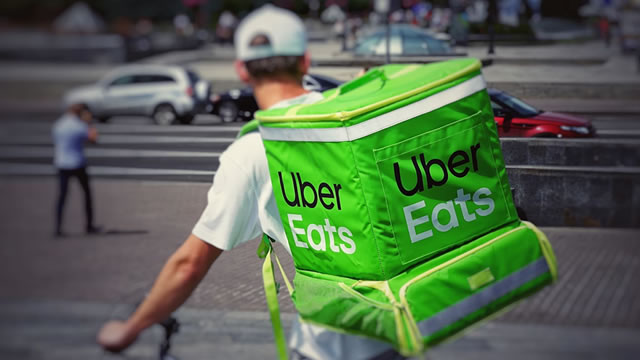
Better Growth Stock in 2026: Uber or DoorDash?
The Motley Fool· 2026-03-21 10:17
Core Viewpoint - Uber is positioned to leverage the autonomous vehicle revolution, which could significantly enhance its business model and profitability compared to DoorDash, which has focused on refining its core food delivery services [2][14]. Uber Technologies - Uber operates the largest ride-hailing network globally, with over 200 million monthly users, and is expanding into autonomous ride-hailing and delivery services [2]. - In 2025, Uber reported gross bookings of $193.4 billion, with $85.4 billion paid to drivers, indicating a substantial cost that could be reduced through automation [3][6]. - After deducting costs, Uber's revenue for 2025 was $52 billion, with an adjusted profit of $5.2 billion, highlighting the limited portion of gross bookings that contribute to the bottom line [4]. - The deployment of autonomous vehicles could allow Uber to retain a significant portion of the $85.4 billion previously paid to drivers, enhancing revenue without increasing customer base [6][7]. - Uber's CEO believes the shift to autonomous driving could create a multitrillion-dollar opportunity for the company, indicating significant long-term growth potential [15]. DoorDash - DoorDash holds over 60% market share in the U.S. food delivery industry and has expanded its services to over 40 countries [8]. - In 2025, DoorDash processed $102 billion in gross order volume, with $20 billion allocated to drivers, and has initiated autonomous delivery solutions with its robot, Dot [9][10]. - DoorDash achieved a record revenue of $13.7 billion in 2025, a 28% increase year-over-year, and a net income of $935 million, reflecting a 660% increase [12][13]. - The company has also reported an adjusted EBITDA of $2.7 billion, showcasing its profitability after years of focusing on growth [13]. Comparative Analysis - Uber's larger investment in driver costs compared to DoorDash suggests a greater potential for profit through automation [14]. - The valuation comparison shows Uber's price-to-sales (P/S) ratio at 3.2, significantly lower than DoorDash's 5.4, making Uber appear more attractive for investment [15][17].