Uber(UBER)

Search documents
WeRide and Uber Launch Fully Driverless Robotaxi Fare-Charging Operations in Dubai, Accelerating Autonomous Mobility in the Middle East
Globenewswire· 2026-03-31 13:03
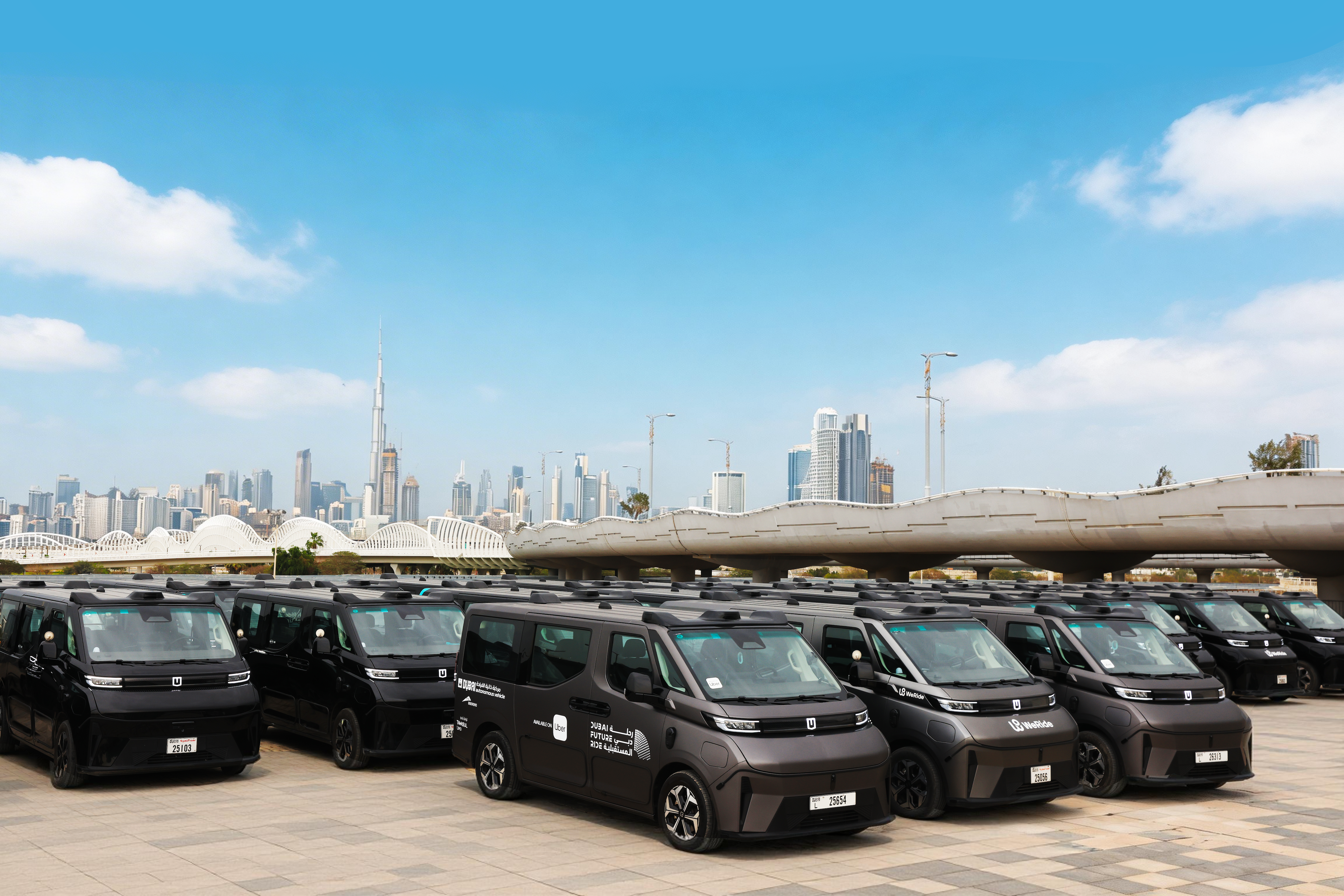
Core Insights - WeRide and Uber have launched fully driverless Robotaxi operations in Dubai, marking a significant milestone in their partnership and supporting Dubai's goal of 25% autonomous journeys by 2030 [1][5][10] Group 1: Launch Details - Public operations commenced in Jumeirah and Umm Suqeim, popular tourist districts, allowing riders to book WeRide Robotaxis via the Uber app [2][5] - The Roads and Transport Authority (RTA) of Dubai endorsed the service, which follows a successful trial that began in December 2025 [3][5] Group 2: Expansion Plans - WeRide plans to progressively extend its service to various busy transport and commercial areas in Dubai, reinforcing the UAE's smart mobility agenda [3][7] - The company aims to deploy at least 1,200 Robotaxis across the Middle East, including Dubai, Abu Dhabi, and Riyadh, with over 200 already operational in the region [10] Group 3: Company Background - WeRide is recognized as a leader in the autonomous driving industry, having tested or operated vehicles in over 40 cities across 12 countries [11] - The company has received autonomous driving permits in eight markets, including the UAE, and was the first to obtain a national license for self-driving vehicles in the UAE [10][11] Group 4: Strategic Partnerships - Uber holds approximately 5.82% of WeRide's Class A ordinary shares, indicating strong confidence in WeRide's technological capabilities and strategic value [9] - Tawasul will manage the fleet operations for WeRide's vehicles on the Uber platform, enhancing service delivery [2]



Peter Deng:你能 vibe code 一个 App,但你不能 vibe code 复利
深思SenseAI· 2026-03-31 06:53
Core Insights - The article discusses the challenges of consumer investing, emphasizing that successful consumer companies must meet five essential criteria simultaneously [3][27]. Group 1: Five Essential Criteria for Consumer Companies - **Fundamental Human Needs**: Successful consumer companies address pre-existing needs rather than creating new ones, such as social connection (Facebook), transportation (Uber), accommodation (Airbnb), food delivery (DoorDash), and shopping (Amazon) [11]. - **Obsessed Founders**: The article highlights the importance of founders with a near-religious obsession for their vision, capable of sacrificing relationships and resources for marginal improvements [13][14]. - **Technological Waves**: Great consumer companies emerge during significant technological shifts, leveraging advancements to create products that resonate with existing needs [16][17]. - **Compounding Effect**: Companies must have a compounding mechanism that enhances their value over time, such as network effects seen in Facebook, WhatsApp, and TikTok [20][22]. - **Extreme Focus**: Successful companies often start by narrowing their focus, excelling in a specific area before expanding, which allows for better understanding and faster adoption [25][28]. Group 2: Implications for Investment - Consumer investing is challenging not due to a lack of market size but because all five criteria must be met; missing even one creates a ceiling on potential success [27]. - The current technological wave, particularly in AI, presents a unique opportunity for new consumer companies, as the infrastructure is now ready for innovative products [28]. - The compounding effect is paramount; as barriers to entry decrease, the only non-replicable aspects are network effects and data flywheels [27]. - The strategy of doing less but doing it exceptionally well is counterintuitive yet essential for survival in the consumer market [28]. - This year is seen as a critical window for breakout consumer companies in the AI space, with the five criteria serving as a checklist for potential investments [28].



What The Market Got Wrong With Uber (Rating Upgrade) (NYSE:UBER)
Seeking Alpha· 2026-03-30 20:33
Core Viewpoint - Uber Technologies, Inc. (UBER) has experienced a significant pullback, with the stock down over 15% year-to-date and recently hitting a low of $68.40, indicating a potential opportunity for investors to consider [1]. Company Summary - The stock has been in a state of limbo for the past few months, suggesting uncertainty in its performance [1]. - The company operates within the technology sector, which has been influenced by various market dynamics, including the recent AI boom [1]. Market Context - The analysis reflects a broader market perspective, emphasizing the importance of momentum in investment strategies, particularly in the technology, media, and telecommunications (TMT) sectors [1].
Uber to buy chauffeur app Blacklane for high-end riders
Yahoo Finance· 2026-03-30 19:23
Core Insights - Uber has agreed to acquire Blacklane, a chauffeur booking platform operating in over 500 cities across more than 60 countries, with financial terms undisclosed [1] - The acquisition aims to accelerate Uber's entry into the executive and luxury travel market, with plans to expand Uber Elite service to New York soon [2] - Blacklane, valued at over €500 million ($574 million) after a 2024 funding round, connects travelers with local chauffeur operators through its app and website [3] Company Strategy - Uber CEO Dara Khosrowshahi emphasized the goal of providing a range of options from everyday commutes to luxury rides, identifying premium travel as a significant growth area for the company [4] - The luxury ride-hailing segment is becoming increasingly competitive, with new entrants like Wheely targeting corporate clients and high-net-worth individuals [5] Market Performance - Uber's higher-end ride categories, including Comfort, SUV, and Black, achieved annualized gross bookings exceeding $10 billion, reflecting a 35% increase from the previous year [6]
UBER & Partners Look to Bring Robotaxis to Europe Soon: Growth Ahead?
ZACKS· 2026-03-30 17:05
Core Insights - Uber Technologies, along with Verne and Pony AI, is launching Europe's first commercial robotaxi service in Zagreb, Croatia, with initial deployment activities already in progress [1][3][10] Partnership Details - The partnership combines Pony AI's autonomous driving technology, Uber's global mobility platform, and Verne's operational ecosystem, where Pony AI provides the autonomous driving system, Verne acts as fleet owner and operator, and Uber integrates the service into its ride-hailing network [2][4] Service Expansion Plans - The collaboration aims to create a scalable model for robotaxi services in Zagreb, with plans to expand to other European cities and international markets, targeting a fleet of thousands of robotaxis in the coming years [3][10] Operational Oversight - Verne will manage market readiness and regulatory approvals in Europe, ensuring safety and performance consistency while facilitating the deployment of robotaxis across Uber's platform [4] Technology and Market Readiness - Pony AI's Gen-7 autonomous driving system has already achieved significant commercial scale in China, indicating readiness for deployment in Europe, as stated by Dr. James Peng, CEO of Pony AI [5] Strategic Growth Focus - Uber is focused on scaling its core businesses and automation initiatives, with an emphasis on growth in suburban and low-density markets, despite existing macro risks and regulatory scrutiny [6] Previous Collaborations - Uber previously partnered with WeRide to launch robotaxi services in Dubai, showcasing its commitment to expanding autonomous mobility solutions [7] Financial Performance - Uber's shares have declined in double digits this year, underperforming the Zacks Internet-Services industry, with a current price-to-sales ratio of 2.35X, indicating it is relatively inexpensive compared to its industry [8][12]
Uber Acquires Blacklane to Expand Luxury and Executive Travel Offerings
PYMNTS.com· 2026-03-30 14:57
Core Insights - Uber Technologies plans to acquire Blacklane, a luxury chauffeur service operating in 500 cities across 60 countries, aiming to enhance its presence in the chauffeur sector [1][3][8] - The acquisition is expected to close by the end of the year, subject to customary closing conditions [2] - This move follows Uber's recent launch of Uber Elite, a luxury ride service targeting executives and frequent travelers, which has seen significant growth in pre-booked trips [3][4] Company Strategy - The acquisition will combine Blacklane's luxury service and expertise with Uber's global scale and technology, enhancing service delivery to a broader audience [8] - Uber's CEO expressed enthusiasm about the partnership, highlighting the potential to amplify exceptional service globally [8] Market Context - Blacklane, founded in 2011 in Berlin, focuses on premium travel for discerning travelers and corporate executives, indicating a strong alignment with Uber's luxury service goals [8][9] - The luxury chauffeur market is becoming increasingly competitive, with other companies like Lyft and Wheely also expanding their luxury service offerings [10]
Uber is buying Berlin startup Blacklane to bolster its ‘Elite' offering
TechCrunch· 2026-03-30 14:46
Core Insights - Uber is acquiring Berlin-based startup Blacklane to enhance its luxury and executive travel services [1][2] - Blacklane, founded in 2011, has raised over $100 million from notable investors including Sixt, Mercedes-Benz, and ALFAHIM [1] - The acquisition is pending regulatory approvals, with expectations to close by the end of the year [2] Company Developments - The acquisition follows Uber's recent launch of Uber Elite, which offers a chauffeur service with luxury amenities and 24/7 support [3] - Uber Elite is currently available in Los Angeles and San Francisco, with plans to expand to New York City [3] - Blacklane operates in major cities across Europe, the Middle East, Asia, South America, and North America, indicating a strong geographical presence [3]
Uber Price Target Cut by Wells Fargo to $95 Due to Autonomous Vehicle Impact
247Wallst· 2026-03-30 14:25
Core Viewpoint - Wells Fargo has cut its price target for Uber to $95 from $100, citing that the impact of autonomous vehicles (AV) will be felt beyond 2027, allowing for a more favorable assessment of Uber's core rideshare and delivery business [3][6]. Financial Performance - Uber closed Q4 2025 with 202 million monthly active platform consumers, an 18% increase year-over-year, and generated $9.763 billion in full-year 2025 free cash flow, up 41.6% [2][13]. - The stock has seen a decline of 16.59% year-to-date and is currently trading at $69.11, down from a 52-week high of $101.99 [5][6]. Price Target and Market Cap - The new price target of $95 implies a market cap of approximately $193 billion, up from the current $142.38 billion [9]. - Analysts generally have a consensus 12-month price target of $105.29, indicating a potential upside of roughly 37% from current levels [6]. Investment Thesis - Wells Fargo's analysis suggests that the fundamental impact of autonomous vehicles is a long-term issue, which alleviates immediate investor concerns and allows for a reassessment of Uber's core business [7]. - The company is expected to maintain healthy trends despite aggressive investments and minor weather-related disruptions [7]. Key Drivers of Stock Performance - Uber's platform scale is compounding, with significant growth in monthly active users and completed trips [13]. - The acceleration of free cash flow supports a $20 billion share repurchase authorization, which can enhance per-share value over time [13]. - Partnerships with companies like Pony.ai and Rivian position Uber as a key player in the future of autonomous mobility without immediate execution risks [13].
Here’s Why Uber (UBER) Fell Despite Reporting Strong Results and Healthy Free Cash Flow
Yahoo Finance· 2026-03-30 13:12
Core Insights - Janus Henderson Investors' Global Sustainable Equity Fund reported a -1.72% return in Q4 2025, underperforming the MSCI World Index which gained 3.12% [1] - The fund's strategy focused on high-quality companies aligned with long-term trends, despite challenges in stock selection impacting performance [1] Group 1: Market Performance - Global equity markets saw significant gains in Q4 2025, with many indices reaching all-time highs due to resilient markets and favorable monetary policies [1] - The ongoing momentum in AI and electrification trends contributed positively to the investment environment [1] Group 2: Fund Performance - The fund's underperformance was attributed to stock selection in healthcare and a lower allocation to real estate, which enhanced relative performance [1] - Conversely, stock selection in industrials and financials negatively impacted the fund's results [1] Group 3: Uber Technologies, Inc. - Uber Technologies, Inc. was highlighted as a significant detractor in the fund's performance, with shares affected by negative sentiment regarding autonomous vehicles and competition from Amazon in grocery delivery [3] - Despite these challenges, Uber continues to show strong quarterly results and healthy free cash flow, maintaining solid fundamentals as a leading ride-sharing platform [3] - Uber's business model promotes a circular economy by allowing riders to reduce travel costs while increasing vehicle utilization [3] Group 4: Stock Performance - As of March 27, 2026, Uber's stock closed at $69.18, with a one-month return of -8.91% and a 52-week loss of 5.05% [2] - Uber has a market capitalization of $142.38 billion [2]
You Won't Believe the Return You Would Have Made if You Bought Uber Stock 3 Years Ago
The Motley Fool· 2026-03-29 12:55
Core Insights - Uber Technologies has experienced a significant stock decline of 31% since its peak in October 2025, reflecting broader trends in the tech stock market [1] - Despite recent weaknesses, Uber's stock price has increased by 125% over the past 36 months, indicating strong long-term performance [2] Financial Performance - Uber's revenue reached $52 billion in 2025, a 63% increase compared to 2022, driven by a 68% rise in gross bookings [4] - The number of monthly active users has grown from 131 million to 202 million, showcasing the expansion of Uber's global ecosystem [4] - Operating income improved from a significant loss in 2022 to $5.6 billion in 2025, highlighting the scalability of Uber's business model [5] Market Position - Uber's current market capitalization stands at $142 billion, with a forward price-to-earnings ratio of 22.3, suggesting that shares may be reasonably priced for potential investors [3][5]