Uber(UBER)

Search documents
X @Bloomberg
Bloomberg· 2026-03-19 12:15
Uber plans to invest as much as $1.25 billion in carmaker Rivian to help launch a robotaxi fleet https://t.co/BjMKAxmLEb ...


Uber to invest up to $1.25 billion in Rivian as part of robotaxi deal
Reuters· 2026-03-19 12:02
Core Insights - Uber will invest up to $1.25 billion in Rivian as part of a deal to deploy 10,000 fully autonomous R2 SUVs as robotaxis starting in 2028 [1][4] - The initial investment will be $300 million, with the remaining funds contingent on Rivian meeting specific autonomous milestones by 2031 [2][6] - Uber has the option to purchase an additional 40,000 robotaxis beginning in 2030 [4][6] Investment and Deployment - The investment is structured with an initial commitment of $300 million, with further funding dependent on performance milestones [2][6] - The deployment of Rivian's R2 robotaxis will begin in major cities like San Francisco and Miami [4][5] - If all milestones are met, thousands of Rivian R2 robotaxis could be operational across 25 cities in the U.S., Canada, and Europe by the end of 2031 [5] Industry Context - Interest in driverless taxis has increased recently, driven by advancements in artificial intelligence and technology partnerships [2] - Rivian is preparing to launch its smaller, more affordable R2 SUVs, which are expected to support the robotaxi initiative [3] - Uber is positioning itself as a marketplace for various robotaxi operators, collaborating with multiple companies in the autonomous vehicle sector, including Waymo and Nvidia [5][6]

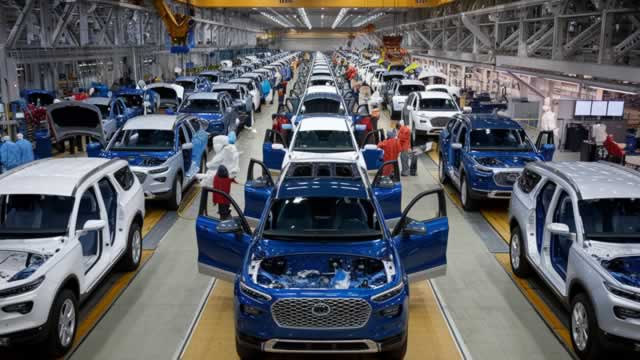
Uber and Rivian Partner to Deploy up to 50,000 Fully Autonomous Robotaxis
Businesswire· 2026-03-19 12:00
Core Viewpoint - Uber and Rivian have formed a partnership to accelerate the deployment of fully autonomous R2 robotaxis, with plans to launch 10,000 units by 2028 and expand to 25 cities by 2031 [2][6]. Investment and Financial Commitment - Uber will invest up to $1.25 billion in Rivian through 2031, contingent on achieving specific autonomous milestones, with an initial commitment of $300 million [3][6]. - The partnership includes an option for Uber to negotiate the purchase of up to 40,000 additional autonomous Rivian R2 vehicles starting in 2030 [4][6]. Deployment Plans - Initial deployments of the R2 robotaxis are set for San Francisco and Miami in 2028, with plans to scale to 25 cities across the US, Canada, and Europe by the end of 2031 [2][4][6]. - If all milestones are met, thousands of unsupervised Rivian R2 robotaxis will be operational by the end of 2031 [4]. Technological Advancements - Rivian's third-generation autonomy platform, expected to launch in late 2026, will feature a multi-modal sensor suite including 11 cameras, 5 radars, and 1 LiDAR, powered by in-house RAP1 chips capable of 1600 TOPS of AI compute performance [5]. - The partnership aims to leverage Rivian's data flywheel and advanced technology to enhance the safety and convenience of autonomous driving [5]. Leadership Statements - RJ Scaringe, CEO of Rivian, expressed excitement about the partnership, emphasizing its potential to accelerate the path to level 4 autonomy [5]. - Dara Khosrowshahi, CEO of Uber, highlighted the importance of Rivian's integrated approach to vehicle design and manufacturing, which aligns with Uber's goals [5].

Uber investing up to $1.25 billion in Rivian, eyes 50,000-car expansion of robotaxi fleet
Yahoo Finance· 2026-03-19 12:00
Core Insights - Rivian will supply Uber with up to 50,000 fully autonomous robotaxis in exchange for up to $1.25 billion in funding, with initial deployments starting in San Francisco and Miami in 2028 and plans to scale to 25 cities by 2031 [1][2] Group 1: Partnership Details - Uber and its fleet partners will purchase 10,000 Rivian R2 robotaxis, with an option to purchase an additional 40,000 by 2030 [1] - The initial $300 million investment from Uber is subject to regulatory approval and certain autonomous milestones [2] - Rivian's CEO expressed excitement about the partnership, highlighting the integration of data and technology in their autonomous solutions [3] Group 2: Competitive Landscape - Uber has signed multiple deals with other partners, including a collaboration with Lucid to create a robotaxi service using up to 20,000 Lucid EVs and a partnership with Waymo to summon robotaxis on Uber's platform [4][5] - Rivian's R2 robotaxis will utilize Rivian's in-house autonomous solution, differentiating it from other partnerships [4] Group 3: Financial Implications - The deal represents a significant opportunity for Rivian, providing a safety net with at least 10,000 R2s on order and a substantial investment to support its path to profitability [6] - Rivian recently announced pricing for the R2 midsize electric SUV, with the R2 Performance starting at $57,990 and the R2 Premium starting at $53,990 [7]
Uber taps Rivian to build robotaxis in deal worth up to $1.25B
TechCrunch· 2026-03-19 12:00
Core Insights - Rivian is partnering with Uber to develop thousands of robotaxis based on its upcoming R2 SUV, with a potential deal value of up to $1.25 billion [1][2] - Uber's initial investment in Rivian is $300 million, with plans to purchase 10,000 fully autonomous R2 robotaxis for deployment in San Francisco and Miami by 2028 [1][2] - The partnership aims to launch robotaxis in 25 cities across the U.S., Canada, and Europe by the end of 2031, exclusively on Uber's network [2] Company Developments - Rivian has not yet started production of the R2 SUV, with manufacturing expected to begin by June, and has not tested a self-driving system for robotaxis [3] - The R2 robotaxi is planned to be manufactured at Rivian's Georgia factory, which is still under construction [3] - Rivian's CEO, RJ Scaringe, emphasizes automated driving technology as a priority, shifting from a rules-based framework to an AI-first strategy for driver assistance [4] Technological Advancements - Rivian's automated driving system, the Rivian Autonomy Platform, debuted in 2024 with the second-generation R1 vehicles, aiming for hands-free driving and point-to-point navigation features [6] - Future upgrades will include a lidar sensor and an "autonomy computer" capable of processing 5 billion pixels per second, expected in a version of the R2 SUV by late 2026 [7] - Rivian aims to achieve a "personal L4" level of autonomy, allowing vehicles to operate without human intervention in specific areas [8] Industry Context - Rivian is not the first electric vehicle startup Uber has partnered with for robotaxi development; previous collaborations include Lucid Motors and Nuro [10] - Uber has established partnerships with over 25 robotaxi or autonomous vehicle companies globally, with notable collaborations including Waymo [11]
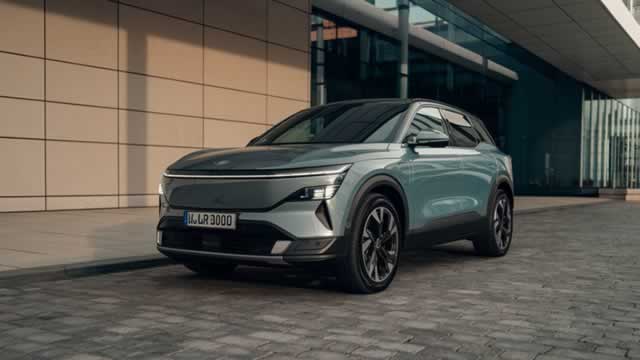
Uber to invest up to $1.25 billion in EV maker Rivian in deal to launch 50,000 robotaxis
CNBC· 2026-03-19 12:00
Group 1 - Uber Technologies plans to invest up to $1.25 billion in Rivian Automotive to deploy up to 50,000 robotaxis by 2031 [1][2] - The deal includes an initial investment of $300 million, subject to regulatory approval, with expectations for Uber to purchase 10,000 autonomous R2 vehicles and an option for 40,000 more starting in 2030 [2][4] - The R2 robotaxis are expected to be available exclusively through Uber's platform in 25 cities across the U.S., Canada, and Europe, with initial launches planned for San Francisco and Miami in 2028 [5] Group 2 - The partnership reflects a resurgence in the autonomous vehicle and robotaxi market, which is projected to be a multitrillion-dollar industry [3] - Previous attempts by companies, including Uber, to achieve robotaxi deployment have not met targets, indicating challenges in the sector [3]
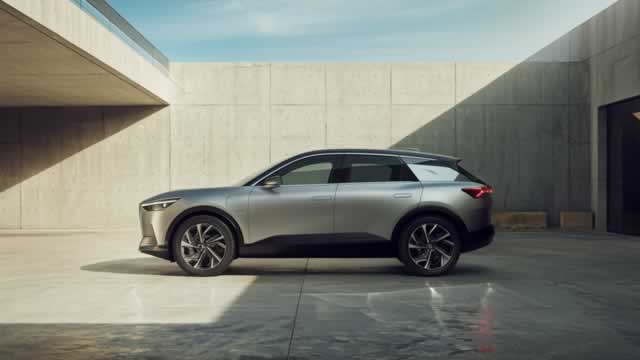
Forget Tesla — Nvidia And Lucid Are Quietly Building Uber's AI Fleet
Benzinga· 2026-03-18 18:59
Core Insights - The autonomous vehicle industry is witnessing a shift from a single-stack model, exemplified by Tesla, to a modular ecosystem involving Nvidia, Lucid, and Uber [1][5][6] Group 1: Emerging Models - Nvidia is expanding its role from chip manufacturing to providing full-stack AI platforms for autonomous systems [1][2] - Lucid is focusing on designing vehicles that are ready for autonomy from the outset, rather than retrofitting existing models [2] - The collaboration between Lucid and Uber indicates a move towards scalable deployment of midsize autonomous vehicles [2][4] Group 2: Distribution Challenges - The primary challenge for autonomous vehicle strategies lies in distribution rather than technology [4] - Uber's existing global demand and ride network position it as a key player in deploying autonomous systems effectively [4] Group 3: Competitive Landscape - The competition in the autonomous vehicle space is evolving into two distinct models: one that builds everything (like Tesla) and another that connects various components (like Nvidia, Lucid, and Uber) [5] - The success of the robotaxi market may depend more on the effectiveness of the system integration rather than the quality of the individual vehicles [5]



Blame Nvidia: Your Next Uber Driver Might Be A GPU Floating 250 Miles Above Earth
Benzinga· 2026-03-18 18:12
Core Insights - The integration of space-based compute platforms could revolutionize the coordination of autonomous vehicles by processing real-time AI decisions globally, overcoming terrestrial infrastructure limitations [1][4] - Nvidia has partnered with Uber to deploy up to 100,000 Level 4 robotaxis globally by 2027, marking a significant network expansion rather than a pilot program [2][6] - Nvidia's CEO Jensen Huang indicates that the moment for autonomy has shifted from mere perception to reasoning capabilities in self-driving cars, likening it to a "ChatGPT moment" [3][4] Company Developments - Nvidia's latest Alpamayo models are designed to enhance the reasoning capabilities of autonomous vehicles, enabling them to handle complex scenarios such as erratic pedestrians and chaotic intersections [4] - Uber's collaboration with Nvidia positions it as a key player in the distribution of autonomous technology, with plans to expand into 28 cities by 2028 [6] - The potential for satellite-based compute to provide an always-on intelligence layer could significantly enhance the operational efficiency of ground-based fleets [5][6]
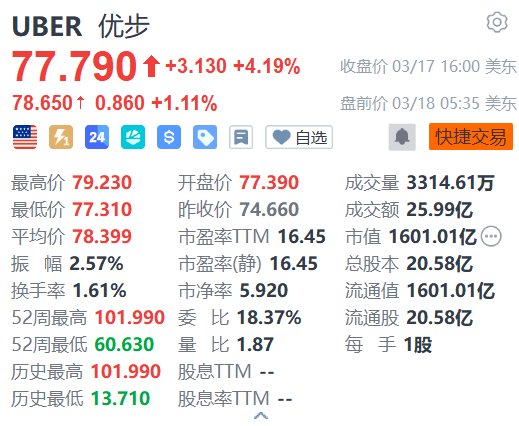
美股异动|优步盘前续涨超1% 与英伟达合作 拟2027年上线L4级自动驾驶车队
Ge Long Hui· 2026-03-18 09:49
| UBER 优步 | | | | --- | --- | --- | | 77.790 + +3.130 +4.19% | | 收盘价 03/17 16:00 美东 | | 78.650 + 0.860 +1.11% | | 盘前价 03/18 05:35 美东 | | 一 2 24 4 8 8 8 同 ♥ 白 一 白 一 | | ● 快捷交易 | | 最高价 79.230 | 开盘价 77.390 | 成交量 3314.61万 | | 最低价 77.310 | 昨收价 74.660 | 成交额 25.99亿 | | 平均价 78.399 | 市盈率 TM 16.45 | 市值 1601.01亿 (... ) | | 振 幅 2.57% | 市盈率(靜) 16.45 | 总股本 20.58亿 | | 换手率 1.61% | 市净率 5.920 | 流通值 1601.01亿 | | 52周最高 101.990 委 比 18.37% | | 流通股 20.58亿 | | 52周最低 60.630 量 比 1.87 | | 色 手 1股 | | 历史最高 101.990 股息TTM -- | | | | 历史最低 ...
异动盘点0318 | 智谱盘中涨超10%,汽车股集体回落;Swarmer上市首日飙升520%,美股太空概念股表现活跃
贝塔投资智库· 2026-03-18 04:01
Group 1 - Zhipu AI (02513) saw a price increase of over 10% during trading, currently up 7.4%, following the announcement of its first closed-source model GLM-5-Turbo and a 20% price hike for its new model API [1] - Capital Airport (00694) dropped over 4% after JPMorgan downgraded its investment rating from "Neutral" to "Underweight" and cut the target price by 40% to HKD 1.8, citing structural challenges and potential selling pressure from being removed from the Hong Kong Stock Connect list [1] - Cloudwalk Technology (02670) rose over 7% after signing a strategic cooperation agreement with SF Express to define new standards for building delivery [1] Group 2 - Yiming Anke-B (01541) increased by over 8% after receiving approval for its II phase clinical study of IMM0306 for treating Primary Membranous Nephropathy [2] - WanGuo Data-SW (09698) surged over 12.6% after reporting a net revenue of RMB 11.4323 billion (USD 1.6348 billion) for the year, a 10.8% year-on-year increase, with adjusted EBITDA also up by 10.8% [2] - Automotive stocks collectively fell, with Li Auto-W (02015) down 6.24%, Xpeng Motors-W (09868) down 4.35%, and Great Wall Motors (02333) down 2.64%, amid warnings from multiple CEOs about rising chip costs [2] Group 3 - Smoore International (06969) opened slightly higher but fell 15.21% after reporting a revenue of approximately RMB 14.256 billion for 2025, a 20.8% increase, but a net profit decline of 18.5% [3] - China Cosco Shipping Energy Transportation (01138) rose 5.39% as reports indicated significant impacts on the tanker and energy markets due to ongoing Middle East conflicts [3] Group 4 - China Oriental Education (00667) increased by 6.57% after reporting a revenue of RMB 4.616 billion for 2025, a 12.1% year-on-year increase, with net profit up 47.5% [4] - Changfeng Pharmaceutical (02652) surged over 21%, currently up 9.99%, after announcing the acceptance of its IND application for a new inhalation powder for treating pulmonary arterial hypertension [4] Group 5 - Swarmer (SWMR.US) debuted on the US stock market with a staggering opening price increase of 315.4%, currently up 520%, focusing on AI-driven drone swarm control systems [5] - 36Kr (KRKR.US) rose 37.39% after reporting a total revenue of RMB 227 million for 2025, with a gross margin increase to 58% and a net profit of approximately RMB 11.42 million [5] - Space-related stocks saw active trading, with Rocket Lab (RKLB.US) up 10.21% and Planet Labs PBC (PL.US) up 10.08% [5] Group 6 - Solaris Energy Infrastructure (SEI.US) rose 10.88% after announcing agreements worth USD 620 million to add approximately 900 MW of gas turbine capacity between 2026 and 2029 [7] - Uber (UBER.US) increased by 4.19% following a partnership with NVIDIA to deploy autonomous taxi fleets in major US cities by 2027 [8] - Aiko Solar (CSIQ.US) rose 1.94% after announcing a supply agreement for a 500 MW energy storage project [8] - Atour (ATAT.US) saw a price increase of 5.98% after reporting a net revenue of approximately RMB 2.788 billion for Q4 2025, a 33.8% year-on-year increase [8]