U.S. Bancorp(USB)

Search documents
Argus Research:将美国合众银行(USB.N)目标价从52美元上调至62美元。
Jin Rong Jie· 2025-12-24 12:40
Group 1 - Argus Research has raised the target price for U.S. Bancorp (USB.N) from $52 to $62 [1]

Did these 25 people actually change banking in 2025?
American Banker· 2025-12-23 11:00
Core Insights - The article discusses influential figures in the banking industry for 2025, highlighting their actions and impacts on the sector, including regulatory changes and market dynamics. Group 1: Federal Reserve and Regulatory Changes - Michael Barr resigned as vice chair for supervision of the Federal Reserve but remains on the board, allowing him to critique the administration's policies without holding the supervisory role [5][6][7] - Michelle Bowman succeeded Barr as vice chair for supervision, initiating deregulatory measures and likely leading the implementation of the Basel III Endgame proposal and stablecoin regulations [18][15][17] - Travis Hill, as the new chair of the FDIC, aligns with the administration's priorities, focusing on transparency in crypto regulations and the upcoming Basel III capital proposal [49][53] Group 2: Mergers and Acquisitions - Mike Bell correctly predicted a record number of credit unions acquiring banks in 2024, but 2025 saw a slowdown in such acquisitions due to external economic factors [9][10][11] - Capital One's acquisition of Discover was approved under the Trump administration, making it the eighth-largest U.S. bank holding company [32][33] Group 3: Banking Performance and Strategy - TD Bank Group faced regulatory challenges and fines in 2025 but reported momentum across its business segments [20][21][22] - JPMorganChase expanded its digital asset strategy by moving its deposit token to a public blockchain, indicating a shift towards mainstream on-chain finance [35][36][37] - Bank of America experienced growth in lending and investment banking, with a focus on regulatory changes that favor large banks [70][71] Group 4: Notable Individuals and Their Impact - Jamie Dimon of JPMorganChase influenced market perceptions with his comments on economic resilience and potential risks in the private credit sector [28][29][30] - Jane Fraser, CEO of Citi, led efforts to simplify the bank's structure, resulting in a positive outlook for its stock and earnings [39][40][41] - Charlie Scharf of Wells Fargo celebrated the lifting of an asset cap, positioning the bank for growth and increased profitability [89][90][91] Group 5: Technological and Cybersecurity Developments - Google Cloud's cybersecurity division provided critical threat intelligence to banks, highlighting ongoing vulnerabilities in the sector [59][60] - The rise of AI and deepfake technology has raised concerns about misinformation and security risks within the banking industry [93][94]




X @Forbes
Forbes· 2025-12-22 01:30
Leadership Transition - Gunjan Kedia was named president of U S Bancorp in May 2024 [1] - Gunjan Kedia will become CEO in April 2025 [1] Company Overview - U S Bancorp has nearly 70,000 employees [1] - U S Bancorp has more than $660 billion in assets [1] Recognition - Gunjan Kedia was listed on the 2025 World's 100 Most Powerful Women list [1]
Best Bank Stocks To Add to Your Watchlist – December 19th
Defense World· 2025-12-21 07:34
Core Insights - The article highlights seven bank stocks to watch, including JPMorgan Chase & Co., Bank of America, Citigroup, Wells Fargo & Company, Charles Schwab, U.S. Bancorp, and Bank of New York Mellon, which have shown the highest dollar trading volume recently [2] Group 1: Company Overviews - JPMorgan Chase & Co. is a financial holding company providing investment banking, consumer and small business financial services, commercial banking, financial transaction processing, and asset management, operating through segments like Consumer and Community Banking, Commercial and Investment Bank, Asset and Wealth Management, and Corporate [3] - Bank of America Corporation offers banking and financial products for individual consumers, small and middle-market businesses, institutional investors, large corporations, and governments, operating in segments such as Consumer Banking, Global Wealth & Investment Management, Global Banking, and Global Markets [4] - Citigroup Inc. is a diversified financial service holding company providing various financial products and services globally, operating through segments including Services, Markets, Banking, U.S. Personal Banking, and Wealth [5] - Wells Fargo & Company is a diversified financial services company offering banking, insurance, investments, mortgage, and finance products, operating through segments like Consumer Banking and Lending, Commercial Banking, Corporate and Investment Banking, and Wealth and Investment Management [6] - Charles Schwab Corporation operates as a savings and loan holding company providing wealth management, securities brokerage, banking, asset management, custody, and financial advisory services, with segments including Investor Services and Advisor Services [7] - U.S. Bancorp provides various financial services to individuals, businesses, and governmental entities, operating through segments such as Wealth, Corporate, Commercial and Institutional Banking, Consumer and Business Banking, Payment Services, and Treasury and Corporate Support [8] - Bank of New York Mellon Corporation offers a range of financial products and services, operating through segments like Securities Services, Market and Wealth Services, and Investment and Wealth Management [9]

Are You Looking for a Top Momentum Pick? Why U.S. Bancorp (USB) is a Great Choice
ZACKS· 2025-12-18 18:01
Core Viewpoint - Momentum investing focuses on following a stock's recent price trends, aiming to buy high and sell higher, with the expectation that established trends will continue [1] Company Overview: U.S. Bancorp (USB) - U.S. Bancorp currently holds a Momentum Style Score of B and a Zacks Rank of 2 (Buy), indicating strong potential for outperformance [3][4] - The stock has shown a price increase of 4.21% over the past week, compared to a 4.34% increase in the Zacks Banks - Major Regional industry [6] - Over the last quarter, U.S. Bancorp shares have risen by 9.27%, and by 12.88% over the past year, while the S&P 500 has only increased by 2.16% and 12.81%, respectively [7] Trading Volume - The average 20-day trading volume for U.S. Bancorp is 8,394,350 shares, which serves as a bullish indicator when combined with rising stock prices [8] Earnings Outlook - In the past two months, three earnings estimates for U.S. Bancorp have been revised upwards, with no downward revisions, leading to an increase in the consensus estimate from $4.49 to $4.54 [10] - For the next fiscal year, three estimates have also moved higher, indicating positive sentiment regarding future earnings [10] Conclusion - Given the positive momentum indicators and earnings outlook, U.S. Bancorp is positioned as a strong buy candidate for investors seeking short-term opportunities [12]

2026 Can Be a Great Year for Banks: 3 Solid Stock Picks
ZACKS· 2025-12-17 17:56
Core Insights - The year has been marked by volatility in the markets, initially driven by optimism surrounding President Trump's return, followed by market fluctuations due to tariff rollouts [1] - A strong recovery in the markets has been observed, reaching record highs, supported by the Federal Reserve's interest rate cuts, which have lowered rates by 75 basis points this year [2] - Banks are expected to benefit from a favorable operating environment in 2026, with anticipated growth in net interest income (NII) and deal-making activities [4] Banking Sector Overview - The Federal Reserve's interest rate cuts and stabilizing funding costs are setting the stage for a potentially favorable 2026 for banks, with expectations of increased revenues [2][8] - Banks are focusing on artificial intelligence (AI) and technology to enhance client experiences and expand online presence, which is crucial for capturing the growing mobile banking population [3] - Consumer spending remains resilient, and credit demand is showing early signs of recovery, contributing to a positive outlook for bank stocks [4] Investment Opportunities - East West Bancorp (EWBC), U.S. Bancorp (USB), and KeyCorp (KEY) are identified as compelling investment opportunities in the banking sector, with each company having a market cap exceeding $10 billion and expected earnings growth of more than 5% in 2026 [5] - EWBC has a market cap of $15.6 billion, with projected earnings growth of 13.4% this year and 7.4% in 2026, supported by solid loan demand and fee income focus [12] - USB, with a market cap of $83.5 billion, is expected to see earnings growth of 14.1% this year and 7.1% in 2026, bolstered by strategic acquisitions and rising NII [18] - KeyCorp, having a market cap of $22.4 billion, is projected to achieve earnings growth of 27.6% this year and 19.6% in 2026, benefiting from strong loan and deposit balances [23] Company-Specific Insights - East West Bancorp operates over 110 locations in the U.S. and China, with total assets of $79.7 billion and a focus on improving fee income and acquiring low-cost deposits [10][11] - U.S. Bancorp has strengthened its market position through acquisitions and partnerships, enhancing its digital capabilities and fee-based businesses [16][17] - KeyCorp is expanding its product offerings and market share through opportunistic acquisitions and is consolidating its branch network to adapt to rising digital banking demand [22]



U.S. Bank Avvance Expands Embedded Financing Network with Three New Integrated Partners
Businesswire· 2025-12-17 15:00
Core Insights - U.S. Bank has integrated three new partners—KabelSync, Strictly, and United Credit—into its Avvance point-of-sale lending platform, enhancing its API-driven embedded financing solutions [1] - The focus of Avvance is on providing seamless financing experiences in the home improvement and elective medical sectors, where affordability and access are crucial [2] Group 1: New Integrations and Partnerships - The new partners have launched Avvance as an embedded payment option, allowing merchants to offer flexible financing at the point of need [1] - Avvance aims to meet consumers at the point of decision, expanding choice and flexibility for both merchants and consumers [3] Group 2: Market Focus and Strategy - U.S. Bank Avvance is particularly targeting the home improvement and elective medical industries, emphasizing the importance of affordability and access [2] - The integration of robust APIs and low-code options allows partners to embed U.S. Bank's lending capabilities directly into their workflows, creating frictionless customer experiences [2] Group 3: Company Overview - U.S. Bancorp, the parent company of U.S. Bank, has approximately 70,000 employees and $695 billion in assets as of September 30, 2025 [5] - The company is recognized for its digital innovation, community partnerships, and customer service, being named one of the 2025 World's Most Ethical Companies [5]

U.S. Bank and Coinstar Announce Expanded Partnership to Offer More Convenient Coin Deposit Options
Businesswire· 2025-12-16 15:00
MINNEAPOLIS--(BUSINESS WIRE)--U.S. Bank and Coinstar today announced an expansion of their partnership, giving U.S. Bank clients more ways to deposit coins directly into their checking accounts. Following a successful pilot at four branches, Coinstar's Transfer to Account service is now available at more than 100 U.S. Bank branches and over 10,000 Coinstar kiosks in retail locations nationwide. The expanded service complements the bank's 2,000 branches and robust digital capabilities to make everyday bankin ...

U.S. Bancorp Remains A Good Income Play In The Banking Sector (NYSE:USB)
Seeking Alpha· 2025-12-16 13:00
As I’ve covered in the past , I see U.S. Bancorp ( USB ) as an interesting income pick in the banking sector due to its above-average dividend yield that seems to be sustainable overLabutes IR is a Fund Manager/Analyst specialized in the financial sector, with more than 18 years of experience in the financial markets. I have worked at several type of institutions in the industry, always at the buy side and related to portfolio management. Associated with the existing author The Outsider.Analyst’s Disclosure ...
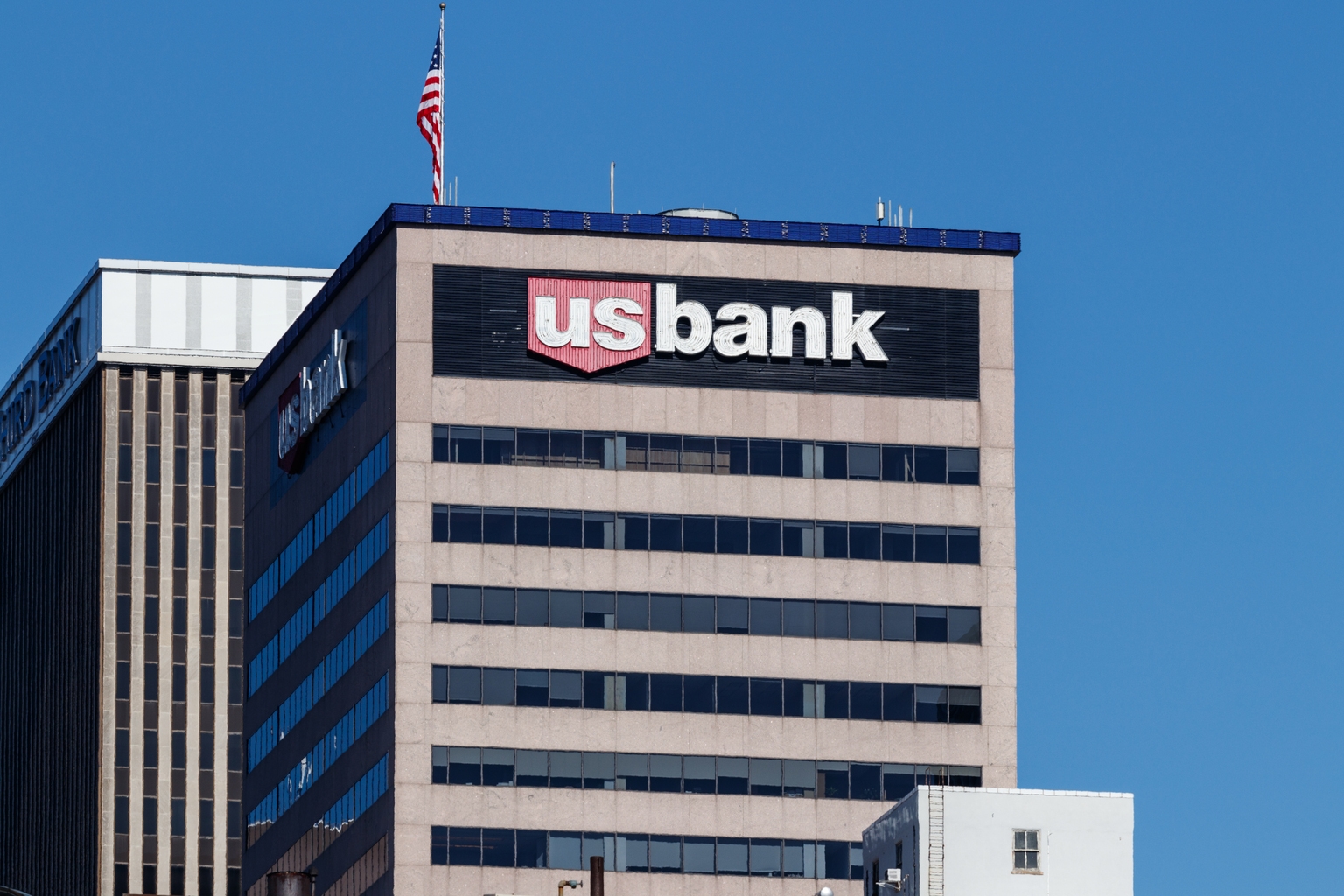
U.S. Bancorp Remains A Good Income Play In The Banking Sector
Seeking Alpha· 2025-12-16 13:00
Core Viewpoint - U.S. Bancorp (USB) is identified as an attractive income investment in the banking sector due to its above-average and sustainable dividend yield [1] Group 1: Company Overview - U.S. Bancorp is positioned as a strong income pick within the banking industry, appealing to investors seeking reliable dividend returns [1] Group 2: Analyst Background - The analysis is provided by a fund manager/analyst with over 18 years of experience in the financial markets, specializing in the financial sector and portfolio management [1]