Walmart(WMT)

Search documents
How To Earn $500 A Month From Walmart Stock Ahead Of Q3 Earnings
Benzinga· 2025-11-19 13:29
Earnings Report - Walmart Inc. is set to release its third-quarter earnings results before the market opens on Thursday, with analysts expecting earnings of 60 cents per share, an increase from 58 cents per share in the same period last year [1] - The consensus estimate for Walmart's quarterly revenue is $175.27 billion, compared to $168 billion a year earlier [1] Leadership Change - Walmart's long-time President and CEO, C. Douglas McMillon, will step down as CEO on January 31, 2026, transitioning to an executive advisory role [2] Dividend Information - Walmart currently offers an annual dividend yield of 0.93%, translating to a quarterly dividend of 23 cents per share, or 92 cents annually [2] - To achieve a monthly income of $500 from dividends, an investor would need to own approximately 6,521 shares, equating to a total investment of about $661,239 [3] - For a more conservative monthly income goal of $100, an investor would need 1,304 shares, requiring an investment of approximately $132,939 [4] Stock Price and Dividend Yield - The dividend yield can fluctuate based on changes in the stock price and dividend payments, with examples illustrating how a stock's dividend yield can vary with price changes [5][6] - Walmart's shares fell by 1.5% to close at $101.39 on Tuesday [6]



Earnings live: Target stock sinks, TJX and Lowe's rise as the focus turns to Nvidia earnings
Yahoo Finance· 2025-11-19 13:27
Core Viewpoint - The third quarter earnings season is showing strong performance, with expectations for continued growth in earnings per share across S&P 500 companies [2]. Group 1: Earnings Performance - As of November 14, 92% of S&P 500 companies have reported their Q3 results, with analysts projecting a 13.1% increase in earnings per share for the quarter [2]. - This anticipated growth would represent the fourth consecutive quarter of double-digit earnings growth, accelerating from the 12% growth rate reported in Q2 [2]. - Initial expectations for Q3 were lower, with analysts forecasting only a 7.9% increase in earnings per share as of September 30 [3]. Group 2: Upcoming Earnings Reports - Key companies to watch this week include Nvidia and Walmart, which are significant players in the AI and retail sectors, respectively [4]. - Additional earnings reports are expected from Palo Alto Networks, Home Depot, Lowe's, Target, TJX, and XPeng, indicating a busy week for corporate earnings announcements [4].

Earnings live: Target stock sinks, Lowe's rises as impending Nvidia earnings rise to the forefront
Yahoo Finance· 2025-11-19 13:27
Core Insights - The third quarter earnings season is showing positive results, with 92% of S&P 500 companies having reported earnings as of November 14, indicating a strong performance in the market [2] - Analysts are projecting a 13.1% increase in earnings per share for Q3, which would represent the fourth consecutive quarter of double-digit earnings growth, surpassing the 12% growth rate from Q2 [2] - Initial expectations for Q3 earnings were lower, with a forecast of only a 7.9% increase in earnings per share as of September 30 [3] Company Focus - Key companies to watch this week include Nvidia and Walmart, both significant players in their respective sectors, along with earnings reports from Palo Alto Networks, Home Depot, Lowe's, Target, TJX, and XPeng [4]
Earnings live: Home Depot, Klarna stocks fall as impending Nvidia earnings rise to the forefront
Yahoo Finance· 2025-11-18 21:46
Core Insights - The third quarter earnings season is showing positive results, with 92% of S&P 500 companies having reported earnings, and a projected 13.1% increase in earnings per share for Q3, marking the fourth consecutive quarter of double-digit growth [2][3] Group 1: Earnings Performance - Analysts had initially expected a 7.9% increase in earnings per share for Q3, indicating a significant upward revision in expectations as the quarter progressed [3] - If the projected 13.1% earnings growth holds, it represents an acceleration from the 12% growth rate reported in Q2 of this year [2] Group 2: Upcoming Reports - Key companies to watch this week include Nvidia and Walmart, alongside earnings reports from Palo Alto Networks, Home Depot, Lowe's, Target, TJX, and XPeng [4]
Walmart to see continued share gains despite slower sales growth in Q3, analysts project
Proactiveinvestors NA· 2025-11-18 21:08
Core Insights - Proactive provides fast, accessible, and informative business and finance news content to a global investment audience [2] - The company focuses on medium and small-cap markets while also covering blue-chip companies and broader investment stories [3] - Proactive's news team delivers insights across various sectors including biotech, mining, oil and gas, and emerging technologies [3] Technology Adoption - Proactive is committed to adopting technology to enhance workflows and content production [4] - The company utilizes automation and software tools, including generative AI, while ensuring all content is edited and authored by humans [5]

Physical AI Moves from Automation to a New Workforce Layer
PYMNTS.com· 2025-11-18 19:58
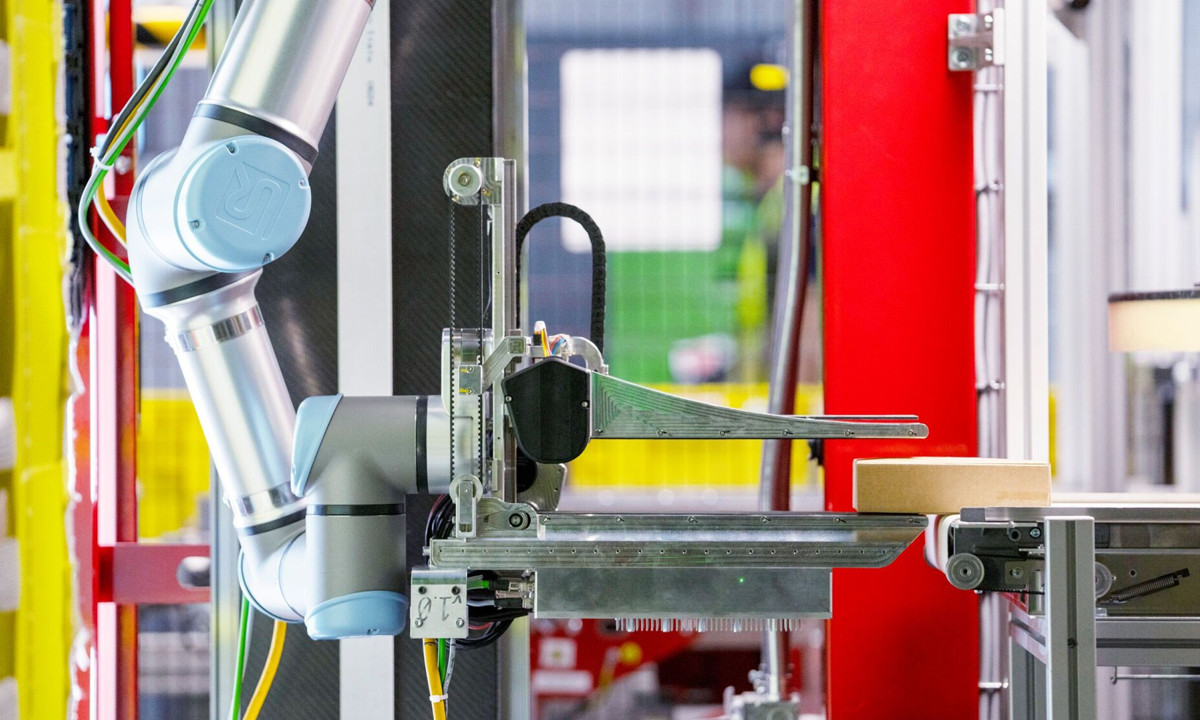
Core Insights - Physical AI is emerging as the next stage of robotics, enabling machines to operate in unpredictable environments, unlike traditional automation [1][5][7] Industry Developments - Research groups are utilizing simulation, digital twins, and multimodal learning to help robots learn adaptive behaviors with minimal retraining [3][4] - The World Economic Forum highlights a shift in manufacturing, where robots are moving from isolated stations to shared work areas, enhancing their roles in production, inspection, and transport [5] - Carnegie Mellon University researchers are developing new sensor designs and training methods that allow robots to function reliably in crowded environments [6] Company Applications - Amazon's Vulcan robot exemplifies the application of physical AI, using vision and touch to handle various product shapes in fulfillment centers, integrating seamlessly with logistics software [9] - Walmart is expanding its physical AI systems to reduce costs and improve throughput across its distribution network, including a partnership with Symbotic for advanced automation [10][11] - GXO Logistics is scaling its physical AI pilots after successful deployments of AI-powered inventory robots, indicating a trend of integrating physical AI into core operational infrastructure [12]


Walmart stock investors brace for earnings
Yahoo Finance· 2025-11-18 19:45
Over the past 20 years, Walmart has faced stiff challenges from e-commerce (Amazon) and big-box brick-and-mortar retailers (Target). At times, its retail dominance has been questioned, leading to investors selling shares. Recently, however, doubts have quieted, and Walmart's stock price has soared. One reason is the company's reputation as the low-priced leader at a time when consumers are increasingly cash-strapped. Another is Walmart's decision to take a page out of Amazon's book, investing heavily in e ...
Target and Walmart lead retail earnings this week, as a ‘tale of two consumers' emerges in the economy
MarketWatch· 2025-11-18 18:37
Core Insights - Retailers such as Gap, Ross, and TJX are expected to discuss the impact of new leadership and the government shutdown during their upcoming earnings calls [1] Company and Industry Summary - Gap, Ross, and TJX are among the retailers that will report earnings, indicating a focus on leadership changes and external factors affecting performance [1]

Walmart Earnings Preview: Tariff Impact Fading, Still Looking For Margin Gains Ahead
Seeking Alpha· 2025-11-18 16:09
Group 1 - The article does not provide any specific content related to a company or industry [1]

WMT Gears Up for Q3 Earnings Release: Buy, Sell or Hold the Stock Now?
ZACKS· 2025-11-18 13:46
Core Insights - Walmart Inc. is set to report its third-quarter fiscal 2026 earnings on November 20, with expectations of solid performance driven by strong momentum in both store and digital channels, an improved merchandise mix, and increasing contributions from membership and advertising [1][10] Revenue and Earnings Estimates - The Zacks Consensus Estimate for third-quarter revenues is $177.1 billion, reflecting a 4.5% increase year-over-year, while the consensus for earnings has risen to 61 cents per share, marking a 5.2% increase from the previous year [2] - Walmart has a trailing four-quarter average earnings surprise of 2.8%, although it experienced a negative earnings surprise of 6.9% in the last reported quarter [2] Earnings Prediction - The Zacks model predicts an earnings beat for Walmart, supported by a positive Earnings ESP and a Zacks Rank of 3 (Hold) [3][4] Factors Influencing Q3 Earnings - Steady demand and market share gains are expected to be reflected in the upcoming results, with consistent performance across income groups and strength in grocery and consumables [5] - Digital sales momentum is significant, with global e-commerce sales growing 25% in the second quarter, driven by store-fulfilled delivery and a robust marketplace [6] - Higher-margin businesses are contributing positively, with advertising revenue increasing by 46% globally and membership income rising over 15% [7] - International markets, including China and Flipkart, are showing strong constant-currency growth, although currency fluctuations may pose challenges [8] Challenges Ahead - Tariff-related cost increases and elevated self-insured liability and workers' compensation costs are key headwinds for the quarter [9][10] Stock Performance - Over the past year, Walmart's stock has increased by 18.9%, outperforming the Zacks Retail – Supermarkets industry growth of 18.3% and the S&P 500's rise of 15.7% [11] - Walmart's stock has surpassed competitors like Kroger, Costco, and Target in terms of stock performance [13] Valuation Metrics - Walmart shares are currently trading at a forward 12-month price-to-earnings ratio of 36.02, above the industry average of 32.78, indicating a premium valuation due to consistent execution and stronger digital profitability [14][16] Investment Outlook - With solid traffic trends, strong omnichannel growth, and expanding higher-margin profit streams, Walmart is positioned for stability and steady growth, despite near-term hurdles [18]