XIAOMI(XIACY)

Search documents
内卷不止的汽车行业,2024年继续滚烫卷
3 6 Ke· 2024-02-28 04:09
2023年,内卷成为很多行业常态,其中汽车行业更是高度内卷的代表。 自2023年初特斯拉率先降价,打响价格战第一枪之后,引发了一场波及全行业的价格战。这场内卷不仅体现在价格上,更延伸至技术研发、市场布局等多个方面。 科技巨头小米官宣造车1000天之后,小米汽车终于也露出神秘面纱,刺激了电动车行业,为汽车行业的竞争增添了更多不确定因素。最后一季度才上市的华为问界M7俨然成为行业黑马。2024年,预计汽车行业的内卷化竞争将继续加剧。 价格战持久,赢家寥寥 延续14年的新能源汽车“国补”政策,在2022年12月31日正式退出历史舞台。这意味着自2023年1月1日起,汽车行业转向市场导向为主。新能源汽车企业没了“救生圈”,开始“裸泳”,市场竞争激烈程度加剧,行业进入调整和洗牌阶段。 为了应对国补退出对自身经营的影响,2022年12月底,比亚迪、吉利、长安、奇瑞等多家车企均宣布旗下新能源汽车涨价。比亚迪自身就因为成本和国补影响在2022年涨价三次。 而自2022年10月开始降价的特斯拉,则尝到了以价换量的甜头,四季度销量表现延续之前的大火势头。据其财报数据显示:特斯拉2022年第四季度产量为43.9万辆,同比增长44% ...


市场复苏催生新变数,手机行业格局重塑在即?
3 6 Ke· 2024-02-27 12:01
Group 1: Market Recovery and Trends - The Chinese smartphone market is showing signs of recovery after nearly 10 consecutive quarters of year-on-year decline, with Q4 2023 shipments reaching approximately 73.63 million units [1] - Canalys predicts a moderate recovery for the Chinese smartphone market in 2024 [1] - The high-end market is becoming increasingly important for leading manufacturers as the replacement cycle for new devices has extended to 43 months, primarily affecting the mid-to-low-end market [1][4] Group 2: Supply Chain Dynamics - The smartphone industry is experiencing a price increase in the supply chain, particularly in components like storage and camera modules, with a projected 20% increase in mainstream CIS prices in the first half of 2024 [2][3] - Leading brands are better positioned to absorb supply chain price fluctuations, while second-tier brands face more significant challenges [3][4] - Xiaomi's recent launch of the Xiaomi 14 Ultra demonstrates resilience against supply chain price increases, maintaining competitive pricing despite added features and upgrades [3][4] Group 3: AI Integration in Smartphones - AI is emerging as a key competitive area for smartphone manufacturers, with IDC forecasting that AI smartphone shipments in China will reach 37 million units in 2024 and 150 million units by 2027 [5][6] - Major brands like Samsung, Huawei, and Xiaomi are actively integrating AI capabilities into their products, with Xiaomi's 14 Ultra featuring a powerful AI photography platform [5][6] - The shift towards AI is not just a product feature but is becoming a core strategic focus for companies, as seen with OPPO's announcement to prioritize AI in its business strategy [6][7] Group 4: Ecosystem Development - The competition among smartphone manufacturers is increasingly focused on building comprehensive ecosystems, with companies like Xiaomi, Huawei, and Apple leading the way [7][8] - Xiaomi's recent products, such as the Pad 6S Pro, exemplify the integration of devices within a broader ecosystem, enhancing user experience through cross-device functionality [8] - The expansion of ecosystems is seen as a crucial differentiator in the market, with companies leveraging their ecosystems to provide seamless user experiences across various devices [7][8]

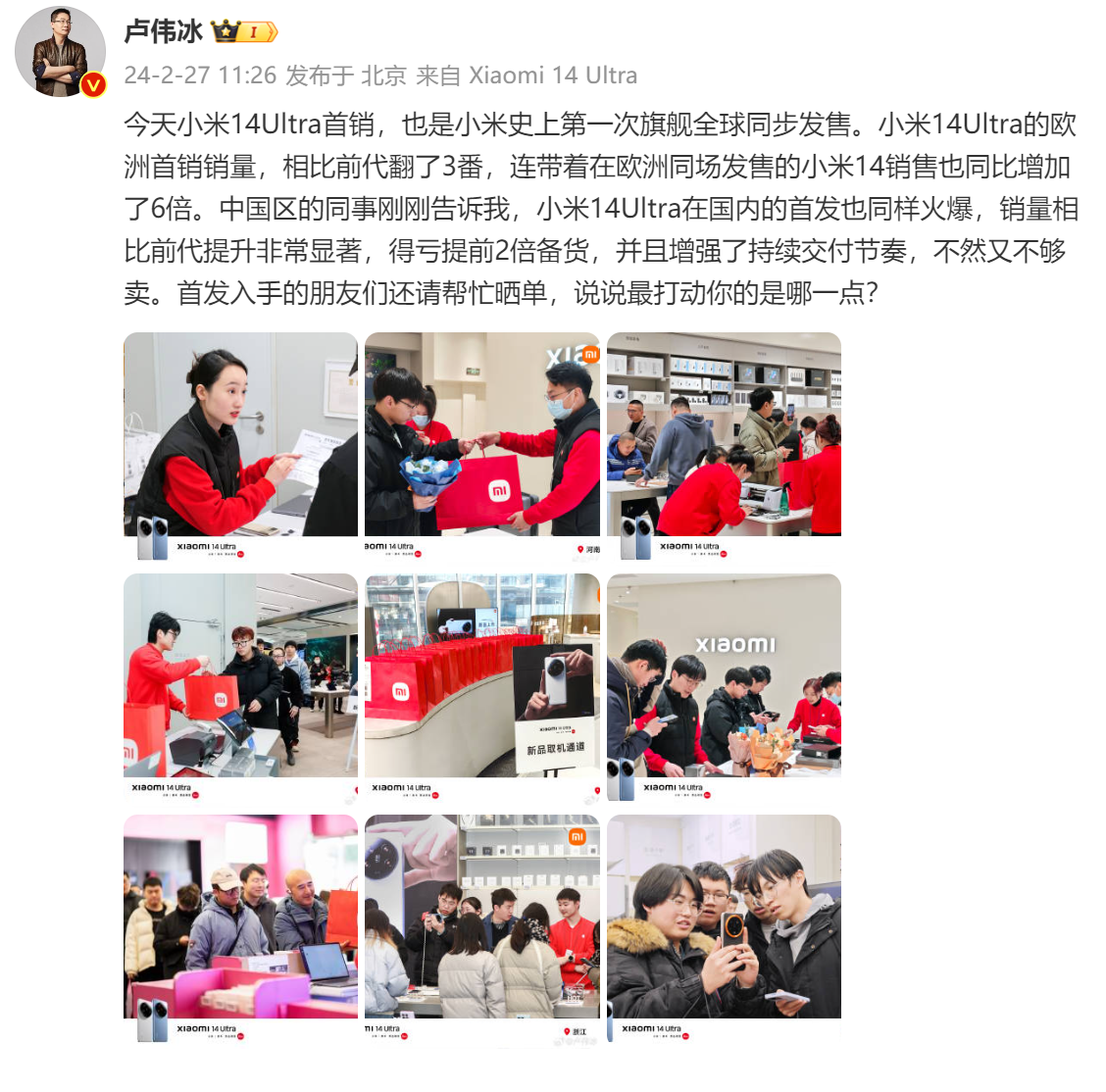
小米14Ultra开售 卢伟冰:提前2倍备货,销量显著提升
Cai Jing Wang· 2024-02-27 06:34
Group 1 - Xiaomi 14 Ultra officially launched on February 27, marking the first global simultaneous release of a flagship product by the company [1][2] - The initial sales of Xiaomi 14 Ultra in Europe saw a threefold increase compared to the previous generation, while the sales of Xiaomi 14 also increased sixfold during the same launch period [2][3] - In China, the company reported significant sales growth for Xiaomi 14 Ultra, with stock prepared at double the usual amount to meet demand and ensure a steady delivery rhythm [2][3] Group 2 - Pricing for Xiaomi 14 Ultra in China is set at 6499 RMB for the 12GB+256GB model, 6999 RMB for the 16GB+512GB model, and 7799 RMB for the 16GB+1TB model, with a special titanium version priced at 8799 RMB [4] - The overseas pricing for Xiaomi 14 Ultra is set at 1499 Euros, which is approximately 12,000 RMB [4]
2024开年,手机厂商革了自己的命
3 6 Ke· 2024-02-23 03:44
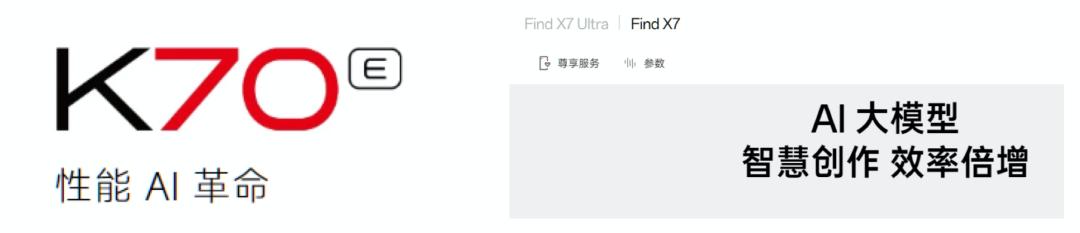
Core Viewpoint - The mobile industry is entering a new era defined by AI integration, with major companies like OPPO and Meizu leading the charge towards AI smartphones, marking a significant shift in product design and functionality [1][3][5]. Group 1: AI Smartphone Development - OPPO has officially announced its entry into the AI smartphone era, highlighting four key features of AI phones and calling for developers to create AI applications [1]. - Meizu has decided to halt traditional smartphone projects to focus entirely on AI devices, indicating a strategic shift in the industry [1][5]. - The integration of AI into smartphones has progressed through three stages, from basic API calls to the incorporation of self-developed AI models by various manufacturers [1][3]. Group 2: Market Projections - IDC forecasts that the shipment of new AI smartphones in China will reach 37 million units in 2024, growing to 150 million units by 2027, with AI smartphones expected to capture over 50% of the market share [3]. - Counterpoint reports that global shipments of smartphones supporting generative AI are projected to increase from 47 million units in 2023 to over 100 million units in 2024, and to 552 million units by 2027 [3]. Group 3: AI Smartphone Features - OPPO defines AI smartphones as those that efficiently utilize computational resources, can perceive the real world, possess strong self-learning capabilities, and provide creative support to users [8][9]. - The hardware capabilities for AI have been significantly enhanced, with Qualcomm's Snapdragon 8 Gen3 chip showing a 98% improvement in NPU performance, allowing for the integration of large AI models [9][11]. Group 4: Ecosystem and Development - The success of AI smartphones will depend on the establishment of a robust ecosystem, similar to the early days of the iPhone, where a strong developer community is essential for innovation [16][18]. - OPPO's "1+N Intelligent Body Ecosystem" aims to democratize AI application development, allowing users to create personalized AI agents without needing programming skills [16][17]. Group 5: Future Implications - The rapid evolution of AI capabilities in smartphones is expected to lead to a new cycle in the mobile industry, with AI applications becoming increasingly integral to user experience [19]. - The shift towards AI smartphones is anticipated to redefine the competitive landscape, moving from a dominant Apple vs. Android model to a more fragmented ecosystem with multiple players [18][19].
AI手机,OPPO与魅族的逆风豪赌
3 6 Ke· 2024-02-22 10:59
Core Viewpoint - The mobile phone industry is entering an "AI phone" era, with companies like OPPO and Meizu making significant investments in AI technology to revitalize the market and compete effectively [1][2][3] Group 1: Industry Trends - OPPO plans to invest 100 billion RMB in AI technology over the next five years, indicating a strong commitment to AI development [1] - The AI smartphone market is projected to grow significantly, with Counterpoint Research estimating a market share of 4% in 2023 and expected to double in 2024 [3] - IDC forecasts that global shipments of next-generation AI smartphones will reach 170 million units in 2024, accounting for 15% of total smartphone shipments [3] Group 2: Competitive Landscape - Major players like Huawei, Xiaomi, Vivo, and Samsung are integrating AI capabilities into their products, with features such as image enhancement and real-time translation being highlighted [2][3] - The competition is not just about hardware but also about software ecosystems, with companies developing their own operating systems and AI frameworks to enhance user experience [5][6] Group 3: Technological Innovations - Qualcomm and MediaTek have released advanced processors designed for generative AI, which are essential for the development of AI smartphones [5] - The integration of AI into smartphones is expected to improve user interaction and responsiveness, with potential for significant advancements in functionality [7] Group 4: Market Challenges - The success of AI smartphones will depend on consumer willingness to pay for AI features, as seen in Samsung's plan to charge for AI functionalities after an initial free period [8] - Companies must consider broader ecosystem integration beyond smartphones, including PCs, wearables, and home devices, to fully leverage AI technology [8]

手机企稳复苏,“人车家全生态”正式闭环
GOLDEN SUN SECURITIES· 2024-02-21 16:00
Investment Rating - The report maintains a "Buy" rating for Xiaomi Group [2][4]. Core Views - The global smartphone market showed signs of recovery, with a year-on-year increase of 8% in Q4 2023, ending a seven-quarter decline. Xiaomi maintained a 13% market share, ranking third globally [1]. - Xiaomi's smartphone shipments are expected to exceed 40 million units in Q4 2023, representing a year-on-year increase of over 20%. The average selling price (ASP) is also anticipated to rise due to the successful launch of the Xiaomi 14 series [1]. - The introduction of the upgraded Xiaomi Surge OS and new AI features is expected to enhance user experience across devices, including tablets and cars [1]. - The launch of the Xiaomi SU7 marks the completion of the "human-vehicle-home ecosystem," with plans for mass production in the first half of 2024 [1]. Financial Summary - For Q4 2023, Xiaomi Group's revenue is projected to be 72.7 billion RMB, a year-on-year growth of 10%. Non-GAAP net profit is expected to reach 4 billion RMB, a significant increase of 175% [2]. - Revenue forecasts for 2023-2025 are 270.4 billion, 295 billion, and 313.9 billion RMB, with year-on-year changes of -3%, +9%, and +6% respectively. Non-GAAP net profit is projected at 18.4 billion, 15 billion, and 16 billion RMB for the same period [2]. - The report highlights a projected non-GAAP core business net profit of 25 billion, 25.2 billion, and 26 billion RMB for 2023-2025 [2]. Key Financial Metrics - The report provides a detailed financial outlook, including revenue growth rates and profit margins. For instance, the expected gross margin for smartphones is 14.3% in 2023, with a slight decline projected in subsequent years [3][8]. - The report also includes projections for earnings per share (EPS) and return on equity (ROE), indicating a recovery trajectory for the company [3][8].
华为Pocket 2要来了,“小折叠屏”成兵家必争之地?
3 6 Ke· 2024-02-18 23:56
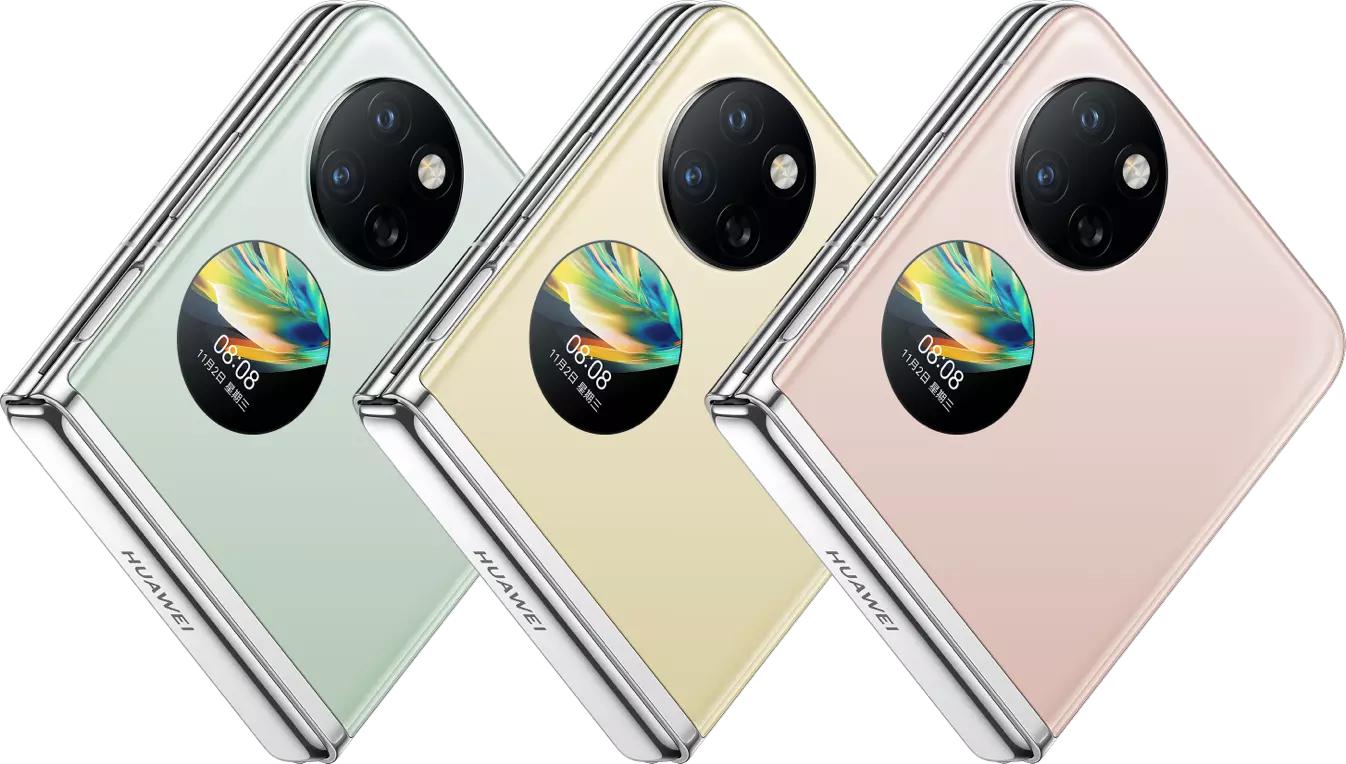
春节假期才刚刚结束,手机市场的「战意」已高速涌动。 小米14 Ultra、华为P70 系列、vivo X100 Pro+等重磅旗舰机型都将陆续发布,这三家品牌选择在2024年打头阵的均为影像旗舰,结合早前曝光的参数来看,这几款机型也可以说是不分伯仲,至于哪一款能先拔头筹,还有待揭晓。 直板机这边打得火热,折叠屏手机也同样热闹非凡。根据数码博主@数码闲聊站透露,vivo今年计划推出双版本的X Fold3,其中X Fold3 Pro将是首款启用「Pro」后缀的大折叠屏手机。 图源:华为 重量级选手华为则选择往小折叠手机方向发力,数码博主@定焦数码透露了两个重要时间节点:2月22日和2月28日,即华为新款小折叠屏手机——华为Pocket 2,将在2月22日官宣,并于2月28日首销。 华为Pocket 2预计将用上麒麟9000S系列芯片,这也是华为首款搭载麒麟芯片的小折叠屏5G手机。相比起搭载高通骁龙4G处理器的Pocket S和P50 Pocket,Pocket 2「麒麟芯+5G」的组合无疑更值得市场期待。 除了核心配置外,华为Pocket 2的影像方面也将得到进一步升级,其方案包括原色摄像头、超广角摄像头、超光 ...
年产能千万台 小米智能工厂正式投产
Cai Jing Wang· 2024-02-18 10:39
2024 年 2 月 18 日,小米智能工厂正式投产,是小米第一个以生产旗舰机为主,年产能超千万台,成规模化量产交付的自建自营工厂,目标成为世界级“灯塔工厂”。小米智能工厂不仅承担小米 14 系列的生产任务,还完成了小米 14 Ultra 在生产阶段的关键验证,这是小米历史上第一座真正意义上的智能工厂。 “产研协同”,深度布局智能制造 制造既是质量的保障,又是效率提升的关键战场。从决定做手机的第一天起,小米就开始了对制造业的探索, 用自己的理解和方法反推制造业的效率提升。智能制造,既是小米对过去经验的沉淀,也是面向未来的长线思考。此前,于 2020 年建成的亦庄工厂具有强研发属性,是新工艺、新材料、新技术预研的大型实验室工厂。目前,一些供应链合作企业已经启用了由小米输出的整套产线设备和智能工厂系统体系。 而此次落成的小米智能工厂隶属小米昌平园区,整个园区包括小米智能工厂、小米创研中心、小米未来产业园以及配套办公楼。总占地 287 亩,总投资 121 亿元。小米智能工厂立足于规模化部署、构建高度智能化的生产体系,并注重核心技术自研,目标年产千万台高端手机,是小米首座真正意义上的智能工厂。未来,两座工厂将一起,形 ...
雷军:小米北京昌平智能工厂正式落成投产
Xin Jing Bao· 2024-02-18 06:42
新京报贝壳财经讯 2月18日,雷军在其微博表示,小米北京昌平智能工厂,今天正式落成投产,旗舰手机制造产能超过千万台,这是小米历史上第一座自有大规模工厂,也是小米智能制造的又一关键里程碑。小米14 海湾蓝以及小米14Ultra工艺创新验证,都来自这个工厂。 海量资讯、精准解读,尽在新浪财经APP 责任编辑:刘万里 SF014 ...

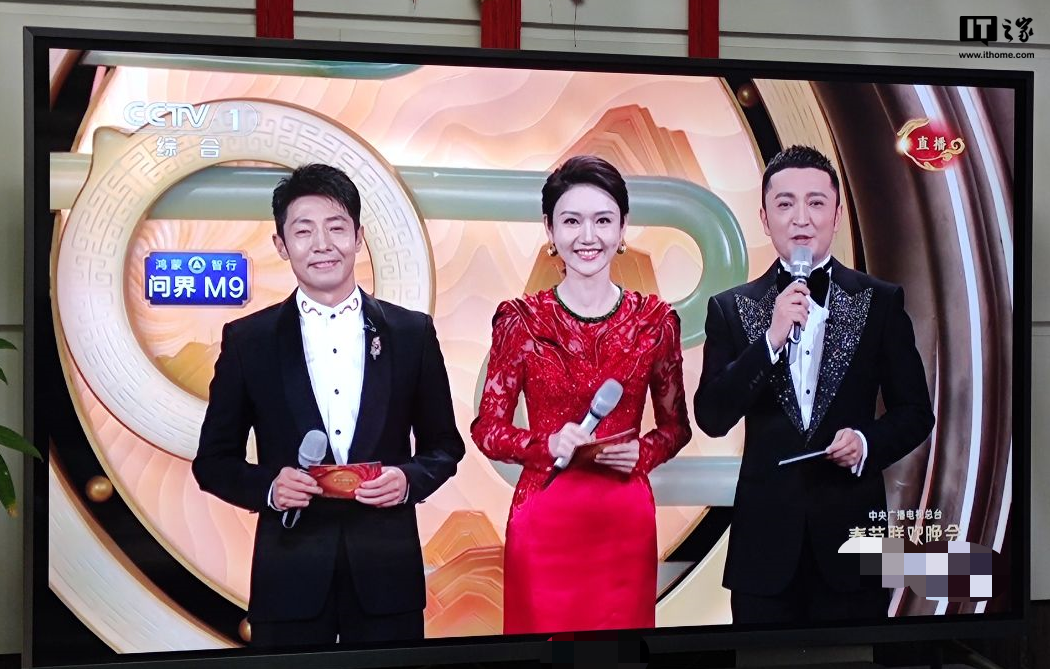
华为鸿蒙智行问界 M9 广告打上 2024 央视春晚,OPPO 小米先来一步
IT之家· 2024-02-09 13:02
IT之家 2 月 9 日消息,每年的央视春晚都是各大企业打广告的“战场”,今年似乎手机厂商特别多。 在 2024 央视春晚开场后不久,华为的“鸿蒙智行问界 M9”广告就出现在主持人旁边,蓝色背景非常显眼。 OPPO 则是在晚间 8 点前召开了“OPPO 史上最短发布会”,一段 30 秒的发布会广告出现在 2024 央视春晚之前,宣布 ColorOS AI 新春版系统向千万 OPPO / 一加用户推送。 小米更是抢先一步,IT之家注意到,小米早在今年 1 月就宣布成为中央广播电视总台“人车家全生态”战略合作伙伴,在新闻联播之后的黄金时段播放广告,因此今日也出现在 2024 央视春晚之前。 京东则是拿下了 2024 央视春晚独家互动合作平台,共有 7 轮互动抽奖彩蛋,IT之家附时间表如下: 广告声明:文内含有的对外跳转链接(包括不限于超链接、二维码、口令等形式),用于传递更多信息,节省甄选时间,结果仅供参考,IT之家所有文章均包含本声明。 ...