Advanced Micro Devices

Search documents
Wall Street Bullish on Taiwan Semiconductor Manufacturing (TSM), Here’s Why
Yahoo Finance· 2025-12-19 19:52
Taiwan Semiconductor Manufacturing Company Limited (NYSE:TSM) is one of the Best Non-US Stocks to Buy According to Hedge Funds. On December 10, Mike Yang from Bank of America Securities reiterated a Buy rating on the stock with a price target of $390. On the same day, Bernstein SocGen Group also reiterated a Buy rating on the stock with a $330 price target. The ratings follow the company’s release of its November 2025 revenue report. Taiwan Semiconductor Manufacturing Company Limited (NYSE:TSM) reporte ...

Could These 5 AI ETFs More Than Double Your Money in 5 Years?
Yahoo Finance· 2025-12-17 23:50
Group 1 - AI stocks and ETFs have significantly outperformed the S&P 500 over the past five years, driven by ongoing technological innovations [1] - The expansion of AI technology into humanoid robots and self-driving vehicles is expected to create substantial demand for related products and services [2] Group 2 - The iShares Semiconductor ETF (SOXX) provides exposure to leading AI chipmakers, with top holdings including Broadcom, Advanced Micro Devices, and Nvidia, which collectively account for nearly 60% of the fund's assets [4] - Increased demand for AI chips is anticipated to be a major catalyst for the iShares Semiconductor ETF, supported by the growing need for AI innovations in various industries [5] Group 3 - The CoinShares Bitcoin Mining ETF (WGMI) offers exposure to crypto miners, many of whom are transitioning to support AI infrastructure, indicating a potential growth area for the ETF [6] - The ETF has experienced significant volatility, initially losing over 80% of its value after its 2022 launch but has since rebounded with an 84% gain this year [8]
Why is Taiwan Semiconductor (TSM) One of the Most Profitable NYSE Stocks to Buy Right Now?
Yahoo Finance· 2025-12-16 18:44
Taiwan Semiconductor Manufacturing Company Limited (NYSE:TSM) is one of the most profitable NYSE stocks to buy right now. Taiwan Semiconductor Manufacturing Company Limited (NYSE:TSM) received a rating update from Bank of America Securities analyst Mike Yang on December 10, who reaffirmed a Buy rating on the stock and set a $390 price target. NVIDIA Invests $2 Billion in Synopsys as Part of New Multiyear AI and EDA Partnership The rating update came the same day Taiwan Semiconductor Manufacturing Company ...
iRobot maker Roomba files for bankruptcy, will go private
Youtube· 2025-12-15 21:56
Company Overview - iRobot, the maker of Roomba, has filed for bankruptcy and plans to hand over control to its main Chinese supplier, expecting to complete Chapter 11 by February [1] - Founded in 1990, iRobot has sold over 40 million Roomba units since its launch in 2002, but has faced declining earnings due to supply chain issues and competition from cheaper alternatives [2][3] Financial Performance - iRobot's shares have dropped more than 80% as a result of its financial struggles [1] - The company received over $90 million in compensation from a failed acquisition deal with Amazon, but much of this was used to cover advisory fees and loan repayments [3] Industry Competitors - The stock prices of major tech companies like Nvidia and Tesla have seen slight rebounds, with Nvidia's shares up more than 1% despite recent declines [4] - Concerns about competition from Google's tensor processing units have negatively impacted Nvidia, which has fallen more than 6% over the past month [5] Mergers and Acquisitions - Intel is reportedly in advanced talks to acquire AI startup Samba Nova Systems for approximately $1.6 billion, which could enhance its product offerings [6] - The connection between Intel and Samba Nova is significant, as Intel's CEO is also the chairman of Samba Nova [7] Cannabis Industry - Canopy Growth's shares have surged over 50% following its announcement to acquire Metal Cannabis, valued at about 125 million CAD [8] - Other cannabis companies like Tilray Brands have also seen stock increases, with Tilray up about 4% due to ongoing discussions about drug classification changes [9]




Is Nvidia's Valuation Justified as New Competitors Close the AI Gap?
The Motley Fool· 2025-12-13 16:25
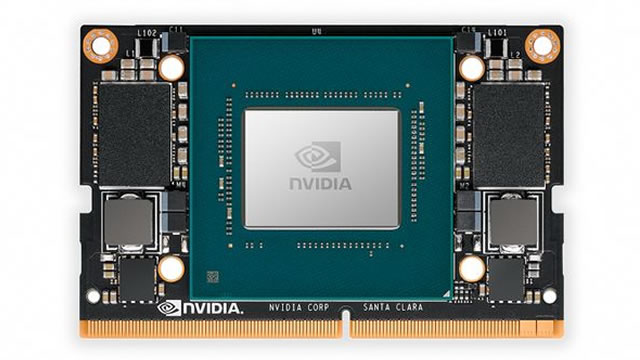
Core Viewpoint - Nvidia may face increased challenges in 2026 as competitors, including major tech companies, begin to develop and sell their own custom semiconductors, potentially impacting Nvidia's market share [2][3][18] Group 1: Nvidia's Market Position - Nvidia has established itself as a leader in the AI sector, particularly in providing GPUs for high-performance AI applications, achieving a market cap of over $5 trillion at its peak [1][5] - The company currently holds approximately 90% of the data center GPU market, contributing to a stock price increase of over 970% and a revenue growth of nearly 600% over the past three years [6][7] - Nvidia's revenue for Q3 of fiscal 2026 reached $57 billion, a 62% increase year-over-year, with data center sales accounting for $51.2 billion, up 66% from the previous year [7] Group 2: Competitive Landscape - Major competitors such as Advanced Micro Devices, Alphabet, and Amazon are developing their own chips to reduce reliance on Nvidia, with Amazon's Tranium3 chip being four times faster and more efficient than its predecessor [3][11] - Alphabet is reportedly in discussions with Meta Platforms to supply AI infrastructure, which could diminish Nvidia's customer base as Meta is currently a client [13] - The introduction of custom chips by competitors may lead to increased pressure on Nvidia's pricing and market share in the coming years [10][12] Group 3: Financial Metrics and Valuation - Nvidia's current price-to-earnings (P/E) ratio stands at 45.8, with a forward P/E of 39.5, which is lower than the three-year mean of over 80, making it relatively attractive compared to other chipmakers [14][16] - Despite potential challenges, Nvidia is expected to continue generating substantial revenue and profits, maintaining its status as a viable investment option [18]

Did Alphabet Just Say "Checkmate" to Nvidia?
The Motley Fool· 2025-12-11 16:35
Core Insights - Alphabet is emerging as a significant player in the AI chip market, particularly with its tensor processing units (TPUs), which pose a new challenge to Nvidia's dominance in the sector [3][12] - The AI infrastructure market is projected to reach $7 trillion by 2030, with substantial investments from hyperscalers, indicating robust demand for both Nvidia's GPUs and Alphabet's TPUs [14] Group 1: Alphabet's Position in AI Chip Market - Alphabet's TPUs are gaining traction and are being utilized by major tech companies, including OpenAI and Meta Platforms, highlighting their growing demand [8][9] - TPUs are specialized hardware designed for deep learning, contrasting with Nvidia's versatile GPUs that support a wide range of AI applications [5][6] - The introduction of TPUs enhances Google's cloud ecosystem, making it a compelling offering for clients seeking AI solutions [9] Group 2: Competitive Landscape - Despite the rise of TPUs, many users, including Google, continue to rely on Nvidia's GPUs, indicating that TPUs are not replacing GPUs but rather complementing them [12][16] - Major deals involving Nvidia's GPUs, such as OpenAI's $38 billion contract with AWS and Anthropic's $30 billion agreement with Microsoft Azure, demonstrate the ongoing reliance on Nvidia's technology [10][11] - The AI chip market is characterized by multiple players, suggesting it is not a winner-take-all scenario, which may mitigate concerns for Nvidia investors [14][17]


This Artificial Intelligence (AI) Infrastructure Stock Could Be the Nvidia of 2026
The Motley Fool· 2025-12-07 19:25
Core Viewpoint - Taiwan Semiconductor Manufacturing Company (TSMC) is positioned to benefit significantly from the ongoing AI infrastructure investments, potentially leading to a breakout similar to Nvidia's by 2026 [5][18]. Industry Overview - The semiconductor industry has been a key player in the rise of generative AI applications, with companies like Nvidia, AMD, and Broadcom being prominent names [2][3]. - There is a growing interest among investors to explore opportunities beyond the traditional chip manufacturers as hyperscalers increase their investments in AI infrastructure [2][3]. Company Analysis: Taiwan Semiconductor Manufacturing Company (TSMC) - TSMC holds approximately 68% market share in the global chip foundry market, making it the largest by revenue [6]. - The company's diverse customer base allows it to benefit from the overall increase in chip demand, positioning it as a "pick-and-shovel" opportunity in the semiconductor sector [7]. - Analysts predict that AI capital expenditures among hyperscalers could reach nearly $500 billion next year, with the potential for multi-year opportunities worth several trillion dollars [9][10]. Future Outlook - The year 2026 is anticipated to mark the beginning of a significant AI infrastructure era, with increasing demand for chips expected to drive TSMC's revenue and profit growth [13]. - Recent large-scale deals indicate sustained demand for GPUs, suggesting that TSMC will play a crucial role in fulfilling these needs [11][12]. - TSMC's expansion efforts in regions like Arizona, Germany, and Japan have helped mitigate geopolitical risks associated with tensions between China and Taiwan [16]. Investment Consideration - Despite a premium valuation compared to earlier lows, TSMC's stock remains an attractive long-term investment due to the early-stage nature of the AI infrastructure opportunity [14][17]. - The ongoing deal flow and TSMC's critical role in the AI landscape suggest a potential for prolonged share price increases as the market recognizes its influence [17].
1 Super Semiconductor Stock to Buy Hand Over Fist in 2026, According to Wall Street
The Motley Fool· 2025-12-07 00:12
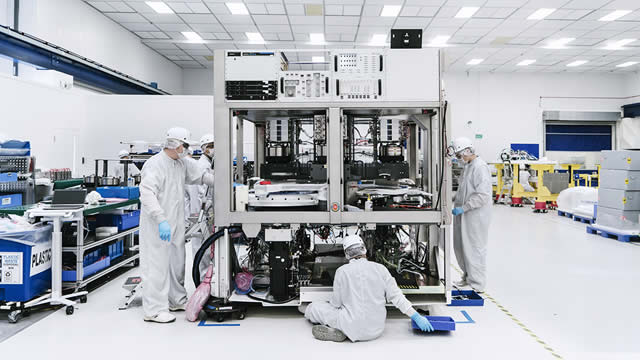
Core Insights - Taiwan Semiconductor Manufacturing Company (TSMC) is poised to benefit significantly from increased spending in artificial intelligence (AI) across various sectors [1][6] - Analysts project a one-year price target of $342 for TSMC, indicating a potential upside of approximately 20% from current levels, which would outperform the long-term market average [2][14] - TSMC is a critical player in the AI ecosystem, providing essential semiconductor chips necessary for advanced computing units [5][11] Company Performance - TSMC's revenue grew by 41% in U.S. dollars during Q3, reflecting strong demand for AI computing units [10] - The company is entering production with its new 2-nanometer chip node, which offers significant energy efficiency benefits over previous 3-nanometer chips, consuming 25% to 30% less power [9][8] - TSMC's stock is trading at 28 times forward earnings, which is lower compared to peers like AMD and Nvidia, making it a more attractive investment option in the AI sector [14] Market Outlook - The AI hyperscalers are expected to increase capital expenditures significantly, with projections indicating record-breaking spending in 2026 [6][11] - Nvidia anticipates global data center capital expenditures to reach $3 trillion to $4 trillion by 2030, while AMD expects a 60% compound annual growth rate for its data center division through the same period [11] - TSMC is well-positioned to supply the necessary chips to support this anticipated growth in the AI market [11][14]

The Most Important Artificial Intelligence Stock You're Not Watching
The Motley Fool· 2025-12-05 10:50
Taiwan Semiconductor's growth is key to the health of the AI investment trend.Recently, the AI debate seems to be centered on whether the computing units from Nvidia or Alphabet are the best option, with maybe Advanced Micro Devices or custom AI accelerators from Broadcom sneaking in as well. While the discourse around these companies' different approaches is good, I think it misses a key point.The primary fact that investors should be taking from this recent debate is that AI spending isn't going anywhere. ...
Investing in Artificial Intelligence (AI) Can Be Risky, but Here's a Magnificent Way to Do It
The Motley Fool· 2025-12-04 09:29
Core Insights - The iShares Future AI and Tech ETF provides a diversified investment option in the AI sector, which has been a significant driver of the S&P 500's performance in recent years [1][2][3] - The ETF has outperformed the S&P 500 since its restructuring, with a 42% gain compared to the S&P 500's 23% return [7] Investment Strategy - Investing in an ETF can mitigate risks associated with individual AI stocks, as demonstrated by the contrasting performances of Palantir Technologies (+124%) and Upstart Holdings (-26%) [2] - The ETF includes 48 AI stocks, providing exposure to various segments of the AI value chain, including software, services, and infrastructure [3][4] Notable Holdings - Key software companies in the ETF include Palantir, Microsoft, and Snowflake, which offer AI-powered platforms and tools [5] - The ETF also features significant holdings in semiconductor companies like Broadcom and Micron Technology, as well as major tech firms such as Amazon and Meta Platforms [6] Performance Metrics - The iShares Future AI and Tech ETF was restructured in August 2024 to focus specifically on AI, leading to a strong performance since then [6][7] - The ETF's expense ratio is 0.47%, which is higher than many index funds but justified by its active management and strong returns [8][10] Future Developments - Nvidia and Advanced Micro Devices are key players in the AI hardware space, with Nvidia's latest GPUs designed for AI workloads and AMD's upcoming Helios data center rack expected to enhance competition [9]