
BlackBerry

Search documents
Top Wall Street Forecasters Revamp BlackBerry Expectations Ahead Of Q2 Earnings
Benzinga· 2025-09-24 10:50
Core Insights - BlackBerry Limited is set to release its second-quarter earnings results on September 25, with analysts expecting earnings of 1 cent per share and projected revenue of $122.03 million, down from $145 million a year earlier [1] Group 1: Earnings Expectations - Analysts anticipate BlackBerry will report quarterly earnings of 1 cent per share [1] - Projected quarterly revenue is $122.03 million, a decrease from $145 million reported in the same quarter last year [1] Group 2: Recent Developments - On September 18, BlackBerry became the first mobile device management vendor certified by Germany's Federal Office for Information Security (BSI) [2] - Following this announcement, BlackBerry shares fell by 3% to close at $4.27 [2] Group 3: Analyst Ratings - RBC Capital analyst Paul Treiber maintained a Sector Perform rating and raised the price target from $3.75 to $4 [6] - Canaccord Genuity analyst Kingsley Craner maintained a Hold rating and increased the price target from $4.25 to $4.60 [6] - Baird analyst Luke Junk maintained a Neutral rating and raised the price target from $4 to $5 [6] - CIBC analyst Todd Coupland maintained an Outperformer rating but reduced the price target from $7 to $6 [6]



Automotive software in India seeing long development cycles as regulatory pressures adding to existing bottlenecks: BlackBerry firm
The Hindu· 2025-09-23 17:47
Group 1: Automotive Software Development in India - Automotive software developers in India are experiencing the longest development cycles globally, primarily due to regulatory pressures and integration complexities [1][2] - Over 26% of Indian developers reported delays in timelines directly linked to evolving compliance demands, with over 500 new regulations introduced globally in 2024 affecting in-car technology [5] - A majority of Indian developers believe that automotive OEMs should prioritize application-layer innovation over foundational software infrastructure to enhance time-to-market and consumer experiences [6] Group 2: Role of AI in Software Development - The majority of automotive software developers across Asia, North America, and Europe anticipate that AI will significantly influence software development in the near future, with estimates suggesting AI could replace 43% of current roles by 2035 [3] Group 3: QNX's Role in Urban Rail Network - QNX has been selected by Medha Servo Drives to provide the software foundation for a next-generation railway protection system in India, aimed at enhancing urban transit systems [7][8] - The deployment of Medha's Communications-Based Train Control (CBTC) solution, powered by QNX OS for Safety, is designed to ensure precise, real-time control of train operations [8][10] - This collaboration is seen as a significant advancement in modernizing India's transit infrastructure, aiming to improve safety, reliability, and efficiency for daily commuters [10] Group 4: Company Background - BlackBerry, having ceased mobile phone production in 2016, has shifted its focus entirely to software and cybersecurity, with QNX providing operating systems and development tools for safety-critical embedded systems [11]

BlackBerry Limited (NYSE:BB) Earnings Preview: Key Insights
Financial Modeling Prep· 2025-09-23 08:00
Core Insights - BlackBerry Limited is set to release its earnings on September 25, 2025, with an expected EPS of $0.01 and projected revenue of $122 million [1][6] - The anticipated revenue for Q2 fiscal 2026 is between $115 million and $125 million, reflecting a 13.8% decline year-over-year due to challenges in the macroeconomic and automotive sectors [2][6] Financial Performance - BlackBerry has a history of impressive earnings surprises, averaging a 116.67% beat over the last four quarters, although the current model does not predict a beat for this quarter [4] - The Zacks Consensus Estimate for BlackBerry's earnings remains at 1 cent, unchanged over the past 60 days [4] - Financial metrics indicate challenges, with a negative P/E ratio of approximately -74.75 and a price-to-sales ratio of about 4.73 [5][6] - Despite these challenges, BlackBerry maintains a healthy current ratio of about 2.15, indicating sufficient current assets to cover liabilities [5][6] Business Segments - The performance of BlackBerry's Q2 results is expected to depend on the momentum of its QNX platform, expansion in the GEM market, and securing government deals [3] - Demand for QNX in the automotive and GEM markets, along with the introduction of Hypervisor 8.0, is anticipated to bolster division revenues [3] - The Secure Communications segment is gaining traction through Secusmart and AtHoc solutions, supported by significant government contracts [3]

Retail Investors' Top Stocks With Earnings This Week: Micron, BlackBerry And More
Benzinga· 2025-09-22 16:36
Group 1: Micron Technology, Inc. (MU) - Micron is set to release its fourth-quarter earnings report after Tuesday's closing bell, expected to be the most-watched report of the week [2] - Analysts anticipate earnings of $2.86 per share and revenue of $11.22 billion for the quarter, with improved sentiment in the memory market benefiting Micron's revenue and gross margins [3] - The key catalyst for Micron's performance is an increase in data storage demand from key hyperscaler customers, leading to a maintained Buy rating and a price target increase from $145 to $173 [4] Group 2: Uranium Energy Corp. (UEC) - Uranium is scheduled to report earnings ahead of Wednesday's opening bell, with analysts expecting losses of four cents per share on revenue of $800,000 for the quarter [5] Group 3: Other Companies Reporting - Accenture is expected to report earnings of $2.96 per share and revenue of $17.36 billion before the market opens on Thursday, along with CarMax, Jabil, and BlackBerry also reporting [6]


Should You Hold or Sell BlackBerry Stock Before Q2 Earnings Release?
ZACKS· 2025-09-22 15:51
Core Insights - BlackBerry Limited (BB) is scheduled to report its second-quarter fiscal 2026 results on September 25, with a consensus estimate for earnings at 1 cent and revenues expected to be between $115 million and $125 million, reflecting a 13.8% year-over-year decline [1][9]. Financial Performance - BlackBerry has a strong earnings surprise history, having outperformed the Zacks Consensus Estimate in the last four quarters with an average beat of 116.67% [2]. - The company currently has an Earnings ESP of 0.00% and a Zacks Rank of 3 (Hold) [4]. Revenue Drivers - The QNX segment is anticipated to drive performance, particularly due to demand in advanced driver assistance systems and digital cockpit markets [5]. - BlackBerry is expanding into general embedded markets (GEM), with GEM now constituting 43% of the total SDP 8.0 pipeline, which grew by 55% in the last quarter [6][7]. - QNX revenue is projected to be between $55 million and $60 million, with adjusted EBITDA expected to be between $10 million and $13 million [10]. Secure Communications Division - The Secure Communications division is likely to benefit from strong uptake of Secusmart and AtHoc solutions, bolstered by key government contracts [11]. - Secusmart has performed well due to large deals with the German government, and the global pipeline is expanding, particularly in defense [12]. - BlackBerry has raised its full-year revenue guidance by $4 million to a range of $234 million to $244 million, with second-quarter revenue expectations of $54 million to $59 million [13]. Market Position and Valuation - BlackBerry's shares have declined by 5.2% over the past six months, underperforming the Internet Software industry's growth of 25% [15]. - The stock is trading at a forward 12-month price/sales multiple of 4.54X, which is lower than the Internet Software industry's multiple of 6.01X [22]. Investment Considerations - Strength in QNX and expanding traction in GEMs provide long-term growth visibility, while momentum in Secure Communications adds stability [24]. - Despite macroeconomic headwinds and rising competition in cybersecurity, the company's earnings surprise history and improving fundamentals are positive indicators [24].
Understanding Microsoft's Position In Software Industry Compared To Competitors - Microsoft (NASDAQ:MSFT)
Benzinga· 2025-09-22 15:00
Core Insights - The article provides a comprehensive evaluation of Microsoft in comparison to its major competitors in the Software industry, focusing on financial metrics, market standing, and growth prospects [1] Company Overview - Microsoft develops and licenses both consumer and enterprise software, known for its Windows operating systems and Office productivity suite [2] - The company is organized into three segments: productivity and business processes, intelligence cloud, and more personal computing [2] Financial Metrics Comparison - Microsoft has a Price to Earnings (P/E) ratio of 37.97, which is 0.29x less than the industry average, indicating potential for growth at a reasonable price [6] - The Price to Book (P/B) ratio is 11.21, below the industry average by 0.79x, suggesting the stock may be undervalued based on book value [6] - The Price to Sales (P/S) ratio is 13.72, which is 0.83x the industry average, indicating potential undervaluation based on sales performance [6] - The Return on Equity (ROE) stands at 8.19%, which is 1.26% above the industry average, highlighting efficient use of equity [6] - Microsoft’s EBITDA is $44.43 billion, which is 56.96x above the industry average, demonstrating stronger profitability [6] - The gross profit of $52.43 billion is 34.72x above that of its industry, indicating higher earnings from core operations [6] - Revenue growth for Microsoft is 18.1%, significantly below the industry average of 66.99%, suggesting challenges in increasing sales volume [6] Debt to Equity Ratio - Microsoft has a debt-to-equity (D/E) ratio of 0.18, indicating a favorable balance between debt and equity compared to its top peers [11] - The D/E ratio is a key metric for evaluating financial health and risk profile within the industry [9] Summary of Key Takeaways - Microsoft exhibits low P/E, P/B, and P/S ratios compared to peers, indicating potential undervaluation [9] - High ROE, EBITDA, and gross profit suggest strong profitability and operational efficiency [9] - The low revenue growth rate may raise concerns for future performance relative to industry peers [9]



BlackBerry Q2 Earnings Preview: Valuation And Growth Considerations (NYSE:BB)
Seeking Alpha· 2025-09-19 16:40
Group 1 - The article promotes a platform for DIY investors to access stock picks of undervalued companies with potential catalysts for growth [2] - It emphasizes the importance of dividend-income recommendations and tracking high upside plays for better investment decisions [2] - The author expresses no current investment positions in the mentioned companies, ensuring an unbiased perspective [3] Group 2 - The platform offers tools and resources for investors to enhance their skills in value investing [2] - It highlights the significance of independent research and alerts for investment opportunities [2] - The article clarifies that past performance does not guarantee future results, underscoring the need for careful consideration in investment choices [4]
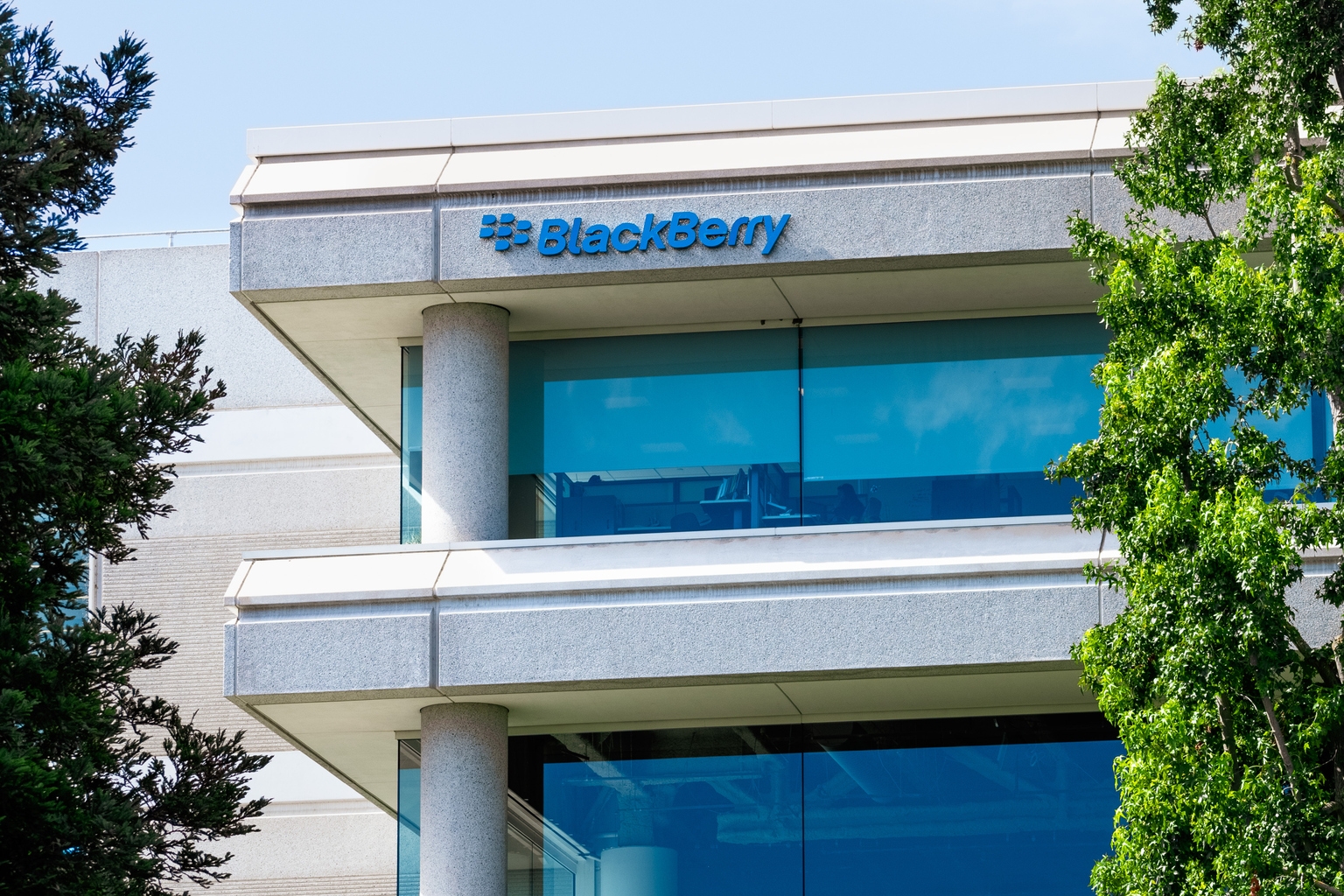
BlackBerry is the First MDM Vendor to Achieve BSI Certification for BlackBerry UEM Deployment with Apple Indigo and Samsung Knox
Accessnewswire· 2025-09-18 07:00
Core Point - BlackBerry Limited has become the first mobile device management (MDM) vendor certified by the German Federal Office for Information Security (BSI) for its Unified Endpoint Management (UEM) solution, specifically for use on Apple and Samsung Knox devices in government operations [1] Group 1 - The certification allows government organizations to secure data on employee iOS and Samsung Knox devices [1]

blackberry limited (TSX:BB) – profile & key information – CanadianValueStocks.com
Canadianvaluestocks· 2025-09-18 06:33
Company Overview - BlackBerry Limited has transitioned from a mobile handset manufacturer to a specialized provider of secure enterprise software, cybersecurity services, and IoT platforms [1][2] - The company's modern focus includes cybersecurity, endpoint management, and embedded vehicle systems, targeting regulated industries and large-scale OEM relationships [2][3] Business Model and Product Offerings - BlackBerry's value proposition is built on three main capabilities: secure endpoint management, AI-driven threat prevention, and automotive-grade platforms based on QNX [3] - Key product lines include BlackBerry Enterprise solutions, BlackBerry Workspaces, BBM Enterprise, AtHoc for emergency communications, and QNX for embedded systems [18][19] Financial Metrics - As of recent market snapshots, BlackBerry's market capitalization is approximately CA$2.55 billion, with annual revenue ranging from CA$700 million to CA$1 billion [9][12] - Revenue drivers include subscription and licensing for UEM and Dynamics suites, IoT platform contracts, and professional security services [10][15] Historical Context and Strategic Evolution - Founded in 1984 as Research In Motion, BlackBerry gained prominence with its wireless data solutions and push-email-enabled devices [23] - The company faced significant challenges in the smartphone market post-2007, leading to a strategic pivot towards enterprise software and cybersecurity under new leadership in 2013 [24][27] Leadership and Governance - Leadership transitions have been pivotal during strategic redirections, with a focus on turnaround management and software emphasis [28][29] - Active board engagement has been noted during periods of restructuring and M&A activities [29] Market Position and Industry Dynamics - BlackBerry operates in enterprise cybersecurity, embedded automotive software, and emergency communications, selling to CIOs, automotive teams, and national security agencies [17] - The company's transition from hardware to software has positioned it among specialist software and cybersecurity firms in Canadian markets [30][32]

Industry Comparison: Evaluating Microsoft Against Competitors In Software Industry - Microsoft (NASDAQ:MSFT)
Benzinga· 2025-09-17 15:00
Core Insights - The article provides a comprehensive analysis of Microsoft in comparison to its key competitors in the Software industry, focusing on financial metrics, market position, and growth prospects [1] Company Overview - Microsoft develops and licenses consumer and enterprise software, known for its Windows operating systems and Office productivity suite, organized into three segments: productivity and business processes, intelligence cloud, and more personal computing [2] Financial Metrics Comparison - Microsoft has a Price to Earnings (P/E) ratio of 37.32, which is below the industry average by 0.32x, suggesting potential undervaluation [5] - The Price to Book (P/B) ratio for Microsoft is 11.02, also below the industry average by 0.82x, indicating possible undervaluation based on book value [5] - Microsoft's Price to Sales (P/S) ratio is 13.49, which is 0.94x the industry average, suggesting it may be undervalued based on sales performance [5] - The Return on Equity (ROE) for Microsoft is 8.19%, which is 1.39% above the industry average, indicating efficient use of equity to generate profits [5] - Microsoft has an EBITDA of $44.43 billion, which is 57.7x above the industry average, indicating stronger profitability and robust cash flow generation [5] - The gross profit for Microsoft is $52.43 billion, which is 35.19x above the industry average, indicating stronger profitability from core operations [5] - Microsoft's revenue growth rate is 18.1%, significantly lower than the industry average of 58.94%, indicating potential concerns regarding sales performance [5] Debt to Equity Ratio - Microsoft has a debt-to-equity (D/E) ratio of 0.18, indicating a favorable balance between debt and equity compared to its peers, which is a positive aspect for investors [9] - The analysis of Microsoft's D/E ratio in relation to its top 4 peers provides insights into its financial health and risk profile [7]