
联影医疗

Search documents
科创50指数ETF(588870)开盘跌2.97%,重仓股中芯国际跌4.38%,海光信息跌2.58%
Xin Lang Cai Jing· 2025-08-29 01:40
Core Viewpoint - The ChiNext 50 Index ETF (588870) opened with a decline of 2.97%, indicating a bearish trend in the market for technology stocks [1] Group 1: ETF Performance - The ChiNext 50 Index ETF (588870) opened at 1.373 yuan, reflecting a significant drop [1] - The ETF's performance benchmark is the Shanghai Stock Exchange ChiNext 50 Index return rate [1] - Since its establishment on January 20, 2025, the ETF has achieved a return of 39.76%, with a one-month return of 29.12% [1] Group 2: Major Holdings Performance - Major holdings in the ETF include: - SMIC (中芯国际) down 4.38% - Haiguang Information (海光信息) down 2.58% - Cambricon (寒武纪) down 6.80% - Lattice Semiconductor (澜起科技) down 2.00% - Zhongwei Company (中微公司) down 2.44% - Kingsoft Office (金山办公) up 0.30% - United Imaging (联影医疗) unchanged - Transsion Holdings (传音控股) down 0.08% - Ninebot (九号公司) down 0.31% [1]





阿尔茨海默概念下跌1.07%,11股主力资金净流出超3000万元
Zheng Quan Shi Bao Wang· 2025-08-28 13:49
Group 1 - The Alzheimer's concept sector declined by 1.07%, ranking among the top declines in the concept sector, with companies like Jingxin Pharmaceutical, Kanghong Pharmaceutical, and Meinian Health showing significant drops [1][2] - Among the Alzheimer's concept stocks, five stocks experienced price increases, with Tonghua Golden Horse, Wangsu Technology, and United Imaging Healthcare rising by 2.02%, 1.48%, and 0.49% respectively [1][2] - The sector saw a net outflow of 1.073 billion yuan from major funds, with 32 stocks experiencing outflows, and 11 stocks seeing outflows exceeding 30 million yuan [2][3] Group 2 - The top net outflow stocks in the Alzheimer's concept included Wangsu Technology with a net outflow of 233.89 million yuan, Meinian Health with 164.59 million yuan, and United Imaging Healthcare with 94.36 million yuan [2][3] - The stocks with the highest net inflows included Daan Diagnostics and Baiyang Pharmaceutical, with net inflows of 2.80 million yuan and 1.30 million yuan respectively [2][3] - The trading volume for the Alzheimer's concept stocks showed significant turnover rates, with Wangsu Technology at 7.68% and Meinian Health at 4.58% [2][3]


浩瀚深度8月28日大宗交易成交624.00万元
Zheng Quan Shi Bao Wang· 2025-08-28 11:47
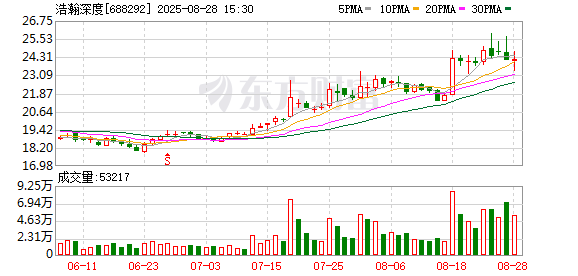
Core Insights - A significant block trade occurred on August 28 for Haohan Deep, with a volume of 260,000 shares and a transaction value of 6.24 million yuan, at a price of 24.00 yuan, reflecting a discount of 0.70% compared to the closing price of the day [2] Trading Activity - The buyer of the block trade was Changjiang Securities Co., Ltd. Beijing Million Street Securities Business Department, while the seller was Changjiang Securities Co., Ltd. Wuhan Luoyu Road Securities Business Department [2] - Over the past three months, Haohan Deep has recorded a total of four block trades, with a cumulative transaction value of 21.83 million yuan [2] Stock Performance - On the same day, Haohan Deep closed at 24.17 yuan, up 0.42%, with a daily turnover rate of 5.28% and a total transaction amount of 128 million yuan [2] - Throughout the day, there was a net outflow of 13.15 million yuan in main capital, and over the past five days, the stock has increased by 1.17% with a total net outflow of 6.42 million yuan [2] Margin Financing - The latest margin financing balance for Haohan Deep is 77.61 million yuan, which has decreased by 1.23 million yuan over the past five days, representing a decline of 1.56% [2]


联影医疗(688271) - 联影医疗关于持股5%以上股东承诺延长股份锁定期的公告
2025-08-28 07:45
证券代码: 688271 证券简称: 联影医疗 公告编号: 2025-036 上海联影医疗科技股份有限公司 关于持股 5%以上股东承诺延长股份锁定期的公告 本公司董事会及全体董事保证本公告内容不存在任何虚假记载、误导性陈述 或者重大遗漏,并对其内容的真实性、准确性和完整性承担法律责任。 上海联影医疗科技股份有限公司(以下简称"公司"或"联影医疗")近日 收到公司股东上海联和投资有限公司(以下简称"联和投资")发来的《关于延 长股份锁定期的承诺函》,现将相关情况公告如下: 基于对联影医疗未来发展前景的信心及长期投资价值的认可,联和投资承诺, 其所持在 IPO 前取得的 13,495.96 万股股份(占联影医疗发行后总股本的 16.38%),自 2025 年 8 月 21 日承诺期满之日起继续自愿延长锁定期 24 个月至 2027 年 8 月 21 日。 锁定期内,联和投资不转让或委托他人管理所持股份,亦不会要求联影医疗 回购所持股份。在上述延长承诺锁定期内,因联影医疗送红股、转增股本、配股 等原因而增加的股份亦将遵守相关承诺进行锁定。 特此公告。 上海联影医疗科技股份有限公司董事会 2025 年 8 月 29 ...
这个被垄断20年的高端设备赛道,国产即将大爆发?
3 6 Ke· 2025-08-28 06:50
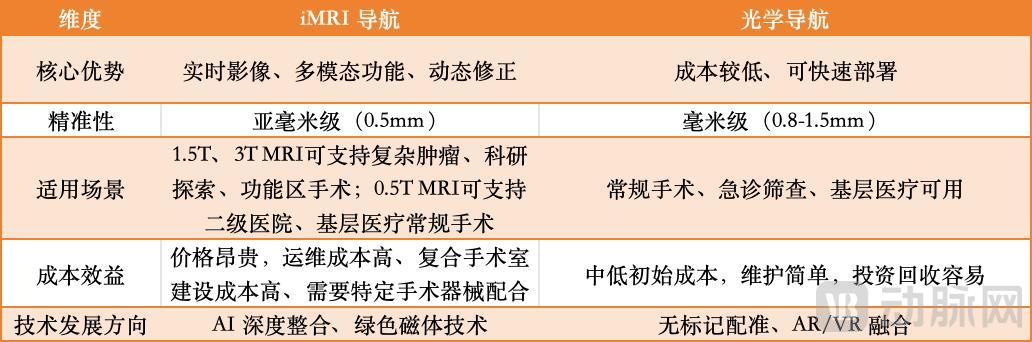
Core Insights - The article discusses the emerging opportunities in the intraoperative MRI (iMRI) market, particularly highlighting the advancements made by domestic companies like Zhongjia Health and Yiying Medical in the context of increasing competition and market demand [1][10]. Market Overview - The global market for intraoperative MRI devices is projected to reach $1.22 billion by 2025, with a compound annual growth rate (CAGR) of 8.5%, and expected to grow to $2.77 billion by 2035 [1]. - The Asia-Pacific region, including China, is anticipated to grow at the fastest rate of 8.6% CAGR, driven by price advantages from centralized procurement, increased penetration of minimally invasive surgeries, and rapid advancements in AI technology [1]. Technological Advancements - iMRI integrates MRI imaging technology with surgical procedures, providing real-time, high-resolution images of the surgical area, which enhances surgical precision and decision-making [2]. - iMRI has shown significant clinical advantages in neurosurgery, improving the complete resection rate of brain tumors from 54.39% to 83.34% [3]. Competitive Landscape - Companies like Cook Medical and Siemens Healthineers are actively investing in iMRI technology, with Cook Medical establishing a dedicated division for interventional MRI with an initial investment of $230 million [3][4]. - Siemens has already formed partnerships to commercialize MRI-guided treatments, indicating a mature strategy in the iMRI space [4]. Challenges in Adoption - The high cost of iMRI systems and the complexity of required infrastructure hinder widespread adoption in domestic hospitals, with only 350 units installed in China as of 2023 [6]. - The construction of an iMRI-compatible surgical environment can cost between 30 million to 90 million yuan, depending on the specifications [6]. Future Prospects - The integration of AI technologies, such as GE's Sonic DL algorithm, is expected to enhance the functionality of iMRI, potentially expanding its application in various clinical scenarios [8]. - Companies need to establish a comprehensive supply chain and identify optimal clinical applications to maximize the value of iMRI technology [10].
联影医疗中标:医疗设备维保服务(七)采购项目
Sou Hu Cai Jing· 2025-08-28 05:34
数据来源:天眼查APP 证券之星消息,根据天眼查APP-财产线索数据整理,根据中国医学科学院北京协和医院月8日25发布的 《医疗设备维保服务(七)采购项目》内容显示,上海联影医疗科技股份有限公司中标,详情如下: 标题:医疗设备维保服务(七)采购项目 通过天眼查大数据分析,上海联影医疗科技股份有限公司共对外投资了21家企业,参与招投标项目7844 次;财产线索方面有商标信息860条,专利信息5436条,著作权信息94条;此外企业还拥有行政许可432 个。 以上内容为证券之星据公开信息整理,由AI算法生成(网信算备310104345710301240019号),不构成 投资建议。 采购方:中国医学科学院北京协和医院 供应商:上海联影医疗科技股份有限公司 中标金额:9630000.0 地区:北京市 发布日期:2025-08-25 ...
联影医疗: 联影医疗关于向公司2025年限制性股票激励计划激励对象首次授予限制性股票的公告
Zheng Quan Zhi Xing· 2025-08-27 16:07
首次授予限制性股票的公告 本公司董事会及全体董事保证本公告内容不存在任何虚假记载、误导性陈述 或者重大遗漏,并对其内容的真实性、准确性和完整性依法承担法律责任。 重要内容提示: ? 限制性股票首次授予日:2025 年 8 月 25 日; 《上海联影医疗科技股份有限公司 2025 年限制性股票激励计划》 证券代码:688271 证券简称:联影医疗 公告编号:2025-035 上海联影医疗科技股份有限公司 关于向公司 2025 年限制性股票激励计划激励对象 (以下简称 "《激励计划》"或"本激励计划")规定的限制性股票授予条件已经成就,根据 上海联影医疗科技股份有限公司(以下简称"公司"或"联影医疗")2024 年年 度股东会的授权,公司于 2025 年 8 月 25 日召开第二届董事会第二十二次会议, 审议通过了《关于向公司 2025 年限制性股票激励计划激励对象首次授予限制性 股票的议案》,同意以 2025 年 8 月 25 日为首次授予日,并以 94.92 元/股的授予 价格向 1,368 名激励对象首次授予 447.13 万股限制性股票。现将有关事项说明 如下: 一、限制性股票授予情况 (一)本次限制性股 ...
联影医疗荣获2024年度上海市科技进步奖一等奖
Zhong Zheng Wang· 2025-08-27 14:56
Core Viewpoint - United Imaging Healthcare has been awarded the first prize in the 2024 Shanghai Science and Technology Progress Award for its project on the independent research and industrialization of multimodal molecular imaging equipment, highlighting its technological advancements in the field [1][2]. Group 1: Project Achievements - The project focuses on multimodal molecular imaging systems, including PET/CT and PET/MR, which can non-invasively and accurately detect metabolic information in human tissues, aiding in the early detection and precise diagnosis of major diseases such as tumors and cardiovascular diseases [1]. - The project has achieved 13 national Class III medical device registrations and 12 certifications from the US FDA and EU CE, with over 600 molecular imaging devices installed globally across nearly 30 countries, including China, the US, Japan, Italy, Germany, and France [2]. Group 2: Clinical and Research Collaboration - The company has conducted extensive clinical application validation over the past decade, establishing a clinical and research application system that includes tumor imaging expert consensus and pharmacokinetic studies [3]. - The project has collaborated with ten well-known large hospitals in China, collecting over 40,000 clinical imaging cases for tumors using the world's first Total-body PET/CT uEXPLORER device, which has led to the development of personalized imaging and diagnostic solutions [3].
决胜“十四五” 打好收官战丨我国医疗装备实现新突围
Sou Hu Cai Jing· 2025-08-27 13:53
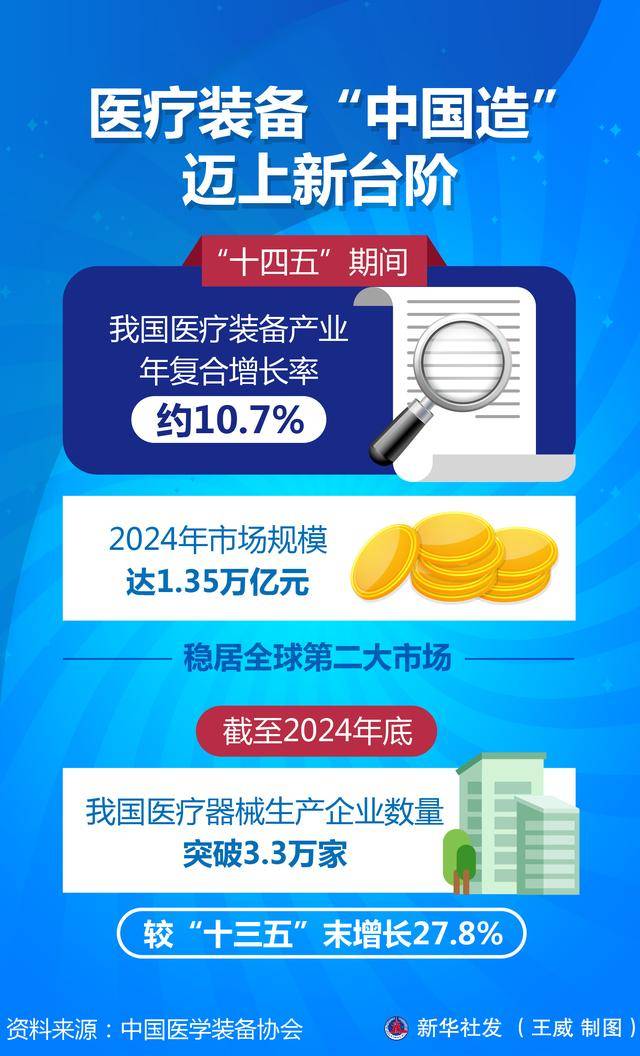
Core Viewpoint - The Chinese medical equipment industry has achieved significant growth during the "14th Five-Year Plan" period, with a focus on high-end and intelligent medical devices, marking a shift from reliance on imports to domestic innovation and production [1][3][10]. Market Growth - The annual compound growth rate of China's medical equipment industry is approximately 10.7% during the "14th Five-Year Plan," with the market size expected to reach 1.35 trillion yuan by 2024, making it the second-largest market globally [2][3]. - By the end of 2024, the number of medical device manufacturing companies in China is projected to exceed 33,000, representing a 27.8% increase compared to the end of the "13th Five-Year Plan" [2][3]. Technological Advancements - The industry is witnessing a trend towards high-end and intelligent medical equipment, with innovations such as advanced imaging devices and integrated radiation therapy technologies being introduced [4]. - Since the beginning of the "14th Five-Year Plan," 315 innovative medical devices have been approved, with 272 of them being domestic products, accounting for 86.3% [4]. Global Integration - Chinese medical equipment is increasingly being integrated into global markets, with companies like MicroPort and Mindray exporting products to over 40 countries and regions, achieving significant overseas revenue [4]. - The industry is transitioning from isolated breakthroughs to systematic integration, enhancing global collaboration and resource sharing [4][9]. Policy Support - The Chinese government has implemented multiple policies to promote high-quality development in the medical equipment sector, focusing on research, industry, and application [7][8]. - Initiatives include the establishment of green channels for innovative medical devices and ongoing projects to improve medical equipment conditions in grassroots healthcare [8]. Patient Benefits - The advancements in domestic medical equipment have led to improved healthcare accessibility, allowing patients to receive high-quality medical services closer to home [9][10]. - Technologies such as AI-assisted diagnostics and remote surgery systems are breaking geographical barriers, enabling better healthcare resource distribution [9].
越来越多“中国造”——我国医疗装备实现新突围
Xin Hua She· 2025-08-27 13:28
Core Viewpoint - The development of China's medical equipment industry during the "14th Five-Year Plan" period has achieved significant progress, showcasing high-end medical equipment and innovative enterprises, which is transforming the healthcare landscape in China and globally [1][2]. Market Growth - The medical equipment industry in China has a compound annual growth rate of approximately 10.7% during the "14th Five-Year Plan," with the market size expected to reach 1.35 trillion yuan by 2024, making it the second-largest market globally [2]. - By the end of 2024, the number of medical device manufacturing companies in China is projected to exceed 33,000, representing a growth of 27.8% compared to the end of the "13th Five-Year Plan" [2]. Technological Advancements - Domestic medical equipment is increasingly moving towards high-end and intelligent solutions, with innovations such as zero-magnetic medical imaging devices and integrated radiation therapy technologies being introduced [3]. - Since the beginning of the "14th Five-Year Plan," 315 innovative medical devices have been approved, with 272 of them being domestic products, accounting for 86.3% [3]. - The domestic production of advanced medical technologies, such as carbon ion therapy systems and artificial hearts, has shifted from reliance on imports to achieving competitive and leading positions in certain products [3]. Clinical Applications - The integration of artificial intelligence and advanced imaging technologies has led to significant improvements in medical equipment, with over 1.045 million patent applications in the medical equipment field during the "14th Five-Year Plan" [4]. - Innovations like the full-body PET/CT scanner have drastically reduced scanning times and improved imaging capabilities, enhancing clinical applications [4]. - The introduction of remote-controlled surgical robots has improved precision and safety in surgeries, benefiting both patients and healthcare providers [6]. Policy Support - The Chinese government has implemented multiple policies to promote high-quality development in the medical equipment sector, focusing on research, industry, and application [7]. - Initiatives such as the "14th Five-Year Plan for Medical Equipment Industry Development" and the establishment of green channels for innovative medical devices are aimed at accelerating the adoption of new technologies [7]. Accessibility and Affordability - The advancements in domestic medical equipment have made healthcare services more accessible and affordable for the public, with significant price reductions for surgical robots enabling more hospitals to offer robotic surgeries [9]. - Technologies like AI-assisted diagnostics and remote surgical systems are breaking geographical barriers, allowing patients in rural areas to access quality medical services [9][10].