Microsoft

Search documents
Vanguard Economist Warns Big Tech's $400B Debt Binge Carries 'Hidden Risks' - Amazon.com (NASDAQ:AMZN)
Benzinga· 2026-02-18 19:38
Group 1 - The AI capital expenditure boom is projected to exceed $400 billion in borrowing this year, significantly higher than the $165 billion raised in 2025 [1] - Concerns are raised regarding the opacity of AI debt exposure, as funding methods like special purpose vehicles and off-balance-sheet financing may not be immediately visible to investors [2] - A Bank of America survey indicates a decline in fund managers advocating for increased capital spending, with only 20% supporting it, down from 34% the previous month [3] Group 2 - Prediction markets suggest a 20% probability of an industry downturn by the end of 2026, with specific triggers identified such as a 50% drop in Nvidia's stock price [4] - The net notional CDS outstanding for major tech companies has surged to nearly $10 billion, indicating a rush among investors to hedge against AI debt exposure [5]



Jim Cramer Says Microsoft Will 'Blow Us Away' As Stock Sits 25% Below Peak
Benzinga· 2026-02-18 17:40
Core Viewpoint - Microsoft Corp's stock has experienced a significant decline in 2026, with a 15% drop year-to-date and nearly 12% over the past month, now trading around $401, which is approximately 25% below its 52-week high of $555.45, indicating a major reset for the company as an AI leader [1][6] Group 1: Stock Performance - The stock is currently down 15% year-to-date and nearly 12% over the past month [1] - Shares are trading around $401, which is about 25% below the 52-week high of $555.45 [1] - The stock is much closer to its 52-week low of $344.79 than to last year's peak, indicating cooled expectations [6] Group 2: AI Investment and Strategy - Microsoft is planning to invest up to $50 billion in AI infrastructure expansion, including data centers, custom AI chips, and Azure capacity build-outs [4] - There is rising investor scrutiny regarding the pace of returns on Microsoft's substantial AI spending [2] - Adoption data for Copilot shows that only about 3.3% of Microsoft 365 users are currently paying for it, raising concerns about monetization [3] Group 3: Future Outlook - Jim Cramer predicts that Microsoft may deliver a surprise with a total refresh beyond Copilot, hinting at deeper AI integration across its platforms [5] - The company is actively developing in-house AI models to reduce long-term reliance on external partners [5] - If Microsoft introduces a new monetization model or deeper AI integration, it could quickly shift market sentiment [5]


Microsoft and CrowdStrike Announce the Falcon Platform Now Available on Microsoft Marketplace
Businesswire· 2026-02-18 17:20
Core Viewpoint - CrowdStrike and Microsoft have expanded their strategic alliance, enabling organizations to purchase the CrowdStrike Falcon® platform through Microsoft Marketplace using their existing Microsoft Azure Consumption Commitment [1] Group 1: Strategic Alliance - The expansion of the alliance allows organizations of all sizes to streamline procurement and billing processes [1] - This collaboration aims to accelerate the deployment of Falcon's unified, AI-native protection across various environments, including endpoints and cloud [1]


Alliance for Decision Education Appoints Microsoft Chief Scientific Officer Eric Horvitz to Board of Directors
Globenewswire· 2026-02-18 17:05
Core Insights - The Alliance for Decision Education has appointed Dr. Eric Horvitz, Chief Scientific Officer of Microsoft, to its Board of Directors, aiming to enhance decision-making skills in K–12 education [1][3]. Group 1: Appointment and Background - Dr. Horvitz is internationally recognized for his contributions to artificial intelligence, particularly in perception, reasoning, and decision-making under uncertainty [2]. - His leadership at Microsoft focuses on the intersection of science, technology, and society, emphasizing AI, biosciences, and healthcare [2]. - Dr. Horvitz has a strong background in ethical AI, having founded and chaired Microsoft's Aether Committee on AI, Effects, and Ethics in Engineering and Research [3]. Group 2: Mission and Vision - The Alliance for Decision Education aims to empower students with essential skills for better decision-making, partnering with various stakeholders to promote Decision Education in schools [5]. - Dr. Horvitz expressed that decision-making excellence is crucial for human flourishing, especially in a rapidly changing technological landscape [4]. - His appointment is expected to strengthen the movement for integrating Decision Education into classrooms nationwide, ensuring students develop critical thinking and informed decision-making skills [4].

Microsoft's Brad Smith says U.S. tech should ‘worry a little' about Chinese firms government subsidies
CNBC· 2026-02-18 16:25
Core Viewpoint - American tech companies face challenges from Chinese competitors due to significant government subsidies that support the development of AI technologies [2][3]. Group 1: Competitive Landscape - The competition between U.S. and Chinese companies in AI is intensifying, with U.S. firms having an advantage in access to powerful chips and technology innovation [2]. - Chinese AI companies have received substantial government support, including a multi-billion-dollar national investment fund and energy vouchers, which could make their lower-cost AI models appealing in developing nations [2][3]. Group 2: Historical Context - The approach taken by the Chinese government to subsidize companies has previously disrupted the telecommunications market, aiding firms like Huawei and ZTE while negatively impacting American and European companies [3]. - The existence of global data centers operated by Chinese firms like Huawei and Alibaba suggests that China can easily provide subsidies to enhance their competitive edge [3]. Group 3: Industry Response - There is a call for American companies to improve their competitiveness in light of Chinese subsidies, emphasizing the need for support from the U.S. government [3].

Microsoft vs. Oracle: Which Cloud & AI Giant Has an Edge Right Now?
ZACKS· 2026-02-18 16:15
Core Insights - Microsoft and Oracle are leading companies in cloud and artificial intelligence, both expanding their AI infrastructure and integrating AI into their offerings as they approach 2026 [1] Microsoft (MSFT) Overview - Microsoft Cloud revenues surpassed $50 billion in Q2 FY2026, marking a 26% year-over-year increase, with Azure growing by 39% [2] - The company has 15 million commercial Microsoft 365 Copilot seats, indicating strong revenue potential through ARPU expansion [3] - Microsoft reported commercial remaining performance obligations (RPO) of $625 billion, a 110% increase year-over-year, providing significant revenue visibility [4] - The Zacks Consensus Estimate for MSFT's fiscal 2026 earnings is $16.97 per share, reflecting an 8.4% upward revision and a projected 24.41% growth from fiscal 2025 [5] Oracle (ORCL) Overview - Oracle is heavily investing in Oracle Cloud Infrastructure (OCI), with OCI revenues growing 68% in Q2 FY2026 and GPU-related revenues increasing by 177% [6] - The company reported a record RPO of $523 billion, up 438% year-over-year, driven by commitments from major clients [6] - Oracle's fiscal 2026 revenue guidance remains at $67 billion, with an additional $4 billion projected for fiscal 2027 [7] - The Zacks Consensus Estimate for ORCL's fiscal 2026 earnings is $7.45 per share, showing a slight downward revision of 0.4% but indicating a 23.55% growth from fiscal 2025 [10] Valuation and Performance Comparison - Microsoft has a forward P/E ratio of 21.95x, while Oracle's is 19.46x, with Microsoft's valuation appearing more justified due to its scale and profitability [11] - Oracle shares have declined by 34.4% over the past six months, underperforming the sector, while Microsoft shares have lost 22.1%, outperforming Oracle [14] Conclusion - Microsoft demonstrates advantages in scale, profitability, AI monetization, and balance sheet strength compared to Oracle [16] - Oracle faces challenges such as negative free cash flow and declining software revenues, which may impact its near-term outlook [16] - Investors are advised to monitor Microsoft for potential entry points, while Oracle holders may consider holding or waiting for a more favorable entry [16]


Microsoft Says It Has Reached Its 100% Renewable Electricity Target
WSJ· 2026-02-18 16:14
Core Insights - The tech giant is utilizing renewable power purchase agreements to mitigate its energy purchases, aiming to enhance its sustainability profile [1] - Critics argue that despite these agreements, the company continues to rely on fossil fuels from the grid, raising questions about the effectiveness of its sustainability efforts [1] Group 1 - The company is engaging in renewable power purchase agreements to offset its energy consumption [1] - There is a significant criticism regarding the company's ongoing reliance on fossil fuels, which undermines its renewable energy initiatives [1]
Microsoft to keep buying enough renewable energy to match all its electricity needs
Reuters· 2026-02-18 16:03
Core Insights - Microsoft has committed to purchasing enough renewable energy to match all its electricity needs, achieving this goal for the first time last year by contracting 40 gigawatts of new renewable energy supply [1][1][1] - The company aims to maintain this 100% renewable energy target during its expansion of AI-driven data centers, with plans to invest $50 billion by 2030 to support AI initiatives in the Global South [1][1][1] Renewable Energy Commitment - Microsoft has successfully contracted 40 gigawatts of renewable energy, with 19 gigawatts already supplied to the power grid [1][1] - The renewable energy contracts span 26 countries, and the remaining supply is expected to be delivered over the next five years [1][1] - The company’s cloud operations chief emphasized the importance of maintaining a 100% renewable energy target as the company grows [1][1] AI Expansion and Investment - Microsoft plans to invest $50 billion by 2030 to expand AI capabilities, particularly in countries across the Global South, primarily funding cloud and AI data centers [1][1] - The recent lifting of a moratorium on data center grid connections in Ireland is expected to help Microsoft meet significant demand for data centers in the region [1][1] - The company anticipates moving forward with previously stalled data center proposals outside Dublin, contingent on new regulatory policies [1][1]
Microsoft says it is on pace to invest $50 billion in 'Global South' AI push
Reuters· 2026-02-18 05:48
Group 1 - Microsoft plans to invest $50 billion by the end of the decade to expand AI in the 'Global South' [1] - The 'Global South' includes developing, emerging, or lower-income countries, primarily located in the southern hemisphere [1] - Last year, Microsoft announced $17.5 billion in AI investments specifically in India, highlighting its commitment to one of the fastest-growing digital markets [1]
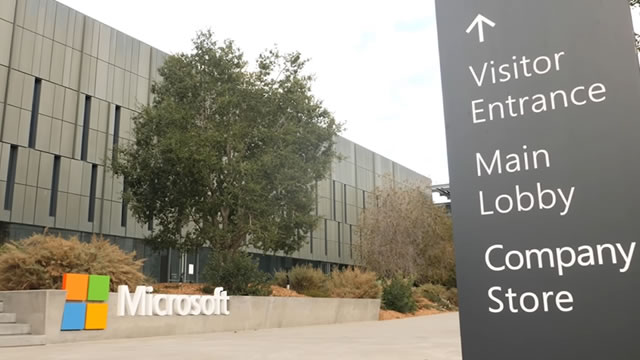
Investors Dump Microsoft Shares Despite Largest Earnings Beat in Company History
247Wallst· 2026-02-18 03:24
Core Viewpoint - Microsoft shares have dropped below $400 despite achieving the largest earnings beat in its history, as investors are skeptical about the sustainability of margins from AI spending [1] Financial Performance - Microsoft reported record operating margins of over 47% and a 26% year-over-year growth in cloud revenue [1] - The stock has fallen nearly 17.46% this year, contrasting with Google's decline of only 1.2% and NVIDIA's flat performance [1] Market Sentiment - Retail investor sentiment on Reddit remains neutral at 51.88, indicating confusion regarding Microsoft's future prospects [1] - The market is not questioning Microsoft's operational excellence but is demanding evidence that AI spending will lead to sustainable returns rather than just revenue growth [1] Investor Concerns - There is a significant disconnect between the company's AI infrastructure investment and actual product monetization, leading to a selloff in shares [1] - Investors are looking for concrete proof that Microsoft's AI initiatives will translate into sustainable margins, not just top-line growth [1] Comparison with Competitors - Google has integrated AI into existing profitable products, resulting in a minimal decline in its stock, while NVIDIA has maintained its stock value by selling infrastructure without promising future returns [1] - Microsoft is facing unique challenges as it is being penalized for the gap between its AI infrastructure spending and product adoption [1]