
Rocket Lab

Search documents
炸场太空赛道,低轨卫星兵家必争
3 6 Ke· 2025-11-06 10:30
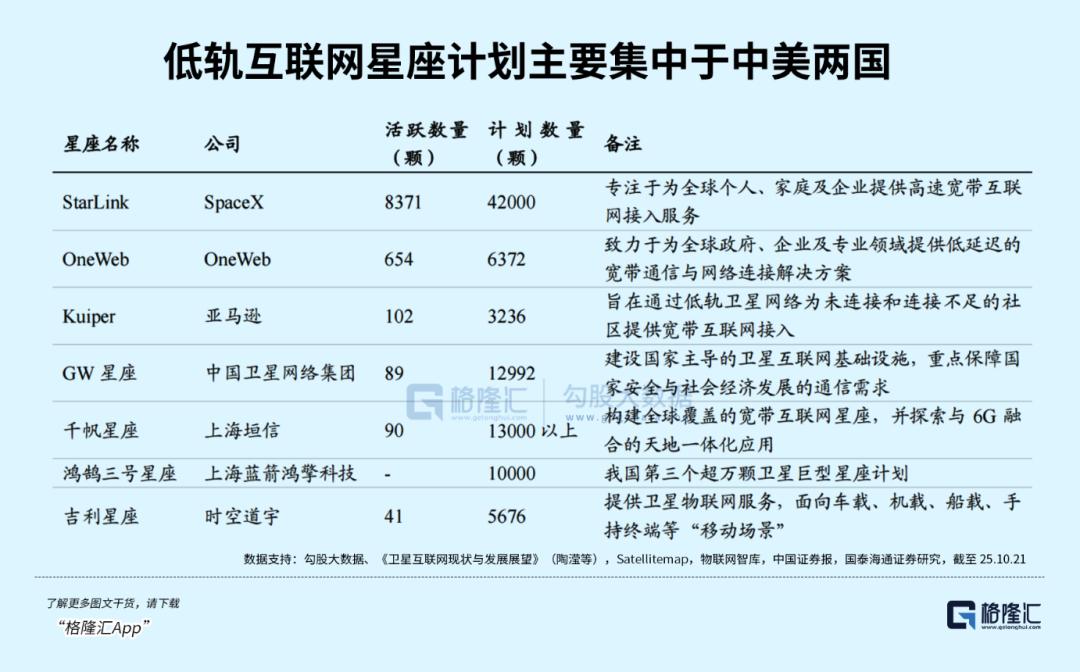
Core Insights - The low Earth orbit (LEO) satellite sector is emerging as a new investment hotspot, driven by significant market interest and capital inflow, particularly in the context of China's strategic push and technological advancements in satellite communication [1][2] Group 1: Market Dynamics - The LEO satellite industry is experiencing a collective surge across the entire value chain, from satellite manufacturing and rocket launches to core components and application services, making it a leading sector after AI chips [1] - Key companies in the sector have shown impressive stock performance, with China Satellite up 57%, Holleywo up 32%, and Shanghai Hanxun up 17% year-to-date [1] Group 2: Catalysts for Growth - Three major factors are accelerating the LEO satellite sector: 1. Policy support from the "14th Five-Year Plan," which prioritizes the construction of LEO satellite constellations [2] 2. Technological breakthroughs, including the successful launch of multiple satellites by China Star Network and the integration of satellite communication features in Huawei and Apple devices [2] 3. Recent successful launches, such as the Long March 6 rocket deploying 12 LEO communication satellites, which have heightened market enthusiasm [2] Group 3: Competitive Landscape - The global LEO satellite race is characterized by the scarcity of orbital and frequency resources, with the U.S. and China leading the charge. SpaceX's Starlink has 8,371 satellites in orbit, while China's GW and Qianfan constellations plan to deploy a total of 25,000 satellites by 2027 [5] - The competition for these resources is driving rapid development in the industry, with satellite manufacturing and launch capacities being significantly expanded [5] Group 4: Market Projections - The global LEO satellite market is projected to exceed $300 billion by 2025 and reach $1.79 trillion by 2035, with a compound annual growth rate (CAGR) of 9%. The Chinese market is expected to grow even faster, reaching 280 billion yuan in 2024 and surpassing 350 billion yuan in 2025, with a CAGR exceeding 25% [7] Group 5: Strategic Directions - Companies are advised to focus on three core areas for investment: 1. Satellite manufacturing and launch services, which are the most stable segments benefiting from large-scale deployments [13] 2. Core components and testing equipment, which are critical for satellite development and are expected to see significant demand growth [14] 3. Terminal and application services, which are poised for commercial success as satellite communication becomes more mainstream [15]


炸场太空赛道!低轨卫星兵家必争!
格隆汇APP· 2025-11-06 09:21
Core Viewpoint - The low Earth orbit (LEO) satellite sector is emerging as a significant investment opportunity driven by policy support, technological advancements, and market demand, with expectations of substantial growth over the next five years [2][4][9]. Summary by Sections Market Dynamics - The LEO satellite industry is experiencing a collective boom across the entire supply chain, from satellite manufacturing and rocket launches to core components and application services, becoming a leading hotspot next to AI chips [3]. - Major companies in the sector have shown impressive stock performance, with China Satellite up 57%, Holleywo up 32%, and Shanghai Hanxun up 17% year-to-date [3]. Policy and Technological Drivers - The "14th Five-Year Plan" has explicitly prioritized the construction of LEO satellite constellations, marking a shift from an industrial focus to a national strategic priority, intensifying competition with the U.S. [4]. - Recent technological breakthroughs include the successful launch of multiple satellites by China Star Network and the integration of satellite communication features in Huawei and Apple devices, transforming satellite connectivity from a concept to a necessity [4][8]. Industry Growth Projections - The global LEO satellite market is projected to exceed $300 billion by 2025 and reach $1.79 trillion by 2035, with a compound annual growth rate (CAGR) of 9%. The Chinese market is expected to grow even faster, reaching 280 billion yuan in 2024 and surpassing 350 billion yuan in 2025, with a CAGR exceeding 25% [9]. Competitive Landscape - The limited availability of orbital and frequency resources has intensified the competition between the U.S. and China, with the U.S. currently holding 89.6% of the global LEO satellites [7]. - China plans to deploy thousands of satellites by 2027, positioning itself as a key player capable of competing with U.S. efforts [7]. Investment Opportunities - Companies involved in satellite manufacturing and launching are seen as the most stable investments, benefiting directly from the scale of satellite deployment [17]. - The core components and testing equipment sector is identified as having significant growth potential, with demand for satellite communication chips and RF modules expected to rise as terminal usage increases [18]. - The terminal and application services segment is viewed as a potential growth area, particularly with the advent of consumer-grade satellite communication capabilities [19].

LIVE! RocketLab Launches Electron from New Zealand | The Nation God Navigates
The Launch Pad· 2025-11-05 02:58
Mission Overview - RocketLab launched its 74th Electron rocket from New Zealand [1] - The launch carried iQPS's satellites, which are small, high-performance SAR satellites [1] - iQPS's satellites use a lightweight, large, stowable antenna to collect high-resolution images of Earth [1] Community Engagement - The Launch Pad encourages viewers to join their community Discord [1] - The Launch Pad offers a membership program with benefits like early video access and behind-the-scenes live streams [1] - The Launch Pad aims to inform and inspire the explorers of tomorrow [1] Social Media & Website - The Launch Pad has a website at tlpnetworkcom [1] - The Launch Pad can be followed on X (formerly Twitter) at TLPN_Official [1] - The Launch Pad has a Facebook page at TheLaunchPadNetwork [1]

LIVE! RocketLab Electron Launch from New Zealand | Owl New World
The Launch Pad· 2025-10-14 15:47
Watch LIVE as RocketLab launches the 73rd Electron rocket. Today's launch is the first of a bulk buy of 10 Electron launches by Synspective to deliver their StriX satellites to low Earth orbit. StriX satellites collect data with a ground resolution of 1-3m and a swath width of more than 10-30km. Each Electron launch will deliver 1 StriX satellite into orbit. #RocketLab #Electron #Synspective Join our community Discord! https://discord.com/invite/xCm9UpDPE4 This coverage is made possible by our amazing commu ...

This Disruptive Emerging Technology Stock Is Up Nearly 4,000% Since 2024. Is It Overheated or Is It a Screaming Buy?
Yahoo Finance· 2025-10-13 10:22
Group 1 - The article highlights that while AI stocks have garnered significant investor attention, other emerging technologies such as quantum computing, eVTOL aircraft, small modular nuclear reactors, and satellite technology have also performed exceptionally well [2][3] - AST SpaceMobile has emerged as a standout performer in the tech sector, with its stock delivering returns exceeding 1,000% over the past 18 months, significantly outperforming even major players like Nvidia [4] - The company is focused on building a satellite-based broadband network that connects with standard smartphones, aiming to provide service in areas lacking terrestrial cell coverage [5][6] Group 2 - AST SpaceMobile has launched six satellites since its inception in 2017 and plans to deploy a total of 45 to 60 satellites by 2026 to serve markets including the U.S., Europe, and Japan [7] - Following the expansion of its partnership with Verizon, AST SpaceMobile's market capitalization surged above $30 billion, indicating strong investor interest despite concerns that its valuation may be inflated [8]

Rocket Lab, MP Materials, And IREN Are Among The Top 10 Large-Cap Gainers Last Week (Oct. 6-Oct. 10): Are The Others In Your Portfolio? - IREN (NASDAQ:IREN), MP Materials (NYSE:MP), Figma (NYSE:FIG), 

Benzinga· 2025-10-12 11:48
Core Insights - Ten large-cap stocks were highlighted as top performers in the previous week, indicating strong market interest and potential investment opportunities [1] Group 1: Stock Performance - The article identifies ten large-cap stocks that excelled in performance last week, suggesting they may be worth considering for investment portfolios [1]

Rocket Lab's stock set for 25% gain this week after flurry of new launch deals
CNBC· 2025-10-10 15:25
Core Viewpoint - Rocket Lab's stock has surged significantly due to new launch agreements, reflecting strong growth in the space tech industry [1][2] Group 1: Stock Performance - Rocket Lab shares have increased by over 25% this week, with a nearly 50% rise over the last two weeks [1] - The stock has nearly tripled since the beginning of the year, indicating robust investor confidence [1] Group 2: New Launch Agreements - The company secured two launches with the Japan Aerospace Exploration Agency, scheduled for December and 2026 [2] - Rocket Lab also announced a multi-launch agreement with Japanese space startup Q-shu Pioneers of Space, in addition to four contracted missions [2]


X @The Wall Street Journal
The Wall Street Journal· 2025-10-03 19:09
A self-taught engineer from a remote part of New Zealand is positioning his company, Rocket Lab, to compete with the likes of Elon Musk’s SpaceX and Jeff Bezos’ Blue Origin https://t.co/qesih1FxAa ...
Why Firefly Aerospace Stock Collapsed 35% Last Month
Yahoo Finance· 2025-10-01 19:45
Core Insights - Firefly Aerospace's stock experienced a significant decline of 35.4% in September due to a rocket explosion during a test [1][5] - The company, which recently went public and raised nearly $1 billion, is facing challenges in establishing itself as a reliable player in the competitive space launch market [3][7] Company Performance - Firefly Aerospace has a backlog of $1.3 billion, indicating strong customer interest, but reported only $15 million in revenue last quarter [3] - The Alpha rocket has had only six launches, and the recent explosion raises concerns about the company's reliability and reputation in the industry [5] Market Context - The IPO was oversubscribed, reflecting investor excitement around space start-ups, but the stock is considered a risky investment due to its unprofitability and the typical underperformance of IPO stocks in the following year [7][8] - Comparatively, Rocket Lab's Electron system has successfully completed 70 missions with minimal mishaps, highlighting the competitive challenges Firefly faces [5]
Why Firefly Aerospace Stock Is Down Today
Yahoo Finance· 2025-09-30 14:50
Core Viewpoint - Firefly Aerospace has faced significant setbacks with its Alpha rocket, leading to a 22% drop in share price as investors express concerns over the impact on the company's timeline for commercial service [1][4]. Group 1: Company Performance - Firefly Aerospace went public in August and initially saw a surge in stock price due to investor enthusiasm for space stocks [3]. - The company has a history of both successes, such as landing a lunar lander, and failures that have affected its financial standing [3]. - The Alpha rocket's booster stage experienced a failure during a preflight trial, marking the second failure in recent months, with the first occurring in April [4][7]. Group 2: Market Position and Competition - There is a market demand for rockets in Alpha's size range, which is between SpaceX's Falcon 9 and Rocket Lab's Electron [5]. - Competition in the space launch sector is intensifying, and delays in Alpha's launch schedule could hinder its ability to compete effectively [5][8]. - Firefly's stock has shown volatility, trading between $27.60 and $73.80 per share since going public, indicating speculative valuation [6][7]. Group 3: Investor Sentiment - Investor excitement in the space sector is high, but caution is advised until Firefly can demonstrate reliable launches with the Alpha rocket [8]. - Analysts have identified other stocks as better investment opportunities compared to Firefly Aerospace, suggesting a lack of confidence in its current trajectory [9].