
新兴技术

Search documents
European Union Agency Calls China A Fragile Power, Suggests Escalation In Trade Disputes
Seeking Alpha· 2026-03-11 14:24
Core Insights - China has experienced a surge in exports, leading to increased global trade tensions [1] - Observing megatrends can provide insights into societal advancements and potential investment opportunities [1] - The importance of fundamentals, quality of leadership, and product pipeline is emphasized for successful investing [1] Group 1: Market Trends - China's exports have significantly increased, impacting global trade dynamics [1] - The evolution of society and technology presents both challenges and opportunities for companies [1] Group 2: Investment Strategy - A focus on macrotrends, futurism, and emerging technologies is crucial for identifying investment opportunities [1] - The analysis of marketing and business strategies is particularly relevant for medium-sized companies and startups [1]


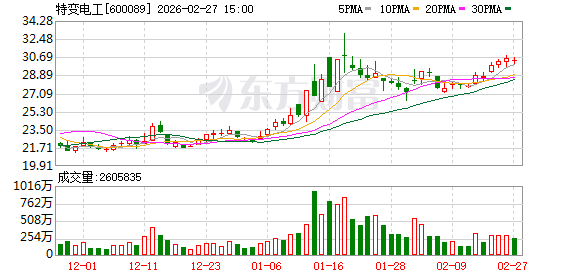
特变电工:公司对新兴技术保持关注,暂无相关技术预研布局
Zheng Quan Ri Bao· 2026-02-27 13:35
Core Viewpoint - The company is currently monitoring emerging technologies but has no related research and development plans in place [2] Group 1 - The company responded to investor inquiries on its interactive platform [2] - The company maintains a focus on emerging technologies [2] - There are no current pre-research layouts for related technologies [2]

学习规划建议每日问答丨为什么要加强新兴领域国家安全能力建设
Xin Hua She· 2026-02-11 02:56
Group 1 - Strengthening national security capabilities in emerging fields is essential for effectively addressing the challenges of national security in the new era, which is crucial for modernizing the national security system and capabilities [2] - The new era of national security in China is characterized by a richer connotation and broader scope than ever before, with emerging fields presenting both unprecedented opportunities and risks [2] - Establishing a safety regulatory system and enhancing regulatory capabilities are necessary to ensure that the development of emerging fields adheres to safety standards [2] Group 2 - Enhancing national security capabilities in emerging fields is a necessary condition for seizing opportunities from the new round of technological revolution and industrial transformation, which is vital for developing new productive forces [3] - The focus should be on maintaining a balance between promoting innovation and legal governance, ensuring that safety compliance allows for sufficient development space for emerging technologies [3] - The establishment of a self-controllable security protection technology system is essential for improving safety levels in emerging fields and promoting the healthy development of pillar industries [3] Group 3 - Strengthening national security capabilities in emerging fields is a strategic measure to gain an advantage in international competition and improve global security governance, which is important for shaping a favorable external security environment [4] - The development of emerging technologies can and should benefit humanity, but there are significant challenges in balancing innovation and security governance [4] - China's efforts to construct a governance framework that emphasizes both development and security have received international acclaim, showcasing its commitment to global governance initiatives [4]
India Dropping Russian Oil Demonstrates How Attractive America's Markets And Economy Are
Seeking Alpha· 2026-02-03 18:17
Group 1 - The U.S.-India trade deal is expected to positively impact markets and may contribute to peace in Europe by reducing Russia's revenue streams [1] - The global economy has shown resilience despite fluctuations in markets and economic cycles [1] - Observing megatrends can provide insights into societal advancements and potential investment opportunities [1] Group 2 - The focus on fundamentals, quality of leadership, and product pipelines is essential for identifying investment opportunities [1] - Recent emphasis has been placed on marketing and business strategy for medium-sized companies and startups [1] - Experience includes evaluating startups and emerging industries/technologies, indicating a strong background in assessing growth potential [1]

中经评论:10万亿千瓦时的信心与动力
Jing Ji Ri Bao· 2026-01-22 00:10
Group 1 - The core point of the article highlights that in 2025, China's total electricity consumption will exceed 10 trillion kilowatt-hours for the first time, reaching 10.4 trillion kilowatt-hours, marking a 5% year-on-year increase, and solidifying China's position as the world's largest electricity consumer [1][2][3] - This electricity consumption level is approximately double that of China's total consumption in 2015 and more than double that of the United States, surpassing the combined annual consumption of the EU, Russia, India, and Japan [1][2] - The growth in electricity demand reflects the robust vitality and quality of China's economy, driven by industrial activities and residential needs, with a significant contribution from high-end manufacturing and emerging technologies [2][3] Group 2 - The increase in electricity consumption is achieved alongside a continuous decline in energy consumption per unit of GDP, indicating more efficient production and higher quality development outcomes [2] - The optimization of industrial structure is evident, with high-end manufacturing sectors such as new energy vehicles and wind power equipment experiencing growth rates exceeding 20% and 30%, respectively [2] - The rapid development of the digital economy and new technologies has led to a surge in electricity demand, particularly in sectors like internet services and charging infrastructure, with year-on-year growth rates exceeding 30% and nearly 50% respectively [2][3] Group 3 - The article emphasizes that the growth in electricity demand does not exacerbate reliance on fossil fuels, as non-fossil energy sources account for over 60% of installed capacity, with wind and solar power leading globally [3] - The trend of decoupling electricity consumption growth from carbon emissions is becoming apparent, with one-third of electricity consumption being green energy [3] - The construction of a new power system is addressing challenges related to the integration of renewable energy sources, supporting China's commitment to carbon neutrality [3] Group 4 - The substantial electricity demand poses challenges for the planning, construction, scheduling, and supply capabilities of the power system, necessitating a robust national energy production and transmission network [4] - Despite the progress, disparities in per capita electricity consumption and regional differences remain, indicating ongoing challenges in achieving balanced development [4] - The article stresses the importance of technological empowerment in addressing these challenges, including advancements in clean energy technologies, energy storage, and smart grid innovations [4]
阿莱德:公司十分关注周边行业的新兴技术发展并审慎评估适配可行性
Zheng Quan Ri Bao Wang· 2026-01-20 08:41
Group 1 - The company is closely monitoring the development of emerging technologies in surrounding industries and is evaluating their feasibility for adaptation [1] - The company will fulfill its disclosure obligations in accordance with legal regulations if there are any relevant business developments that meet disclosure standards [1]

十年翻一番——2025年我国用电量首次超过10万亿千瓦时
Zhong Guo Dian Li Bao· 2026-01-20 00:41
Core Viewpoint - China's total electricity consumption in 2025 is projected to reach 10,368.2 billion kilowatt-hours, reflecting a year-on-year growth of 5.0%, showcasing the resilience and vitality of China's large-scale economy [1][3]. Group 1: Electricity Consumption Growth - The average annual growth rate of electricity consumption during the 14th Five-Year Plan period is approximately 6.6%, with an annual increase of 563.6 billion kilowatt-hours, which is 0.9 percentage points higher than the previous five-year period [2][3]. - By 2025, China's electricity consumption will exceed the total of several major economies, including the EU, Russia, India, and Japan, highlighting China's status as a manufacturing and population powerhouse [3]. Group 2: Economic Impact on Electricity Demand - Economic growth is driving electricity demand, with urban and rural residential electricity consumption growing at annual rates of 6.4% and 6.2%, respectively, indicating a gradual reduction in the urban-rural electricity consumption gap [4]. - In 2025, the first, second, and third industries are expected to see electricity consumption growth rates of 9.9%, 3.7%, and 8.2%, respectively, with the first and third industries leading the growth [6]. Group 3: High-End Manufacturing and New Energy - High-tech and equipment manufacturing industries are projected to have an electricity consumption growth rate of 6.4%, with significant growth in automotive, general equipment, and instrumentation manufacturing [6]. - The electricity consumption growth in new energy vehicles and wind power equipment manufacturing is expected to exceed 20% and 30%, respectively, indicating a strong shift towards new scenarios and services [7]. Group 4: Third Industry and New Infrastructure - The third industry is anticipated to consume 2.0 trillion kilowatt-hours of electricity by 2025, accounting for approximately 19.2% of total electricity consumption, becoming a key driver of electricity demand [7]. - New infrastructure and emerging technologies, such as charging services and information technology services, are experiencing significant growth, with year-on-year increases of 48.8% and 17.0%, respectively [7].
申万公用环保周报:2025年用电平稳增长,三产及居民贡献增量过半-20260119
Shenwan Hongyuan Securities· 2026-01-19 14:07
Investment Rating - The report maintains a positive outlook on the power and gas sectors, recommending various companies within these industries for investment opportunities [1]. Core Insights - The report highlights that China's total electricity consumption is projected to exceed 10 trillion kWh in 2025, reaching 10.4 trillion kWh, with a year-on-year growth of 5% [7][8]. - The growth in electricity consumption is driven primarily by the secondary and tertiary industries, which together contribute nearly 80% of the total increase in electricity demand [8]. - The report notes significant growth in electricity consumption from high-end manufacturing, digital economy, and new infrastructure projects, such as charging stations and 5G base stations, which are expected to see growth rates exceeding 30% [8]. Summary by Sections 1. Electricity Sector - In 2025, the total electricity consumption is expected to reach 10.4 trillion kWh, with a 5% year-on-year increase. The first, second, and third industries, along with urban and rural residential electricity consumption, are projected to grow by 9.9%, 3.7%, 8.2%, and 6.3% respectively [7][9]. - The second industry remains the largest consumer of electricity, contributing 48% to the growth, while the third industry contributes 31% [9][13]. - The report recommends investments in coal-fired power companies like Guodian Power and Inner Mongolia Huadian, as well as large hydropower companies such as Yangtze Power and State Power Investment [15][16]. 2. Gas Sector - The report indicates that colder temperatures are expected to increase heating demand, leading to a rebound in gas prices across Europe and Asia. As of January 16, the Henry Hub spot price was $3.06/mmBtu, with a weekly increase of 6.77% [17][24]. - The report highlights that European gas prices have surged due to low inventory levels and increased heating demand, with the TTF spot price reaching €38.10/MWh, up 31.38% week-on-week [17][24]. - Recommendations include investing in integrated gas companies like Kunlun Energy and New Hope Energy, as well as gas trading companies like New Hope and New Energy [38]. 3. Market Performance - The report notes that the public utility, power, and environmental sectors outperformed the Shanghai and Shenzhen 300 index during the week of January 12 to January 16, 2026 [40]. 4. Company and Industry Dynamics - Recent initiatives in various provinces aim to enhance green energy and environmental standards, including the establishment of green mining standards in Guangxi and guidelines for industrial microgrid construction [46][47]. - The report also mentions significant corporate announcements, including mergers and acquisitions in the energy sector, which may impact market dynamics [50].



用电量超10万亿千瓦时 中电联:彰显经济强劲韧性与发展活力
Xin Lang Cai Jing· 2026-01-19 13:51
Core Insights - The National Energy Administration has projected that China's total electricity consumption will reach 10,368.2 billion kilowatt-hours by 2025, representing a year-on-year growth of 5.0% [1][2][3] - This milestone marks the first time any country has surpassed 10 trillion kilowatt-hours in electricity consumption, which is more than double the annual electricity consumption of the United States and exceeds the combined total of the European Union, Russia, India, and Japan [1][2] Group 1 - The increase in electricity consumption is attributed to a combination of a recovering economy and multiple instances of high-temperature weather, which have significantly boosted residential electricity demand [2][3] - In July and August, China's total electricity consumption exceeded 1 trillion kilowatt-hours for two consecutive months, a global first [2][3] Group 2 - The high-end manufacturing sector is expected to become a new growth point for electricity consumption, with the electric vehicle and wind power equipment manufacturing industries projected to grow by over 20% and 30%, respectively [2][3] - The rapid development of the digital economy and emerging technologies is driving electricity demand, with new infrastructure such as charging stations and 5G base stations leading to over 30% growth in electricity consumption from the internet and related services, and nearly 50% growth in the charging and swapping industry [2][3] Group 3 - Changes in electricity consumption patterns and new consumption scenarios reflect the ongoing optimization of China's economic structure and the accelerated upgrading of traditional industries, further confirming the positive, green, and new development trends of the economy [2][3]
2025年全社会用电量首超10万亿千瓦时:彰显中国经济发展韧性与活力
Ren Min Ri Bao Hai Wai Ban· 2026-01-19 02:46
Core Insights - China's total electricity consumption is projected to reach 10,368.2 billion kilowatt-hours by 2025, marking the first time a single country surpasses the 10 trillion kilowatt-hour threshold globally [1][2] - The growth in electricity consumption is driven by the tertiary sector and urban-rural residential electricity use, contributing to 50% of the overall increase [1] Industry Analysis - The first industry electricity consumption is expected to be 149.4 billion kilowatt-hours, with a year-on-year growth of 9.9% [1] - The second industry will consume 6,636.6 billion kilowatt-hours, showing a year-on-year growth of 3.7% [1] - The third industry is projected to consume 1,994.2 billion kilowatt-hours, with a year-on-year growth of 8.2% [1] - Urban and rural residential electricity consumption is anticipated to reach 158.8 billion kilowatt-hours, growing by 6.3% year-on-year [1] Growth Drivers - High-end manufacturing is expected to become a key growth point for electricity consumption, with electric vehicle and wind power equipment manufacturing sectors seeing growth rates exceeding 20% and 30%, respectively [2] - The rapid development of the digital economy and emerging technologies is driving a significant increase in electricity demand, with new infrastructure such as charging stations and 5G base stations contributing to over 30% growth in internet and related services electricity consumption [2] - The charging and swapping service industry is projected to see nearly 50% year-on-year growth in electricity consumption [2]