
Under Armour

Search documents
关税重压撕裂利润幻象,Lululemon股价暴跌逾两成
Sou Hu Cai Jing· 2025-06-07 03:10
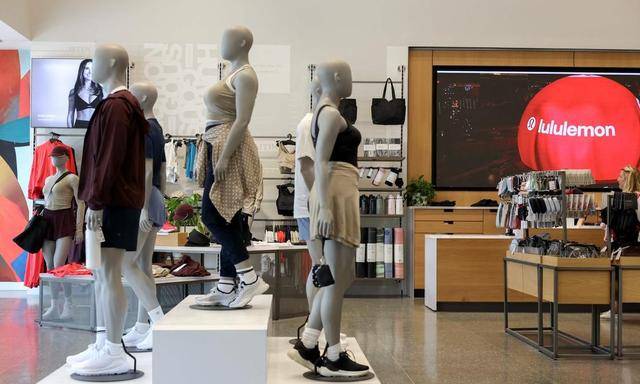
Core Viewpoint - Lululemon's stock experienced a significant drop of 23% following disappointing financial results, reflecting broader challenges in the American fashion supply chain due to rising operational costs and weak sales [1][3] Financial Performance - Lululemon's recent financial report showed both sales and profits falling short of expectations, particularly in the Americas market where comparable sales declined [3] - The company's high valuation bubble is being rapidly deflated as consumer spending tightens and price sensitivity increases, undermining its pricing power [3] Impact of Tariffs - The U.S. government's imposition of tariffs up to 30% on Chinese goods and additional tariffs on other Asian products has significantly increased costs for brands reliant on Asian supply chains, with Lululemon's CFO indicating a "major impact" on profit margins [3][5] - The broadening of tariff policies disrupts the entire supply chain, forcing brands to reassess their global production strategies amidst rising manufacturing costs [5] Structural Issues - Lululemon's stock decline highlights the vulnerability of high-valuation consumer brands in a changing macroeconomic environment, where even its core customers are cutting back on spending [5][6] - The brand's reliance on emotional value and perceived quality is being challenged by declining consumer confidence and rising credit defaults [5][6] Industry Context - Lululemon's struggles are indicative of a larger trend affecting the non-essential consumer goods sector, with major brands like Nike and Adidas also facing performance challenges [6] - The shift towards digital assets and the pressures from generative AI and the metaverse are creating strategic anxieties for traditional brands that depend on physical retail [6] Future Outlook - The current situation signals a shift in the fashion industry, where brands must navigate political risks and adapt to a new order prioritizing national security over globalization [8] - The recent tariff measures represent a systemic reconfiguration that could serve as a warning for brands dependent on global supply chains, emphasizing the need for resilience in the face of geopolitical tensions [8]

Under Armour(UAA) - 2025 Q4 - Annual Report
2025-05-22 20:35
Revenue and Sales Performance - In Fiscal 2025, net revenues from apparel, footwear, and accessories represented 67%, 23%, and 8% of total revenues, respectively, with licensing arrangements contributing 2%[22]. - North America accounted for approximately 60% of total net revenues, with $2.8 billion generated from sales in the United States[39][40]. - Direct-to-consumer sales represented 40% of net revenues, while wholesale sales accounted for 58%[36]. - In Fiscal 2025, sales through the wholesale channel represented approximately 58% of the company's net revenues[96]. - Total net revenues for Fiscal 2025 decreased by 9.4% to $5,164.3 million compared to $5,701.9 million in Fiscal 2024[195]. - Direct-to-consumer revenue decreased by 10.5%, while wholesale revenue decreased by 8.1%[190]. - North America net revenue decreased by 11.4%, while EMEA increased by 0.4%[190]. - Total net revenues decreased by $537.6 million, or 9.4%, to $5.16 billion during Fiscal 2025 from $5.70 billion in Fiscal 2024[196]. - Net sales decreased by $509.9 million, or 9.1%, to $5.07 billion during Fiscal 2025, primarily due to lower unit sales in apparel and footwear[198]. - License revenues decreased by $16.7 million, or 15.0%, to $94.6 million during Fiscal 2025, mainly due to lower revenues from North American licensing partners[199]. Operational and Strategic Initiatives - The company aims to enhance consumer engagement through a digital strategy that strengthens brand connectivity[19]. - The company is focused on expanding its wholesale distribution and increasing direct-to-consumer sales channels for long-term growth[19]. - The company has a license agreement with partners in Japan and Australia to expand its market presence in those regions[46]. - The company is investing significantly in enhancing digital shopping capabilities and consumer loyalty programs to adapt to evolving consumer preferences[101]. - The company plans to enhance its digital strategy to improve consumer engagement and brand connectivity[185]. - The company has invested in expanding its network of Brand and Factory House stores and enhancing its digital strategy, which requires substantial cash investments[116]. Financial Performance and Challenges - Net income for Fiscal 2025 was a loss of $201.27 million, compared to a net income of $232.04 million in Fiscal 2024[195]. - Gross profit decreased by $155.5 million to $2.5 billion during Fiscal 2025, while gross margin increased to 47.9% from 46.1%[202]. - Selling, general and administrative expenses increased by $201.5 million, or 8.4%, to $2.60 billion during Fiscal 2025, representing 50.4% of net revenues[205][206]. - The company incurred restructuring charges of $57.97 million in Fiscal 2025, with total estimated charges expected to be between $140 million and $160 million[187][190]. - Restructuring charges increased by $58.0 million during Fiscal 2025, primarily due to employee-related and facility-related charges[208]. - Interest expense, net increased by $6.4 million to $6.1 million during Fiscal 2025, primarily due to a decrease in interest income[210]. - Other expense, net increased by $45.5 million to $13.4 million during Fiscal 2025, primarily due to an earn-out recorded in connection with the sale of MyFitnessPal[214]. - Income tax expense decreased by $32.9 million to a tax benefit of $2.9 million during Fiscal 2025, with an effective tax rate of 1.4%[215]. Market and Competitive Landscape - The competitive landscape includes major brands like NIKE, adidas, and PUMA, with the company focusing on brand image and product quality to differentiate itself[59]. - The company operates in a highly competitive market, with competitors having greater resources and brand recognition, which may lead to a loss of market share[88]. - The company faces intense competition for employees and regularly collects feedback to improve the teammate experience[71]. - The company faces significant pricing pressure due to intense competition, which may negatively impact margins and profitability[91]. Supply Chain and Manufacturing - The top five suppliers provided approximately 38% of the fabric used in apparel and accessories, primarily sourced from Taiwan, China, Malaysia, and Vietnam[51]. - In Fiscal 2025, 67% of apparel and accessories products were manufactured in Jordan, Vietnam, Cambodia, and Indonesia[52]. - The company generated approximately 69% of its apparel and accessories products from ten manufacturers in Fiscal 2025, with nine manufacturers producing nearly all of its footwear products[109]. - The company relies on third-party suppliers for raw materials, and disruptions in supply could adversely affect its ability to meet consumer demand and result in lower revenues[110]. - Labor disruptions at ports or suppliers could create significant risks for the company's operations, leading to canceled orders and increased expenses[114]. - The company evaluates all manufacturers for quality systems, social compliance, and financial strength before selection and on an ongoing basis[53]. Human Capital and Organizational Structure - As of March 31, 2025, the company had approximately 14,400 teammates worldwide, with about 6,500 being full-time employees[64]. - The total rewards strategy aims to provide competitive pay and benefits, with approximately 64% of the workforce located in the United States[69]. - The company has a human capital management strategy focused on creating an engaging workplace and retaining talent through development opportunities[63]. - The leadership team includes experienced executives, with Kevin Plank serving as President and CEO since April 2024[72]. - The company has experienced significant changes in its executive management team, which could disrupt business operations and customer relationships[125]. Risks and Regulatory Compliance - Global events, including public health emergencies, can disrupt operations and negatively affect financial results[94]. - Fluctuations in the cost of raw materials and transportation can adversely affect profit margins and financial condition[93]. - Economic downturns or inflation can materially impact consumer discretionary spending, affecting sales and growth expectations[82]. - The company may not be able to mitigate cost increases from tariffs and trade restrictions, which could adversely impact financial results[87]. - Compliance with evolving regulatory standards and data privacy laws could result in significant costs and impact profitability[138]. - The company is exposed to currency exchange rate fluctuations, which could materially impact financial results[134]. - The company has identified a material weakness in its internal control over financial reporting as of March 31, 2025, which could lead to material misstatements in financial statements and a decline in stock price[149]. - The company is actively engaged in remediation efforts to address the identified material weakness, but there is no guarantee of success in promptly resolving it[151]. - The company has significant ongoing legal proceedings that could adversely affect its business, reputation, financial condition, and stock price[147]. Cybersecurity and Technology - The company has implemented a cybersecurity program aligned with its enterprise risk management program to mitigate data security threats[156]. - The company engages independent third parties for regular penetration testing and cybersecurity audits to enhance its information security[157]. - The company maintains cyber liability insurance to help cover financial losses from cybersecurity incidents, although it may not cover all types of incidents[156]. - The company depends heavily on information technology for its operations, and any failure or interruption could harm its business effectiveness[121]. Real Estate and Facilities - The company leases approximately 3.5 million square feet of distribution facilities across Maryland, Tennessee, and California, with plans to exit the Rialto, California facility by March 2026[165]. - The company operates 441 Brand and Factory House retail stores across various countries, with lease termination dates extending through 2038[166]. - The company has moved its principal executive and administrative offices to a newly owned complex in Baltimore, Maryland, while evaluating options for its previous office space[164].
Under Armour(UA) - 2025 Q4 - Annual Report
2025-05-22 20:35
Revenue Breakdown - In Fiscal 2025, net revenues from apparel, footwear, and accessories represented 67%, 23%, and 8% of total revenues, respectively, with licensing arrangements contributing 2%[22]. - North America accounted for approximately 60% of net revenues, with U.S. sales reaching $2.8 billion in Fiscal 2025[39][40]. - Direct-to-consumer sales comprised 40% of net revenues, while wholesale sales accounted for 58% in Fiscal 2025[36]. - In Fiscal 2025, sales through the wholesale channel represented approximately 58% of the company's net revenues[96]. - Total net revenues for Fiscal 2025 decreased by 9.4% to $5,164.3 million compared to $5,701.9 million in Fiscal 2024[190]. - Total net revenues decreased by $537.6 million, or 9.4%, to $5.2 billion during Fiscal 2025 from $5.7 billion in Fiscal 2024[196]. - Net sales decreased by $509.9 million, or 9.1%, to $5.1 billion during Fiscal 2025, primarily due to lower unit sales in apparel and footwear[198]. - License revenues decreased by $16.7 million, or 15.0%, to $94.6 million during Fiscal 2025, mainly due to lower revenues from North American licensing partners[199]. Manufacturing and Sourcing - The top five suppliers provided approximately 38% of the fabric used in apparel and accessories, primarily sourced from Taiwan, China, Malaysia, and Vietnam[51]. - In Fiscal 2025, 67% of apparel and accessories were manufactured in Jordan, Vietnam, Cambodia, and Indonesia, with ten manufacturers producing 69% of these products[52]. - The company is exploring ways to diversify sourcing in response to global trade policy changes[52]. - The company evaluates all manufacturers for quality systems, social compliance, and financial strength before selection and on an ongoing basis[53]. - The company generated approximately 69% of its apparel and accessories products from ten manufacturers in Fiscal 2025, with nine manufacturers producing nearly all footwear products[109]. Digital Strategy and Consumer Engagement - The company aims to enhance consumer engagement through a digital strategy that includes multiple digital touchpoints[19]. - The company is investing significantly in enhancing digital shopping capabilities and consumer loyalty programs to adapt to evolving consumer preferences[101]. Marketing and Brand Strategy - The marketing strategy focuses on high-performing athletes and teams, leveraging sponsorships and grassroots events to drive brand awareness[31][30]. - The company owns major trademarks, including UA Logo® and UNDER ARMOUR®, and actively protects its intellectual property[56][57]. - The competitive landscape includes major brands like NIKE, adidas, and PUMA, with challenges from both global and regional competitors[59][60]. Financial Performance and Challenges - Net income for Fiscal 2025 was a loss of $201.27 million, compared to a net income of $232.04 million in Fiscal 2024[195]. - The company incurred restructuring charges of $57.97 million in Fiscal 2025, with total estimated charges expected to be between $140 million and $160 million[187][188]. - Selling, general and administrative expenses increased by 8.4% to $2,601.99 million[190]. - The company faces significant pricing pressure due to intense competition, which may negatively impact margins and profitability[91]. - Fluctuations in raw material costs and supply chain disruptions can adversely affect the company's profit margins and financial results[93]. - The company must successfully execute its long-term strategies, including expanding its direct-to-consumer business and enhancing digital offerings, to achieve growth objectives[99]. - A decline in sales to key customers could result in a material loss of net revenues, negatively impacting growth prospects[102]. Operational Efficiency and Management - Inventory management is crucial, with a focus on improving efficiency and reducing lead times to meet consumer demand[54]. - The company is executing a restructuring plan aimed at improving financial and operational efficiencies, but may not fully realize the expected benefits, potentially impacting profitability[127]. - The company has faced significant changes in its executive management team, which could disrupt operations and affect business goals[125]. - The company relies heavily on information technology, and any failure or interruption could harm its operational effectiveness[121]. - The company experienced operational disruptions due to cyberattacks, which could lead to delays in product fulfillment and reduced operational efficiency[122]. Sustainability and Compliance - The sustainability strategy aims to drive performance through sustainable innovations across product, home field, and team pillars[62]. - Climate change and increased regulatory focus on sustainability may adversely affect the company's brand, product sales, and operational results[117]. - Legal and regulatory compliance is critical, as failure to adhere to laws could lead to significant penalties and reputational damage[135]. Workforce and Culture - The workforce consists of approximately 14,400 teammates, with about 6,500 being full-time employees[64]. - The company emphasizes a culture of engagement and ethical practices, supported by various training and development programs[65][66]. - Total rewards strategy includes competitive pay and benefits, with a focus on pay equity and performance-based compensation[68][69]. - The company is committed to enhancing its leadership capabilities through mentoring and training programs[67]. Cash Flow and Financial Position - As of March 31, 2025, the company's cash and cash equivalents totaled $501 million, indicating a need for additional capital to manage and grow the business[130]. - The company anticipates no cash dividends will be declared or paid in the foreseeable future[175]. - The company is actively monitoring macroeconomic factors, including inflation and global trade policies, which may materially impact results in Fiscal 2026[192][193]. Risks and Vulnerabilities - The company relies heavily on consumer discretionary spending, which can decline during economic downturns, impacting sales and growth expectations[82]. - The company has limited brand recognition and operational experience in certain international markets, which may hinder its growth strategy and operational efficiency[105]. - The company relies on a limited number of distribution facilities, making it vulnerable to disruptions from natural disasters or operational difficulties[120]. - The company has experienced challenges with maintaining quality control standards, risking loss of net revenues and brand reputation[113]. - The company has historically provided supply chain finance support, but disruptions in financial markets could impact cash flow and liquidity for its partners[111].

Under Armour: Rating Downgrade To Sell As Valuation Upgrade Is Not Justified
Seeking Alpha· 2025-05-16 22:27
Core Viewpoint - Under Armour, Inc. (NYSE: UAA) is at a critical juncture where its stock performance could vary significantly based on investor sentiment and market conditions [1]. Company Analysis - The investment thesis emphasizes a blend of value investing principles and a focus on long-term growth potential, suggesting that Under Armour may be undervalued [1]. - The strategy involves purchasing quality companies at a discount to their intrinsic value and holding them for long-term gains, which aligns with the company's growth trajectory [1].
Foot Locker shares surge 85% after Dick's Sporting Goods agrees to buy rival for $2.4B
New York Post· 2025-05-15 15:22
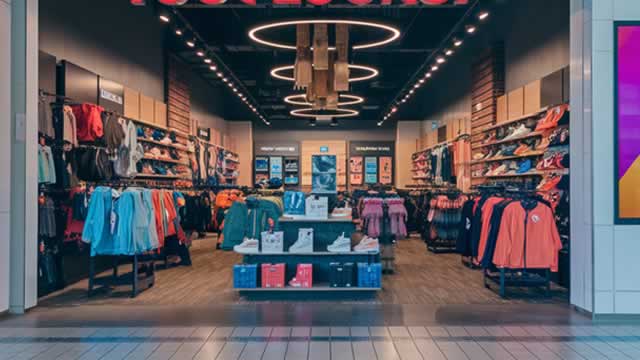
Group 1: Acquisition Details - Dick's Sporting Goods has agreed to acquire Foot Locker for $2.4 billion, offering $24 per share, which represents an 86% premium to Foot Locker's last closing price [1][3] - This acquisition is Dick's largest deal in the sporting goods industry and aims to enhance its presence in malls and expand into international markets for the first time [3][6] - The deal is expected to close in the second half of 2025 and will be financed through a combination of cash-on-hand and new debt [9] Group 2: Market Context - Several US retailers have issued pessimistic forecasts due to the impact of tariffs, leading to reduced consumer spending on various goods [4] - Foot Locker has been losing market share to competitors like Nike and Under Armour, which have expanded their direct-to-consumer business, alongside a decline in customer visits to indoor malls [5][8] - Foot Locker operates 2,400 retail stores across 20 countries, with worldwide sales of $8 billion last year [5]
Shark Tank alum Bombas taps former Under Armour exec as CEO as it looks beyond digital roots
CNBC· 2025-05-15 11:10
Core Insights - Bombas founder David Heath is stepping down as CEO, with Jason LaRose taking over to lead the company through its next growth phase [1][2] - The company has experienced significant revenue growth, with a 22% increase in the current fiscal year and over $2 billion in lifetime sales [3] - Bombas aims to expand its wholesale presence from approximately 7% of sales to between 10% and 20% to sustain growth [4][5] Company Strategy - The footwear segment is the fastest-growing area, with expected revenue growth of over 70% this year, while sock sales have increased by 17% year-over-year [3] - Bombas is exploring physical store options and expanding its assortment with current partners, avoiding Amazon as a wholesale channel [5][6] - The company emphasizes the importance of storytelling and brand integrity in its expansion strategy, focusing on partnerships that align with its values [8][9] Industry Context - The shift from a direct-to-consumer model to wholesale is seen as necessary for sustainable growth, as many digitally native brands face challenges in profitability [7] - Brands that have successfully transitioned to wholesale have recognized the need for strategic partnerships to maintain brand integrity while scaling [8][10]

Under Armour Stock Impresses With Revenue Beat
Schaeffers Investment Research· 2025-05-13 14:42
Core Insights - Under Armour Inc (NYSE:UAA) shares increased by 0.8% to $6.26 following a fiscal fourth-quarter report that showed a narrower-than-expected loss and revenue that exceeded estimates, indicating successful turnaround efforts by the company despite challenging macroeconomic conditions [1] Group 1: Stock Performance - UAA is currently facing its 80-day moving average and is down 24.5% year-to-date for 2025, although shares have risen nearly 10% in May, surpassing the $6 mark [2] - The options market is experiencing high activity, with total options volume at three times the average daily pace, indicating strong investor interest [3] Group 2: Options Activity - The most popular options are the May 6 put and call, reflecting bullish sentiment among traders [3] - Short interest has decreased by 6.3% in the latest reporting period, but 32.80 million shares sold short still represent 17.4% of UAA's total float, suggesting a potential for a short squeeze [3]
Under Armour (UAA) Q4 Earnings: Taking a Look at Key Metrics Versus Estimates
ZACKS· 2025-05-13 14:31
Core Insights - Under Armour reported revenue of $1.18 billion for the quarter ended March 2025, reflecting an 11.4% decline year-over-year, with an EPS of -$0.08 compared to $0.11 in the same quarter last year [1] - The revenue exceeded the Zacks Consensus Estimate of $1.16 billion by 1.52%, while the EPS surpassed the consensus estimate of -$0.09 by 11.11% [1] Financial Performance Metrics - Total Doors: 441, below the two-analyst average estimate of 465 [4] - North America Net Revenues: $689.40 million, exceeding the average estimate of $664.36 million, but down 10.7% year-over-year [4] - Asia-Pacific Net Revenues: $164.83 million, below the average estimate of $174.60 million, representing a 27.3% decline year-over-year [4] - Latin America Net Revenues: $45.09 million, below the average estimate of $50.19 million, reflecting a 10.3% decrease year-over-year [4] - EMEA Net Revenues: $278.62 million, slightly above the average estimate of $274.97 million, with a year-over-year change of -1.9% [4] - Footwear Net Revenues: $281.85 million, below the average estimate of $300.17 million, showing a 16.6% decline year-over-year [4] - Apparel Net Revenues: $780.37 million, above the average estimate of $765.79 million, but down 11.1% year-over-year [4] - Total Net Sales: $1.15 billion, slightly above the average estimate of $1.13 billion, with an 11.6% year-over-year decline [4] - Accessories Net Revenues: $91.50 million, exceeding the average estimate of $80.22 million, with a year-over-year increase of 2.3% [4] - License Revenues: $24.22 million, slightly below the average estimate of $24.53 million, reflecting a 14.9% decline year-over-year [4] - Wholesale Net Revenues: $767.60 million, above the average estimate of $742.17 million, but down 9.7% year-over-year [4] - Direct to Consumer Net Revenues: $386.11 million, below the average estimate of $405.57 million, representing a 15.1% decline year-over-year [4] Stock Performance - Under Armour shares have returned +14.2% over the past month, outperforming the Zacks S&P 500 composite's +9.1% change [3] - The stock currently holds a Zacks Rank 3 (Hold), indicating potential performance in line with the broader market in the near term [3]

Under Armour(UA) - 2025 Q4 - Earnings Call Transcript
2025-05-13 13:32
Financial Data and Key Metrics Changes - The fourth quarter revenue decreased by 11% to $1.2 billion, slightly better than the expected 10% decline for the full year [39][47] - Full year revenue declined by 9% to $5.2 billion, with North American revenue down 11% and EMEA flat [47][49] - Gross margin for the fourth quarter increased by 170 basis points year over year to 46.7%, driven by lower product and freight costs [44][47] - Full year gross margin increased by 180 basis points to 47.9%, surpassing expectations [47][49] - The company reported a diluted loss per share of $0.16 for the fourth quarter, while adjusted diluted loss per share was $0.08 [46][49] Business Line Data and Key Metrics Changes - Apparel revenue decreased by 11%, while footwear revenue declined by 17% [43] - Accessories business saw a 2% increase, benefiting from strength in team sports and running [43] - Direct to consumer revenue was down 15%, primarily due to a 27% decrease in e-commerce sales [42] Market Data and Key Metrics Changes - North American revenue declined by 11%, primarily due to a decrease in the DTC business [39] - EMEA revenue decreased by 2%, remaining flat on a currency-neutral basis [40] - APAC revenue was down 27%, attributed to a highly competitive and promotional environment [40] Company Strategy and Development Direction - The company is focusing on higher quality revenue and brand strength while driving gross margin expansion [49][50] - A shift towards a category management operating model aims to enhance efficiency and decision-making speed [13] - The company is committed to reducing promotional activities to build a more premium brand image [39][42] Management's Comments on Operating Environment and Future Outlook - Management expressed confidence in navigating the evolving business environment and emphasized the importance of agility [6][37] - The company anticipates a modest top-line contraction for fiscal 2026 due to recent changes in trade policy [49][50] - Management highlighted the need for a disciplined approach to cost management while maintaining marketing investments [79] Other Important Information - The company has recognized $32 million in restructuring charges for the fourth quarter, with total charges expected to be between $140 million and $160 million [45][49] - Inventory was down 1% year over year to $946 million, aligning with expectations [46] Q&A Session Summary Question: Can you provide more details about the North American reset? - Management highlighted the importance of leadership and a structured approach to improve brand execution and consumer engagement [56][60] Question: How is the company planning to normalize e-commerce with reduced promotional activities? - Management noted positive traction in full-price sales and emphasized the need for a brand-inspired online experience [72][74] Question: What are the expected savings from the restructuring plan? - Management indicated that approximately $35 million in savings were achieved in fiscal 2025, with expectations of $75 million in annual run rate savings by the end of fiscal 2026 [78][79]
Under Armour(UA) - 2025 Q4 - Earnings Call Transcript
2025-05-13 13:30
Financial Data and Key Metrics Changes - The fourth quarter revenue decreased by 11% to $1.2 billion, slightly better than the expected 10% decline for the full year [38][45] - Full year revenue declined by 9% to $5.2 billion, with North American revenue down 11% and APAC revenue down 13% [45][46] - Gross margin for the fourth quarter increased by 170 basis points year over year to 46.7%, driven by lower product and freight costs [42][46] - Full year gross margin increased by 180 basis points to 47.9%, surpassing expectations [46] Business Line Data and Key Metrics Changes - Apparel revenue decreased by 11%, while footwear revenue declined by 17% [41] - Accessories revenue increased by 2%, benefiting from the decision to bring the socks business in-house [41] - Direct to consumer revenue was down 15%, primarily due to a 27% decrease in e-commerce sales [40] Market Data and Key Metrics Changes - North American revenue declined by 11%, primarily due to a decrease in the DTC business [38] - EMEA revenue decreased by 2%, remaining flat on a currency-neutral basis [39] - APAC revenue was down 27%, attributed to a highly competitive environment [39] Company Strategy and Development Direction - The company is focusing on higher quality revenue and brand strength while driving gross margin expansion [46][50] - A category management operating model is being implemented to enhance efficiency and decision-making [12] - The company aims to reduce promotional activities to build a more premium online presence [40][75] Management's Comments on Operating Environment and Future Outlook - Management expressed confidence in navigating the evolving business environment and emphasized the importance of agility [5][36] - The company anticipates a modest top-line contraction for fiscal 2026 due to recent changes in trade policy [46][50] - Management highlighted the need for a disciplined approach to cost management while maintaining marketing investments [78] Other Important Information - The company has recognized $32 million in restructuring charges for the fourth quarter, with total charges expected to be between $140 million and $160 million [43][46] - Inventory was down 1% year over year to $946 million, aligning with expectations [44] Q&A Session Summary Question: Can you provide more details about the North American reset? - Management highlighted the importance of leadership and the need to move away from constant discounting to build brand momentum [54][60] Question: What can you share about upcoming major brand activations? - The company plans to embrace its underdog DNA with a campaign that focuses on storytelling rather than price [62][64] Question: How is the company planning to normalize e-commerce with reduced promotional activities? - Management emphasized the importance of creating a brand-inspired online experience and leveraging loyalty programs to drive revenue [72][74] Question: What are the expected savings from the restructuring plan? - The company anticipates $75 million in annual savings from restructuring efforts, with a focus on maintaining marketing investments [76][78] Question: Can you provide insights on inventory management? - Management expressed confidence in managing inventory tightly and noted that a significant portion is current, minimizing old or excess stock [84]