Wipro

Search documents
Market’s Wild Ride: Trump’s Policy Ping-Pong Keeps Traders on Their Toes (and Valuations Guessing)
Stock Market News· 2025-09-23 06:00
Market Overview - The U.S. stock market reached new all-time highs with the S&P 500 rising 0.4% to 6,693.75, the Dow increasing 0.1% to 46,381.54, and the Nasdaq climbing 0.7% to 22,788.98, despite underlying volatility [2][10] - Analysts noted that the market's resilience persists amid a turbulent policy landscape, with "uncertainty" being a recurring theme in 2025 [8] Boeing and Aerospace Industry - An $8 billion deal for Uzbekistan Airways to acquire up to 22 Boeing 787 Dreamliners was announced, projected to create over 35,000 jobs in the U.S., leading to a rally in Boeing shares after-hours [3][10] - The announcement reversed a prior decline in Boeing's stock, which had closed down 1.65% at $212.09 [3] Semiconductor Sector - The administration's renewed threat of tariffs on chip imports has created uncertainty in the semiconductor sector, which has complex global supply chains [4] - Analysts indicated that while some domestic sectors might benefit from protectionist policies, globalized tech firms like ASML face challenges [4] Pharmaceutical Industry - The Trump administration's drug pricing reforms and tariff policies have caused volatility in the pharmaceutical sector, with tariffs on Indian exports impacting shares of Indian drugmakers [5] - The S&P 500 Pharmaceuticals Index has dropped 5% year-to-date, reflecting ongoing regulatory challenges [5] Technology Sector - A new $100,000 annual fee for H-1B visas aimed at protecting American jobs has raised concerns in the technology sector, leading to declines in shares of major tech companies reliant on H-1B workers [6][7] - The Nifty IT index fell over 3% on September 22, 2025, affecting major players like Tata Consultancy Services and Infosys [7] Market Reactions to Presidential Comments - Specific comments from the Trump administration can significantly impact individual stocks, as seen with Kenvue's shares dropping 7.5% following unsubstantiated claims linking Tylenol to autism [9] - Safe-haven assets like gold have seen an increase, with futures up 2% to a record-high $3,780 an ounce, indicating investor caution amid market volatility [9]


硬件 - 消费电子_PCB 技术会议要点_增长空间广阔但面临诸多挑战-India Technology_ Hardware - Consumer Electronics_ PCB Tech Conference Takeaways_ Long growth run-way but various challenges
2025-09-23 02:34
Summary of PCB Tech Conference Insights Industry Overview - The conference focused on the Indian PCB (Printed Circuit Board) industry, highlighting its growth potential and challenges within the consumer electronics sector [1] - The Indian PCB market is projected to reach USD 4.2 billion in FY25, with a significant portion of demand (approximately 88%) currently met by imports [4][4] Key Takeaways 1. **Growth Trajectory**: - The Indian PCB industry is on a clear growth path, supported by a large domestic market and government initiatives such as Anti-Dumping Duties on low-end PCBs and incentives for high-end manufacturing [2][2] - The market is expected to grow to USD 14-15 billion by 2030, indicating substantial opportunities [4][4] 2. **Competitive Landscape**: - Thailand is emerging as a significant PCB manufacturing hub, with 60 new factories established by global players in the last 3-4 years, contributing to a market expected to exceed USD 12-13 billion post-2025 [2][4] - India's global market share remains low at 1%, trailing behind China (approximately 50%) and Thailand [4][4] 3. **Sustainability and Profitability**: - Sustainable profitability in the PCB sector will depend on continuous technological upgrades due to global oversupply [2][2] - Companies like Wipro are expanding capacity in Copper Clad Laminates, aiming for 400,000 sheets per month for export [6][6] 4. **Challenges**: - **Technological Deficiencies**: Significant gaps exist in advanced PCB manufacturing, particularly for high-density interconnects (HDI) and smartphone applications, which require advanced techniques not currently available in India [7][7] - **Talent Shortages**: There is a notable shortage of skilled labor, including process specialists and R&D personnel, which is critical for the industry's growth [10][10] - **Infrastructure Issues**: Key challenges include environmental compliance, power stability, and reliance on imported machinery and raw materials [10][10] 5. **Demand Drivers**: - High-growth sectors identified include Automotive, AI, Industrial, Medical, Aerospace & Defense, and 5G base stations [8][8] - Collaboration between PCB manufacturers, ODMs, and OEMs is essential for improving design manufacturability and reducing defects [8][8] 6. **Manufacturing Capabilities**: - Current production is primarily focused on single and double-sided PCBs, with some companies advancing to 8-layer PCBs for specific applications [8][8] - The industry has seen significant investment announcements, with up to INR 100 billion allocated for PCB manufacturing incentives [8][8] 7. **Raw Material Localization**: - Approximately 80% of PCB chemistries are available domestically, but key materials like Copper Clad Laminates are still largely imported [10][10] - Efforts are underway to establish local sources for critical raw materials to reduce dependency on imports [10][10] Conclusion - The Indian PCB industry presents a long-term growth opportunity, but companies must navigate significant challenges related to technology, talent, and infrastructure to capitalize on this potential [1][2][4]
Market Whiplash: Trump’s Latest Tweets & the Economy’s Rollercoaster
Stock Market News· 2025-09-21 18:00
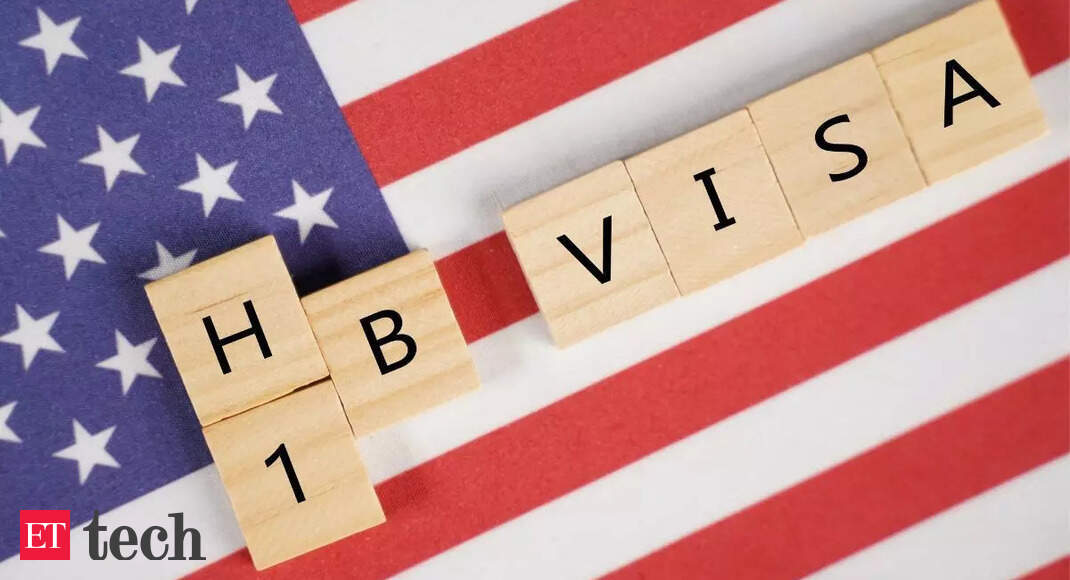
Group 1: Immigration Policy Impact on Tech Sector - The tech sector is facing a new $100,000 fee for H-1B visa applications, effective September 21, 2025, which initially caused panic among Silicon Valley executives [2] - The fee will be a one-time payment applicable only to new H-1B applicants, not renewals or existing visa holders, alleviating some immediate concerns [3] - Analysts believe this policy change represents a "major blow" to the U.S. tech industry, which heavily relies on skilled workers from countries like India and China [3] Group 2: Market Reaction to H-1B Fee - Following the announcement, shares of U.S.-listed Indian IT firms experienced declines, with Infosys ADRs dropping 4%, Wipro slipping 2%, and Cognizant declining 4.7% [4] - Analysts suggest that the fee hike significantly raises costs and diminishes competitiveness for U.S. tech giants like Apple, Alphabet, NVIDIA, and Tesla [4] Group 3: Tariff Policy and Market Volatility - President Trump threatened sanctions and additional tariffs on Mexico over a water treaty dispute, which historically tends to "rattle equity markets" [5] - The market's response to tariff announcements has been volatile, with significant drops in indices following major tariff news, such as a 1,679-point drop (4%) in the Dow Jones Industrial Average in April 2025 [5] - Conversely, a "tariff pause" in April 2025 led to a market rally, highlighting investors' preference for stability [5] Group 4: Trade Relations with China - The upcoming meeting between President Trump and President Xi Jinping regarding TikTok, tariffs, and tech has provided a temporary boost to market sentiment, leading to record highs for the S&P 500 and Nasdaq [6] - The anticipation of trade deal resolutions has been a significant driver of market rallies, despite ongoing uncertainties [6] Group 5: The Trump Media & Technology Group - The stock performance of Trump Media & Technology Group (DJT) has been driven more by retail investor sentiment and political affinity than traditional financial metrics, resembling a "meme stock" phenomenon [7] - Following its merger with Digital World Acquisition Corp. (DWAC), DJT's stock saw significant fluctuations, including a 239% surge after Trump won the Iowa caucus [7] Group 6: Analyst Perspectives on Market Dynamics - Goldman Sachs Research estimates that a five-percentage-point increase in U.S. tariff rates could reduce S&P 500 earnings per share by 1-2% [8] - The ongoing policy uncertainty is expected to weigh on the value of U.S. stocks, with analysts noting a disconnect between administration intent and investor assumptions [8] Group 7: Conclusion on Market Behavior - The financial markets continue to react dramatically to Trump's policy announcements, oscillating between fear and euphoria [9] - The unpredictability of the market, driven by immigration policies, tariff threats, and trade negotiations, creates a challenging environment for investors [9]

Trump's H-1B visa crackdown upends Indian IT industry's playbook
Yahoo Finance· 2025-09-21 15:05
Core Insights - India's $283 billion information technology sector must revise its long-standing strategy of rotating skilled talent into U.S. projects due to the new $100,000 fee for H-1B visas imposed by U.S. President Donald Trump [1][2] Group 1: Impact on the IT Sector - The sector generates approximately 57% of its total revenue from the U.S. market and has historically benefited from U.S. work visa programs [2] - India accounted for 71% of approved H-1B visa beneficiaries last year, significantly outpacing China, which had 11.7% [2] - Trump's changes will compel IT firms to pause onshore rotations, increase offshore delivery, and hire more U.S. citizens and green card holders [3] Group 2: Industry Reactions - Industry body Nasscom indicated that the new visa fee could disrupt America's innovation ecosystem and business continuity for onshore projects [5] - Experts predict that the changes will constrain client-facing roles, negatively impacting IT deal conversion and extending project timelines [6] - Immigration lawyers reported a surge in inquiries due to confusion surrounding the new visa fee, which they deemed excessive [7]
The Trump Market: Where Policy Meets Punchline
Stock Market News· 2025-09-21 06:00
Group 1: H-1B Visa Fee Impact - President Trump imposed a one-time $100,000 fee on new H-1B visa petitions, causing immediate concern in the tech industry [2][3] - Shares of IT services companies like Infosys, Wipro, and Cognizant Technology Solutions saw notable declines, with Infosys ADRs dropping 3.41% to $16.97 and Cognizant down 4.75% to $66.94 [3] - Analysts expressed that the fee would significantly impact both Indian and US-listed IT companies, with predictions of skyrocketing employee costs [3][4] Group 2: Market Reactions to Tariffs - On August 1, 2025, Trump announced a 35% tariff on certain Canadian goods, leading to a 0.88% drop in the Toronto Stock Exchange and declines in major US indices [5][6] - The S&P 500 fell 1.6%, marking its largest decline since May, while the Dow Jones and Nasdaq also experienced significant drops [5][6] - Analysts noted that the combination of tariffs and weaker-than-expected employment data contributed to market volatility [6] Group 3: Broader Market Resilience - Despite policy-induced jitters, major US tech companies like Alphabet, Amazon, Apple, Microsoft, and NVIDIA showed resilience, with Alphabet trading at $235.15 and Amazon up 4.8% [10] - As of September 20, 2025, major indices reflected a mixed but generally upward trend, with the S&P 500 at 6,664.36 (+0.5%) and the Dow Jones at 46,315.27 (+0.4%) [11] - The ongoing uncertainty in economic policy continues to create a volatile environment for investors [11]

Donald Trump's H-1B visa order: Infosys, Wipro take a hit; here's how Indian stock markets will be impacted
DNA India· 2025-09-20 13:58
Group 1 - Trump's immigration clampdown includes a significant increase in the H-1B visa application fee to USD 100,000, impacting Indian tech firms heavily [1][2][4] - Indian tech companies, particularly Infosys and Wipro, experienced a decline in their American Depository Receipts (ADRs) following the announcement, with Infosys down 3.41% and Wipro down 2.10% on the NYSE [3][4] - The H-1B visa is crucial for Indian tech firms as it allows them to hire skilled foreign professionals, and the increased fees are expected to adversely affect their operations in the US [4] Group 2 - Cognizant, a US tech firm with significant operations in India, saw its ADRs drop by 4.75% in response to the visa fee increase [3] - Tata Consultancy Services (TCS), India's largest IT firm, has not yet faced market repercussions as it does not have an ADR listing in the US, but the overall impact on Indian markets will become clearer when trading resumes [4] - The visa fee hike is anticipated to negatively influence the stock performance of Indian tech companies when the Indian markets open [2][3]

IT contracts worth $13 billion up for renewal in coming quarters
The Economic Times· 2025-09-17 00:30
Core Insights - The deal market for IT firms is expected to exceed $14 billion in 2024, driven by a surge in deal activity as companies navigate high costs and AI-led optimization pressures [1][12] - India's software services exporting industry, valued at $283 billion, is seeing a significant number of large deals, typically priced at $100 million and above, with over 600 engagements up for renewal in the second half of 2025 [2][12] Deal Activity - In the first half of 2023, approximately $1.3 billion worth of mega deals were in the renewal process, covering around 70% of global IT deal momentum [5][12] - The number of mega awards (annual contract value of $100 million or more) has been increasing over the past 24 months, indicating strong large deal activity expected to continue into 2025 [5][12] Market Dynamics - The current market conditions reflect a mix of "confident" and "guarded" optimism, with a focus on cost optimization and tight discretionary spending due to high uncertainty [10][13] - Clients are seeking significant discounts during renewals and are increasingly interested in AI-led benefits [10][13] Competitive Landscape - Major Indian IT companies like Tata Consultancy Services (TCS), Infosys, and Wipro are competing for a share of the lucrative renewal market, with TCS recently winning a $640 million order from Danish insurer Tryg [4][12] - The renewals include over 800 deals, particularly from financial services and manufacturing sectors, with some mega deals valued around $1.7 billion [4][12] Trends in Deal Sizes - While large deal momentum is increasing, overall deal sizes in the business process outsourcing (BPO) sector are shrinking, indicating a shift in spending patterns [6][7] - Smaller deals, averaging just under $100 million in total contract value, are seen as signs of discretionary spending that has been slow over the past 2-3 years due to macroeconomic and geopolitical stress [7][8]
Wipro partners with CrowdStrike to offer AI-led unified security services
BusinessLine· 2025-09-16 03:48
Core Insights - Wipro Limited has announced an expanded partnership with CrowdStrike to launch an AI-powered unified managed security service (MSS) called Wipro CyberShieldSM MDR, aimed at simplifying and strengthening enterprise security operations [1][3] Group 1: Partnership and Service Launch - The partnership with CrowdStrike focuses on addressing the challenges organizations face due to a high volume of alerts from siloed security tools that are ineffective in stopping adversaries [1] - Wipro CyberShield MDR is designed to enhance threat visibility, simplify operations, and strengthen resilience against evolving threats, thereby addressing the complexities and costs associated with fragmented security operations [2][3] Group 2: Industry Challenges - Organizations are currently dealing with fragmented security operations across various domains such as endpoints, cloud workloads, identity, and data, which leads to increased complexity and operational blind spots [2]

H-1B reality hits home; Games24x7 layoffs
The Economic Times· 2025-09-11 01:30
H-1B Visa Trends - Indian IT services exporters, including Tata Consultancy Services (TCS), Infosys, HCLTech, Wipro, Tech Mahindra, and LTIMindtree, have reduced H-1B filings by an average of 46% over five years, with TCS reporting 5,505 H-1B employees last year, second only to Amazon [3][10] - Global peers like Accenture, Capgemini, Cognizant, and IBM have also seen an average drop of 44% in H-1B filings between FY21 and FY25 [3][10] - Big Tech companies are increasing their H-1B sponsorships, with OpenAI filing 76 petitions and Anthropic filing 41 [3][10] Industry Adaptation - Indian software giants are shifting their business models by hiring locally, nearshoring to Mexico and Eastern Europe, and automating core processes due to immigration fatigue, geopolitical unease, and rising protectionism [5][12] - The proposed HIRE Act, which aims to tax US firms that outsource, could further complicate the H-1B landscape [10] Real-Money Gaming Sector - Games24x7 plans to lay off 500 employees, approximately 70% of its workforce, due to a ban on online real-money gaming [5][12] - The gaming sector is facing significant challenges, with over 2,000 professionals actively seeking new jobs following the ban [7][12] - Other companies, such as Mobile Premier League, have also laid off around 60% of their Indian staff due to the new regulations [7][12] AI in Therapy - Demand for online therapy is increasing, with startups like Docvita and Amaha Health reporting user growth of 16% and 80% year-on-year, respectively [8][12] - Startups are developing AI tools to enhance therapy services, including chatbots for matching clients with therapists [8][12]
Wipro surges 2.83% as IT sector rallies on Infosys buyback boost
BusinessLine· 2025-09-10 08:26
Company Performance - Wipro Limited shares increased by 2.83% to ₹256.21 during Tuesday's trading session, making it one of the top gainers in the IT sector [1] - The stock opened at ₹249.30 and reached a high of ₹257.17, with trading volumes of 117.62 lakh shares worth ₹300.29 crore [1] Sector Overview - The gains for Wipro coincided with a broader recovery in the IT sector, as the Nifty IT index rose over 2%, with all constituents trading positively [2] - Wipro was the second-best performer in the IT sector, following Infosys, which led the rally with nearly 4% gains after announcing share buyback plans [2] Corporate Actions - On September 9, Wipro allotted 61,954 equity shares under the ADS Restricted Stock Unit Plan 2004 and 163,524 shares under the Restricted Stock Unit Plan 2007 following ESOP exercises [3] Market Sentiment - The sector-wide rally was initiated by Infosys' board decision to consider a share buyback proposal, which boosted investor sentiment across IT stocks [4] - Market analysts suggest that the buyback announcement has raised expectations for similar shareholder-friendly actions from other large IT companies [4] Economic Factors - The weakening rupee, which recently reached an all-time low of 88.36 against the dollar, is providing additional support for IT companies that generate significant revenues from US markets [5] - Despite the recent gains, the Nifty IT index remains down 19% year-to-date, reflecting ongoing concerns over potential US tariffs on software exports and global tech spending softness [5]