Brookfield

Search documents
2 Warehouses To Replace 10 Fuel Tanks At Fairfax City Depot
Fairfax City, VA Patch· 2025-07-18 17:42
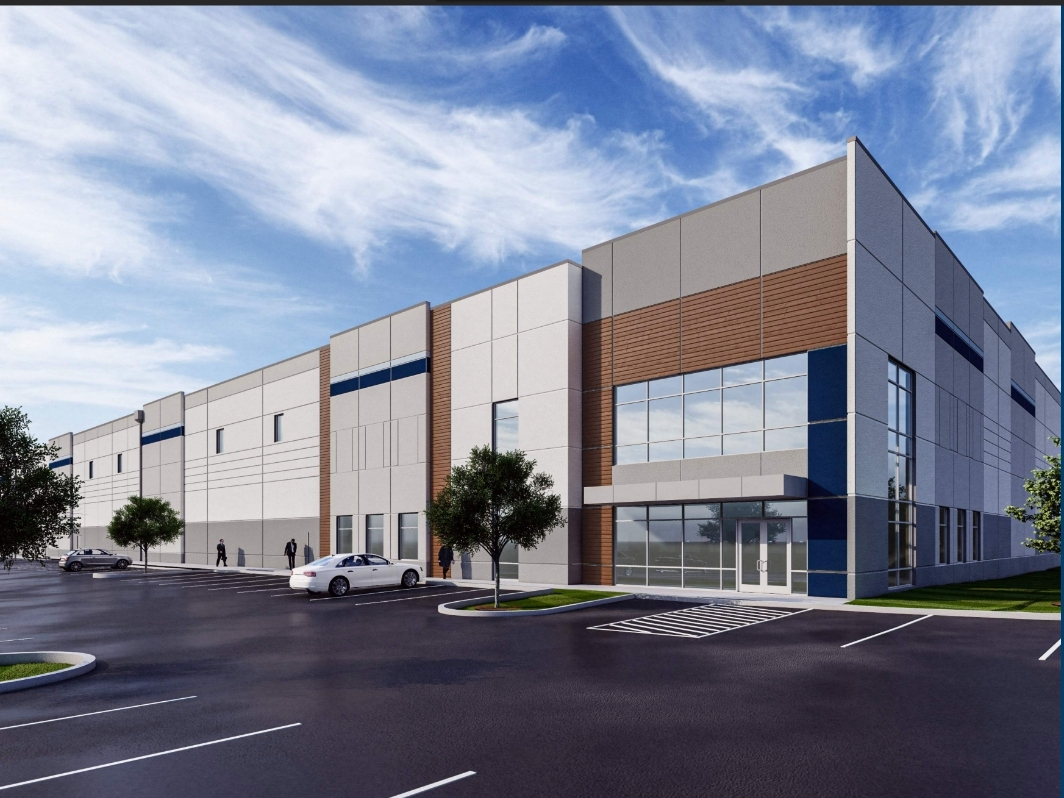
Core Viewpoint - Brookfield plans to replace 10 fuel tanks at the Pickett Road Tank Farm in Fairfax City with two warehouses totaling 311,580 square feet, aiming to attract Fortune 500 companies like Walmart and Target [3][5][6]. Group 1: Project Details - The Fairfax City Board of Architectural Review unanimously approved the plan to demolish the fuel tanks and construct the warehouses [3]. - The warehouses will be built on a site of approximately 18.93 acres, located at the intersection of Colonial Avenue and Pickett Road [6]. - The project is located in an Industrial Heavy District, allowing Brookfield to proceed without needing City Council approval, although zoning approvals and permits are still required [4][8]. Group 2: Timeline and Next Steps - The applicant plans to submit a site plan for review in the coming weeks, with an estimated timeline of obtaining all necessary zoning approvals and permits within a year [8]. - Demolition of the 10 fuel tanks is expected to commence shortly after the approvals are secured [8].


10 Dividend Stocks to Double Up On Right Now
The Motley Fool· 2025-07-15 09:08
Core Insights - Dividend stocks have significantly outperformed non-dividend payers over the past 50 years, with a 9.2% average annual return compared to 4.3% [1] - Dividend growers and initiators have provided even better returns, averaging 10.2% [1] Company Summaries - **Alphabet**: Despite a low dividend yield of 0.5%, Alphabet has a low valuation and has raised its payout by 5% this year. The company is cash-rich and has strong growth drivers, particularly in AI [4][5] - **American Water Works**: This leading water utility has a dividend yield of 2.3%, nearly double the S&P 500's yield. It pays out 55% to 60% of its earnings in dividends and expects to grow its earnings per share by 7% to 9% annually [6][5] - **Broadcom**: With a dividend yield of 0.9%, Broadcom has consistently raised its payout for 14 years, including an 11% increase last year. The company is experiencing rapid growth in AI semiconductor demand, with AI revenue growing 220% to $12.2 billion [7][8] - **Brookfield Renewable**: This company offers a dividend yield of over 4.5%, supported by stable cash flow. It expects to increase its funds from operations per share by over 10% annually, which will support a dividend increase of 5% to 9% per year [9][10] - **Realty Income**: With a dividend yield of over 5.5%, Realty Income has raised its dividend 131 times since its public listing. The REIT has a strong financial profile and expects to continue delivering a rising income stream [11][12] - **PepsiCo**: The company has a dividend yield of over 4% and has raised its payout for 53 consecutive years. PepsiCo anticipates 4% to 6% annual revenue growth, supporting its dividend increases [13][14] - **Prologis**: This industrial REIT has a dividend yield approaching 4% and has grown its dividend at a 13% compound annual rate over the past five years. Strong demand for warehouse space supports its growth [15][16] - **Johnson & Johnson**: With a dividend yield of over 3%, the company has raised its payout for 63 consecutive years. It generates about $20 billion in free cash flow annually, more than sufficient to cover its dividend [17][18] - **NextEra Energy**: The utility has a 3% dividend yield and has grown its payout at a 10% compound annual rate over the past 20 years. Heavy investments in renewable energy are expected to drive future growth [19][20] - **Visa**: Despite a low dividend yield of 0.7%, Visa has raised its payout at a compound annual rate of over 17% for the past decade and generated nearly $9.5 billion in free cash flow over the last year [21][22]



What's Behind The 20% Jump In AES Stock?
Forbes· 2025-07-11 10:20
Group 1 - AES Corp. experienced a significant stock price increase of nearly 20% in one session due to discussions of a potential acquisition [2][3] - Reports indicate that AES is considering strategic alternatives, including a possible sale, with major players like Blackstone, Brookfield, and BlackRock's infrastructure division speculated to be involved [3] - AES plays a crucial role in the clean energy transition, supplying renewable energy to major tech companies such as Microsoft, Amazon, and Meta, which enhances the perceived value of its assets amid rising energy demand from AI data centers and cloud computing [4] Group 2 - The combination of merger speculation and increasing energy demand driven by AI has generated investor enthusiasm for AES [5] - Despite facing challenges like reduced subsidies for renewable initiatives due to changing U.S. policies, the long-term demand narrative for AES remains strong [4]


Snider: There's still more gains ahead for equities, even with the S&P at all-time highs
CNBC Television· 2025-07-10 11:39
Schneider, senior U.S. Portfolio strategist at Goldman Sachs. Ben, great to have you here. Good morning.We got to start off with the news. You're changing your S&P price targets for three months, six months. And also the next year let's do the 12 month horizon 6900 double digit.About a 1,011% rise from here. What is the catalyst. Right now we're already at all time highs.That's right. >> And when we sent out this note to clients, the real message was even though the S&P 500 has rallied by 25% over the last ...
Dividend Yields Are Near Record Lows. Here's Where You Can Lock in a Bigger Payday.
The Motley Fool· 2025-07-09 08:41
Core Insights - The S&P 500's dividend yield is declining, nearing 1.2%, which is close to its record low last seen in 2000, resulting in lower dividend income for new investments [1] - Real estate and energy sectors currently offer higher average dividend yields of 3.4%, making them attractive for investors seeking better payouts [2] Energy Sector - Many energy stocks provide higher dividend yields, with Kinder Morgan (KMI) offering above 4% backed by a strong financial profile, including take-or-pay contracts securing 69% of cash flows [6] - Kinder Morgan maintains a conservative payout ratio of 44% of its cash flow from operations in 2025, allowing for substantial excess free cash flow for expansion and consistent dividend increases [6] - Brookfield Renewable (BEPC) yields around 4.5%, supported by stable cash flow from long-term fixed-rate power purchase agreements, with 70% of revenue linked to inflation [7][8] - Brookfield aims to increase its dividend by 5% to 9% annually, having grown its payout at a 6% compound annual rate since 2001 [8] Real Estate Sector - The REIT sector is a strong source of dividend income, with NNN REIT yielding over 5%, focusing on freestanding retail properties secured by triple net leases [10] - NNN REIT has a history of increasing its dividend for 35 consecutive years, supported by a conservative payout strategy [11] - Mid-America Apartment Communities (MAA) has a dividend yield of around 4%, driven by strong rental demand in the Sun Belt region, and has increased its dividend for 15 straight years [12] Investment Opportunities - Despite the overall decline in average dividend yields, energy stocks and REITs present lucrative opportunities for investors seeking higher income streams without incurring additional risk [13]


X @Bloomberg
Bloomberg· 2025-07-04 07:08
Brookfield is in talks to buy a hotel on Dubai’s Palm Jumeirah in a deal that could value the luxury property at about $500 million, sources say https://t.co/hkNRWxQpeh ...
X @Bloomberg
Bloomberg· 2025-06-30 17:37
A key witness in a longstanding corruption case in Peru was found dead Sunday, a dark new development in the saga over the origins of a major toll contract now owned by Brookfield https://t.co/9DN4FMvSrU ...
澳洲退休地产爆发!Keyton冲刺两万套,百万豪华养老村热销
Sou Hu Cai Jing· 2025-06-23 01:44
Core Viewpoint - Keyton, a retirement community operator spun off from Lendlease, aims to operate 20,000 retirement living units, focusing on expansion along Australia's East Coast [1] Company Overview - Keyton currently operates approximately 13,500 housing units, making it one of Australia's largest retirement community operators, adding 200 to 300 units annually [4] - The CEO, Nathan Cockerill, emphasizes the intention to accelerate growth through acquisitions, leveraging existing land reserves for development [5][7] - Keyton's existing scale has been achieved through a series of acquisitions, targeting small developers who struggle to manage multiple projects [7] Growth Strategy - The company plans to sell its 10-project portfolio in Western Australia (approximately 1,600 units) to concentrate on East Coast development [8] - Keyton's operational cash yield is between 3% and 3.5%, with equity returns of 8% to 10%, driven by project value appreciation [8] Industry Context - The retirement property sector is experiencing heightened interest, with a significant portion of new projects being multi-story/apartment-style buildings [10] - The average price per unit for Keyton is around AUD 650,000, with various purchasing models available [10] - The current vacancy rate for retirement housing in Australia is only 4%, with average unit prices at 59% of the local median house price, indicating a strong market position [11] Demographic Trends - By 2040, the population aged 75 and above in Australia is projected to increase from 2 million to 3.7 million, an 85% growth, while only 12,000 new units are expected to be added in the next five years, leading to a significant supply-demand mismatch [11]

DigitalBridge Group (DBRG) 2025 Conference Transcript
2025-06-11 20:15
Financial Data and Key Metrics Changes - Digital Bridge has grown its assets under management from less than $20 billion four and a half years ago to $100 billion today, while simplifying its balance sheet by eliminating $19 billion of debt and selling off $50 billion of real estate [9][10][11] - The company currently holds approximately $300 million in debt, which is securitized against its fee streams and funds [11] Business Line Data and Key Metrics Changes - The company transitioned from being balance sheet heavy to a more balanced approach, now described as balance sheet neutral, focusing on maximizing shareholder value through judicious capital allocation [23][24] - Digital Bridge has established new teams and strategies, including a credit team, late-stage venture growth team, and a liquid securities group, to enhance its capital deployment capabilities [14][15] Market Data and Key Metrics Changes - The digital infrastructure market is experiencing significant capital inflows, particularly in AI, with an estimated $7 trillion opportunity for AI infrastructure, which Digital Bridge aims to capitalize on [32][63] - The company is witnessing a shift in investor interest, with sophisticated LPs becoming more discerning and seeking unique, proprietary investment opportunities in the digital space [42][44] Company Strategy and Development Direction - Digital Bridge is positioning itself as a multi-strategy alternative asset manager, focusing on digital infrastructure, power, and real estate, with a strong emphasis on customer relationships and long-term contracts [15][54] - The company aims to leverage its extensive data center portfolio and customer relationships to create unique opportunities in power generation and trading, particularly in the context of the AI economy [60][61] Management's Comments on Operating Environment and Future Outlook - Management believes that digital infrastructure will continue to be a critical necessity for the global economy, driven by trends such as cloud computing, AI, and 5G [16][17] - The company is optimistic about its fundraising efforts, projecting to grow fee-earning AUM from $35 billion to over $40 billion within the year, supported by strong investor receptivity [50][51] Other Important Information - Digital Bridge has identified a significant opportunity in the power sector, with plans to build microgrids and sell excess power, which could yield higher returns than traditional infrastructure investments [58][59] - The company is also focusing on acquiring and operating investment-grade data centers, targeting a market that is currently underserved due to a shift in real estate allocations [67][69] Q&A Session Summary Question: Where does Digital Bridge fall in the balance sheet light or heavy spectrum? - Management indicated that the company is transitioning from balance sheet heavy to balance sheet neutral, focusing on effective capital allocation to maximize shareholder value [21][24] Question: How does the build-out of AI compare to previous technological shifts? - Management noted that while there are similarities in the cyclical nature of technological advancements, the scale of investment required for AI infrastructure is unprecedented, with a projected $7 trillion opportunity [32][33] Question: How sophisticated are the LPs in terms of allocating to infrastructure? - Management observed that sophisticated LPs are becoming more discerning and are looking for unique, proprietary investment opportunities rather than generic offerings [42][44]

澳洲证监会酝酿改革:私募信贷监管、IPO市场活力双线推进
Sou Hu Cai Jing· 2025-06-03 01:12
Group 1: Regulatory Response to Private Markets - The Australian Securities and Investments Commission (ASIC) is expected to clarify its approach to the rapid growth of private market assets, particularly private credit, and the declining IPO market [1][3] - ASIC Commissioner Simone Constant will address these issues at an investor symposium, highlighting the importance of the health of Australia's economic and financial systems [3][4] - ASIC is balancing the need for increased transparency and disclosure obligations with the necessity of not overburdening the industry with compliance costs [3][5] Group 2: Initial Reform Measures - ASIC is anticipated to announce an early reform initiative as a "quick win" and will continue to explore other rapid reform suggestions [3][5] - A discussion paper released by ASIC in February analyzed structural issues in private and public markets, receiving around 90 feedback submissions, with over half to be disclosed this week [5] Group 3: Global Context and Systemic Risks - The International Monetary Fund (IMF) has identified the rising role of non-bank financial institutions (NBFI) in the financial system, with banks' exposure to private credit exceeding $500 billion (approximately 777 billion AUD) [5] - The IMF emphasizes the need for improved regulation of NBFIs due to their increasing influence on systemic financial stability [5] Group 4: Industry Perspectives on Regulation - Industry opinions on ASIC's regulatory approach vary, with some advocating for caution in new regulations to avoid disadvantaging private asset managers compared to banks [6] - Others argue for stronger governance and transparency standards in private credit [6] Group 5: IPO Market Reform - There is significant interest in how ASIC will revitalize the IPO process, as the number of new listings on the Australian Securities Exchange (ASX) has been low in recent years [7][8] - ASIC does not view the decline in IPO numbers as a structural issue but acknowledges that streamlining the process could attract more companies to list [8] Group 6: Ongoing Initiatives and Market Dynamics - Virgin Australia and GemLife are planning IPOs, and their pricing and market performance will influence the IPO window [9] - Investment banks, including JPMorgan, are pushing for reforms to optimize the IPO process, recognizing the need for a competitive capital market in Australia [10] - The ASX has also acknowledged the necessity for reform and has proposed several optimization suggestions for the IPO process [10]