Berkshire Hathaway

Search documents
Warren Buffett-Led Berkshire Hathaway Owns $37 Billion Worth of 1 Stock. Here Are 3 Reasons You Should Buy It Right Now.
The Motley Fool· 2025-04-26 08:14
Core Viewpoint - Berkshire Hathaway holds a significant stake in American Express, valued at $37 billion, indicating potential for continued success in the financial sector [1] Group 1: Competitive Strengths - American Express possesses durable competitive advantages, characterized by a strong brand and economic moats, making it a high-quality business [3] - The company has a powerful brand presence in the financial services industry, targeting wealthier clients with premium credit cards that offer high rewards and perks [4] - American Express benefits from a network effect, where increased merchant acceptance enhances the value of its cards for consumers, creating a positive feedback loop [5][6] Group 2: Financial Performance - In 2024, American Express reported a 9% increase in revenue, reaching $65.9 billion, and a 19% rise in adjusted earnings per share (EPS) [7] - The company anticipates revenue growth of 8% to 10% and adjusted EPS growth of 12% to 16% in 2025, with long-term sales growth projected at a minimum of 10% per year [7] - Favorable trends, such as the shift towards cashless transactions and rising GDP, are expected to drive payment volume through American Express's network [8] Group 3: Customer Base and Demographics - The customer base is shifting, with millennials and Gen-Z accounting for over 60% of new consumer accounts in Q1, indicating a growing spending trend among these demographics [9] Group 4: Valuation and Capital Return - American Express shares are currently trading 26% below their all-time high, presenting a compelling valuation opportunity with a price-to-earnings (P/E) ratio around 17, one of the lowest in the past year [10] - The company has a strong capital allocation policy, returning $2 billion in dividends and repurchasing $5.9 billion in stock in 2024, enhancing returns for investors [11]



2 Buffett Stocks You Can Buy During a Market Crash and Hold Forever
The Motley Fool· 2025-04-26 07:33
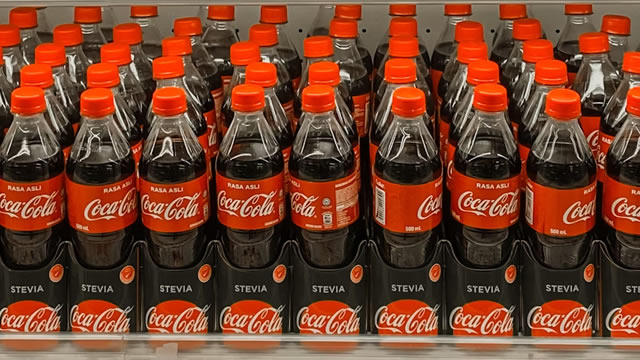
Group 1: Market Impact and Investment Opportunities - The market crash following President Trump's tariff announcement on April 2 created opportunities for long-term investors in dividend-paying stocks [1] - Berkshire Hathaway, under Warren Buffett's leadership since 1965, has achieved a 19.9% average annual return despite multiple recessions and market crashes [2][3] Group 2: Constellation Brands - Constellation Brands, known for Modelo Especial and Corona Extra, faces pressure on its stock price due to a new 25% tariff on imported beer, with shares trading over 30% below their peak [4] - Long-term investors may find value in Constellation Brands, as the tariff was enacted via executive order and could end with the current administration, allowing for potential profit growth once tariffs are lifted [6][7] - Berkshire Hathaway acquired over 5.6 million shares of Constellation Brands in Q4 2024, representing less than 1% of its overall portfolio, suggesting a cautious approach to building a position in the company [8] Group 3: Coca-Cola - Coca-Cola has delivered a remarkable 6,090% return since the end of 1988, benefiting from its strong brand recognition and consistent dividend payouts [9] - The company raised its dividend payout for the 63rd consecutive year, currently offering a 2.8% yield, and quickly rebounded after initial stock price drops following the tariff announcement [10] - Despite its strong market position, Coca-Cola's stock is trading at a historically high valuation of about 29.5 times trailing-12-month earnings, indicating that it may not be the best time to buy, but it remains a strong candidate for future investment if prices decline [11]



Why VeriSign Stock Soared Friday
The Motley Fool· 2025-04-25 16:38
Core Insights - VeriSign shares surged after the release of first-quarter earnings and the declaration of a dividend for the first time, leading to a 9.3% increase in stock price and a year-to-date gain of 33% [1] Financial Performance - The company reported a nearly 5% year-over-year growth in both revenue and operating income, and it raised its full-year guidance for 2025 for these metrics [4] - VeriSign declared a cash dividend of $0.77 per share, resulting in a forward dividend yield of approximately 1.1% [5] - The company repurchased 1 million shares at an average price of $230 per share, indicating strong free cash flow, with nearly $800 million still authorized for share repurchases as of the end of the quarter [5] Shareholder Engagement - The initiation of a quarterly cash dividend is expected to please shareholders, including significant investor Warren Buffett and his Berkshire Hathaway, which has held VeriSign for over a decade [2][3] - Buffett's Berkshire Hathaway increased its holding in VeriSign, valued at about $2.75 billion at the end of Q4, just outside of its top 10 largest holdings [3] Market Position - VeriSign is recognized for managing internet domain names and providing critical internet infrastructure, which positions it favorably despite potential economic slowdowns and currency fluctuations [6]

Tariff-Resilient Tech Stocks: CyberArk & Verisign's Durable Edge
MarketBeat· 2025-04-25 12:30
Core Viewpoint - The article discusses the impact of tariffs on financial markets and highlights two stocks, CyberArk Software and Verisign, that are well-positioned to withstand tariff-related uncertainties [1][2][3]. Group 1: CyberArk Software - CyberArk Software is identified as a strong player in the cybersecurity sector, which is likely to be one of the last areas where businesses cut spending during economic uncertainty [4][5]. - The company primarily secures data through software solutions, reducing its direct tariff risk compared to hardware-dependent firms [6]. - CyberArk specializes in Privileged Access Management (PAM), protecting users with access to sensitive information, making it resilient to business uncertainties [7][8]. - Dan Ives from Wedbush Securities notes that CyberArk is expected to outperform other tech stocks amid tariff concerns [9]. Group 2: Verisign - Verisign is a monopolistic tech firm that dominates the generic top-level domain (gTLD) market, particularly with ".com" and ".net" domains [10][11]. - The company operates under exclusive agreements with ICANN, ensuring its strong market position as businesses must pay Verisign to operate websites with these suffixes [11]. - Verisign's services are not directly affected by tariffs since it sells services rather than physical goods, and companies are unlikely to stop paying for domain registrations due to tariffs [12][13]. - The company has shown consistent revenue growth since 2008, with a net income margin of around 48%, and is backed by Warren Buffett's Berkshire Hathaway, which owns approximately 14% of its shares [14].


Why Warren Buffett Isn't Likely to Buy Tesla Stock -- Ever
The Motley Fool· 2025-04-25 09:45
Core Viewpoint - The article discusses why Warren Buffett is unlikely to invest in Tesla, emphasizing the lack of a competitive moat and the company's focus on technology beyond traditional automotive, which is outside Buffett's circle of competence [1][2][3][7]. Group 1: Competitive Advantage - Tesla lacks a defendable competitive advantage, or "moat," which is a critical factor for Buffett when considering investments [3]. - Buffett prefers companies with strong competitive moats, such as Coca-Cola and Apple, which dominate their industries [4]. - Ferrari is mentioned as a car company with a similar aura to Buffett's preferred investments, highlighting the challenges faced by other automakers in establishing a unique position [5]. Group 2: Industry Predictability - Predicting the future of the automotive industry is challenging, as Buffett expressed uncertainty about where car companies will be in five or ten years [6]. - In contrast, Buffett feels more confident about the future of companies like Apple, which he believes has a clearer trajectory [6]. Group 3: Focus on Technology - Tesla's involvement in technology, including robotics and artificial intelligence, is outside Buffett's expertise, which primarily focuses on energy, consumer goods, and financials [7][8]. - While Berkshire Hathaway holds some tech stocks, these are typically smaller positions and not directly chosen by Buffett [7]. Group 4: Investment Philosophy - Buffett advocates for staying within one's circle of competence, avoiding investments in areas with higher risks, such as emerging technologies [9]. - The article suggests that while Buffett may not invest in Tesla, other investors with a different risk tolerance and focus on technology may find it appealing [10][11].


Meet the Stock Warren Buffett Has Spent More Buying Than Apple, Bank of America, Coca-Cola, American Express, and Chevron, Combined!
The Motley Fool· 2025-04-25 07:51
Core Viewpoint - Warren Buffett has invested nearly $78 billion in share buybacks of Berkshire Hathaway since mid-2018, reflecting his confidence in the company and its long-term value [1][17][19] Investment Strategy - Berkshire Hathaway's CEO, Warren Buffett, has a history of outperforming the S&P 500, with Class A shares showing a cumulative increase of over 6,310,000% since the mid-1960s [2] - Investors often look to Buffett for guidance on stock purchases, although he does not provide specific recommendations [3] Major Holdings - Five major stocks account for nearly 64% of Berkshire Hathaway's $268 billion invested assets, including Apple, American Express, Coca-Cola, Bank of America, and Chevron [4][6] - The largest holdings are valued as follows: Apple at $59.9 billion (22.4%), American Express at $38.3 billion (14.3%), Coca-Cola at $29.6 billion (11%), Bank of America at $26.1 billion (9.7%), and Chevron at $16.3 billion (6.1%) [7] Share Buybacks - Since July 2018, Berkshire Hathaway has repurchased shares without a ceiling, spending almost $78 billion and reducing the outstanding share count by approximately 12.5% [17] - The buyback strategy is intended to increase the ownership stakes of existing shareholders, boost earnings per share (EPS), and signal Buffett's confidence in the company [18][19] Recent Developments - Despite aggressive buybacks, Berkshire's stock is currently trading at its highest price-to-book multiple since 2008, leading Buffett to pause share purchases in the latter half of 2024 [20][21]


Is This the Best Warren Buffett Stock to Invest $1,000 in Right Now?
The Motley Fool· 2025-04-24 13:35
Core Viewpoint - American Express is highlighted as a strong investment opportunity, particularly for those looking to invest $1,000, due to its durable competitive advantages and solid financial performance over time [1]. Group 1: Economic Moat and Competitive Strength - American Express possesses a durable economic moat characterized by its strong brand and premium positioning in the credit card market, attracting wealthier customers [2]. - The company's brand supports its pricing power, allowing it to charge merchants higher fees compared to other card networks and to increase annual fees for customers, with the average fee per card rising to $111 in Q1 2025, a 185% increase over the past decade [3]. Group 2: Financial Performance and Growth - American Express has demonstrated sustainable growth, with revenue and diluted earnings per share (EPS) increasing at compound annual rates of 6.7% and 9.7% respectively from 2014 to 2024 [5]. - The leadership anticipates continued growth, projecting revenue to increase by at least 10% annually and EPS to grow at a mid-teens rate [5]. Group 3: Resilience in Economic Downturns - Despite concerns about a potential recession, American Express's affluent customer base is expected to navigate economic challenges better than average consumers, which may minimize losses for the company [7]. - In Q1 2025, American Express reported a net write-off rate of 2.1%, unchanged year over year, indicating stability in credit quality [7]. Group 4: Recent Spending Trends - The company has observed continued strength in restaurant and lodging spending, although there was a deceleration in airline spending compared to 2024 trends [8]. - American Express experienced a 6% increase in billed business, which measures payment volume, in Q1 2025 [8]. Group 5: Valuation and Investment Opportunity - Despite a challenging market environment, American Express shares have declined 18% in 2025, presenting a potential buying opportunity for long-term investors [10]. - With a price-to-earnings ratio of 16.9, below its historical three-year average, the stock is considered a compelling investment at its current valuation [11].

Stock Market Sell-Off: The Best Warren Buffett Stock to Buy Now
The Motley Fool· 2025-04-23 11:35
Core Viewpoint - Amazon is positioned as a strong long-term investment opportunity, particularly in the context of its competitive advantages and growth in cloud computing through AWS [1][3]. Company Analysis - Warren Buffett's investment in Amazon began in 2019, with Berkshire Hathaway now holding approximately $1.7 billion in shares, after initially passing on opportunities in the 1990s [2]. - Amazon's competitive advantages include its scale, which allows for cost efficiencies and a network effect that attracts more customers and merchants [4]. - The company leads in cloud computing with AWS, holding a 30% global market share, and is leveraging this position to become a leader in generative AI [5]. Financial Performance - Amazon's first-quarter revenue increased by 10% year over year to $187.7 billion, driven by strong performance in AWS [6]. - The fourth-quarter operating income rose by 61% to $21.2 billion, with about half of this income coming from the AWS segment [9]. - Amazon is implementing cost-cutting measures, including the reduction of approximately 14,000 managerial positions, aiming to save between $2.1 billion and $3.6 billion annually [9]. Market Challenges - The company faces near-term challenges from macroeconomic uncertainties, including potential impacts from tariffs that could affect consumer prices and demand [10]. - Despite these challenges, Amazon's reliance on AWS provides a buffer against tariff-related uncertainties, and its forward price-to-earnings multiple of 26 suggests a valuation that reflects these risks [11].


Time to Rethink Occidental Petroleum; Here Are 2 High-Yield Energy Alternatives
The Motley Fool· 2025-04-23 01:05
Core Viewpoint - Occidental Petroleum (OXY) is under scrutiny due to its association with Warren Buffett's Berkshire Hathaway, but it may not be the best investment choice for dividend investors [1][9] Group 1: Dividend Performance - Occidental Petroleum's dividend yield is 2.5%, which is below the energy industry average of approximately 3.1% [2] - The company significantly cut its dividend in 2020 due to plummeting oil prices and an overleveraged balance sheet from a large acquisition [4] - Despite improvements in financial health, neither the dividend nor the stock price has returned to previous levels [4] Group 2: Alternative Investment Options - Chevron (CVX) is recommended as a better alternative for dividend investors, offering a 5% dividend yield and a history of increasing dividends for 38 consecutive years [5] - Chevron has a strong balance sheet with a debt-to-equity ratio of 0.15x, significantly better than Occidental's 0.75x [6] - Enterprise Products Partners (EPD) is highlighted as another high-yield option, with a distribution yield of 6.9% and a track record of increasing distributions for 26 consecutive years [7][8]


1 Warren Buffett Stock Crushing the Market This Year to Buy and Hold Forever
The Motley Fool· 2025-04-22 14:07
Core Viewpoint - President Trump's aggressive trade policies have triggered a global trade war, causing significant economic uncertainty and a sell-off in equity markets, with the S&P 500 down by 12% since January [1] Company Performance - Coca-Cola has shown resilience amid market challenges, being a long-term holding in Berkshire Hathaway's portfolio for over 30 years, suggesting it is a strong buy-and-hold stock [2] - The company benefits from a substantial manufacturing footprint in various countries, which helps mitigate the impact of tariffs, as most of its products consumed in the U.S. are made domestically [4][5] - Coca-Cola operates in the defensive consumer staples sector, which tends to be more stable during economic fluctuations, outperforming the Vanguard S&P 500 Index Fund ETF year to date [6] Brand Strength and Market Position - Coca-Cola's strong brand allows it to pass on cost increases to consumers without losing significant market share, contributing to its strong performance this year [8] - The company has a vast and diversified portfolio of beverages, including low-sugar options, which aligns with evolving consumer health concerns [12] Dividend and Long-term Outlook - Coca-Cola is recognized as a Dividend King, having increased its payouts for 63 consecutive years, with a competitive forward yield of 2.8%, indicating the strength and durability of its operations [13] - Despite its current success, there are uncertainties that could affect Coca-Cola's performance in the near term, emphasizing the importance of a long-term investment strategy [9][10]