
China

Search documents
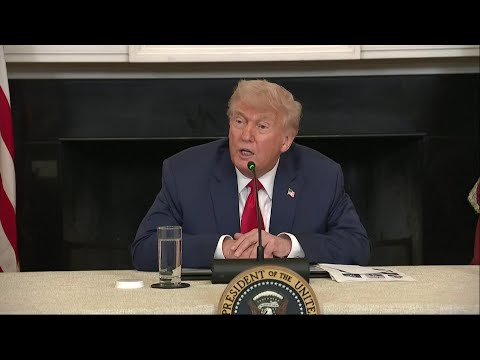
Trump on China Trade Talks: 'Not Easy'
Bloomberg Television· 2025-06-09 11:54
We are [Music] doing well with China. China is not easy. Just like just like your your home country is not easy there. Uh I think we're doing very well. They're over there now. I'm only getting good reports. It's a little early, but they'll be calling in soon. In fact, probably when I get back, I'll have my first call from them. We want to open up China. And if we don't open up China, maybe we won't do anything. But we want to open up China. It'll be a great thing for China, great thing for the rest of the ...

China Enters Bull Market Into Trade Talks: 3-Minute MLIV
Bloomberg Television· 2025-06-09 00:31
What are traders looking for out of these talks. How high are expectations. Are we going to see some kind of a catalyst coming in the same way we saw out of Geneva.Hi. Good morning, Guy. Well, I think that the market is going into these trade talks with a reasonably optimistic view of where we are right now.We can see that in Asia's markets today with equities are performing well. China is a gauge in Hong Kong moving into bull market territory. So, you know, plenty of optimism there.And I think we have seen ...
2024年拉丁美洲和加勒比经济初步概览(英)
拉丁美洲经济委员会· 2025-06-03 06:35
Investment Rating - The report does not explicitly provide an investment rating for the industry Core Insights - Global economic growth is projected to remain steady at around 3.2% for 2024 and 2025, primarily driven by emerging economies [36][39] - The region's economic growth is estimated at 2.2% for 2024 and 2.4% for 2025, indicating a low-growth trajectory [34][36] - The region is experiencing a "trap of low capacity for growth," with average annual growth from 2015 to 2024 at only 1% [30][35] - Inflation rates are converging towards target ranges, albeit slowly, with falling inflation prompting looser monetary policies in the region [26][33] Summary by Sections Executive Summary - Global economic growth is expected to hold steady, driven by emerging economies [26] - The region's debt issuance on international markets is increasing, but net resource transfers abroad are also rising [26] - Economic activity remains low, increasingly reliant on private consumption [26] - Labour markets show modest improvements despite low job creation [26] - Fiscal space in Latin America and the Caribbean remains limited [26] - Inflation is converging towards target ranges, albeit at a slower pace [26] Global Context - The global economy is projected to grow at 3.2% in 2024, with the United States contributing significantly [36][39] - Major central banks have expanded liquidity, ending the tight monetary cycle [40][41] - Increased global liquidity has led to higher capital flows, primarily towards developed economies [46] Economic Activity - The region's GDP growth is projected at 2.2% for 2024, reflecting weak domestic demand and a smaller external contribution [51] - Economic growth in South America is accelerating, while Mexico and Central America are experiencing slower growth [52] External Sector - The region's current account deficit is expected to widen, driven by higher interest payments abroad [47] - Foreign direct investment inflows have increased significantly, accounting for 3.2% of GDP [49] - Debt issuance in international markets has risen by 35% year-on-year to US$ 98.9 billion [50] Prices - Inflation in the region is generally declining, with core and food inflation converging to central bank targets [20] Employment and Wages - Employment in Latin America grew by 1.7% in 2024, but growth in the number of employed people is slowing [85] - Real wages rose in the first half of 2024, although gender gaps in participation and unemployment persist [93][94] Macroeconomic Policies - Fiscal balances are stabilizing but remain in substantial deficit, with high public debt levels [112][113] - Monetary policy rates have been cut across the region, although some countries maintain a restrictive stance [118]
Jeffrey Sachs: Starting WW3 over Taiwan " the stupidest thing for my grandchildren to die for."
All-In Podcast· 2025-06-03 01:47
China, first of all, is not a threat to the United States security. Big oceans, big nuclear deterrent and so forth. Second, we don't have to be in China's face.What do I mean by that. We don't have to provoke World War II over Taiwan. That's a long complicated issue, but this would be the stupidest thing for my grandchildren to die for.We have three agreements with China that say we're going to stay out of that and we should and then China would have no reason for war either. ...

How Trump’s $175B Golden Dome Will Upgrade U.S. Defense | WSJ
The Wall Street Journal· 2025-05-29 14:00
Project Overview - The US needs to put incredibly complex technology into space, including satellites that don't even exist yet, for President Trump's $175 billion missile defense shield, the Golden Dome, to work [1] - The Golden Dome aims to counter advancements in missile technology from competitors like China and Russia, including ICBMs, FOBS, and boosted hypersonic glide weapons [3][4][5][6][7] - The US plans to launch hundreds or thousands of sensors into orbit to detect and track maneuvering missiles [10] Technological Advancements & Challenges - Competitors are developing missiles that can maneuver and evade current defenses, posing challenges to existing detection and tracking systems [3][9] - The US is developing a sensor layer, a network of tracking satellites, to keep track of maneuvering objects [10] - The US is considering space interceptors to take out missiles earlier in their flight, but the design is unclear [11][12] Geopolitical Implications - The Golden Dome could be used offensively to take out satellites belonging to China or Russia, leading to concerns about an arms race in space [13] - China and Russia have expressed opposition to the Golden Dome [13] Potential Obstacles - Experts suggest the Golden Dome could cost billions more than the estimated $175 billion and take much longer to build [14] - Previous missile defense initiatives have fallen short due to high costs, technological shortcomings, and foreign pressure [15]

“海湖庄园协议”总设计师谈:重组全球贸易体系用户指南
2025-05-18 14:09
Summary of Key Points from the Conference Call Industry or Company Involved - The discussion revolves around the **global trading system** and its implications for the **U.S. economy**, particularly under the policies of the **Trump Administration**. Core Points and Arguments 1. **Desire for Reform**: There is a strong desire to reform the global trading system to ensure fairer competition for American industries, a theme consistent with President Trump's agenda for decades [1][10][11]. 2. **Economic Imbalances**: Persistent overvaluation of the U.S. dollar is identified as a root cause of economic imbalances, hindering U.S. exports and benefiting imports, which negatively impacts the manufacturing sector [2][19][22]. 3. **Tariff Implementation**: Tariffs can provide revenue and, if offset by currency adjustments, may have minimal adverse effects. The experience from 2018-2019 suggests that tariffs can be implemented without significant inflationary consequences [4][12][68]. 4. **Currency Policy**: The U.S. has historically pursued multilateral approaches to currency adjustments, but there are unilateral strategies available to address currency misvaluation [5][61]. 5. **Financial Market Consequences**: The potential financial market consequences of tariff and currency policies are significant, and careful sequencing of these policies is necessary to mitigate risks [6][67]. 6. **Manufacturing Sector Impact**: The overvaluation of the dollar has led to a decline in manufacturing jobs, with estimates indicating that between 600,000 and 2 million jobs were lost due to increased trade with China [19][20]. 7. **National Security Concerns**: The intertwining of trade policy with national security is emphasized, with the administration likely to focus on industries critical to national security, such as semiconductors and pharmaceuticals [15][65][66]. 8. **Trade-offs of Reserve Currency Status**: The U.S. benefits from being the world's reserve currency, which allows for cheaper borrowing but also leads to currency overvaluation that erodes export competitiveness [57][58]. 9. **Potential for Policy Changes**: The Trump Administration is expected to undertake substantial changes to trade and financial policies, with a focus on improving the competitiveness of American manufacturing [11][64][66]. Other Important but Possibly Overlooked Content 1. **Historical Context**: The current tariff rates and trade policies are legacies of post-World War II strategies aimed at rebuilding and creating alliances, which may no longer be suitable for today's economic landscape [35][36]. 2. **Economic Consequences of Reserve Status**: The U.S. has run a current account deficit since 1982, indicating that the dollar's role as a reserve currency is not effectively balancing international trade [48][49]. 3. **Market Volatility Risks**: There are significant risks of market volatility associated with unilateral policy changes, which could have adverse effects on the economy [62][67]. 4. **Inflation Dynamics**: The relationship between tariffs and inflation is complex, with evidence suggesting that currency adjustments can mitigate inflationary pressures from tariffs [75][91]. 5. **Re-exporting Practices**: Chinese exporters have begun re-exporting goods to avoid tariffs, complicating the analysis of tariff impacts on prices and trade flows [87][88]. This summary encapsulates the key points discussed in the conference call, highlighting the complexities and interconnections between trade policy, currency valuation, and national security.
高盛:亚太区每周动态_ 本周香港及中国 A 股领涨;尽管美元走强,外资流入仍强劲
Goldman Sachs· 2025-05-14 03:09
10 May 2025 | 4:20AM SGT Asia-Pacific Weekly Kickstart MXAPJ stayed around its ytd highs; Hong Kong and China A led this week; Strong foreign inflows continued despite a stronger Dollar MXAPJ rose 0.3%, led by Hong Kong (+4%), China-A (+2%), and Singapore (+1%), while India (-2%), Australia (-1%), and Indonesia (muted) lagged. Tech Hardware & Semis, Transportation, and Insurance & Financial Services led Health Care, Energy, and Software. EM Asia experienced strong foreign inflows totaling US$4.1bn, led by T ...
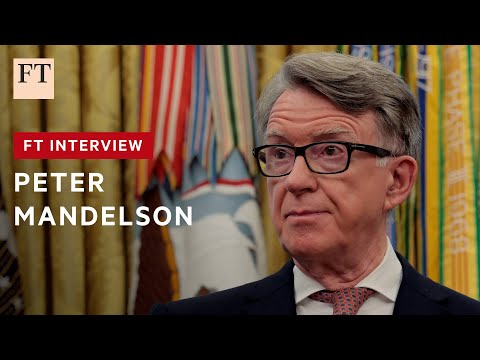
Peter Mandelson: 'China is now a country with whom we are all engaged in a strategic rivalry' | FT
Financial Times· 2025-05-12 14:01
Trade Deal & International Relations - The UK and US have a trade deal covering the vast bulk of UK's industrial/goods exports to the US, including autos, pharma, aerospace, and steel [7] - The trade deal started with 10% tariffs and ended with 10% tariffs, but now many cases don't have tariffs [8] - The US has committed to negotiating the reduction and elimination of tariffs, opening the door to a broader, deeper technology partnership [8] - The UK already has a national security investment act to check supply chains, exports, and inward investment, focusing on China [8] - The UK views China as a strategic rival and adversary, particularly regarding its support for Russia in Ukraine, necessitating a realistic approach [8] - The speaker's views on China have evolved through three stages: bedding down China into the international trading system, the "golden era" of open engagement, and now coming to terms with China's economic dominance and overproduction [8] - The speaker suggests that the US should work with other big players like Britain and Europe to address imbalances in trade created by China [8] - The speaker believes the current trade deal with the US is binding, given the close alliance between the two countries [9] - The speaker acknowledges that leaving the European Union has resulted in losses for the UK, necessitating a reset and improvement of the existing Brexit deal [9] Technology Partnership - The UK and US are pursuing a technology partnership focused on future industries driven by science and technology, such as AI, nuclear fusion, quantum computing, engineering biology, and space [8][11] - The goal is to accelerate scientific and technological advancement through collaboration, incorporating American technology to create new businesses and industries in the UK [11] - The UK aims to regulate technology companies in a pro-innovation, pro-growth manner, avoiding stifling regulations [11] - Quantum computing is highlighted as a specific area for collaboration, aiming to achieve better and quicker results than working separately [14] - The speaker emphasizes the need to protect collaborative work in areas like quantum computing to prevent technology from being transferred to the Chinese economy [14]
新兴市场资金流向;印度和中国出现复苏迹象
2025-04-01 04:17
Summary of Emerging Markets Equity Strategy Conference Call Industry Overview - The conference call focuses on the Emerging Markets (EM) equity landscape, highlighting recent trends in fund flows and investment patterns across various regions, particularly India and China. Key Points and Arguments Fund Flows - EM equities experienced outflows of **-$554 million** after previous inflows of **+$379 million** the week prior [1] - Year-to-date (YTD) EM equity flows are at **-$7.1 billion** [1] - Emerging Market (EM) equity funds saw a total of **+$586 million** in ETF subscriptions, contributing to a total of **+$11.2 billion** since January 29 [1] - Non-ETF funds faced outflows of **-$1.1 billion** [1] Regional Insights - **India** reported significant inflows of **+$2.7 billion**, breaking a streak of 14 weeks of outflows [2] - **China** saw inflows of **+$1.2 billion** after three months of sell-offs [2] - Other notable inflows included **Mexico (+$184 million)**, **Poland (+$122 million)**, and **Chile (+$50 million)** [2] - **Korea** had inflows of **+$1.2 billion**, while **Taiwan** recorded marginal inflows of **+$84 million** after four weeks of heavy sell-offs [2] - In contrast, **Brazil** experienced outflows of **-$197 million** after two weeks of inflows [2] - **South Africa** and **Turkey** faced significant outflows of **-$303 million** and **-$444 million**, respectively [2] Performance Metrics - The overall EM equity performance remains under pressure, with a notable decline in flows compared to previous periods [4] - Developed Europe saw strong inflows of **+$3.1 billion**, contrasting with the outflows in the US, which totaled **-$20.3 billion** [4] Market Dynamics - The report indicates a mixed sentiment across different EMs, with some regions showing resilience while others continue to struggle with outflows [2][4] - The data suggests a potential shift in investor sentiment towards India and China, which may present new opportunities for investment [2] Additional Insights - The report emphasizes the importance of monitoring regional fund flows as a key indicator of market health and investor confidence [4] - The analysis includes a detailed breakdown of fund flows by region, highlighting the disparities in investment behavior across different markets [4] Important but Overlooked Content - The report notes that all EM ASEAN countries experienced outflows, indicating a broader regional challenge [2] - The data also highlights the ongoing volatility in the EM space, suggesting that investors should remain cautious and vigilant [4] This summary encapsulates the key insights from the conference call, providing a comprehensive overview of the current state of the Emerging Markets equity landscape and the implications for future investment strategies.
