Palantir Technologies Inc.

Search documents
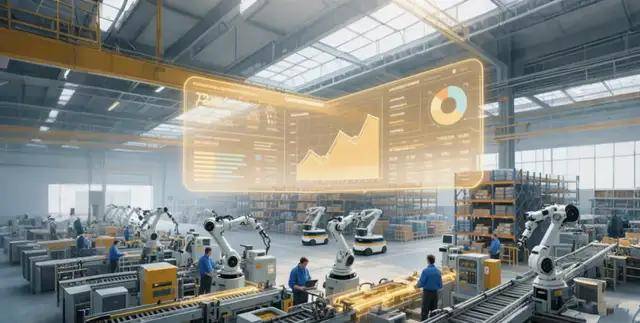
华为如何引领工业软件“智变”
Sou Hu Cai Jing· 2025-12-04 23:56
Core Insights - The traditional industrial software landscape is facing significant challenges due to the rise of AI and large model technologies, leading to data silos and a lack of effective communication between disparate systems [1][2][4] - The evolution of industrial software must focus on creating a new generation of intelligent industrial software that allows for seamless data flow and precise AI implementation [4][5] Group 1: Challenges in Traditional Industrial Software - Data fragmentation is a primary challenge, with large manufacturing enterprises often using numerous software systems from different vendors, leading to incompatible data formats [2] - The existence of system silos prevents AI from accessing comprehensive contextual data, as early ERP, MES, and SCM systems lack a unified semantic framework [2] - There is a disconnect between AI models and real-world industrial scenarios, resulting in AI's inability to understand specific industrial logic, which can lead to inaccuracies [2] Group 2: Solutions and Innovations - Palantir's ontology concept offers a potential solution by creating a unified data semantic framework to connect disparate information and unlock deeper data value [5] - Huawei's Industrial Data Graph Platform embodies this approach, integrating various data sources to support AI-driven decision-making and enhance operational efficiency [7][9] - The iDME and iDEE products from Huawei provide foundational capabilities for data modeling and conversion, ensuring data consistency and interoperability across different industrial software [9][10] Group 3: Implementation and Impact - Huawei's hardware development toolchain, IPDCenter, facilitates cross-disciplinary collaboration and data flow among various industrial software tools, enhancing innovation and digital transformation [11][13] - The comprehensive capability system established by Huawei, from data foundation to application collaboration, positions it as a leader in the evolution of industrial software [13][15] - Real-world applications of Huawei's solutions in companies like GAC Group and Jianghuai Automobile demonstrate significant improvements in efficiency and product quality through unified data management [16][17]

S&P 500, Nasdaq Extend Win Streaks Ahead Of Key Inflation Data; AppLovin, Robinhood Eye Buy Points
Investors· 2025-12-04 22:51
Group 1 - The S&P 500 index increased by 0.1% and the Nasdaq composite rose by 0.2% on Thursday, supported by economic data suggesting an interest-rate cut may be imminent [1] - Small-cap stocks are nearing all-time highs, indicating strong market performance despite major indexes pausing [2] - Key inflation data is expected to be released on Friday, which will be crucial for Wall Street's assessment of the interest-rate outlook [1] Group 2 - Small caps are leading the market, outperforming large caps, with notable stocks like Eli Lilly and Robinhood being highlighted [4] - The current market season is characterized by a focus on stock buybacks, which may influence investment strategies [4] - New AI stocks are gaining attention from top funds, indicating a shift in investment interest towards emerging technologies [4]

Prediction: In 5 Years, Many Artificial Intelligence (AI) Investors Will Regret Not Doing This
The Motley Fool· 2025-12-04 20:14
Core Insights - The CEO of a major tech company acknowledged that no firm will be immune if the AI bubble bursts, highlighting the current high valuations of AI stocks like Nvidia and Palantir, which have increased over 1,000% since 2023 [1][3] Group 1: AI Stock Performance - Nvidia is the leading provider of AI-accelerator chips essential for next-gen technologies, while Palantir specializes in AI-powered data analytics to enhance business efficiencies [2] - Palantir's market cap is around $400 billion, despite generating only $4 billion in annual revenue, indicating a steep valuation [4] - Palantir's stock trades at over 100 times sales and 390 times earnings, raising concerns about financial risks for investors [5] Group 2: Economic Conditions and Market Risks - A potential trigger for the AI bubble's burst could be a continued weakening of economic conditions, as consumers are reducing discretionary spending [6][7] - An MIT study revealed that 95% of generative AI investments have not yielded returns for companies, which may lead to rising costs and declining revenues [7] - The interconnectedness of big tech companies means that a slowdown in spending from hyperscalers could significantly impact the market [8] Group 3: Investment Strategies and Market Outlook - Investors may be tempted to shift towards tech stocks with low earnings multiples, such as Nvidia, which has a forward price-to-earnings multiple of 23 and a PEG ratio under 1.0 [9] - Analysts' projections for the tech sector are optimistic, but these forecasts can change rapidly if spending cuts occur, potentially making previously cheap stocks appear expensive [10][11] - Diversifying investments outside of tech could be crucial, as the disconnect between the tech sector and consumer behavior may lead to market corrections [13][14]


Voyager Technologies, Inc. (VOYG): A Bull Case Theory
Yahoo Finance· 2025-12-04 17:05
Core Thesis - Voyager Technologies, Inc. is positioned as a dual-focus defense and space company with significant growth potential through its national security subcontracting operations and the Starlab commercial space station project, which is set to replace the ISS by 2030 [2][3][4] Business Overview - The core defense business generates most near-term revenue by supplying propulsion systems for LMT's Next Generation Interceptor (NGI) missile program and providing ISR, AI/ML software, and space infrastructure services [2] - Voyager's near-term growth is supported by a pipeline of additional programs valued at approximately $2.7 billion, with expectations to onboard a second program by 2026 [2] Strategic Acquisitions and Partnerships - Operational expertise and strategic acquisitions, including Nanoracks, Valley Tech Systems, and BridgeComm, enhance Voyager's technology stack and program credibility [3] - Multinational partnerships with companies like Airbus, Mitsubishi, MDA Space, and Palantir provide strategic advantages, positioning Voyager favorably against competitors such as Axiom Space, Blue Origin, and Vast Space [4] Valuation and Price Target - A sum-of-the-parts valuation indicates that VOYG's core business is valued at 7.5 times one-year forward sales, with Starlab contributing additional call-option value, leading to a price target of $58 and a bull case of $84 within two years [5] - Potential catalysts for growth include funding announcements for Starlab, clarity on the Golden Dome RFP, additional defense program awards, and strategic valuation uplifts [5] Investment Opportunity - Voyager represents a compelling growth opportunity with immediate defense exposure and transformative long-term upside, despite risks related to program execution and funding timing [5]
Why Palantir And Nvidia's Infrastructure Move Matters More Than Any Model
Benzinga· 2025-12-04 16:23
Core Insights - The AI boom is shifting focus from model size and chip launches to energy and compute infrastructure, as highlighted by Palantir's new partnership with Nvidia and CenterPoint Energy [1][2] - The real constraint on AI innovation is identified as the power grid, which is lagging behind the rapid deployment of AI technologies [1][2] Group 1: AI Infrastructure Bottleneck - All technology companies with AI ambitions are facing limitations due to the slow approval of data center capacity by utilities, which is years behind AI deployment plans [2] - The exponential growth in industry demand for AI cannot be met without adequate energy distribution [2] Group 2: Strategic Positioning of Palantir - Palantir's initiative, Chain Reaction, aims to serve as the coordination layer for re-architecting energy infrastructure, focusing on utilities, grid operators, and data-center planners [3] - The longevity of infrastructure provides a strategic advantage over rapidly evolving AI models [3] Group 3: Nvidia's Role and Market Dynamics - Nvidia's involvement indicates a shift in compute economics, where the limiting factor is now the ability to build and power environments rather than chip fabrication speed [4] - Without significant grid expansion, Nvidia's future demand for GPUs may face constraints [4] Group 4: Future of AI Companies - The narrative is shifting from benchmarks of AI models to the availability of megawatts and the optimization of energy-compute networks [5] - The next leading AI companies will succeed not by having larger models but by having more robust power grids [7]

Here's How Picking AI Stocks Is Going to Change in 2026
The Motley Fool· 2025-12-04 14:45
Core Insights - The investment landscape for AI-related companies is shifting from a focus on revenue growth to a demand for adequate returns on investment [2][8] - Companies are categorized into two groups: those providing AI technology (e.g., Nvidia, Broadcom) and those utilizing AI to enhance productivity (e.g., Amazon, Recursion Pharmaceuticals) [5][6] - The expectation is that expenditures in AI must start contributing positively to the bottom line rather than detracting from it [6][7] Group 1: AI Technology Providers - Nvidia and Broadcom are leading companies in the AI technology space, with Nvidia producing high-performance processors and Broadcom providing networking equipment [5] - Nvidia reported a Q3 revenue of $57 billion, with a net income of $31.9 billion, reflecting a profit margin of 55% [15] - However, Nvidia's profit margins may face pressure as competition from companies like Alphabet and Marvell Technology increases [17] Group 2: Companies Utilizing AI - Companies like Amazon leverage AI for product recommendations and delivery route optimization, while Recursion Pharmaceuticals uses AI for virtual drug discovery [6] - Palantir Technologies has achieved significant growth, with a revenue increase of 63% to nearly $1.2 billion and a net income of $477 million, resulting in a profit margin of 40% [9] - In contrast, C3.ai is struggling with increasing losses despite revenue growth, raising concerns about its ability to achieve sustainable profitability [10] Investment Considerations - J.P. Morgan estimates that achieving a 10% return on AI investments through 2030 would require approximately $650 billion in annual revenue [7] - A study by MIT indicates that 95% of institutional investments in AI are not yet yielding meaningful returns [7] - Goldman Sachs' analyst Eric Sheridan warns that only 2-3 companies in any technology sector typically earn excess returns, suggesting investors need to be selective [8][18] Market Dynamics - The AI market is still maturing, and there is a growing concern about profitability metrics becoming more relevant [19][20] - The increasing discourse around an AI bubble and profit concerns signals a shift towards a more discerning investment approach [20]

SCHD ETF continues to disappoint: buy SPYI instead?
Invezz· 2025-12-04 14:12
Core Viewpoint - The Schwab US Dividend Equity ETF (SCHD) has underperformed compared to high-growth technology stocks and alternative funds like the NEOS S&P 500 High Income ETF (SPYI) in 2023, leading to a recommendation for SPYI as a better investment option [1][5]. Performance Comparison - The SCHD ETF has a total return of 4.68% in 2023, while the S&P 500 and Nasdaq 100 indices have increased by 22% and 17%, respectively [1]. - Over the past three years, SCHD's return was only 20%, significantly lower than the Nasdaq 100's 120% and the S&P 500's 78% [2]. Sector Composition - SCHD is primarily composed of companies in traditional industries, with energy being the largest sector at approximately 20% of its holdings [3]. - Other significant sectors in SCHD include consumer staples, healthcare, and industrials, which have faced challenges due to external factors like tariffs [4]. Comparison with SPYI - The NEOS S&P 500 High Income ETF (SPYI) offers a higher yield of 12% and has outperformed SCHD with a three-year return of 58% compared to SCHD's 20% [5][6]. - In 2023, SPYI returned 15%, significantly higher than SCHD's 4.98% [6]. Investment Strategy - SPYI employs a covered call strategy, investing in S&P 500 companies and writing call options to generate monthly premiums for dividends [7]. - SPYI also utilizes tax loss harvesting to enhance returns, which contributes to its superior performance compared to other covered call ETFs [7]. Recommendations - Analysts recommend SPYI as a preferable option for investors seeking dividend income, especially given its historical performance and higher yield compared to SCHD [8].

Top Big Data Stocks Set to Accelerate the AI-Powered Future
ZACKS· 2025-12-04 13:51
An updated edition of the October 15, 2025 article.The world is witnessing a gigantic stream of digital information from various sources, comprising online shopping, sensors, social media, videos and more. This vast and continuous flow of structured and unstructured data sets is known as Big Data.Notably, the traditional data processing software can’t process or store the large volumes of data. However, as technology has evolved, artificial intelligence (AI) and advanced machine learning algorithms can now ...

Snowflake Has Already Hit $100 Million AI Run-Rate, CEO Says: 'Real Usage
Benzinga· 2025-12-04 13:51
Snowflake Inc (NYSE:SNOW) smashed through its AI milestone a quarter ahead of expectations, reaching a $100 million annualized AI revenue run rate earlier than forecast. CEO Sridhar Ramaswamy emphasized that the number isn't cosmetic or speculative. "This milestone $100 million AI revenue run rate reflects real-world production usage — not a forecast slide," he said over the company’s third quarter earnings call.Track SNOW stock here.With peers in the AI race often accused of marketing inflation and vaporwa ...


AI进化速递 | 可灵首个“音画同出”模型上线
Di Yi Cai Jing· 2025-12-04 12:46
Group 1 - Alibaba's 1688 launched an AI agent named "Ao Xia" for cross-border e-commerce [1] - OpenAI acquired Neptune to enhance AI model training monitoring capabilities [1][3] - Anthropic and Snowflake entered a $200 million agreement to collaborate on AI agents [1][4] Group 2 - Palantir released an operating system called Chain Reaction aimed at the U.S. AI infrastructure, with Nvidia as a founding partner [1][4] - Amazon plans to invest $12.7 billion in AI infrastructure in India by 2030 [1] - The International Atomic Energy Agency held its first seminar on AI and nuclear energy [1]