Foxconn

Search documents
Apple Is Moving US iPhone Assembly to India Amid Tariff Turmoil
CNET· 2025-05-02 23:02
Core Viewpoint - Apple plans to source nearly all iPhones sold in the US from India, amounting to about 60 million units annually, in response to tariffs imposed by the Trump administration on China [1][2] Group 1: Manufacturing Strategy - The majority of iPhones sold in the US are expected to have India as their country of origin for the June quarter, with Vietnam being the source for most iPads, Macs, Apple Watches, and AirPods [2] - By relocating assembly to India, Apple aims to mitigate cost pressures from the trade war, although India may face new tariffs [3] - Apple's shift is part of a broader strategy that may involve increasing US component manufacturing, with plans to potentially double iPhone production capacity in India over the next two to three years [4] Group 2: Market Dynamics - Despite the shift, Apple will maintain a significant manufacturing presence in China, as 15% of its sales are expected to come from that market, and global iPhone manufacturing will still rely heavily on Chinese facilities [4] - The company is unlikely to move all iPhone production to the US due to cost constraints, but it may increase production of modems and internally designed processors in collaboration with Taiwan Semiconductor [4] Group 3: Competitive Landscape - Apple's move to increase manufacturing in India is not unprecedented, as competitors like Samsung, Oppo, Vivo, and Motorola have already established production in the country [7] - There are indications that Google may also shift production of its Pixel phone to India from Vietnam, highlighting a trend among tech companies to diversify manufacturing locations [7]



TTM Technologies(TTMI) - 2025 Q1 - Earnings Call Transcript
2025-04-30 21:32
Financial Data and Key Metrics Changes - TTM Technologies achieved revenue of $648.7 million in Q1 2025, a 14% increase year-on-year from $570.1 million in Q1 2024 [26] - Non-GAAP EPS for Q1 2025 was $0.50, compared to $0.28 in Q1 2024, reflecting strong financial performance [30] - Non-GAAP operating margin improved to 10.5%, up 340 basis points from 7.1% in the same quarter last year [28] Business Line Data and Key Metrics Changes - Aerospace and defense represented 47% of total sales in Q1 2025, with revenues growing 15% year-on-year [17] - Data center computing accounted for 21% of total sales, also growing 15% year-on-year, driven by demand for generative AI applications [19] - Automotive sales declined to 11% of total sales, down from 13% in the previous year, primarily due to inventory adjustments [20] Market Data and Key Metrics Changes - The company reported a book-to-bill ratio of 1.1 for the quarter, indicating a healthy order intake relative to shipments [7][25] - The aerospace and defense program backlog was approximately $1.55 billion, up from $1.38 billion year-on-year [18] - Networking revenue grew by 53% year-on-year, accounting for 8% of total revenue, driven by increased demand [21] Company Strategy and Development Direction - The company is focused on diversifying its end markets and manufacturing footprint, with significant investments in new production capabilities in regions like Malaysia [8] - TTM is positioned to benefit from increased defense spending, with expectations of continued growth in the aerospace and defense sector [15] - The company aims to mitigate tariff impacts through strategic sourcing and delivery timing [12] Management's Comments on Operating Environment and Future Outlook - Management noted that there has been no significant change in customer behavior due to tariffs, with a strong outlook for the aerospace and defense market [9][66] - The company is optimistic about the potential for increased domestic manufacturing investments in the U.S., which could benefit TTM in the long term [13] - Management highlighted the importance of maintaining flexibility and vigilance in response to potential economic slowdowns [13] Other Important Information - TTM's cash and cash equivalents at the end of Q1 2025 totaled $411.3 million, with net debt to EBITDA at 1.3 [32] - The company plans to ramp up production at its new facility in Syracuse, with expectations for production to begin in mid-2026 [16] - TTM published its second corporate sustainability report on April 22, reflecting its commitment to environmental responsibility [17] Q&A Session Summary Question: Revenue and margins at the Penang facility - In Q1, the Penang facility generated approximately $2.2 million in revenue, with an operating income loss of about $11.5 million, but is expected to reach breakeven by Q3 [36][37] Question: Decline in aerospace and defense program backlog - The program backlog decreased slightly from $1.56 billion to $1.55 billion, but bookings remain strong, indicating healthy demand [41][44] Question: Customer qualifications at the Penang facility - TTM has four anchor customers and is qualifying approximately 10 additional customers, with a focus on data center and networking markets [50][54] Question: Impact of tariffs on customer behavior - Management has not observed significant changes in customer behavior due to tariffs, with steady demand across various markets [66] Question: Competitive dynamics in PCB manufacturing - TTM is engaging in discussions with customers regarding future volume needs and is positioned to leverage its Penang facility for advanced technology production [70][71] Question: Potential upside from defense spending - The reconciliation bill includes programs related to air missile defense, which could provide additional revenue opportunities for TTM [80][82]

TTM Technologies(TTMI) - 2025 Q1 - Earnings Call Transcript
2025-04-30 20:30
Financial Data and Key Metrics Changes - TTM achieved revenue of $648.7 million in Q1 2025, a 14% increase year on year from $570.1 million in Q1 2024 [26] - Non-GAAP EPS for Q1 2025 was $0.50, compared to $0.28 in Q1 2024, reflecting strong financial performance [30] - Non-GAAP operating margin improved to 10.5%, up 340 basis points from 7.1% in the same quarter last year [28] Business Line Data and Key Metrics Changes - Aerospace and defense represented 47% of total sales in Q1 2025, with revenues growing 15% year on year [17] - Data center computing accounted for 21% of total sales, also growing 15% year on year, driven by demand for generative AI applications [19] - Automotive sales declined to 11% of total sales, down from 13% in the previous year, primarily due to inventory adjustments [20] Market Data and Key Metrics Changes - The company reported a book-to-bill ratio of 1.1 for the quarter, indicating a healthy order intake relative to shipments [7][25] - The medical industrial instrumentation market contributed 13% of total sales, returning to 5% year on year growth as demand normalized [19] - Networking sales grew 53% year on year, accounting for 8% of revenue, driven by increased demand from AI-related products [21] Company Strategy and Development Direction - TTM is focused on reducing seasonality in operating performance and has diversified its end markets and manufacturing footprint [8] - The company is investing in new production capabilities in regions like Malaysia while divesting lower-margin facilities in China [8] - TTM aims to mitigate tariff impacts through strategic sourcing and delivery timing, maintaining a diverse manufacturing footprint [12] Management's Comments on Operating Environment and Future Outlook - Management noted strong demand in aerospace and defense, with a solid program backlog of approximately $1.55 billion [18] - The company is optimistic about future growth, particularly in defense spending, with expectations of continued increases in the defense budget [15] - Management highlighted the importance of monitoring customer behavior in response to tariffs but noted no significant changes thus far [66] Other Important Information - TTM's new facilities in Penang and Syracuse are progressing well, with expectations for revenue ramp-up and breakeven points in the near future [16] - The company published its second corporate sustainability report, reflecting its commitment to minimizing environmental impact [17] Q&A Session Summary Question: Revenue and margins at the Penang facility - Revenue at the Penang facility was approximately $2.2 million in Q1, with an operating income loss of about $11.5 million, but management expects steady improvement [36][37] Question: Decline in aerospace and defense program backlog - The program backlog slightly decreased from $1.56 billion to $1.55 billion, but bookings remain strong, indicating a healthy outlook [41][44] Question: Customer qualifications at the Penang facility - TTM has four anchor customers and is qualifying approximately 10 additional customers, with a focus on data center and networking markets [51][54] Question: Impact of tariffs on customer behavior - Management has not observed significant changes in customer behavior due to tariffs, with steady demand across various markets [66] Question: Competitive dynamics in PCB manufacturing - TTM is engaging in discussions with customers regarding competitive dynamics, particularly in light of the Penang facility's capabilities [68][70] Question: Potential upside from defense spending - Management is optimistic about the reconciliation bill and its potential positive impact on aerospace and defense revenue [82][84]
indiGOtech Closes Strategic Funding Round from Industry Giants to Accelerate Sustainable Ride Hail and Delivery for Communities
Prnewswire· 2025-04-29 16:00
Core Insights - indiGOtech (tradename: GO) has successfully closed a $54 million Series BB funding round, with investments from FedEx, Foxconn, and FM Capital, aimed at enhancing sustainable local transport solutions [1][5] - The company is focused on developing SmartWheels™ powered electric vehicles (EVs) and autonomous vehicles (AVs) that are designed to be cost-effective, spacious, and user-friendly, addressing the current challenges faced by Mobility Network Companies (MNCs) [1][2] Funding and Strategic Positioning - The recent funding positions GO to initiate GO Loop services, launch the DASH model, and prepare for a Series C funding round by the end of the year to bring the FLOW model to market [5] - GO has engaged TD Cowen as its investment banker to facilitate the Series C funding from strategic and institutional investors [5] Product Offerings - GO is introducing multiple light smart EVs for fleets, including the DASH, which seats four, has a spacious 90 cubic feet interior, a range of 110 miles, and is priced around $20,000 after tax credits, with pre-orders available for fulfillment in Q4 2025 [3] - The FLOW model features a 100% drive-by-wire capability, a center drive cockpit for ergonomic use, and is designed for easy transition between human and autonomous driving systems [4] Technological Innovations - GO's SmartWheels™ technology integrates a smart suspension and propulsion system in each wheel, providing a superior user experience and enhancing the operational efficiency for ride-hailing and delivery services [2][3] - The acquisition of Clevon, an unmanned delivery vehicle provider, aims to accelerate the development of GO's SmartWheels platform and integrate it with leading regional autonomous driving systems [4] Market Focus - GO targets the growing needs of drivers and fleets, emphasizing the importance of providing sustainable transportation solutions that are economically viable for both drivers and mobility companies [2][6] - The company's mission is to enhance local electric transport services (LETS) through Smart EVs and service hubs, ultimately contributing to more sustainable community transportation [6]


苹果计划将所有美国 iPhone 的供应转向印度,摆脱对中国的依赖
2025-04-27 03:55
Summary of Apple Inc. Conference Call Company Overview - **Company**: Apple Inc. - **Industry**: Technology, specifically smartphone manufacturing Key Points 1. **Shift in Production Location**: Apple plans to shift the assembly of all iPhones sold in the US to India as soon as next year, moving away from reliance on China due to trade tensions initiated by former President Donald Trump [2][4] 2. **Long-term Goals**: The company aims to source all more than 60 million iPhones sold annually in the US from India by the end of 2026, indicating a significant acceleration in its supply chain diversification strategy [5] 3. **Production Capacity Increase**: Achieving this target would require Apple to double its iPhone output in India, a notable shift after nearly two decades of heavy investment in Chinese manufacturing [6] 4. **Current Manufacturing Landscape**: Currently, the majority of iPhones are manufactured in China through third-party suppliers like Foxconn, which have been impacted by aggressive tariffs imposed by the US [7][10] 5. **Market Value Impact**: Following Trump's tariff announcements, Apple experienced a market value loss of $700 billion, prompting the company to expedite the export of Indian-manufactured iPhones to the US to mitigate tariff impacts [8] 6. **Component Sourcing**: Despite the shift in assembly, Apple remains heavily reliant on Chinese suppliers for hundreds of components necessary for iPhone production [10] 7. **Tariff Context**: The US has imposed a 20% tariff on all imports from China, while India faced a reciprocal tariff of 26%, which is currently paused as negotiations for a bilateral trade agreement progress [11] 8. **US Market Share**: The US accounted for approximately 28% of Apple's global iPhone shipments, valued at $232.1 billion in 2024, highlighting the importance of the US market for Apple's overall sales [12] 9. **Increased Capacity Needs**: To fulfill all US orders from India, Apple will need to further increase its manufacturing capacity in the country [12] 10. **Strategic Importance**: Industry experts believe this move is crucial for Apple to maintain its growth and momentum amidst tariff risks, showcasing the company's agility in responding to market challenges [14] 11. **Upcoming Earnings Report**: Apple is set to report quarterly earnings soon, with investors keen to understand the implications of the tariff situation on the company's financial performance [15] 12. **Executive Engagement**: CEO Tim Cook has maintained regular communication with Trump and his administration since the inauguration, indicating the company's proactive approach to navigating trade issues [15] Additional Insights - **Component Import Strategy**: In efforts to boost production in India, Foxconn and Tata have started importing pre-assembled component sets from China, reflecting a transitional strategy as Apple ramps up local assembly [13] - **No Official Comments**: Apple has declined to comment on the specifics of its production strategy or the impact of tariffs [16][17]
Apple to shift most US iPhone production to India by 2026 to avoid China tariffs: reports
New York Post· 2025-04-25 15:00
Group 1 - Apple plans to shift most of its iPhone production for the US market to India by the end of 2026 to avoid high tariffs on Chinese imports [1][4] - The company has already increased manufacturing capacity in India and is accelerating these plans due to deteriorating US-China trade relations, despite higher manufacturing costs in India [1][4] - The number of iPhones produced in India is expected to double to over 80 million units per year, while currently, about 80% of the 60 million iPhones sold in the US are made in China [4] Group 2 - Apple is in urgent discussions with manufacturing partners Foxconn and Tata to support its production shift to India, with plans to build two additional factories [2] - The US has imposed a 145% tariff on Chinese goods, while tariffs for India and Vietnam are 26% and 46% respectively, although the US administration has paused these tariffs for 90 days during negotiations [5] - In response to tariff concerns, Apple airlifted 600 tons of iPhones (approximately 1.5 million units) from India to the US to build up its domestic inventory [6]

Apple ‘aims to source all US iPhones from India', reducing reliance on China
The Guardian· 2025-04-25 10:16
Apple is reportedly planning to switch assembly of all iPhones for the US market to India as the company seeks to reduce its reliance on a Chinese manufacturing base amid Donald Trump’s trade war.The $3tn (£2.3tn) technology company aims to make the shift as soon as next year, the Financial Times reported.Apple has been swept up in Trump’s aggressive tariff policies, with the iPhone maker at one point among the biggest stock market casualties because of the prospect of its Chinese-made products being hit wi ...

Nvidia Plummets In Premarket—Projects $5.5 Billion Blow From New Restrictions On AI Chip Exports To China
Forbes· 2025-04-16 08:12
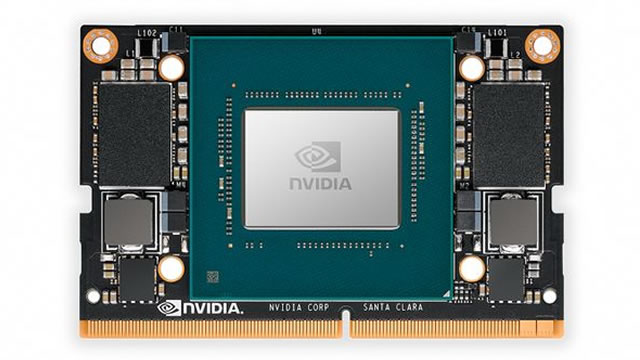
Core Viewpoint - Nvidia's shares experienced a significant decline following the announcement of new export restrictions on its H20 AI chips to China, which were implemented by the Trump administration despite prior discussions that suggested a potential delay in such measures [1][3]. Group 1: Export Restrictions - The U.S. government has mandated that Nvidia requires a special license to export its H20 AI chips to China, including Hong Kong and Macau, or to companies based in those regions [2]. - The licensing requirement for H20 exports to China will be in effect "for the indefinite future," aimed at mitigating risks associated with the potential use of these products in supercomputers in China [3]. Group 2: Financial Impact - Nvidia anticipates a financial impact of approximately $5.5 billion in its first quarter results for the 2026 fiscal year due to these export restrictions [3]. Group 3: Stock Performance - Following the announcement, Nvidia's share price fell to $104.32, representing a decline of over 7% in premarket trading, and a total drop of 16.45% since the beginning of 2025 [5]. Group 4: Political Context - Nvidia CEO Jensen Huang's recent attendance at a $1 million-per-head fundraising dinner at Mar-a-Lago was initially thought to have influenced the Trump administration to delay the export restrictions, but the government has since decided to proceed with them [6]. - Lawmakers from both parties have been advocating for the imposition of these export controls, indicating bipartisan support for the restrictions [6]. Group 5: U.S. Manufacturing Plans - Nvidia has announced plans to construct two factories in Houston and Dallas to assemble its AI supercomputers entirely in the U.S., in partnership with Taiwanese manufacturers Foxconn and Wistron, with mass production expected to ramp up within 12-15 months [7].

Nvidia plans to manufacture AI chips in the US for the first time
TechXplore· 2025-04-14 17:23
Core Points - Nvidia will produce its artificial intelligence supercomputers in the United States for the first time, marking a significant shift in its manufacturing strategy [3][5] - The company has secured over one million square feet of manufacturing space in Arizona and Texas, with plans to invest up to $500 billion in AI infrastructure over the next four years [4][10] - Nvidia's AI supercomputers are intended to serve as the engines for new AI factories, which are specialized data centers designed for AI processing [8] Manufacturing and Economic Impact - The production of Blackwell chips has commenced at Taiwan Semiconductor Manufacturing Company facilities in Phoenix, Arizona, with additional supercomputer manufacturing plants being established in Texas [7][9] - Nvidia's U.S. manufacturing initiative is expected to create hundreds of thousands of jobs and contribute trillions of dollars to economic security in the coming decades [8] - Mass production at the new plants is anticipated to ramp up within the next 12-15 months [9] Government and Industry Context - The announcement aligns with the Trump administration's focus on boosting U.S.-based semiconductor manufacturing, which is seen as a priority for economic growth [5][9] - The White House has referred to Nvidia's move as "the Trump Effect in action," highlighting the administration's efforts to secure significant investments in the tech sector [9]
Nvidia Says It's Making Chips in Arizona, Supercomputers in Texas
CNET· 2025-04-14 15:52
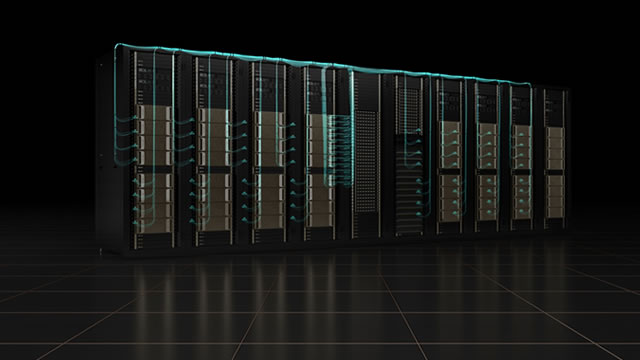
Core Points - Nvidia has commenced chip production in Arizona and plans to build supercomputers in Texas, marking a significant shift in the manufacturing of generative AI technology to the US [1][2] - The production of Nvidia's Blackwell chips is taking place at TSMC facilities in Phoenix, while supercomputers will be constructed in Houston (with Foxconn) and Dallas (with Wistron) [2] - Nvidia anticipates that manufacturing at the supercomputer plants will increase over the next year [2] - The move to American manufacturing is aimed at meeting the rising demand for AI chips and supercomputers, enhancing supply chain resilience [3] - The push for semiconductor manufacturing in the US has gained momentum following the CHIPS Act signed by President Biden in 2022, which allocated $53 billion to support domestic chip production [3]