爱旭

Search documents
兴证电新——固态电池、AIDC 电气、人形机器人
2025-03-10 06:49
Summary of Key Points from the Conference Call Industry Overview - The conference call primarily discusses the **solid-state battery**, **AIDC (Artificial Intelligence Data Center)**, and **humanoid robot** sectors, highlighting their growth potential and market dynamics [2][3][10]. Core Insights and Arguments - **Market Opportunities**: The telecom sector's main opportunities are concentrated in growth areas, particularly solid-state batteries, LDC (Low Latency Computing) electrical equipment, and humanoid robots, with a strong market preference for growth tracks [2][3]. - **Humanoid Robots**: The valuation in the humanoid robot sector is high, with downstream fund companies valued at tens of billions of RMB. Despite high valuations, the long-term growth potential is significant, justifying current valuation methods [3][4]. - **Solid-State Batteries**: The solid-state battery technology is expected to have a promising industrial outlook by 2027, with companies like BYD planning mass demonstration applications and Huawei aiming to provide samples by 2025 [3][5][7]. - **LDC Electrical Equipment**: The demand for computing power in the LDC sector is increasing, with clear planning from major manufacturers. The need for improved work efficiency and cooling requirements is driving the value of service units [3][6]. - **Data Centers**: The demand for cooling equipment in data centers is rising, with HVDC (High Voltage Direct Current) penetration expected to increase. There are differing views on storage-centric data centers, with passive devices like diesel generators facing intense competition [8]. - **AIDC Sector**: The AIDC sector is seeing diversification in domestic construction and supply chain choices. The market has stabilized after previous downturns, presenting new opportunities as domestic AIDC construction progresses [9]. Additional Important Insights - **Photovoltaic Industry**: The photovoltaic sector is experiencing significant price increases for BC components, with production expected to rise by 24% to over 50GW in March. Companies like Aisew and BenQ are showing strong stock performance, indicating a favorable investment logic [11][14]. - **Wind Power Development**: The government has highlighted offshore wind power development, indicating long-term growth potential despite current market focus being elsewhere [11]. - **Grid and Related Equipment**: The first batch of bidding results from the State Grid shows a good safety margin, making it a key area for investment. Companies like Shandong Electric and JD Technology are noted for their relatively low valuations [12]. - **Lithium Battery Structural Components**: Companies like Kraly are recommended for their high cost-performance ratio and strong research capabilities in lithium battery structural components, with barriers to entry for new players [13]. - **Investment Opportunities in New Photovoltaic Technologies**: BC components are highlighted as having a clear investment logic, with companies like Aisew and BenQ expected to maintain competitiveness and benefit from future developments [14].

中信证券 看多光伏板块的几条理由
2025-03-05 05:45
Summary of the Conference Call on the Photovoltaic Industry Industry Overview - The conference call focused on the photovoltaic (PV) industry, highlighting its current strategic reversal phase and investment opportunities within the sector [2][4]. Core Points and Arguments 1. **Price Recovery**: The PV industry has experienced significant cash flow pressure and financial losses over the past year, leading to a reduction in capacity utilization and inventory expansion. Starting from Q4 2024, inventory levels are expected to decline, particularly in the battery and silicon wafer segments, with a clear upward price trend anticipated as the installation peak season approaches [2][3]. 2. **Policy Support**: Government policies are crucial for the industry, focusing on supply-side reforms and promoting high-quality product premiums. These policies are expected to help the industry escape deflationary spirals, stabilize, and even increase prices. A period of intensive policy announcements is anticipated in the next 1-2 months, which will likely accelerate the elimination of outdated production capacity [2][7]. 3. **Demand Resilience**: Despite a lackluster installation forecast for 2025, medium-term demand remains optimistic. To achieve the 2030 energy consumption target of 1.5 billion tons of standard coal, an annual installation of 200-300 GW is necessary, indicating a long-term stable growth trend [2][3]. 4. **Technological Advancements**: Significant potential exists for technological progress and corporate transformation within the industry, such as IBC batteries and new silver paste technologies, which are expected to bring substantial changes by 2025. The focus is on profitability while maintaining scale, leading to a stabilization of the value chain and a reshaping of profit expectations [3][5]. 5. **Supply and Demand Elasticity**: The supply side's elasticity is greater than that of the demand side, which is a core factor in the industry's reversal. The emphasis is on stabilizing prices rather than merely pursuing scale, as unprofitable orders are deemed ineffective. Order profitability is expected to improve significantly in the coming months [6][10]. 6. **Cost Pressure Relief**: The decline in natural gas and soda ash prices in April is expected to alleviate cost pressures, leading to improved profit levels. The price increases observed in the market have exceeded expectations, with most price hikes now ranging between 2 to 3 yuan [13]. 7. **Glass Supply Dynamics**: The glass supply remains tight in the short term, with recent production adjustments not significantly altering the overall supply balance. The industry is expected to maintain a relatively balanced supply throughout the year, despite some marginal improvements [12]. 8. **Investment Recommendations**: The call recommended focusing on segments benefiting from industry self-discipline and supply-side reforms, such as silicon materials and midstream manufacturing. Additionally, new technologies represented by BC products are highlighted as promising investment directions [9]. Other Important Insights - The PV industry is currently at a triple bottom in terms of performance, fundamentals, and expectations, with a clear turning point in volume and price observed [4]. - The upcoming months are seen as a critical window for strategic positioning within the industry, particularly due to the anticipated policy changes and market dynamics [4][7]. - The potential for bankruptcies and restructuring among smaller firms may lead to larger companies finding new growth avenues through operational efficiency [3][5].

隆基绿能李振国:以自主创新和中国原创技术引领光伏产业发展
Zhong Guo Jing Ji Wang· 2025-02-28 05:46
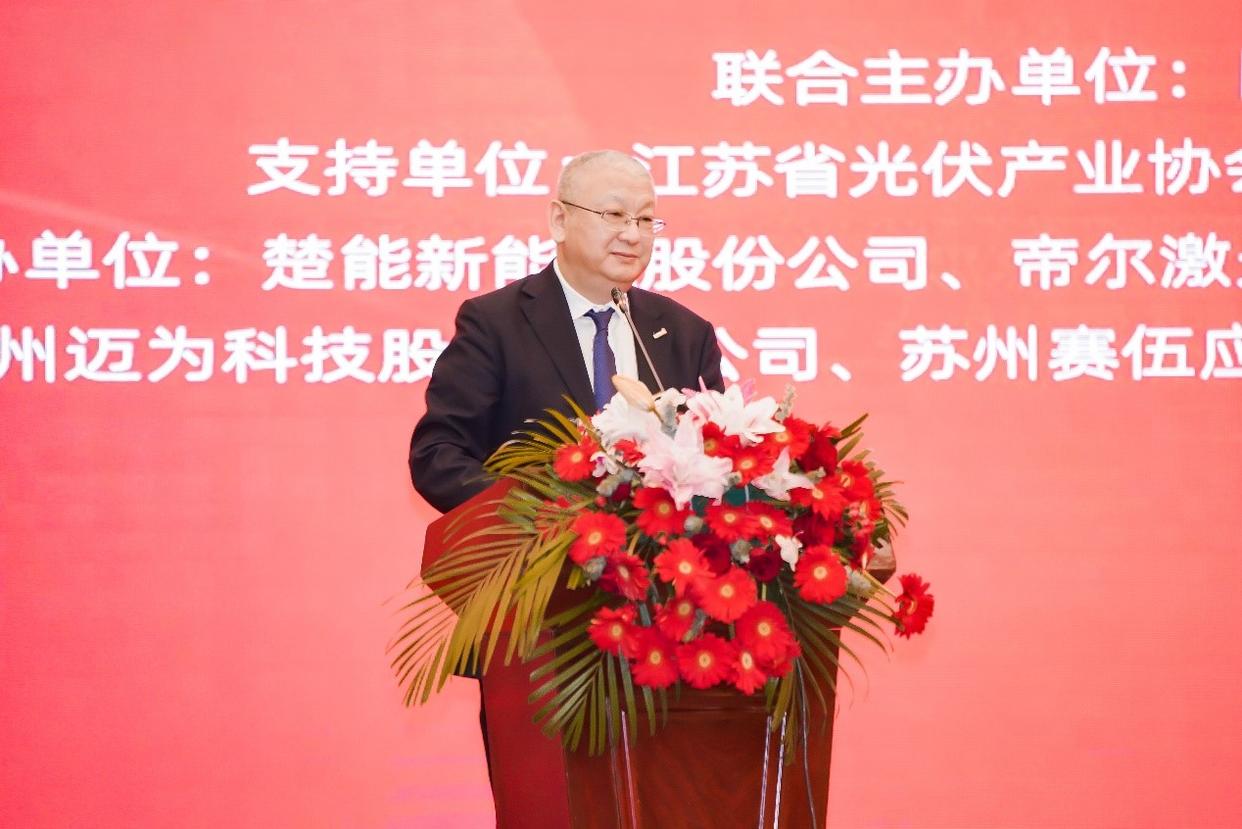
Core Viewpoint - The future of the photovoltaic industry is centered on innovation, responsibility, and a global perspective, emphasizing the importance of independent innovation and original technology in sustaining China's leadership in the sector [1]. Group 1: Importance of Innovation - Chinese photovoltaic companies have achieved international leadership in multiple industry chain segments through independent innovation and original technology development [1]. - Chinese photovoltaic products are exported to over 200 countries and regions, playing a crucial role in global energy transition [1]. Group 2: Call to Action - The industry is urged to rely on Chinese original technology and independent innovation to break through technological barriers in key areas, transitioning from a "manufacturing hub" to an "innovation hub" [1]. - A joint initiative titled "Proposal for Actively Promoting Independent Innovation and Original Technology Development in the Photovoltaic Industry" was released, aiming to foster collaboration for the robust development of photovoltaic innovation and technology [1].