Catalent

Search documents
Lisata Therapeutics inks global product license deal with Catalent
Proactiveinvestors NA· 2025-10-08 13:59
Group 1 - Proactive provides fast, accessible, informative, and actionable business and finance news content to a global investment audience [2][3] - The news team covers key finance and investing hubs including London, New York, Toronto, Vancouver, Sydney, and Perth [2] - Proactive focuses on medium and small-cap markets while also covering blue-chip companies, commodities, and broader investment stories [2][3] Group 2 - The team delivers insights across various sectors including biotech and pharma, mining and natural resources, battery metals, oil and gas, crypto, and emerging digital and EV technologies [3] - Proactive adopts technology to enhance workflows and improve content production [4][5] - All content published by Proactive is edited and authored by humans, ensuring adherence to best practices in content production and search engine optimization [5]

Scholar Rock's Spinal Muscular Atrophy Drug Faces FDA Delay Over Catalent Indiana Inspection
Benzinga· 2025-09-23 15:32
Core Viewpoint - The U.S. FDA issued a Complete Response Letter (CRL) for Scholar Rock's apitegromab Biologics License Application (BLA) due to observations from a routine inspection of Catalent Indiana LLC, which is not specific to the drug itself [1][2]. Group 1: FDA Response and Observations - The CRL did not raise any concerns regarding the efficacy and safety data of apitegromab or the third-party drug substance manufacturer [2]. - Catalent Indiana submitted a comprehensive response to the FDA's observations in early August 2025 and is actively working on corrective actions [4]. - Scholar Rock plans to resubmit the apitegromab BLA following Catalent Indiana's remediation of the FDA observations [4]. Group 2: Market Authorization and Future Plans - Outside the U.S., the apitegromab marketing authorization application (MAA) is under review by the European Medicines Agency, with a decision expected by mid-2026 [5]. - The European launch of apitegromab is anticipated in the second half of 2026, with Germany expected to be the first market for patient access [5]. Group 3: Related Industry Developments - Regeneron Pharmaceuticals anticipates delays in regulatory approvals for its EYLEA HD applications due to observations from an FDA inspection at Catalent Indiana, which also affects Scholar Rock [6]. - Scholar Rock's stock price increased by 1.24% to $32.99 following the news [7].



Silexion Therapeutics Announces Selection of Contract Research Organization to Support Upcoming Phase 2/3 Clinical Trials for SIL204
Globenewswire· 2025-09-04 13:25
Core Insights - Silexion Therapeutics Corp has selected AMS Advanced Medical Services GmbH as its contract research organization (CRO) to support upcoming Phase 2/3 clinical trials for SIL204, a next-generation siRNA candidate targeting KRAS-driven solid tumor cancers [1][2][3] - The partnership is expected to enhance Silexion's regulatory submissions to the Israel Ministry of Health in Q4 2025 and to the European Union in Q1 2026, with trials commencing in the first half of 2026 [2][3] - SIL204 has demonstrated up to 97% inhibition rates in preclinical studies across various cancer models, including pancreatic, colorectal, and lung cancers [3][5] Company Overview - Silexion Therapeutics is a clinical-stage biotechnology company focused on developing RNA interference therapies for cancers driven by the mutated KRAS oncogene, which is prevalent in human cancers [6] - The company aims to advance its lead product candidate for locally advanced pancreatic cancer, building on positive trends observed in previous clinical trials [7] Clinical Development Strategy - The upcoming Phase 2/3 trial will evaluate SIL204's dual-route administration strategy, which combines intratumoral delivery to target primary tumors and systemic administration for metastatic disease [5] - Preclinical data supports the efficacy of SIL204 in significantly reducing both primary tumor growth and metastatic spread in relevant pancreatic cancer models [5] CRO Partnership - AMS brings over 28 years of experience in oncology clinical development and regulatory affairs, which is crucial for executing Silexion's clinical program effectively [2][4] - The collaboration will cover regulatory strategy, clinical trial design, site selection and management, and data analysis for the planned Phase 2/3 study [4]
Science 37 and Catalent Announce Partnership Enabling Universal Access to Clinical Research
Globenewswire· 2025-09-04 12:00
Core Insights - Science 37 and Catalent have formed a strategic partnership to enhance the delivery of investigational medicinal products (IMPs) directly to patients' homes for clinical research [1][2] - The collaboration aims to remove geographic barriers, allowing for more diverse patient populations and faster enrollment in clinical trials [3] Company Overview - Science 37 focuses on expanding patient access to clinical trials, leading to quicker approvals and improved health outcomes [8] - Catalent is a global leader in contract development and manufacturing, dedicated to supporting product development and supply for pharma, biotech, and consumer health sectors [6] Partnership Details - Catalent provides logistics services for Science 37's Direct-to-Patient Clinical Trial Site model, ensuring efficient and secure delivery of study medications [2] - The partnership has successfully enrolled nearly 1,700 patients across 17 studies, with an average of 26% of the total study population enrolled at a single Direct-to-Patient Site [3] Operational Benefits - The integrated solution offers sponsors a streamlined clinical trial site under a single contract and budget, improving enrollment speed and retention rates [4] - The partnership has delivered over 6,400 shipments to study participants, demonstrating its operational efficiency [3]

Silexion Therapeutics Reports Second Quarter 2025 Financial Results and Provides Business Update
Globenewswire· 2025-08-12 12:00
Core Insights - Silexion Therapeutics Corp. has made significant advancements in its preclinical program for SIL204, demonstrating strong efficacy across multiple KRAS-driven cancer types, including pancreatic, colorectal, and lung cancers [1][2][7] - The company has strengthened its financial position and is on track to initiate Phase 2/3 clinical trials for SIL204 in the first half of 2026 [1][4][5] Recent Milestones & Business Highlights - The preclinical data for SIL204 shows up to 94% inhibition in pancreatic cancer cells with KRAS G12D mutations, approximately 90% inhibition in colorectal cancer cells, and significant dose-dependent inhibition in lung cancer cell lines [9] - A strategic partnership with Catalent was established for formulation development and clinical manufacturing of SIL204, supporting a dual-route development strategy [3] Regulatory and Clinical Timeline - Silexion plans to submit regulatory applications to initiate Phase 2/3 trials to the Israel Ministry of Health in Q4 2025 and to the European Union in Q1 2026 [4] Financial Overview - As of June 30, 2025, cash and cash equivalents increased to $3.5 million from $1.2 million at the end of 2024, reflecting successful financing activities [10] - Total operating expenses for Q2 2025 were $2.3 million, a 64.3% increase from Q2 2024, with R&D expenses rising to $1.0 million [11] - The net loss for Q2 2025 was $2.5 million, compared to $1.5 million in Q2 2024, primarily due to increased general and administrative expenses [13]
贝达药业(300558.SZ):目前关税对恩沙替尼出海的潜在影响很小
Ge Long Hui· 2025-08-11 08:48
Core Viewpoint - The company plans to produce the active pharmaceutical ingredient (API) Ensartinib domestically and will export it, while the formulation will be contracted to the US CDMO company Catalent, indicating minimal potential impact from tariffs on the export of Ensartinib [1] Group 1 - The company will produce Ensartinib's API domestically before exporting it [1] - The formulation of Ensartinib will be outsourced to Catalent, a US-based CDMO [1] - The company is monitoring tariff policies and is prepared to respond to any changes [1]
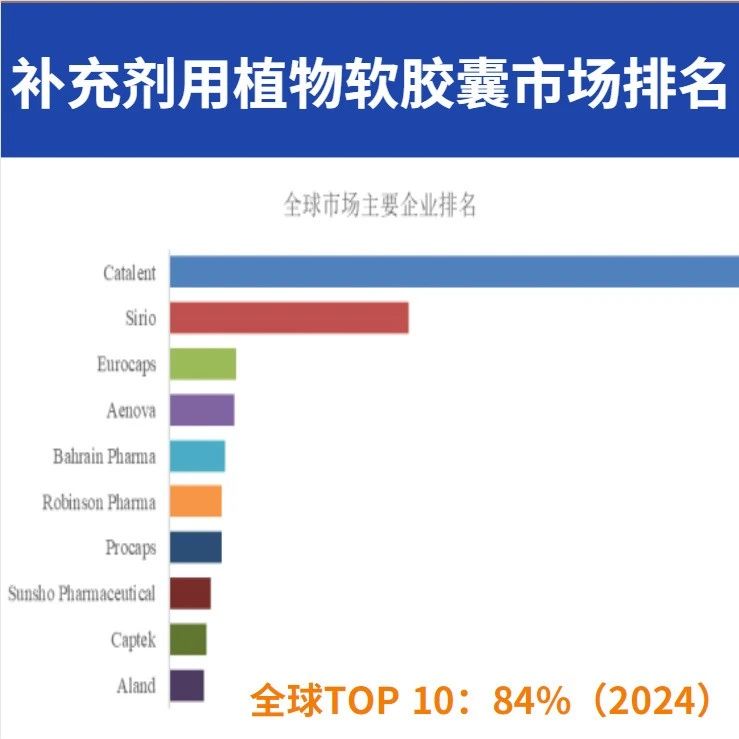
全球补充剂用植物软胶囊市场前10强生产商排名及市场占有率
QYResearch· 2025-06-24 08:42
Core Viewpoint - The global market for plant-based soft capsules for supplements is projected to reach USD 575.39 million by 2031, with a compound annual growth rate (CAGR) of 5.4% from 2025 to 2031 [2]. Market Overview - The global market for plant-based soft capsules is expected to grow significantly, with the top ten manufacturers holding approximately 84.0% of the market share by 2024 [7]. - The main product type currently dominating the market is carrageenan, which accounts for about 89.3% of the market share [9]. - In terms of application, vitamin and mineral supplements represent the largest demand source, holding approximately 35.5% of the market share [12]. Industry Trends - The trend of vegetarian soft capsules replacing gelatin soft capsules is expected to continue, driven by the advantages of vegetarian options, such as being non-animal sourced and suitable for a wider audience [13]. - The popularity of gellan gum products is increasing, as gellan gum is a non-toxic, odorless, and tasteless ingredient that enhances the stability and bioavailability of active ingredients in soft capsules [13][14]. Challenges - High price levels due to significant R&D investments and high raw material costs are a challenge for manufacturers [15]. - Continuous R&D investment is necessary to meet market demands, as the nutritional health food industry experiences rapid product updates and requires substantial funding and technical expertise [15]. Growth Drivers - Vegetarian soft capsules are more popular in developed countries, with significant market shares in the U.S., Europe, and Japan [16]. - There is a growing demand for vegetarian products in Middle Eastern and African countries, particularly in Islamic regions [17].
Novo Nordisk Stock: Is It Still a Smart Buy?
The Motley Fool· 2025-06-06 08:40
Core Viewpoint - Novo Nordisk's stock has declined nearly 18% since the beginning of the year, raising investor concerns about its ability to compete in the obesity drug market, particularly against new entrants like Eli Lilly [1][5]. Company Overview - Novo Nordisk was the first to receive FDA approval for a GLP-1 drug for obesity, with Wegovy being launched in mid-2021, giving it a significant head start in the market [3]. - The company has faced increased competition, particularly from Eli Lilly's Zepbound, which has begun to capture market share from Wegovy [6][7]. Market Dynamics - The obesity drug market is currently valued at approximately $28 billion, with Novo Nordisk holding a 51% market share, while Eli Lilly holds the remainder [7]. - Analysts predict that the market will fragment as more obesity drugs are developed and approved, increasing competition [8]. Competitive Challenges - Novo Nordisk has experienced setbacks, including a shortage of semaglutide, which led to the FDA allowing compounding pharmacies to produce copies, creating additional competition [9]. - A clinical trial showed that Eli Lilly's Zepbound resulted in more significant weight loss compared to Wegovy, further intensifying competition [10]. - The departure of long-serving CEO Lars Fruergaard Jørgensen has also impacted investor sentiment [11]. Strategic Responses - In response to competitive pressures, Novo Nordisk acquired contract drug manufacturer Catalent for $16.5 billion to gain more control over Wegovy production [12]. - The company is actively pursuing new drug developments and has received FDA approval for Wegovy to treat metabolic dysfunction-associated steatohepatitis (MASH) [14]. Market Projections - Future projections for the obesity drug market are optimistic, with estimates suggesting it could reach $150 billion by 2035, significantly higher than the $24 billion estimated for 2024 [15][16]. - Despite potential market fragmentation, Novo Nordisk is expected to remain a significant player due to its first-mover advantage and strong brand recognition [16].



Asia-Pacific Pharmaceutical CMO Market Share Analysis, Trends and Growth Forecasts to 2030 Featuring Catalent, Recipharm, Jubilant Life Sciences and More
GlobeNewswire News Room· 2025-06-06 08:04
Market Overview - The Asia-Pacific Pharmaceutical Contract Manufacturing Organization (CMO) Market is projected to grow from an estimated USD 59.97 billion in 2025 to USD 91.18 billion by 2030, reflecting a compound annual growth rate (CAGR) of 8.74% [2] - The market landscape is highly fragmented, with large pharmaceutical firms increasingly outsourcing production to CMOs for cost efficiency and expertise [6] Regional Insights - China's competitive advantage in the CMO market is attributed to low labor costs, tax incentives, and favorable currency valuation, which help reduce manufacturing expenses [3] - India is attracting Japanese pharmaceutical investments through favorable foreign direct investment policies, enhancing its domestic manufacturing landscape [8] - Japan's CMO sector has experienced a 30% growth due to regulatory changes that separate manufacturing from sales [8] - Australia faces challenges due to pricing and reimbursement volatility but benefits from its geographical proximity to South Asian markets [8] Market Dynamics - The demand for injectable drugs, particularly for rapid-acting oncology treatments, presents significant growth opportunities within the market [8] - Prolific late-stage clinical trials, especially in cancer therapies, are expected to drive market growth, with anti-cancer drugs making up nearly half of the developmental pipeline [8] - Outsourcing of biologic formulations to CMOs is common as major pharmaceutical companies focus on discovering and developing new drug modalities [8] Industry Developments - Recent expansions by companies such as Jubilant Biosys in India and Boehringer's capacity increase in China highlight strategic collaborations aimed at enhancing market share [6] - New policies in India allowing certain drug studies without late-stage clinical trials lead to considerable cost savings, further strengthening its appeal for pharmaceutical production [8] Challenges - The COVID-19 pandemic has disrupted global supply chains, necessitating strategic responses to inventory management, particularly as China is a key supplier of essential raw materials [8] - Increasing lead times and logistics costs, along with stringent regulatory requirements, pose challenges for the CMO market [14]

PESG Research Report: A Review of Silexion Therapeutics' Innovative KRAS-Driven Cancer Treatment
GlobeNewswire News Room· 2025-05-22 19:46
Core Insights - Silexion Therapeutics is pioneering RNA interference (RNAi) therapies targeting KRAS-driven cancers, which are notoriously difficult to treat with traditional methods [2][3] - The lead candidate, SIL204, has shown promising preclinical results in reducing tumor growth and metastasis across various cancer types, including pancreatic, colorectal, and lung cancers [2][5] Technological Platform - Silexion's technology targets KRAS mutations at the genetic level, differing from conventional small molecule inhibitors, aiming to prevent oncogenic protein production [4] - SIL204 can target multiple KRAS mutations, which are prevalent in various cancers: approximately 90% in pancreatic cancers, 45% in colorectal cancers, and 35% in non-squamous non-small-cell lung cancers [5] Preclinical Developments - A significant milestone was reached in March 2025 with the completion of studies using orthotopic pancreatic cancer models, providing a more accurate representation of cancer progression [6] - SIL204 demonstrated notable efficacy in reducing tumor cell numbers across different pancreatic cancer cell lines, indicating a nuanced understanding of therapeutic interventions [7] Strategic Approach - Silexion focuses on two primary drug delivery methods: systemic delivery for metastatic progression and intratumoral delivery for primary tumors, collaborating with Catalent to enhance formulation and manufacturing processes [8] - The company's research extends beyond pancreatic cancer, exploring applications in colorectal and lung cancers, reflecting a comprehensive understanding of KRAS-driven malignancies [9] The Road Ahead - Silexion's development roadmap includes continued preclinical studies, toxicology and pharmacodynamic investigations, potential regulatory submissions, and plans to initiate human clinical trials in the first half of 2026 [10] - The scientific community is closely monitoring Silexion's progress, as successful outcomes could significantly impact cancer therapeutics and precision oncology [11]