
LG Chem

Search documents
2025 年能源行业 12 大核心要点-Bernstein Energy_ Twelve key takeaways in energy in 2025
2025-12-22 14:29
Key Takeaways from Bernstein Energy Conference Call Industry Overview - **Industry**: Energy Sector, focusing on oil, gas, and renewables - **Key Trends for 2025**: The report outlines significant trends and investment implications in the energy sector as it heads into 2025 Core Insights 1. **Energy Transition Timeline**: The transition to renewable energy will take longer than anticipated, with net zero targets being aspirational rather than achievable in the short term. The IEA has revised its peak oil demand forecast to 2040, indicating a need for continued investment in oil and gas [6][26] 2. **Oil Market Dynamics**: The oil market is oversupplied, with Brent prices declining from US$81/bbl to US$68/bbl. Demand growth is weak, particularly from China, which has reached peak gasoline and diesel consumption [7][8] 3. **Gas Supply Surge**: A significant increase in LNG supply is expected, with 150MTPA of new capacity coming online, while demand in major markets like China and Japan is declining. This could lead to a gas glut [12][26] 4. **Electricity Demand Growth**: Power demand is projected to double by 2050, driven by factors such as AI, electrification of transport, and increased cooling needs due to climate change. Electricity is becoming a larger share of final energy consumption [16][19] 5. **Investment in Renewables**: Despite some project cancellations, 2025 is expected to be a record year for solar and wind installations, particularly in China, which is leading in renewable capacity additions [26][27] 6. **Oil Majors' Investment Strategies**: Oil companies are scaling back investments in low-carbon technologies and focusing on core activities, with a resurgence in exploration and M&A activities [25][26] 7. **Critical Minerals and Supply Chains**: China’s dominance in critical minerals is crucial for clean energy technologies, and decoupling from China will take significant time and investment [34][36] 8. **AI and Power Supply**: The US and China are in an AI arms race, with China leading in power supply capacity but lagging in chip manufacturing. This creates investment opportunities in companies that address these bottlenecks [40][41] 9. **Energy Storage Market**: The energy storage market has seen unexpected growth, with demand for lithium-ion batteries increasing by nearly 50%. This trend is driven by energy storage systems (ESS) [45][46] 10. **Nuclear Power Resurgence**: Nuclear energy is experiencing a revival, particularly in China, which is expected to become the largest nuclear operator by the end of the decade [46][47] 11. **Grid Investment Needs**: Significant investment in electricity grids is necessary to support the growing demand from data centers and renewables, particularly in the US and Europe [51][52] 12. **Geopolitical Uncertainties**: Investors should remain cautious of geopolitical risks that could impact energy markets, as historical events have shown that surprises are inevitable [54][55] Additional Important Insights - **Market Performance Ratings**: Various companies in the energy sector have been rated based on their performance outlook, with notable mentions including CATL, CNOOC, and PetroChina [3][4] - **Investment Implications**: The report emphasizes the need for investors to adapt to changing market dynamics, particularly in oil and gas, as well as in renewable energy sectors [3][4][5] This summary encapsulates the critical insights and trends discussed in the Bernstein Energy conference call, providing a comprehensive overview of the current state and future outlook of the energy sector.
电池周报(12 月 8 日)-Battery Weekly 08 December
2025-12-12 02:19
Summary of Key Points from the Conference Call Industry Overview - The conference call primarily discusses the **Global Energy Storage** industry, focusing on developments in battery technology and electric vehicle (EV) markets across various regions including Europe, China, and North America [1][4]. Key Insights and Arguments Europe - **UK EV Sales**: In November, the UK registered 39,965 new battery electric vehicles (BEVs), marking a growth of 3.6% and a market share of 26.4%, which is 1.5% higher than the previous year. However, this growth is the weakest in two years, with overall registrations falling by 1.6% to 151,154 units due to a 5.5% drop in private demand [2][2]. - **Electrified Vehicles**: Electrified vehicles (including PHEVs and HEVs) now account for 51.4% of registrations, indicating a shift away from petrol and diesel cars [2][2]. China - **Energy Storage Tenders**: In November, China completed tenders for 10GW/29.7GWh energy storage systems, with independent storage projects making up nearly 90%. Inner Mongolia led demand, accounting for nearly 30% of orders [3][3]. - **CATL Developments**: CATL has begun large-scale shipments of next-generation 587-Ah high-capacity battery cells, achieving 2 GWh in shipments and expected to reach 3 GWh this year. The production line reduces costs by 42% and has an energy density of 434 Wh/L, improving performance by 10% over previous models [3][3]. - **LFP Cathode Price Increases**: Chinese lithium iron phosphate (LFP) cathode producers are raising prices due to tightening supply, with processing fee hikes of RMB 3,000 ($420) per ton expected between November 2025 and January 2026 [3][3]. North America - **LG Energy Solution Expansion**: LG Energy Solution is increasing its North American energy storage system (ESS) battery production target to 50 GWh by 2026, up from 30 GWh, with 80% of production to be made and sold locally [5][5]. - **Canadian Solar Reshoring**: Canadian Solar plans to shift manufacturing to North America, acquiring 75.1% of three overseas factories to ensure compliance with U.S. tariffs and restrictions, aiming to secure U.S. market access [5][5]. Additional Important Information - **Environmental Initiatives**: CATL's new factory in Hungary aims to cut emissions by 43% and reduce water and energy use by one-third, with plans to switch to treated wastewater for operations [5][5]. - **Market Dynamics**: The energy storage market is experiencing significant growth driven by demand for renewable energy and data centers, with projections indicating that ESS battery demand may surpass that of electric vehicles [10][10]. - **Price Performance of Key Commodities**: Lithium carbonate (LiCO) spot prices are at $12,940 per tonne, while lithium hydroxide (LiOH) spot prices are at $11,455 per tonne, reflecting the ongoing volatility in the market [6][6]. Conclusion The conference call highlights the evolving landscape of the energy storage and EV markets, with significant developments in technology, production capacity, and market dynamics across key regions. The insights provided indicate both opportunities and challenges for companies operating within this sector, particularly in relation to pricing pressures and regulatory environments.

中国的产能过剩困境-China‘s overcapacity troubles
2025-12-08 15:36
Summary of Key Points from the Conference Call Industry Overview - **Industry Focus**: The conference call primarily discusses the implications of China's anti-involution policy on various sectors, particularly those facing overcapacity such as cement, steel, chemicals, alumina, lithium-ion batteries, new energy vehicles, and solar cells [3][34]. - **Economic Context**: The anti-involution policy aims to address issues of overcapacity, price wars, and margin erosion in China, pushing local producers to seek alternative overseas markets due to high inventories and price declines [1][9]. Core Insights and Arguments - **Overcapacity Issues**: Significant overcapacity is noted in sectors like cement, steel, chemicals, and aluminium, with specific vulnerabilities identified in fertilisers, household appliances, and integrated circuits [3][34]. - **Export Dynamics**: The movement of goods from China is expected to accelerate, with exports expanding to more sectors by 2026 as domestic demand remains sluggish [2][10]. - **Five-Year Plans**: The analysis of China's Five-Year Plans reveals a strategic focus on manufacturing and industrial production capacity, which has contributed to global oversupply and aggressive price undercutting in various sectors [15][16]. - **Export Performance**: Emerging sectors such as new energy vehicles and solar cells are experiencing significant export growth, with NEVs seeing a 688% increase in exports, while solar cells have surged by 170% [20][62]. Sector-Specific Observations - **Cement**: Exports increased by 105% due to producers seeking overseas markets amid declining domestic demand. However, enforcement of capacity controls may not fully alleviate oversupply pressures [63]. - **Fertilisers and Chemicals**: Fertiliser exports have declined sharply, particularly urea, due to government policies prioritising domestic supply. The value of exports surged due to global supply constraints [64][65]. - **Steel**: Steel exports rose by 75%, indicating a significant drop in domestic consumption. The shift towards higher-value products is noted, but overcapacity remains a risk [67][68]. - **Household Appliances**: Exports grew by 26%, driven by advancements in smart technology. Companies like Midea and Xiaomi are expanding overseas to mitigate domestic challenges [58][59]. - **Lithium-Ion Batteries**: Exports increased by 26%, with CATL positioned to benefit from rising demand, although competition is intensifying [42][45]. Additional Important Insights - **Price Trends**: Broad-based declines in the Producer Price Index (PPI) across upstream industries signal oversupply and weak demand, particularly in coal, petroleum, and steel [28][29]. - **Global Competition**: The rapid expansion of Chinese companies in international markets may lead to increased pricing competition and contribute to oversupply pressures globally [59]. - **Policy Implications**: The anti-involution campaign is expected to reshape competitive dynamics, encouraging firms to focus on innovation and brand strength rather than price wars [54]. This summary encapsulates the critical insights and data points discussed in the conference call, highlighting the challenges and opportunities within the Chinese industrial landscape.
电池周刊 11 月 17 日
2025-11-24 01:46
Summary of Key Points from the Conference Call Industry Overview - The conference call primarily discusses the **global energy storage** industry, with a focus on **China's electric vehicle (EV) battery market** and key players like **CATL** and **BYD** [1][2]. Key Companies and Their Performance - **CATL** holds a **43.00%** market share in China's EV battery installations for October, with a total of **36.14 GWh** installed, reflecting a **42.1%** year-on-year increase and a **10.7%** month-on-month rise [1]. - **BYD** ranks second with a **21.29%** market share, having installed **17.89 GWh** in October, up from **21.07%** in September [1]. - **Lithium iron phosphate (LFP)** batteries dominate the market, accounting for **80.3%** of total installations with **67.5 GWh** in October, marking a **43.7%** year-on-year increase [1]. Strategic Developments - CATL's co-founder plans to reduce his shareholding by **1%**, approximately **45.63 million shares**, valued at around **RMB 18.44 billion**, to invest in the energy storage sector [1]. - CATL and **GAC Group** have signed a **10-year strategic cooperation agreement** to enhance their battery swap business, launching the **Aion UT Super** compact hatchback utilizing CATL's battery swap technology [1]. - CATL has commenced mass production of its **5th-generation LFP batteries**, achieving advancements in energy density and cycle life [1]. - **Ronbay** will supply **60%** of CATL's cathode powder for sodium-ion batteries, indicating a deepening partnership [1]. Market Trends and Challenges - **Longi Green Energy** is pivoting towards energy storage by acquiring a majority stake in **PotisEdge**, a lithium-ion battery maker, amid struggles in the solar sector [2]. - Predictions suggest that **solid-state batteries** may not be commercially viable in China until after **2030**, with current technologies being more practical [2]. - The demand for energy storage is surging both domestically and internationally as power grids adapt to increased renewable energy integration [2]. Regulatory and Operational Insights - CATL is negotiating with the Spanish government to allow **2,000 Chinese workers** for its **€4.1 billion** manufacturing plant in Zaragoza, emphasizing the need for experienced technicians [4][6]. - The joint venture with **Stellantis NV** is set to produce lithium-iron phosphate batteries, with production expected to start by the end of **2026** [4]. Financial Metrics and Market Performance - The report includes various financial metrics for key companies, such as **CATL**'s market cap of **246.8 billion CNY** and a P/E ratio of **25.8x** [8]. - The performance of lithium and battery component prices is also highlighted, with **LiCO** spot prices at **$12,117/tonne** and **LiOH** at **$11,060/tonne** [7]. Conclusion - The energy storage sector is experiencing significant growth driven by advancements in battery technology and increasing demand for renewable energy solutions. Key players like CATL and BYD are leading the market, while strategic partnerships and regulatory negotiations are shaping the industry's future.
全球储能领域_储能系统(ESS)需求推动电池需求激增
2025-11-16 15:36
Summary of Global Energy Storage Sector Conference Call Industry Overview - The global energy storage sector experienced a robust third quarter, with total demand increasing by 46% year-over-year (y-o-y) despite a 6% decline in average selling prices (ASP) [1][8] - Total battery demand reached 466 GWh in 3Q25, with a cumulative 1,209 GWh for the first nine months of 2025, marking a 50% y-o-y increase [1][17] - Energy Storage System (ESS) batteries saw an impressive growth of 85% y-o-y, contributing nearly 50% of the incremental battery demand, surpassing electric vehicles (EVs) in growth contribution [1][8] Key Companies and Performance CATL - CATL's EV battery installations grew by 17% y-o-y in 3Q25, but its market share declined to 32.2% from 33.8% in the first nine months of 2025 [2][20] - CATL maintained a stable unit profit of US$14/kWh in 3Q25, with a quarterly operating profit margin (OPM) of 17% [3][54] - The company is increasing its capital expenditure (capex) by 40% for 2025, focusing on expanding ESS capacity with a new plant in Shandong exceeding 100 GWh [4][65] - Target price raised to CNY 440, reflecting strong growth potential in ESS demand [5][11] LG Energy Solution (LGES) - LGES reported a 30% y-o-y increase in EV battery installations in 3Q25, but its revenue declined by 17% y-o-y [2][33] - The company’s OPM improved to 11% in 3Q25, but is expected to face challenges in 4Q25 due to reduced high-margin U.S. EV battery products [54][84] - Capex reduced by 30% in 2025, focusing on maximizing existing facilities [65] Samsung SDI - SDI's EV battery installations grew by 25% y-o-y in 3Q25, but revenue fell by 22% y-o-y [2][33] - The company faced continued profit challenges with an OPM of -19% in 3Q25 [54] - Capex decreased by 36% in 2025, with a focus on converting EV plants to ESS production [65] Market Dynamics - The average price of battery packs in China fell to US$93/kWh for NMC and US$69/kWh for LFP, reflecting a decline of 6% and 7% y-o-y, respectively [1][28] - Lithium prices averaged US$10,200 per ton in 3Q25, decreasing 5% y-o-y but increasing 19% quarter-over-quarter [28] - ESS demand is expected to continue growing, driven by market-based pricing and lower battery costs, particularly in China, the U.S., and Europe [8][10] Investment Implications - Battery and battery value chain stocks are rallying globally, primarily due to the surge in demand for ESS rather than EVs [8][11] - Despite the promising ESS outlook, near-term fundamentals for Korean battery makers appear challenging due to weak EV demand in the U.S. [11][81] - Ratings remain Outperform for CATL, Market-Perform for LGES, LG Chem, and SDI, and Underperform for Ecopro and Posco Future M [5][81] Financial Outlook - Revenue forecasts for battery manufacturers have been lowered due to weaker-than-expected ASPs, while earnings estimates for CATL have been raised due to a more positive outlook on unit net profit [84] - Long-term margin outlook remains unchanged, with increased ESS battery demand forecasts for Korean battery cell makers reflected in higher revenue and earnings projections from 2027 onward [84] Conclusion - The global energy storage sector is poised for significant growth, driven by ESS demand, with CATL positioned as a leading player. However, challenges remain for other manufacturers, particularly in the context of EV demand fluctuations and ASP pressures.
Sinopec Signs Deals Worth US$40.9 Billion at CIIE 2025
Prnewswire· 2025-11-05 07:39
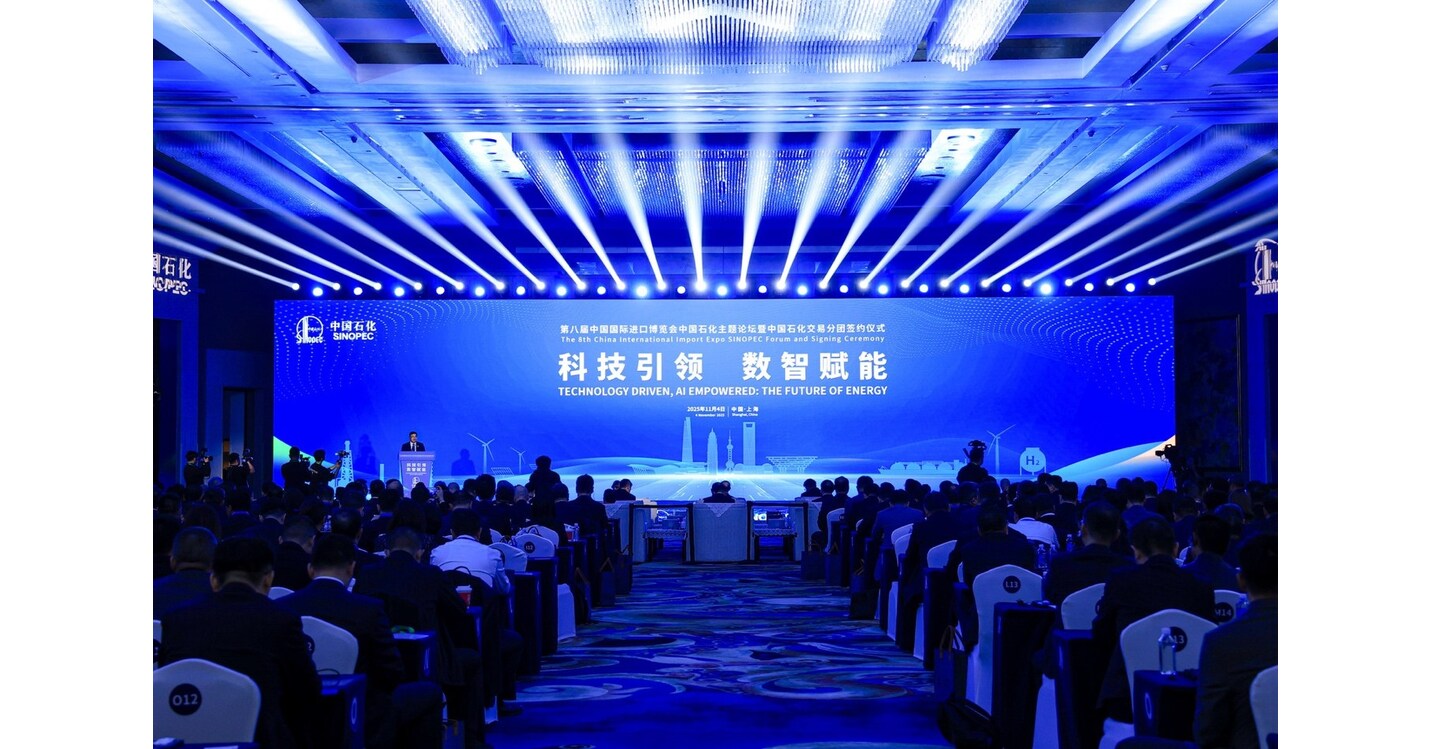
Core Insights - Sinopec signed purchasing contracts worth US$40.9 billion with 34 partners from 17 countries at the 8th China International Import Expo (CIIE 2025) [1][2] - The contracts encompass 24 products across 10 major categories, including crude oil, chemicals, equipment, materials, and consumer goods [1] - Since the inception of CIIE in 2018, Sinopec has accumulated over US$325 billion in signed orders across eight sessions [1] Group 1: Event Overview - The forum's theme was "Technology Driven, AI Empowered: The Future of Energy," focusing on digital intelligence, technological innovation, and international energy cooperation [2] - Keynote speeches were delivered by senior executives from leading firms, emphasizing collaboration and innovation in the energy sector [7] Group 2: Company Strategy and Vision - Sinopec's commitment to high-quality development includes leveraging technological strength and digital intelligence to create new value [4][6] - The company aims to enhance scientific and technological innovation and overcome developmental bottlenecks during China's 15th Five-Year Plan [5] - Sinopec plans to expand green and low-carbon cooperation while promoting the efficient use of traditional energy alongside new energy development [6]

China’s Refining Giant Jumps Into the Battery Business
Yahoo Finance· 2025-11-04 07:55
Core Insights - Sinopec has established a joint venture with LG Chem to develop sodium-ion batteries, marking its entry into the battery industry [1][2] - The collaboration aims to enhance technology and market competitiveness, aligning with Sinopec's vision of becoming a leading clean energy and premium chemical company [2] - The demand for sodium-ion batteries is projected to increase significantly, from 10 GWh in 2023 to 292 GWh by 2034, with China expected to dominate global production [5] Company Overview - Sinopec is the largest oil refiner globally, with a refining capacity of approximately 6 million barrels per day [3] - The company is also a major crude oil and gas producer in China, anticipating that peak oil demand in the country will occur soon, at around 16 million barrels daily [3] Financial Performance - Sinopec reported a 32% decline in net profits for Q3, attributed to lower oil prices and sluggish demand growth [4]

Sinopec and LG Chem Sign Agreement to Jointly Develop Sodium-ion Battery Materials
Prnewswire· 2025-11-04 07:41
Core Insights - Sinopec and LG Chem have signed a joint development agreement to collaborate on sodium-ion battery materials, focusing on applications in energy storage systems and low-speed electric vehicles [1][2][4] - The partnership aims to accelerate the commercialization of sodium-ion battery technologies and expand into new energy and high-value materials sectors in the future [1][3] Industry Overview - Sodium-ion batteries present advantages over lithium-ion batteries, including better resource accessibility, cost efficiency, enhanced safety, and faster charging performance [3] - The sodium-ion battery market in China is projected to grow from 10 GWh in 2025 to 292 GWh by 2034, indicating an average annual growth rate of approximately 45% [3] - By 2030, China is expected to account for over 90% of global sodium-ion battery production [3] Company Statements - Sinopec's Chairman, Hou Qijun, emphasized the strategic cooperation with LG Chem will enhance technological capabilities and market competitiveness, contributing to global energy transition and sustainable development [5] - LG Chem's CEO, Shin Hak-Cheol, highlighted the partnership's role in advancing next-generation battery materials and aligning with customer strategies in the electric mobility market [5]

China oil major Sinopec partners with South Korea's LG Chem to develop battery materials
Reuters· 2025-11-04 03:56
Group 1 - Sinopec, the world's largest refiner by capacity, has signed an agreement with LG Chem to jointly develop sodium-ion battery materials, marking its first venture into new energy [1] - This collaboration indicates Sinopec's strategic shift towards renewable energy solutions and diversification of its product offerings [1] - The partnership with LG Chem highlights the growing importance of sodium-ion technology in the battery market, which is seen as a potential alternative to lithium-ion batteries [1] Group 2 - The agreement reflects a broader trend in the energy sector where traditional oil and gas companies are increasingly investing in renewable energy technologies [1] - Sinopec's move into sodium-ion battery materials could position the company favorably in the evolving energy landscape, as demand for sustainable energy solutions rises [1] - This initiative may also enhance Sinopec's competitive edge in the global energy market, aligning with global efforts to reduce carbon emissions [1]
X @Bloomberg
Bloomberg· 2025-10-22 01:54
LG Chem shares surged to the highest in more than a year after UK-based activist fund Palliser Capital UK disclosed a stake in the South Korean firm https://t.co/eP9CooP09H ...