
May Mobility

Search documents
Waymo Robotaxis Face New Challenger in Atlanta
WSJ· 2025-09-10 12:00
Group 1 - Michigan-based May Mobility is collaborating with Lyft to introduce a new service [1] - This initiative aims to compete with Waymo's availability on the Uber app [1]



优步、英伟达出手,美国自动驾驶投资再度升温
Guan Cha Zhe Wang· 2025-08-23 00:48
Group 1 - Nuro, supported by SoftBank, has completed a $203 million financing round, led by Uber and Nvidia, bringing its total valuation to $6 billion [1][3] - The investment reflects a renewed surge in the U.S. autonomous driving technology sector, with Uber signing agreements with over ten automotive manufacturers and tech providers since the beginning of the year [3][4] - Nvidia has also been actively investing in the autonomous driving space, including a $25 million investment in Chinese startup WeRide and a $100 million investment from Uber [3][4] Group 2 - Despite setbacks such as the suspension of Cruise's operating license due to accidents, investment interest in Robotaxi technology remains strong in the U.S. [3][5] - The U.S. government is expected to ease regulations on autonomous driving, which could further stimulate investment in the sector [4][5] - Nuro, founded in 2016, initially aimed to create autonomous delivery robots but has shifted focus to providing L2 to L4 level driving assistance systems to automotive manufacturers and suppliers [5]


Lyft to add autonomous shuttles in 2026 as Uber inks more self-driving deals
TechCrunch· 2025-07-25 15:33
Core Insights - Lyft will introduce autonomous shuttles from Benteler Group to its network by late 2026, in collaboration with U.S. cities and airports, with potential for future expansion [1] - The shuttles will be electric, branded under Holon, and designed without steering wheels or pedals, accommodating up to nine seated and six standing passengers [2] - Lyft is still in the process of integrating autonomous vehicles into its fleet, with plans to add AVs from May Mobility in Atlanta later this year and is collaborating with Mobileye for technology [3] Company Developments - The partnership with Benteler allows Lyft to utilize urban electric shuttles, enhancing its service offerings amid competition from Uber, which is expanding its robotaxi fleet [2] - Lyft's ongoing efforts to incorporate autonomous vehicles include testing with various partners, indicating a gradual approach to AV integration [3] - The technology powering the Holon shuttles comes from Mobileye, although Lyft clarified that the current deals are separate from those involving Mobileye [3] Competitive Landscape - Lyft's announcement comes at a time when Uber is aggressively expanding its robotaxi services with multiple partnerships, highlighting the competitive dynamics in the autonomous vehicle market [2] - The introduction of Benteler's shuttles may position Lyft to better compete with Uber's advancements in the autonomous transportation sector [2] - Lyft's strategy to partner with established manufacturers like Benteler reflects a trend in the industry towards collaboration for technological advancement [1][2]

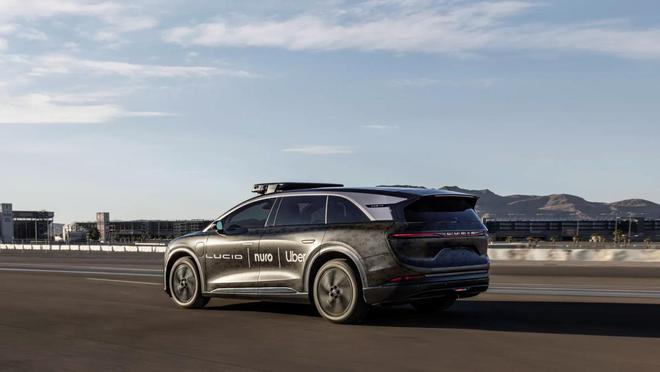
Uber Announces Global Robotaxi Plan With Lucid and Nuro
CNET· 2025-07-17 18:36
Core Insights - Uber has announced a global robotaxi program in partnership with Lucid and Nuro, aiming to integrate autonomous driving technology with its ride-sharing platform [1][2] - The initiative will initially launch in a major US city and is expected to expand globally, deploying over 20,000 Lucid vehicles within six years [2] - Uber plans to invest multi-hundred-million dollars into both Lucid and Nuro as part of this collaboration [3] Company Partnerships - The partnership combines Uber's ride-sharing capabilities with Lucid's electric SUV, the Gravity, and Nuro's autonomous driving technology [2] - Uber has existing partnerships with 18 autonomous vehicle companies, including Waymo, Avride, Aurora, and May Mobility, indicating a strong commitment to expanding its autonomous vehicle offerings [3][4] Industry Impact - Uber's CEO highlighted the transformative potential of autonomous vehicles for urban environments, emphasizing the goal of making autonomous driving accessible to a broader audience [4] - The collaboration with established ride-hailing services like Uber is seen as a strategic move to scale robotaxi services and lower entry barriers for consumers [5]


Uber makes multi-million-dollar investment in Lucid and Nuro to build a premium robotaxi service
TechCrunch· 2025-07-17 12:31
Investment Overview - Uber is investing $300 million in Lucid and plans to purchase at least 20,000 of Lucid's new Gravity SUVs over the next six years, which will be equipped with Nuro's autonomous vehicle system [2][3] - Additionally, Uber is investing a multi-hundred-million dollar amount into Nuro, reportedly exceeding its investment in Lucid [3] Production and Launch Timeline - Production of the modified Lucid Gravity vehicles is expected to begin in late 2026 [3] - Uber aims to launch its robotaxi service in a major U.S. city next year [2] Partnership and Development - The agreement between Uber, Lucid, and Nuro took a year to finalize, indicating a significant commitment to the robotaxi program [3][4] - Engineers from Lucid and Nuro have already made progress, testing a prototype driverless vehicle at Nuro's proving grounds in Las Vegas [6] Broader Industry Context - Over the past two years, Uber has established partnerships with more than 18 autonomous vehicle technology companies globally, covering various applications in ride-hailing, delivery, and trucking [7] - Uber's notable partnership with Waymo is currently operational, offering a "Waymo on Uber" service in Austin and Atlanta, showcasing Uber's willingness to invest heavily in the autonomous vehicle market [8]

Uber's latest robotaxi partner is China's Baidu
TechCrunch· 2025-07-15 15:02
Core Viewpoint - Uber has formed a multi-year strategic partnership with Baidu to deploy thousands of Baidu's Apollo Go autonomous vehicles on its platform in various markets outside the U.S. and mainland China, starting in Asia and the Middle East later this year [1] Group 1: Partnerships and Collaborations - Uber has been actively pursuing partnerships with various autonomous vehicle (AV) providers to enhance its ride-hailing business amid the rise of robotaxis [2] - Recent partnerships include agreements with Waymo, Volkswagen, May Mobility, and Pony AI, with Uber also taking direct stakes in some of these companies [3] - In May, Uber expanded its partnership with WeRide, which included a $100 million investment [3] Group 2: Implementation and User Experience - The deployment of Baidu's AVs is still in early stages, and initially, riders will not be able to request a Baidu AV directly through Uber's app [4] - Instead, riders may be presented with the option to have their trip fulfilled by a fully driverless Apollo Go AV, similar to existing arrangements with other partners [4]


Robotaxi大战,Lyft请老司机“上桌”
汽车商业评论· 2025-06-29 15:28
Core Viewpoint - Lyft is adopting a unique approach to the challenges posed by autonomous driving by involving drivers in the decision-making process through the establishment of the Driver Autonomous Forum, aiming to address the future of work and societal acceptance of Robotaxi deployment [4][5][6]. Group 1: Lyft's Strategy - Lyft has launched the Driver Autonomous Forum to engage experienced drivers in shaping Robotaxi policies and service planning, with the first group of drivers providing key insights before the launch of Lyft's autonomous service in Atlanta [10][11]. - The forum will focus on three main topics: Robotaxi policy formulation, deployment pacing, and exploring future roles for drivers, such as remote vehicle support and fleet management [11]. - Lyft's approach contrasts with competitors like Waymo and Tesla, which are pursuing more technology-driven paths, highlighting Lyft's emphasis on collaboration and community involvement [7][20]. Group 2: Industry Context - The rise of Robotaxi technology presents a paradox, as it promises efficiency and cost reduction while potentially threatening the livelihoods of gig economy workers [12][13]. - Analysts have warned that aggressive expansion of Robotaxi services could lead to significant job displacement for ride-hailing drivers in the U.S. [13]. - Lyft's strategy is seen as a "soft landing" approach, acknowledging the importance of human factors in the deployment of autonomous vehicles, such as safety, user acceptance, and emergency response [16][15]. Group 3: Competitive Landscape - Competitors like Tesla and Waymo are rapidly advancing their Robotaxi initiatives, with Tesla planning to scale its fleet significantly and Waymo expanding its service areas and vehicle numbers [21][24][25]. - Uber has shifted its strategy to a platform-based model, collaborating with multiple autonomous vehicle companies to create a diverse Robotaxi alliance [26]. - Lyft's focus on community and driver participation may provide a more sustainable path, allowing it to leverage its platform advantages while gaining policy support amid regulatory scrutiny [28][29]. Group 4: Future Implications - The real challenge in the Robotaxi era lies not in technology but in building trust and addressing societal concerns regarding employment and urban ethics [30]. - Lyft's Driver Autonomous Forum signals a rare bottom-up exploration approach, aiming to reintegrate drivers into the system rather than exclude them, though the effectiveness of this strategy in the face of aggressive competition remains to be seen [31].


Uber Partners Up for Margin Gains via Fully Self-Driving Taxis
PYMNTS.com· 2025-06-10 08:01
Core Insights - Consumer adoption of autonomous vehicles may be less challenging than anticipated, driven by real-world utility and convenience, with integration into existing platforms like Uber and Lyft facilitating the transition to a service-based mobility model [1][12][14] - The concept of "autonomy as a service" (AaaS) is gaining traction, with companies like May Mobility and Uber collaborating to implement scalable, human-free autonomous mobility solutions, marking a significant shift from research and development to practical application [3][5][6] Group 1: Technological Innovations - Multi-policy decision making (MPDM) enables autonomous systems to simulate thousands of potential outcomes in real time, enhancing safety and adaptability by considering multiple future scenarios rather than relying solely on extensive data training [2][9] - The rise of "driver-out" vehicles signifies a major advancement towards fully autonomous logistics and mobility systems, as evidenced by May Mobility's partnership with Uber to deploy thousands of vehicles equipped with autonomous technology [6][10] Group 2: Economic Implications - The economics of autonomy are compelling for ride-hailing platforms, as removing driver-associated costs can significantly increase profit margins and reduce variability caused by labor shortages and human error [7][10] - May Mobility's collaboration with Toyota allows for a robust supply of vehicles powered by its technology, while leveraging Uber and Lyft's platforms helps meet demand without the need for new app downloads [11] Group 3: Consumer Behavior and Trust - Evidence suggests that consumer willingness to adopt autonomous vehicles is high, particularly when these vehicles solve real-world problems and enhance convenience [12][14] - Historical shifts in consumer behavior, such as the acceptance of ride-sharing services, indicate that public trust in autonomous vehicles can be built through demonstrated utility [13][14]

Uber Wins Analyst Praise For Robotaxi Boom, Lyft Faces Tougher Road Ahead
Benzinga· 2025-06-09 17:07
Core Viewpoint - Bank of America Securities analyst Michael McGovern maintains a Buy rating on Uber Technologies while expressing caution regarding Lyft due to the rapid growth of Waymo in the autonomous vehicle (AV) sector [1]. Group 1: Autonomous Vehicle Market Dynamics - May Mobility is one of only two companies in the US currently providing rides without safety drivers, alongside Waymo [2]. - McGovern anticipates that the AV ecosystem will include demand aggregators (Uber, Lyft), vehicle manufacturers (Toyota), fleet operators (Marubeni), and autonomy providers (May, Waymo, Tesla) [3]. - May Mobility's partnerships with Uber and Lyft will enable it to receive thousands of trip requests every hour, enhancing route selection and asset utilization [4]. Group 2: Operational Developments - May Mobility is set to launch on Lyft in Atlanta mid-year, with riders assigned May vehicles based on trip selection [4]. - Uber's launch in Arlington, Texas, is expected at the end of the year, starting with driver-in testing before transitioning to driver-out rides [5]. Group 3: Technology Insights - May Mobility employs a combination of camera, LiDar, and radar technologies, with CEO Olsen advocating for camera technology due to its rapid advancements [6]. - The cost of LiDar and radar is expected to decrease as AV technology scales, although camera-only systems may not guarantee the best long-term solution for Level 4 autonomy [7]. - The analyst highlights the importance of sensor technology and mapping capabilities, noting that sensor costs become minimal when amortized over numerous rides [8]. Group 4: Competitive Landscape - The proliferation of multiple Level 4 AV providers is beneficial for Uber, which has nearly 20 AV partnerships and a global scale [9]. - Uber's stock has seen a 1.85% increase, reaching $87.20 [9].

Lyft (LYFT) 2025 Conference Transcript
2025-06-04 00:00
Lyft (LYFT) 2025 Conference Summary Company Overview - **Company**: Lyft (LYFT) - **Date**: June 03, 2025 - **Key Speaker**: Aaron Brewer, CFO of Lyft Core Industry Insights - **Industry**: Rideshare and Transportation - **Market Dynamics**: The rideshare industry is experiencing significant changes, with Lyft focusing on customer obsession to drive profitable growth [3][4] Key Financial Metrics - **2024 Performance**: Lyft exceeded all metrics set during the previous Analyst Day, achieving record highs in active riders, rides, driver hours, gross bookings, adjusted EBITDA, and free cash flow in Q1 2025 [3][4] - **User Growth**: Lyft reported double-digit growth in active riders, indicating healthy new user cohorts [5] Strategic Initiatives - **Product Expansion**: Introduction of new products such as Women Plus Connect, Pricelock, and Lyft Silver to enhance user experience and attract new riders [6] - **Partnerships**: The partnership with DoorDash has been pivotal, with a 30% increase in linked accounts and doubling of linked rides from Q4 to Q1 [12][13] - **Geographic Expansion**: Lyft is focusing on underpenetrated markets and expanding in Canada, which has shown strong growth [8][11] Autonomous Vehicle (AV) Strategy - **Partnerships**: Lyft has partnerships with May Mobility, Mobileye, and Marubeni, with plans to launch AV services in Atlanta in summer 2025 and Dallas in 2026 [22][25] - **Market Potential**: The company views AVs as a market-expanding opportunity, with expectations of declining unit economics as technology advances [23][24] Insurance and Cost Efficiency - **Insurance Costs**: Lyft has made progress in reducing insurance costs per ride, focusing on product innovation and collaboration with insurance partners [19][20] - **Operational Efficiency**: Achieved 10% efficiencies in driver and rider incentives, contributing to improved financial performance [16] Advertising and Media - **Lyft Media**: The annual run rate for Lyft Media is projected to hit $100 million, with video ads showing significant success in brand perception and engagement [41][43] Capital Allocation Strategy - **Focus Areas**: Lyft emphasizes maintaining liquidity, investing in growth (e.g., FreeNow acquisition), and optimizing shareholder returns through accelerated buybacks [49][52] Regulatory Environment - **Portable Benefits**: Lyft supports legislation that enhances driver independence while providing benefits, advocating for a federal framework to streamline regulations [54][55] Future Outlook - **Growth Opportunities**: Lyft is optimistic about the future, with plans for international expansion, AV launches, and continued product innovation [62][63] - **Market Resilience**: Despite macroeconomic concerns, Lyft does not currently see negative impacts on its business, viewing rideshare as essential transportation [46][48] Conclusion - Lyft is positioned strongly in the rideshare market, with a focus on innovation, strategic partnerships, and operational efficiency, setting the stage for continued growth and expansion in the coming years [62][63]