Nio

Search documents
Nio raises US$1.2bn in latest share issue
Yahoo Finance· 2025-09-23 08:57
Core Insights - Nio Inc raised US$ 1.16 billion through an equity offering of 209,090,918 new Class A ordinary shares priced at US$ 5.57 per share [1][2] Financial Performance - Nio reported a 9% year-on-year increase in revenues to CNY 19.01 billion (US$ 2.67 billion) in Q2 2025, with vehicle deliveries rising by 26% to 72,056 units [4] - Adjusted losses per share narrowed to CNY 1.85, and vehicle deliveries for Q3 are projected to be between 87,000 and 91,000 units, reflecting a year-on-year increase of 41% to 47% [4] Use of Proceeds - The new capital will be allocated to research and development in smart EV technologies, development of new platforms and models, and expansion of global charging and battery-swapping networks [3] - Some proceeds will also be utilized to strengthen the company's balance sheet, which had CNY 27.2 billion (US$ 3.8 billion) in cash and cash equivalents at the end of Q2 [3]
Nio shares surge over 14%, extending gains for seventh session
CNBC· 2025-08-25 03:07
Group 1 - Nio's Hong Kong-listed shares surged by as much as 14.84%, marking the seventh consecutive session of gains [1] - The recent rally is attributed to the unveiling of Nio's latest ES8 SUV, priced at 308,800 yuan ($43,000) under a battery subscription plan, making it one of the company's most affordable models [2] - Nio's premium SUVs typically range from 338,000 yuan to 768,000 yuan, indicating a significant price differentiation with the new model [2] Group 2 - Following the announcement of the new vehicle, Nio's U.S.-listed shares increased by 9.27% to close at $5.54, and further rallied by 14.44% to end at $6.34 [3] - In Hong Kong, Nio's shares ended the trading session 11.12% higher on the same day [3] - Deliveries of the new ES8 SUV are set to begin in late September, which may further impact the company's stock performance [2]



Nio shares pop after releasing one of its most affordable SUVs yet
CNBC· 2025-08-22 06:26
Core Insights - Nio's shares experienced a significant increase following the launch of its new affordable ES8 SUV, highlighting the competitive pricing strategies in the Chinese electric vehicle market [2][3] Company Summary - Nio's U.S.-listed shares rose by 9.27% to close at $5.54, while shares in Hong Kong increased by up to 10% in early trading [2] - The newly launched ES8 SUV is priced at 308,800 yuan ($43,000) under a battery subscription plan, which reduces initial costs and allows for battery upgrades through a monthly fee [2] - Deliveries of the ES8 are expected to commence in late September [2] Industry Context - The introduction of the ES8 is part of Nio's strategy to compete in a market where other manufacturers are offering similar features at lower prices [3] - Nio has historically focused on the high-end market but is now expanding its offerings with two new brands: Onvo, targeting the mass market, and Firefly, aimed at young urban consumers [3] - The stock surge is attributed to market expectations of strong new orders for the ES8 and the recently launched Onvo L90 [3]

中国汽车业_反内卷及其潜在受益者_将广州汽车和中升集团评级上调至增持-China Autos_ Anti-involution and its potential beneficiaries_ Upgrade Guangzhou Auto and Zhongsheng Auto to OW
2025-08-05 03:19
Summary of Key Points from the Conference Call Industry Overview - **Industry**: China Autos - **Key Focus**: The impact of the Chinese government's "anti-involution" initiatives aimed at curbing irrational competition and addressing overcapacity in the automotive sector, particularly in New Energy Vehicles (NEVs) [2][8][12] Core Insights - **Challenging Pricing Environment**: - The average industry capacity utilization rate was around 70% in 2024, with significant variance among OEMs [6][15] - The top 10 brands accounted for only 55% of the market share in 1H25, indicating a lack of market concentration [6][18] - The pricing environment worsened in 2Q25 due to price cuts initiated by key OEMs like BYD and Nissan [14] - **Government Initiatives**: - The government is implementing measures to stabilize pricing and improve margins by phasing out outdated capacity [12][14] - Initial signs of a stabilizing pricing environment are emerging, supported by government actions and company-level restructuring [6][12][37] - **Consolidation Trends**: - A two-phase consolidation is expected, with the first phase involving the exit of smaller OEMs and the second phase seeing Chinese brands gaining market share from foreign brands [6][23][32] Company-Specific Insights - **Guangzhou Auto (GAC)**: - Upgraded from Underweight (UW) to Overweight (OW) with a price target of Rmb11.00, implying a potential upside of 42% [40][58] - GAC is undergoing a comprehensive restructuring aimed at improving profitability, with expected benefits starting in 2026 [41][61] - The company plans to launch new NEV models and enhance its product offerings, focusing on technology and connectivity [44][46] - **Zhongsheng Auto**: - Upgraded to Overweight (OW) due to expected benefits from Mercedes-Benz's restructuring and a strong model cycle [2][40] Financial Projections - **Guangzhou Auto Financials**: - Revenue is projected to grow from Rmb107.78 billion in FY24 to Rmb139.34 billion in FY27 [57] - Adjusted net income is expected to improve significantly, with a forecast of Rmb1.33 billion in FY26 [57] - The company is currently trading at a low price-to-book (P/B) ratio of 0.2x for FY25E and FY26E, indicating favorable risk-reward dynamics [40][41] Risks and Considerations - **Downside Risks**: - Potential risks include worse-than-expected sales volume and profitability at major joint ventures, as well as slower-than-anticipated growth for GAC's own-brand operations [63] Conclusion - The Chinese automotive sector is poised for a turnaround driven by government initiatives and company-level restructuring, with specific companies like Guangzhou Auto and Zhongsheng Auto positioned to benefit significantly from these changes [2][8][40][58]

How Chinese EVs are taking on Tesla
CNBC Television· 2025-07-14 15:12
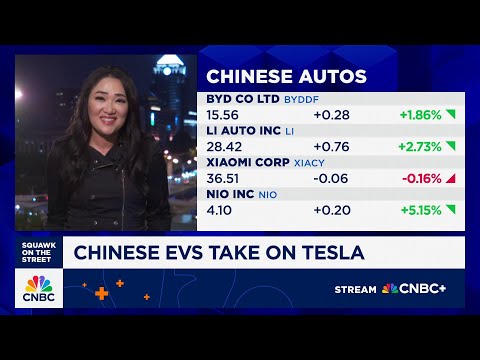
Thanks, Sarah. Well, it's called the Xiaomi U7. This is an SUV that's going head-to-head with Tesla's Model Y here at $35,000.It's just slightly less than the Model Y. Um, it also includes a driver assistance technology. This is their most advanced one.They give that one away for free. So, that's unlike uh Tesla. And then both are seen as performance cars.And the Xiaomi is seen as one that has a bit of a a better range. Now in China, of course, as you guys were talking about, there are so many car makers th ...

Xpeng defies China's EV price war with steady sales as Tesla and local rivals try to keep pace
CNBC· 2025-07-02 03:49
Core Insights - Xpeng is maintaining strong sales momentum with 34,611 car deliveries in June, marking its eighth consecutive month of over 30,000 deliveries, despite intense competition from BYD and others in the Chinese electric vehicle market [1][2] Industry Overview - The electric vehicle price war in China has intensified, leading to government criticism of excessive competition, with President Xi Jinping calling for better governance of low-price competition [3] - BYD remains the dominant player in the market, with June sales reaching 377,628 vehicles, contributing to a total of 2.1 million vehicles sold in the first half of the year [13] Competitor Performance - Xpeng's competitors have shown mixed results: - Zeekr reported 16,702 deliveries in June, down 11.7% month-over-month and 16.9% year-over-year [4] - Nio delivered 24,925 cars in June, showing slight growth due to its premium and lower-priced brands [4] - Li Auto delivered 36,279 vehicles in June, a decline of 11.2% from May, but exceeded its second-quarter guidance with 111,074 total deliveries [5] - Xiaomi reported over 25,000 electric car deliveries in June, with significant demand for its new YU7 SUV, which is priced lower than Tesla's Model Y [8][9] Market Dynamics - Tesla's sales in China are estimated at approximately 128,000 units for Q2, down 12% year-over-year, facing pressure from new model launches by Chinese brands [10] - Tesla's market share in China's new energy vehicle segment has slightly declined, with retail sales just over 200,000 vehicles in the first five months of the year [11] - Leapmotor and Aito reported strong growth with record deliveries of 48,006 and 44,685 cars respectively in June [12] Future Outlook - Analysts predict that BYD, Xiaomi, and Geely are likely to survive potential industry consolidation, while Nio may face risks due to financial challenges despite having a strong product lineup [14]

What's the Best Driverless Vehicle Stock? (Hint: It's Not Tesla or Alphabet)
The Motley Fool· 2025-07-01 00:00
Core Viewpoint - Nvidia is identified as the best stock for investing in the driverless vehicle market, despite not being a pure play in autonomous vehicles, unlike competitors such as Alphabet's Waymo and Tesla [1][8]. Market Potential - The driverless vehicle market is expected to experience significant growth, with projections estimating it could reach $4.45 trillion by 2034, reflecting a compound annual growth rate (CAGR) of 36% over the next decade [4]. - Growth projections for the autonomous vehicle market are robust across various sources, with most estimates indicating CAGRs in the low to high 30% range [5]. Nvidia's Position - Nvidia provides a comprehensive AI-powered driverless technology platform, allowing companies to select specific technologies for their development programs [7]. - Nvidia is already profiting from the driverless vehicle space, with expectations for profits to increase as more companies utilize its technology [8]. - The company has a significant lead in the autonomous vehicle tech space, with every automaker developing autonomous technology reportedly using Nvidia's tech for AI training [13][14]. Partnerships and Collaborations - Major automakers, including Toyota, General Motors, Mercedes-Benz, and Volvo Cars, are known to use Nvidia's autonomous vehicle technology for both AI training and AI inferencing [17]. - Numerous Chinese electric vehicle makers, such as BYD and Nio, have partnered with Nvidia, enhancing their vehicle offerings with Nvidia's driverless technology [18]. Technology Offerings - Nvidia's technology includes a data center AI supercomputer for training self-driving AI models, a simulation platform for scenario modeling, and an in-vehicle AI supercomputer that processes data from vehicle sensors [9]. - The DRIVE AGX systems serve as the "brains" of vehicles, enabling advanced decision-making capabilities [9].


Xiaomi says it received over 200,000 orders for a new car it priced just below Tesla's Model Y in 3 minutes
Business Insider· 2025-06-27 06:31
Core Insights - Xiaomi launched the YU7 car, priced at $35,000, which has garnered over 289,000 orders within the first hour of its launch, indicating strong market demand [1][2] - The YU7 is positioned to compete directly with Tesla's Model Y, which starts at $36,760, and Xiaomi's CEO Lei Jun emphasized the company's intent to challenge Tesla in the market [2][4] - Following the strong order demand for the YU7, Xiaomi's stock rose 8% to a record high, reflecting investor confidence in the company's growth potential in the EV sector [3][6] Company Performance - Xiaomi's stock has increased by 72% this year, driven by robust sales of the SU7 sedan, success in the smartphone market, and expansion into home appliances [6] - The YU7 is Xiaomi's second vehicle, following the SU7, which has consistently outsold Tesla's Model 3 in China since December [5] Market Dynamics - The launch of the YU7 contributes to the ongoing price war in the EV market, with Chinese manufacturers like Xiaomi, BYD, Nio, and Xpeng undercutting Tesla's prices and gaining market share in both China and Europe [4][5] - Analysts suggest that the YU7's specifications and performance may allow it to capture market share from the Model Y, indicating a competitive landscape for EVs [4]

Should You Buy Nio While It's Below $6?
The Motley Fool· 2025-03-29 08:19
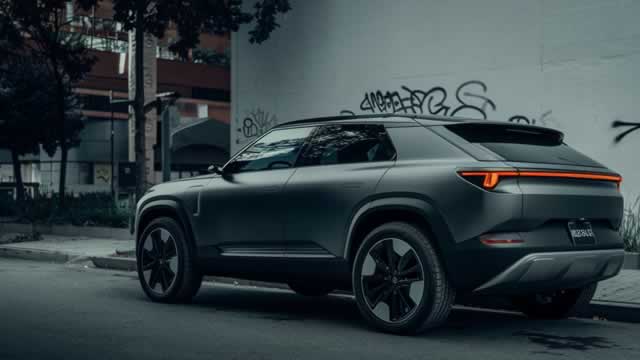
Core Viewpoint - Nio is a rapidly growing player in China's electric vehicle market, facing challenges such as pricing wars and geopolitical trade tensions, while leveraging its unique battery swap business model to differentiate itself from competitors [1][11]. Company Overview - Founded in 2014, Nio has become China's fifth-largest pure EV brand with a market share of 3%, selling 160,038 vehicles compared to BYD's 1.3 million (25% market share) and Tesla's 603,000 (11.7% market share) [3]. - Nio's revenue reached $9.1 billion, reflecting a 16% year-over-year increase, although it continues to operate at a loss with negative earnings per share of $1.53 [9]. Unique Selling Proposition - Nio's battery swap business is part of its battery-as-a-service (BaaS) model, allowing customers to purchase vehicles without batteries and pay a subscription fee for battery access, which includes quick battery swaps [4][6]. - The battery swap process takes about five minutes, significantly faster than traditional charging methods, and allows users to upgrade their batteries as new technology becomes available [6]. Market Position and Challenges - Nio delivered a record 221,970 vehicles last year, holding a 40% market share in the pure EV segment for vehicles priced over RMB 300,000 (approximately $41,359) [8]. - The company faces significant headwinds from pricing wars among Chinese EV makers, which have pressured its gross margin, improving from 5.5% to 9.9% but still below previous levels [9]. Future Outlook - CEO William Li is optimistic about achieving profitability by the fourth quarter of 2025, supported by aggressive cost-cutting measures and operational restructuring [10]. - However, recent negative public sentiment affecting the Onvo brand has led to sales volumes being 30% to 40% lower than expected, posing a risk to growth [10]. Geopolitical Factors - Nio is impacted by geopolitical trade tensions, including tariffs imposed by the European Union and the U.S. on Chinese EVs, which could hinder its competitive position in international markets [11]. Investment Considerations - Nio's stock is currently trading at approximately 0.99 times sales, significantly lower than Tesla's 9.95 times sales, presenting a potential opportunity for more aggressive investors [13].

Better EV Stock: Nio vs. Rivian
The Motley Fool· 2025-03-28 08:30
Core Insights - Nio and Rivian, once leading electric vehicle stocks, have seen significant declines in their stock prices due to lower vehicle deliveries and substantial losses [2][14] - Nio is experiencing a recovery in its business with increasing deliveries and expanding vehicle margins, while Rivian is facing challenges with production and supply chain issues [2][8] Nio Overview - Nio's vehicle deliveries have grown significantly from 20,565 in 2019 to an expected 221,970 in 2024, with a peak growth rate of 113% in 2020 [4] - The company has faced challenges in 2022 and 2023, including supply chain issues and competition, leading to a decline in vehicle margins from 20.1% in 2021 to 9.5% in 2023 [3][4] - Nio's recent product launches, including the lower-end Onvo L60 and the Firefly hatchback, are expected to drive future growth [6][4] - Analysts project Nio's revenue to increase by 38% in 2025 and 32% in 2026, despite remaining unprofitable [7] Rivian Overview - Rivian's vehicle deliveries increased from 920 in 2021 to 50,122 in 2023, but growth is expected to stall in 2024 due to production shutdowns for upgrades [10] - The company has struggled with negative gross margins, which improved from -845.5% in 2021 to -24.1% in 2024, but profitability is still not expected soon [10][12] - Rivian anticipates delivering between 46,000 to 51,000 vehicles in 2025, with the launch of the R2 SUV planned for 2026 [11] - Analysts expect Rivian's revenue growth to be modest at 8% in 2025, with a potential increase of 40% in 2026 [13] Investment Comparison - Nio is viewed as a more attractive investment due to its higher vehicle deliveries, clearer future plans, and lower valuations compared to Rivian [14] - Rivian's future performance is uncertain, particularly with the upcoming R2 launch, making it a riskier investment at this time [14]