Pioneer Natural Resources

Search documents
Tamboran Resources (NYSE:TBN) Earnings Call Presentation
2025-09-14 22:00
Beetaloo Basin Development & Resources - Tamboran controls approximately 1.9 million net prospective acres in Australia's Beetaloo Basin[26, 28] - The Beetaloo Basin has over 5,000 potential drilling locations across a single bench, with potential for >16,000 locations across 3 benches[29, 32] - Tamboran is progressing towards a farmout of ~400,000 acres in the Phase 2 Development Area[16, 33] Production & Well Performance - The Shenandoah South 2H ST1 (SS-2H ST1) well achieved a record Beetaloo Basin IP90 flow test of 6.7 MMcf/d[15, 54, 55] - The SS-2H ST1 well has a 5,483 foot (1,671 m) horizontal section[53, 55] - The initial Shenandoah South Pilot Project aims to deliver 40 TJ/d (~39 MMcf/d) of gross production[16, 64, 87] Market & Infrastructure - Tamboran has a take-or-pay Gas Sales Agreement (GSA) with the Northern Territory Government for 40 TJ/d (~39 MMcf/d) until mid-2041[74, 94, 117] - The Sturt Plateau Pipeline (SPP) will have a design capacity of 50 TJ/d (~49 MMcf/d), expandable to 100 TJ/d (~98 MMcf/d)[109, 111, 112] - The East Coast gas market is anticipated to have a >1 Bcf/d shortfall from the early 2030s[35, 74] Cost Reduction & Partnerships - Tamboran is targeting ~50% reduction in drilling & completion costs with continuous operations[75] - The company has secured local sand for upcoming completions at ~US$0.07/lb, a ~70% reduction compared to 2024 imported sand costs[86]
3 Integrated Energy Stocks to Gain Despite Industry Vulnerability
ZACKS· 2025-07-24 16:06
Industry Overview - The crude oil pricing environment is expected to experience significant volatility, negatively impacting exploration and production activities of integrated energy companies [1] - The Zacks Oil and Gas Integrated International industry includes companies involved in upstream, midstream, and downstream operations across various global regions [3] - Integrated players are gradually focusing on renewables to lower emissions and cut carbon intensity of products sold [4] Current Challenges - The integrated energy sector is navigating a highly uncertain macroeconomic environment, with refining, renewable energy, and chemical segments under pressure due to limited market visibility [5] - A slowdown in oil production growth in the U.S. is driven by shareholder demands for capital returns rather than production expansion, leading to reduced revenues [6] - Growing demand for renewable energy is expected to decrease reliance on oil and natural gas, adversely impacting integrated energy firms primarily engaged in fossil fuel production [7] Industry Performance - The Zacks Oil and Gas Integrated International industry ranks 189, placing it in the bottom 23% of the 245 Zacks industries, indicating bleak near-term prospects [8][9] - The industry has underperformed the broader Zacks Oil - Energy sector and the S&P 500, declining 5.4% over the past year compared to the S&P 500's growth of 17.3% [10] Valuation Metrics - The industry is currently trading at a trailing 12-month EV/EBITDA ratio of 4.27X, lower than the S&P 500's 17.85X and the sector's 4.77X [13] - Over the past five years, the industry has traded between 2.75X and 6.54X, with a median of 4.11X [14] Key Companies - Chevron completed a $53 billion acquisition of Hess Corporation, enhancing its upstream portfolio and gaining a 30% interest in the Stabroek Block offshore Guyana, which holds over 11 billion barrels of recoverable oil [17] - ExxonMobil's acquisition of Pioneer Natural Resources expanded its production capabilities in the Permian Basin, allowing it to maintain low production costs and a robust project pipeline in offshore Guyana [21] - Shell's acquisition of Pavilion Energy strengthens its LNG trading capabilities, targeting a 4-5% annual increase in LNG sales over the next five years [23]


X @The Wall Street Journal
The Wall Street Journal· 2025-07-18 20:41
Oil-patch turnaround: The FTC reversed an order that kept Scott Sheffield off the Exxon Mobil board after his Pioneer Natural Resources was sold to Exxon https://t.co/xY3ZhQ3X3X ...
X @Bloomberg
Bloomberg· 2025-07-17 21:56
The US FTC set aside an order barring the former Pioneer Natural Resources CEO from joining Exxon Mobil’s board https://t.co/yk0MYS3Gkf ...
Iran-Israel Conflict Escalates: Boon for ExxonMobil's E&P Business?
ZACKS· 2025-06-18 14:16
Core Insights - The West Texas Intermediate crude price is approaching $75 per barrel, a significant increase from $60.79 on May 30, driven by rising tensions between Iran and Israel, which positively impacts Exxon Mobil Corporation's exploration and production activities [1][8] - ExxonMobil generates approximately 88% of its earnings from upstream operations, making the rise in oil prices beneficial for its bottom line [2] - ExxonMobil has a strong presence in the oil-rich Permian Basin, which is expected to generate substantial cash flows due to high oil prices [2][8] ExxonMobil's Operations - ExxonMobil's acquisition of Pioneer Natural Resources has led to an upward revision of annual synergy estimates from $2 billion to $3 billion for the first decade, enhancing its operational efficiency in the Permian [3][8] - The company's upstream business is significantly benefiting from the favorable crude pricing environment, particularly in the Permian region [8] Competitors' Performance - Chevron Corporation and BP plc also benefit from high oil prices due to their substantial earnings from upstream operations [4] - Chevron operates on approximately 1.8 million net acres in the Permian, with low breakeven costs allowing for strong cash flow generation [5] - BP maintains a low-cost production model, positioning itself well to capitalize on rising oil prices [6] Market Performance - ExxonMobil's shares have increased by 7.9% over the past year, outperforming the industry average of 3.7% [7] - The company's trailing 12-month enterprise value to EBITDA (EV/EBITDA) ratio stands at 7.06X, above the industry average of 4.26X, indicating a premium valuation [9]
Chevron's Permian Wells Deliver More - With Less Spending
ZACKS· 2025-06-16 13:10
Key Takeaways CVX expects 5-6% CAGR in oil and gas output through 2026 while cutting reinvestment by 20%. New Mexico's Delaware Basin now accounts for 85% of CVX's development plans due to strong well performance. CVX sees $2B growth in Permian free cash flow by 2026, aided by low-royalty acreage and efficiency gains.Chevron Corporation’s (CVX) operations in the Permian Basin are showing strong results, and the company is doing it with less money. The energy supermajor expects its oil and gas production t ...

3 Cheap Dividend Growth Stocks to Buy Right Now
The Motley Fool· 2025-06-04 09:50
Core Viewpoint - Dividend growth stocks are ideal long-term investment options as they provide good payouts and potential for capital appreciation, helping to mitigate inflation effects [1] Group 1: Investment Opportunities - ExxonMobil has increased its annual dividend for 42 consecutive years, currently yielding 3.76%, which is significantly higher than the S&P 500 average of 1.3% and its own three-year average of 3.4% [4][5] - Verizon Communications offers the highest yield on the list at 6.2%, which is above its five-year average of 5.8%, despite a 22% decline in stock price over the past five years [6][7] - AbbVie, classified as a Dividend King with over 50 years of annual increases, currently yields 3.5% and has a strong portfolio in various therapeutic areas [10][12] Group 2: Financial Metrics - ExxonMobil trades at less than 14 times its trailing earnings, indicating a relatively cheap valuation [4] - Verizon trades at less than 11 times its earnings, with an estimated free cash flow of at least $17.5 billion, significantly exceeding its annual dividend payout of $11 billion [8][9] - AbbVie trades at an earnings multiple of around 80, but based on future profit estimates, it trades at about 15 times its expected earnings [11]


ExxonMobil Is 1 of the Largest Energy Companies by Market Cap. But Is It a Buy?
The Motley Fool· 2025-06-04 08:41
America's largest oil and gas company is no dinosaur. The oil and gas stock can still be a great addition to your portfolio. Renewable energy sources, including wind and solar, have experienced significant growth over the past few decades, becoming a major contributor to the world's energy needs. But don't let anyone tell you that oil and gas companies are dying. The reality is far from it. Research by The Motley Fool laid out today's energy landscape, and virtually every single one of the world's largest e ...
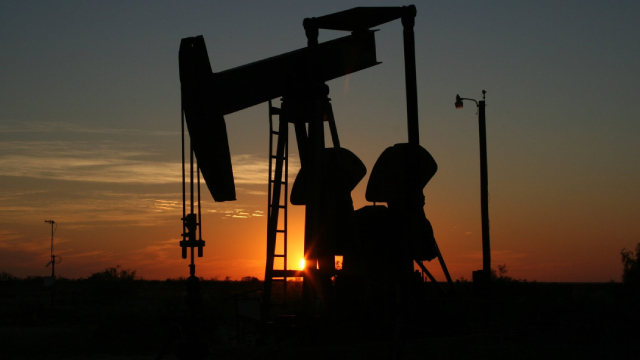
目标击垮美国页岩油?OPEC+本周预计大幅增产,意将油价压低至60美元以下
Hua Er Jie Jian Wen· 2025-05-26 07:14
Group 1 - OPEC+ is initiating an aggressive production increase strategy aimed at undermining the U.S. shale oil industry's survival threshold of $60 per barrel [1][4] - HSBC forecasts that OPEC+ will announce a production increase of 411,000 barrels per day for July, following similar increases in May and June [2][3] - The strategy is designed to push international oil prices below $60 per barrel, directly threatening the profitability of U.S. shale oil companies, which require at least $61 per barrel for new drilling to be profitable [1][4] Group 2 - The increase in U.S. shale oil market share from 14% to 20% over the past decade has prompted OPEC+ to reclaim lost market share, with OPEC's share declining from 50% to 25% [3] - OPEC+ leaders, particularly Saudi Arabia and Russia, are focused on regaining market share taken by U.S. shale oil producers [4][5] - The current environment is more challenging for U.S. producers due to rising inflation affecting drilling costs and the depletion of high-quality oil fields [6][7] Group 3 - U.S. shale oil companies are facing a potential crisis, with rising costs and declining production, leading to warnings of a possible wave of bankruptcies [7] - Major U.S. oil companies are reducing spending and idling drilling rigs, with some predicting a significant drop in production if oil prices fall to $50 per barrel [7] - HSBC's report indicates that Brent crude oil prices are facing downward risks, with predictions of a supply surplus in the fourth quarter of 2025 [8][9]
Is a Big Oil Megamerger Brewing? Exxon, Chevron, and Others Are Eyeing This Oil Stock.
The Motley Fool· 2025-05-11 19:22
Consolidation in the Oil Industry - A consolidation wave has occurred in the oil sector, with ExxonMobil initiating a $64.5 billion acquisition of Pioneer Natural Resources and Chevron planning to buy Hess for $60 billion [1][2] BP's Strategic Shifts - BP has faced challenges and undergone two significant strategy shifts, initially pledging to cut capital spending on oil and gas projects by 40% to focus on clean energy [4] - Due to a recovery in oil prices and underperformance, BP has revised its strategy, reducing renewable investment from $5 billion to $1.5 billion to $2 billion annually while increasing oil and gas capital investment to $10 billion per year [5][6] BP's Production Goals - BP aims to increase its overall oil and gas output to an average of 2.5 million barrels of oil equivalent (BOE) per day by 2030, up from less than 2.4 million BOE last year [6] Comparison with Competitors - BP's strategy contrasts with U.S. oil giants like Exxon and Chevron, which have clear multi-year strategies for shareholder value growth, including Exxon's $140 billion investment plan and Chevron's focus on advantaged assets [7][8] Potential Takeover Interest - BP's underperformance has made it a potential takeover target, with companies like Shell, Exxon, Chevron, TotalEnergies, and Adnoc Gas reportedly considering acquisitions [10][12] - Shell has expressed hesitance, preferring stock repurchases over acquiring BP, citing the need to stabilize its own operations first [11] Challenges to Acquisition - BP's significant debt of $77 billion, partly from the Deepwater Horizon disaster, poses a challenge for potential acquirers, as it could negatively impact their balance sheets [13] - Regulatory scrutiny in the U.K. may also hinder any acquisition attempts, as there may be resistance to foreign control of BP [13] Investment Appeal - Despite speculation around a potential acquisition, BP's shifting strategy and financial challenges make it a less appealing investment compared to Exxon and Chevron, which have more defined growth strategies [14]