BYD

Search documents
中国智能驾驶芯片:助力汽车智能化 -对地平线和黑芝麻智能的首次覆盖--China Smart Driving Chip_ Powering Auto Intelligence - Initiation with OP on Horizon Robotics and UP on Black Sesame
2025-09-04 15:08
Summary of the Conference Call on China Smart Driving Chip Sector Industry Overview - The smart driving chip market in China is projected to reach USD 15.4 billion by 2030, growing at a CAGR of 40% from 2025 to 2030, driven by the increasing adoption of Advanced Driver Assistance Systems (ADAS) features [2][34] - The penetration of Navigate on Autopilot (NOA) features is expected to reach 88% by 2030, creating a significant market opportunity for smart driving chips [2][12] Key Companies Discussed Horizon Robotics - Horizon Robotics is positioned as the domestic leader in smart driving System on Chip (SoC), with a projected 23% vehicle share for L1-L2 SoC and 30% for L2+ SoC in 2024 [3] - The company is expected to capture 29% of the outsourced L2+ & above SoC TAM by value by 2030, supported by its unique hardware-software integrated model [3][14] - Horizon's SoC design is co-optimized with smart driving algorithms, allowing for lower costs and faster iterations, potentially increasing OEM net income by 10-20% on a RMB 150K vehicle [3] - Horizon Robotics is rated Outperform with a price target of HKD 15, indicating a 56% upside potential [3][8] Black Sesame - Black Sesame is the second-largest domestic vendor but faces challenges due to a lack of scale and heavy R&D burdens, which could pressure its financials [4][9] - The company focuses on L2+ SoC, capturing a 9% vehicle share in 2024, but lacks software expertise, slowing customer acquisition compared to Horizon [5] - Black Sesame's current balance sheet can only support R&D investments for 1-2 years, suggesting a need for frequent capital raises, which could dilute shareholder value [5] - Black Sesame is rated Underperform with a price target of HKD 16, indicating a 15% downside potential [5][9] Market Dynamics - Concerns exist regarding OEMs' in-house development of smart driving chips potentially disrupting the outsourcing market; however, it is expected that around 60% of the market will remain open to third-party vendors by 2030 [2][13] - The competitive landscape is evolving, with Horizon Robotics and Black Sesame primarily competing against Nvidia in the L2+ & above market [14] - The increasing consumer preference for smart driving features is a critical differentiator among OEMs, with over 70% of consumers considering ADAS functionalities important in vehicle purchasing decisions [18][21] Financial Metrics - Horizon Robotics has a market cap of HKD 133.3 billion and an enterprise value of HKD 116.3 billion, with a reported EPS of RMB 0.51 for 2024 [6] - Black Sesame has a market cap of HKD 12 billion and an enterprise value of HKD 10.4 billion, with a reported EPS of RMB 1.20 for 2024 [6] Investment Implications - Horizon Robotics is expected to maintain its technological leadership through significant R&D investments, which will also allow for future expansion into robotics and global markets through joint ventures [8] - Black Sesame's lack of software capabilities and scale may hinder its long-term success, necessitating a strategic shift or additional funding to remain competitive [9] Conclusion - The smart driving chip sector in China is poised for rapid growth, with Horizon Robotics positioned as a leader due to its integrated hardware-software solutions, while Black Sesame faces significant challenges that could impact its market position and financial health [8][9]

BYD vs. TTWO: Which Stock Is the Better Value Option?
ZACKS· 2025-09-03 16:40
Core Viewpoint - Investors in the Gaming sector should consider Boyd Gaming (BYD) and Take-Two Interactive (TTWO) for potential value opportunities, with BYD currently presenting a better value proposition [1] Valuation Metrics - Boyd Gaming has a forward P/E ratio of 12.42, while Take-Two Interactive has a significantly higher forward P/E of 87.96 [5] - Boyd Gaming's PEG ratio is 2.42, compared to Take-Two Interactive's PEG ratio of 2.57, indicating a more favorable valuation relative to expected earnings growth [5] - Boyd Gaming's P/B ratio stands at 4.92, whereas Take-Two Interactive's P/B ratio is 12.77, further highlighting BYD's more attractive valuation metrics [6] Analyst Outlook - Boyd Gaming holds a Zacks Rank of 2 (Buy), indicating stronger earnings estimate revision activity and a more favorable analyst outlook compared to Take-Two Interactive, which has a Zacks Rank of 3 (Hold) [3][7] - The overall assessment suggests that value investors are likely to favor Boyd Gaming over Take-Two Interactive based on the combination of valuation metrics and analyst sentiment [7]



中国电池材料:商用车乘势而上-China Battery Materials_ Commercial Vehicle Builds on the Momentum
2025-09-03 13:23
Summary of Key Points from the Conference Call Industry Overview - **Industry**: China Battery Materials, specifically focusing on Electric Vehicle (EV) batteries - **Date**: August 31, 2025 Core Insights - **Battery Installation Data**: In July 2025, China’s EV battery installation was 63.7 GWh, reflecting a decrease of 3% month-over-month (MoM) but an increase of 43% year-over-year (YoY) [1][2] - **Year-to-Date Performance**: Cumulative EV battery installations for the first seven months of 2025 reached 402.8 GWh, representing a 49% increase YoY [1][2] - **Commercial Vehicle Segment**: Commercial vehicles accounted for 16% of battery installations in the first seven months of 2025, up from 10% in 2024, indicating a shift from Internal Combustion Engine (ICE) vehicles to Battery Electric Vehicles (BEV) [1][7] - **Market Share of Top Manufacturers**: The top two battery manufacturers, CATL and BYD, held a combined market share of 66% in July 2025, with CATL at 43% and BYD at 22%, both down by 1 percentage point MoM [2][5] Market Dynamics - **Battery Chemistry**: Lithium Iron Phosphate (LFP) batteries continued to dominate the market with a 79% share in July 2025 [1] - **Commercial Vehicle Battery Size**: The average battery size for commercial vehicles increased to 160 kWh per unit in 2025, up from 110 kWh in 2024, driven by the growing demand for larger batteries in special vehicles [7] Company Insights - **Top Picks**: Recommended stocks in the battery space include CATL, EVE Energy, and Hunan Yuneng, all of which are under observation for potential upside catalysts [1] - **Valuation Metrics**: - CATL is valued at HK$425/share based on a target EV/EBITDA of 16.6x for 2025, implying a P/E of 28.2x for 2025 and 22.4x for 2026 [12] - EVE Energy is valued at Rmb59.20/share, with a focus on its core battery business and other contributions [15] - Hunan Yuneng is valued at Rmb51.9/share, reflecting a cautious outlook due to surplus supply in the LFP cathode industry [17] Risks Identified - **CATL Risks**: Potential risks include lower-than-expected EV demand, increased competition leading to reduced market share, and higher raw material costs [13][14] - **EVE Energy Risks**: Risks include impacts from COVID-19-like situations, slower EV penetration in a low oil price environment, and rising raw material costs [16] - **Hunan Yuneng Risks**: Key risks involve lower-than-expected LFP cathode shipments, worse-than-expected gross profit margins, and higher expenses [18] Additional Insights - **Commercial Vehicle Transition**: The transition of special vehicles such as refrigerated trucks and garbage trucks from ICE to BEV is a significant trend contributing to the growth in battery installations [7] - **Market Share Trends**: The decline in market share for leading manufacturers like CATL and BYD may indicate increasing competition in the EV battery market [2] This summary encapsulates the essential insights and data from the conference call, providing a comprehensive overview of the current state and future outlook of the China battery materials industry, particularly in the EV segment.



中国-一位股票策略师的日记(HA)-(8 月 25 - 29 日):在流动性驱动的上涨与基本面间平衡
2025-09-02 14:24
Summary of Key Points from the Conference Call Industry Overview - The conference call primarily discusses the **Chinese equity market** and its recent performance, particularly focusing on the **HSCEI** and **CSI 300** indices, along with macroeconomic factors affecting these markets [1][2]. Core Insights and Arguments - **Market Performance**: The HSCEI decreased by **1.5%**, while the CSI 300 increased by **2.7%** during the week of August 25-29. This reflects a pullback in offshore markets after regulatory changes by Sinolink Securities and domestic mutual funds [1]. - **Regulatory Changes**: Sinolink Securities raised its margin deposit ratio to **100%** for new client financing contracts, and banks warned against using credit card funds for investments, indicating tighter liquidity conditions [1]. - **Geopolitical Tensions**: Former President Trump stated that China must provide concessions to the US or face a **200% tariff**, highlighting ongoing trade tensions [1]. - **Government Initiatives**: The National Development and Reform Commission (NDRC) is drafting new rules to regulate internet platform pricing and is promoting coordinated AI development across provinces. The State Council aims to accelerate 'AI Plus' integration across six key sectors by **2027** [1]. - **Sector Performance**: Materials, IT, and Communication Services sectors outperformed, while Healthcare, Real Estate, and Consumer Discretionary sectors underperformed during the week [1]. - **Wax & Wane Indicator**: The W&W indicator reached **38**, indicating a marginally bullish sentiment, with weekly and monthly averages at **39** and **37**, respectively [1]. Additional Important Content - **Macro Economic Indicators**: The State Council is calling for enhanced domestic demand and high-quality development in services trade. The Ministry of Commerce (MOC) plans to unveil measures to boost services consumption and exports [2]. - **Industrial Profits**: Year-to-date industrial profits have decreased by **1.5% YoY**, a decline from **4.3%** in June, indicating a challenging economic environment [2]. - **Sector-Specific Updates**: - **Automotive**: Chinese carmakers are resisting government calls to end aggressive price competition [3]. - **Telecommunications**: China aims to open up satellite communication services and achieve over **10 million users** by **2030** [3]. - **Real Estate**: Shanghai has eased housing purchase restrictions, and Suzhou has removed the two-year holding period on new homes [3]. Investment Opportunities - The report highlights potential investment opportunities in high dividend yield stocks and local champions with significant exports to non-US/EU markets. Notable companies include: - **CCB** (China Construction Bank) with a market cap of **$258.3 billion** and a dividend yield of **5.7%** [12]. - **PetroChina** with a market cap of **$218.3 billion** and a dividend yield of **6.5%** [12]. - Companies less impacted by US/EU tariffs, such as **BYD** and **Great Wall Motor**, are also identified as potential investment targets [12]. This summary encapsulates the key points discussed in the conference call, providing insights into the current state of the Chinese equity market, regulatory environment, and potential investment opportunities.
BYD(1211.HK):2Q25 EARNINGS MISSED WITH WEAKENING PROFIT QUALITY;DOWNWARD REVISION OF CONSENSUS AND DECELERATION LED TO STOCK DE-RATING
Ge Long Hui· 2025-09-02 02:46
Core Viewpoint - BYD's total revenue increased by 14.0% YoY in 2Q25, but net profit fell sharply by 29.9% YoY, marking the first quarterly decline since 2022, leading to a downgrade in stock rating from HOLD to SELL with a target price of HK$80 based on 18x 2025E P/E [1][2][4]. Revenue and Profit Performance - Total revenue for 2Q25 reached RMB200.9 billion, aligning with expectations, while revenue from the rest of the business grew by 17.2% YoY, slightly exceeding vehicle sales volume growth of 16.1% YoY [3]. - Net income for 2Q25 dropped to RMB6.36 billion, a 29.9% YoY decline, ending a streak of quarterly profit growth since 2022 [4]. - Excluding BYDE, profits plummeted by 33.5% YoY to RMB56.3 billion, significantly below estimates and market consensus [4]. Margin and Operational Expenses - The gross margin for the auto business fell by 2.0/5.1 percentage points YoY/QoQ to 18.7%, primarily due to aggressive price cuts and increased operational expenses, particularly in R&D [5]. - OPEX, especially R&D costs, remained high, contributing to a more than 40% YoY/QoQ decline in earnings per vehicle to RMB4.9k in 2Q25 [2][5]. Overseas Sales and Profitability - BYD's overseas sales grew significantly, with export volumes accounting for 21% of total sales in 2Q25, up from 11% in 2Q24 [6]. - However, the rapid expansion in overseas markets has not yet resulted in substantial profit contributions, affected by delayed revenue recognition and additional costs related to inventory for immediate delivery [7]. Profit Structure and Non-Operational Contributions - In 1H25, BYD's net income increased by 13.8% YoY to RMB15.5 billion, but the quality of earnings weakened due to a rising reliance on non-operational items such as foreign exchange gains and government subsidies [8]. - FX gains accounted for approximately 20% of net income, while government subsidies made up 41% of net income in 1H25, a significant increase from 26% in 2024 [8].
BYD share price slumps as analysts say the Chinese EV giant's 'gravy train' is slowing
Business Insider· 2025-09-01 10:25
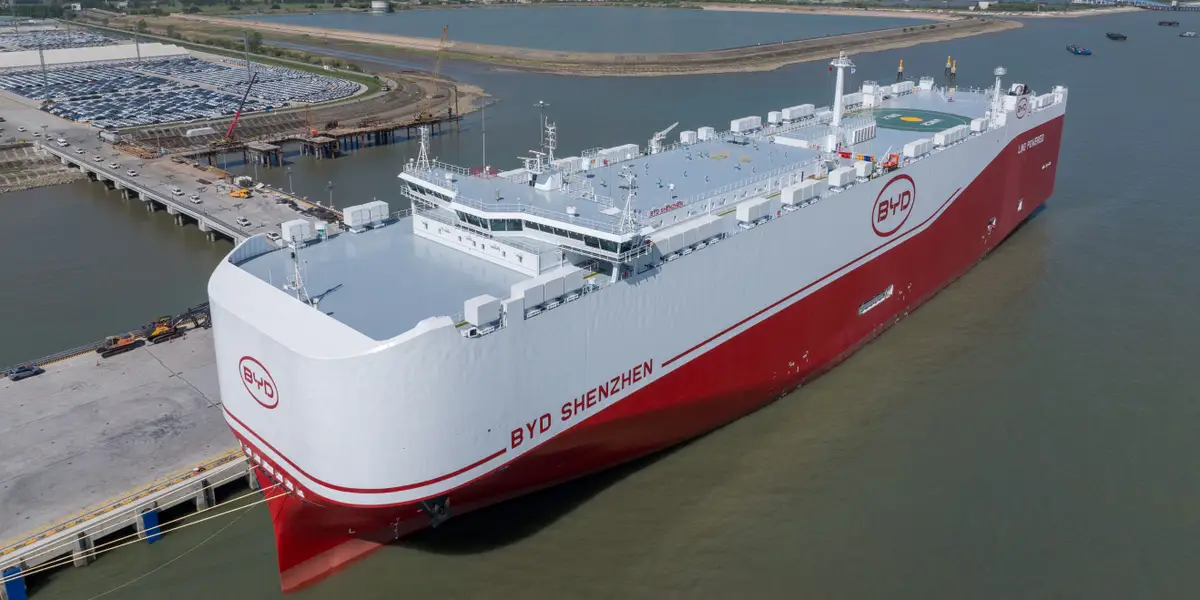
Core Viewpoint - BYD's share price has declined significantly due to disappointing earnings, with net profits falling 30% year-over-year in Q2, amid intense competition in the Chinese EV market [1][2]. Group 1: Financial Performance - BYD reported a 30% decrease in net profits for the second quarter compared to the same period last year [1]. - The company's disappointing results were somewhat offset by a 50% increase in overseas revenues from the previous year [3]. Group 2: Regulatory Environment - BYD is facing scrutiny from Chinese regulators due to practices such as heavy discounting and delayed supplier payments, which are common in the EV industry [2]. - The company's earnings report indicated that "short-term profitability" has been impacted by "industry malpractices" including excessive marketing and discounting [2]. Group 3: Strategic Initiatives - BYD has been expanding its global footprint, building a fleet of car-carrying cargo ships to meet rising demand in markets like Europe, Brazil, and Mexico [4]. - The company has plans to establish factories in Brazil, Hungary, and Turkey as part of its aggressive global expansion strategy [4]. - In a notable achievement, BYD outsold Tesla in Europe last month, marking the second time this year it has done so [4].
BYD's Hong Kong shares fall nearly 8% after quarterly profit drop
CNBC· 2025-09-01 02:15
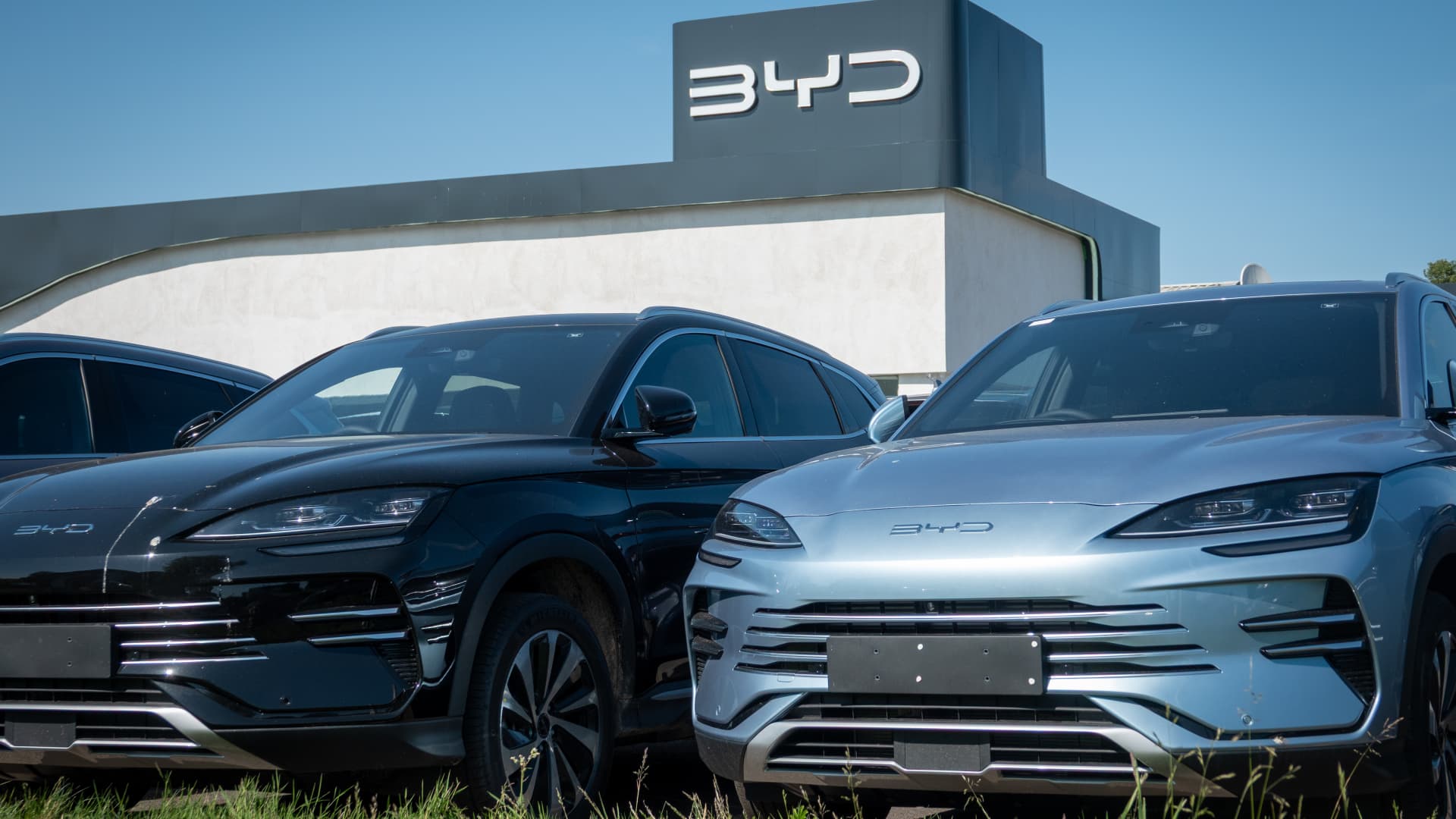
Core Viewpoint - Hong Kong-listed shares of BYD experienced a significant decline of up to 7.87% following the announcement of a quarterly profit drop, highlighting the impact of an aggressive price war in the domestic electric vehicle industry [1] Company Summary - BYD reported a profit of 6.4 billion yuan (approximately $891 million) for the June quarter, which represents a decrease of about 30% compared to the same period last year [1] - Despite the profit decline, BYD has seen an expansion in sales overseas, indicating potential growth opportunities outside the domestic market [1]
Is BYD Stock Your Ticket to Becoming a Millionaire?
The Motley Fool· 2025-08-30 08:30
Company Overview - BYD Company (BYDDY) has recently surpassed Tesla to become the world's largest electric vehicle (EV) manufacturer, selling nearly 607,000 battery-powered EVs in Q2 compared to Tesla's 373,728 deliveries [2][3] - The company is not only focused on EVs but also manufactures hybrids, buses, high-speed trains, electronics components, and lithium batteries for other automakers [4][10] Market Position - BYD is highly self-sufficient, producing its own electronic components and batteries, and even owns seven cargo ships for vehicle delivery, enhancing its operational flexibility [5] - The company holds approximately 30% of China's EV market share, significantly ahead of its nearest competitor, Geely, which has just over 10% [11] Growth Potential - The demand for new energy vehicles in China is increasing, with July sales reaching 1.26 million cars, a 27% year-over-year increase, and projections indicate that new energy vehicles could account for 80% of new car sales in China by 2030 [10] - A $100,000 investment in BYD today could potentially grow to $1 million in 15 to 20 years, requiring an average annual gain of 12% to 16%, which, while above historical norms, is plausible given the company's performance and market conditions [14]

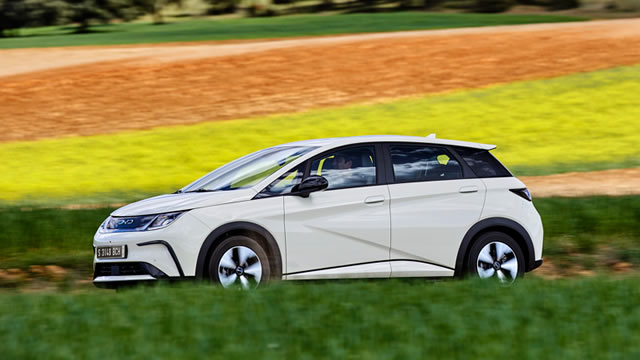
Why Is BYD More Popular Than Tesla in Europe?
FX Empire· 2025-08-28 09:53
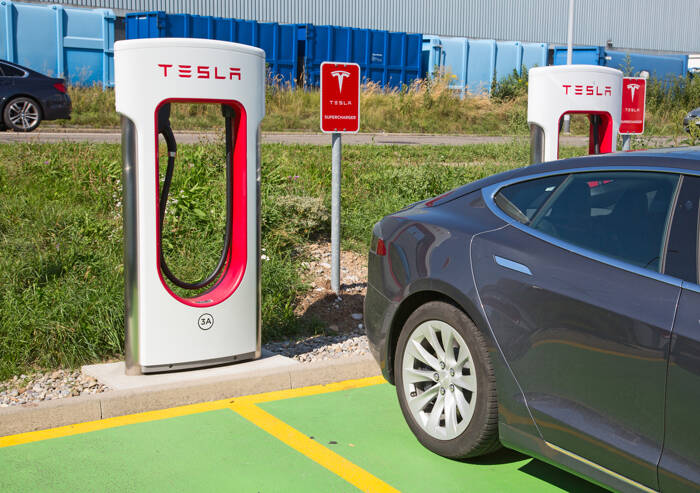
Core Insights - The European EV market is becoming increasingly competitive, with Chinese brands like BYD gaining significant market share, reaching over 5% in the first half of the year, and BYD alone accounting for 1.1% in July, surpassing Tesla's 0.7% [1][2] - Tesla is facing challenges due to an aging product lineup, having not released a new mass-market vehicle since the Model 3 in 2017, which has led to perceptions of it being a maturing brand rather than an innovator [3][4] - BYD's success in Europe is attributed to competitive pricing, a diverse vehicle lineup, strategic market targeting, and a cost of ownership advantage, making it appealing to cost-conscious consumers [8][10][12] Group 1: Competitive Landscape - Tesla is increasingly caught between higher-priced offerings compared to Chinese competitors and less local appeal than European rivals, as companies like Volkswagen and Renault ramp up production of affordable EVs [2] - BYD's pricing strategy allows it to offer vehicles below many European models and Tesla's offerings, with the BYD Dolphin Surf priced at €19,990, making it competitive with conventional petrol cars [8][9] - BYD has become the world's largest producer of battery-electric and plug-in hybrid cars, leveraging economies of scale to maintain aggressive pricing [9] Group 2: Product and Market Strategy - Tesla's recent revamp of the Model Y did not significantly boost sales, and the anticipated Cybertruck has not made a notable impact in Europe [3][4] - BYD's broad range of vehicles, from compact cars to luxury models, contrasts with Tesla's reliance on the Model Y and Model 3, appealing to a wider audience [10] - BYD has strategically targeted markets with weaker domestic auto industries, such as the UK, Spain, and Italy, and has managed to maintain demand despite facing a 17.4% tariff in the EU [11] Group 3: Financial Performance and Investor Sentiment - Tesla's second-quarter 2025 results showed a decline in auto sales revenue and continued loss of market share, raising concerns among investors about Musk's divided focus on ventures outside of Tesla [6][7] - BYD has overtaken Tesla as the world's biggest EV manufacturer by sales volume, with a growth rate exceeding 20% in 2025, indicating strong financial momentum and resilience [13] - The diverging fortunes of Tesla and BYD signal a shift in the balance of power in the EV market, with affordability and product diversity becoming key factors for success [14][15]

Why Is Everyone Talking About BYD Stock?
The Motley Fool· 2025-08-26 01:05
The Chinese EV leader is making waves with record sales, a strong grip on its home market, and ambitious global plans.BYD Company ADR (BYDDY -1.15%) is suddenly everywhere in investor conversations -- and for good reason.The Chinese automaker just crossed the $100 billion revenue mark, kept profits growing through a bruising price war, and is pushing hard into overseas markets. That combination -- scale, vertical integration, and global ambition -- has BYD squarely on the radar for growth-minded investors.L ...