Berkshire Hathaway

Search documents
Warren Buffett Says His $31,500 Home Was the 'Third Best Investment I Ever Made'— But Only for the Memories, Not the Money. 'I'd Have Made More Renting'
Yahoo Finance· 2026-01-10 14:47
Core Insights - Warren Buffett's purchase of his home in 1958 for $31,500 was primarily for family memories rather than financial gain [1][4] - In his 2010 letter to shareholders, Buffett acknowledged that while his home appreciated to between $1.2 million and $1.5 million, it was a financial underperformer compared to Berkshire stock [2][3] - Buffett emphasized that a house is not an automatic wealth-builder and should be treated as an investment if one aims for financial returns [5][6] Real Estate Market Context - The current median home price is approximately $410,000, with historically high mortgage rates, leading many buyers to stretch their budgets for "starter homes" [7] - Buffett's long-term residence in the same home for nearly seven decades contrasts with the trend of buyers seeking larger, more expensive properties [6]
Abel's $25 million Berkshire paycheck is in the same league as other S&P 500 CEOs
CNBC· 2026-01-10 12:50
Core Viewpoint - The article discusses the compensation of Berkshire Hathaway's Vice Chairman Greg Abel, highlighting the significant difference between his pay and that of the company's founder, Warren Buffett, while also addressing the implications of this shift in compensation structure for the company and its future direction [2][4]. Compensation Comparison - Greg Abel's total compensation, including stocks and noncash awards, exceeds the median of over $16 million for S&P 500 CEOs, with many top executives earning more than $25 million [2]. - Warren Buffett's annual salary is notably low at $100,000, with additional personal security costs, and he has historically returned half of his salary to cover personal expenses [2]. Share Ownership and Investment - Abel currently owns Berkshire shares valued at approximately $171 million, which is considered a significant amount by investors [3]. - Investor Jonathan Boyar suggests that Abel should invest more of his personal wealth in Berkshire stock to align his interests with those of shareholders [3]. Future of Berkshire Hathaway - The article suggests that Abel's increasing salary may indicate a trend towards "normalization" of executive compensation at Berkshire, potentially making the company more similar to its corporate peers [4]. - Professor Randall Peterson notes that the transition may take a long time and could be influenced by Buffett's eventual departure [4]. Performance Metrics - As of early 2026, Berkshire Hathaway's stock performance has lagged behind the S&P 500 by approximately one percentage point, with the S&P outperforming Berkshire's A shares by 7.0 percentage points in the previous year [7].


Warren Buffett Left Wall Street 3 Deafening Warnings Before Retiring. Was Anyone Paying Attention?
The Motley Fool· 2026-01-10 11:00
Core Insights - Warren Buffett's final moves before retirement may signal caution for investors, particularly regarding the S&P 500's sustainability [2][10] - Berkshire Hathaway has transitioned to a net seller of stocks, indicating a strategic shift in investment approach [5][10] Group 1: Portfolio Adjustments - Berkshire sold its stakes in S&P 500 ETFs, including Vanguard S&P 500 ETF and SPDR S&P 500 ETF, during Q4 2024 [4] - Since the end of 2022, Berkshire has been actively trimming its portfolio, exiting positions in Citigroup and consistently selling shares of Apple and Bank of America [5] - The company has been a net seller of stocks amounting to $184 billion over the past two years [5] Group 2: Cash Reserves - Berkshire's cash and equivalents reached a record $382 billion by the end of Q3, reflecting its cautious stance [6][8] - The company has opted to earn steady interest from Treasury Bills rather than participating in the current bull market [8] Group 3: Investment Philosophy - Recent investments in UnitedHealth Group and Alphabet represent only a small fraction (2%) of Berkshire's total portfolio, indicating a selective approach [9] - Buffett's strategy suggests a belief that the current market levels are unsustainable, advocating for cash accumulation until better buying opportunities arise [10][11] - The investment philosophy emphasizes value investing and avoiding overpriced stocks, aligning with Buffett's contrarian approach [11][12]
Prediction: This Monster Artificial Intelligence (AI) Stock Will Reach a $5 Trillion Market Cap in 2026 (Hint: It's Not Apple or Microsoft)
The Motley Fool· 2026-01-09 20:29
Core Insights - Nvidia is the only company to have ever reached a $5 trillion market cap, currently holding a market cap of $4.5 trillion, while Alphabet is predicted to potentially join the trillion-dollar club by the end of the year [1][2]. Company Overview - Alphabet currently has a market cap of $3.8 trillion, requiring a 32% increase in stock price to reach $5 trillion, which is approximately half of the 65% gain it achieved in 2025 [10][12]. - The stock price of Alphabet is currently around $329.58, with a P/E ratio of 31, indicating it may appear expensive, but the forward P/E suggests a clearer valuation story [11][14]. Financial Performance - Alphabet's profitability has been increasing at a higher rate than its revenue, despite significant capital expenditures on AI initiatives over the past three years [6]. - The company's revenue trends have improved significantly, with its Google Cloud Platform being the fastest-growing segment, driven by partnerships with major clients like OpenAI and Meta Platforms [8][7]. Market Position and Strategy - Alphabet's comprehensive ecosystem, which includes next-generation hardware and software, positions it to compete effectively against major players like AWS, Microsoft Azure, and Nvidia [9]. - The company is expected to find more monetization opportunities within its AI product suite, enhancing its competitive stance against other megacap companies [9]. Future Outlook - 2026 is anticipated to be a pivotal year for Alphabet, with expectations of sustained revenue growth and profit margin expansion, supported by its vertically integrated tech stack [15][4]. - Given the current dynamics, there is a strong belief that Alphabet could reach a $5 trillion market cap within the year, presenting a significant investment opportunity for long-term investors [16].



How Berkshire's Service Arm Drives Its Service and Retailing Business
ZACKS· 2026-01-09 17:40
Core Insights - Berkshire Hathaway's Service and Retailing operations are crucial for its long-term growth strategy, significantly contributing to revenues, earnings stability, and diversification [1][4] Group 1: Service and Retailing Operations - The service group includes various businesses such as NetJets, FlightSafety, TTI, Dairy Queen, XTRA, CORT, Charter Brokerage, Business Wire, IPS-Integrated Project Services, and WPLG [2] - The service sub-segment contributes approximately 13-15% to total revenues and about 48% to segment earnings, with revenues showing continuous improvement despite fluctuations in earnings [3][8] - Service businesses benefit from recurring demand and long-term contracts, providing predictable cash flows and enhancing customer relationships, which supports reinvestment and disciplined acquisitions [4][8] Group 2: Competitive Position and Market Performance - Berkshire Hathaway's shares (BRK.B) have gained 12.6% over the past year, outperforming the industry [7] - The company trades at a price-to-book value ratio of 1.54, slightly above the industry average of 1.49, indicating a relatively expensive valuation [10] - The Zacks Consensus Estimate for BRK.B's EPS for the fourth quarter of 2025 and first quarter of 2026 has remained unchanged, with revenue estimates indicating year-over-year increases while EPS estimates show a decline [11][12]
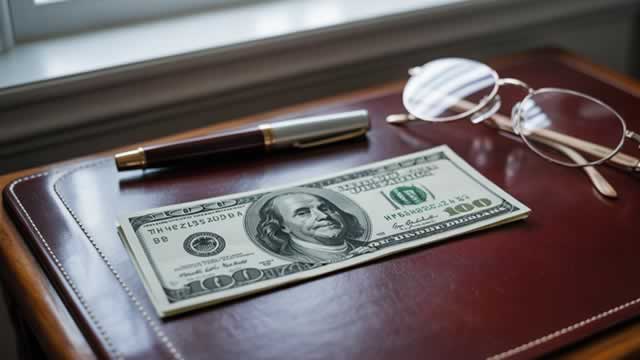
This 20-year old lotto winner refused $1M in cash and chose $1,000/week for life. Which option would you pick?
Yahoo Finance· 2026-01-09 15:01
Core Insights - The article discusses the financial decision made by Brenda Aubin-Vega, a Canadian lottery winner, who opted for a $1,000 weekly annuity instead of a $1 million lump sum, effectively securing a 5.2% annual yield on her jackpot, which is considered nearly as safe as government treasury bonds [1][2][7]. Financial Implications - Aubin-Vega's choice to take weekly payments allows her to accumulate a total payout of $3.1 million by age 80, assuming she invests the weekly payments rather than spending them [7]. - The lack of taxes on lottery winnings in Canada benefits Aubin-Vega, as she could have claimed $1 million tax-free, unlike American winners who face significant tax deductions [2][3]. Social Perception and Decision-Making - The decision to choose an annuity over a lump sum has sparked debate on social media, with many arguing that the upfront payout is the more rational choice [4]. - Aubin-Vega's decision may also protect her from potential financial exploitation, as receiving smaller, regular payments could deter those seeking to take advantage of her newfound wealth [8]. Pros and Cons of Annuity vs. Lump Sum - Pros of the annuity include a safer asset compared to the stock market and a steady income stream, while cons include reduced flexibility and potential inflation risks that could erode purchasing power over time [10][11]. - The article highlights that investing a lump sum in a low-cost index fund could yield better growth opportunities, potentially turning Aubin-Vega into a multimillionaire in about 10 years [11]. Conclusion - The article emphasizes the importance of considering tax implications, investment opportunities, and personal financial goals when faced with a significant financial windfall, as demonstrated by Aubin-Vega's choice [3][10].
If This Warren Buffett Stock Plunged by 99% Today, It Would Still Have Outperformed the S&P 500 Since 1965
The Motley Fool· 2026-01-09 10:17
Core Insights - Berkshire Hathaway has transformed from a struggling textiles manufacturer into a highly successful holding company under Warren Buffett's leadership, showcasing the power of compounding returns [1][2] Group 1: Company Performance - Berkshire Hathaway's shares have significantly outperformed the broader market over Buffett's 60-year tenure, with an average annual return of 19.7% compared to the S&P 500's 10.5% [7] - A $1,000 investment in Berkshire stock 60 years ago would be worth $48.5 million today, while the same investment in the S&P 500 would have grown to only $399,702 [8] Group 2: Investment Strategy - Buffett focused on companies with steady growth, consistent profits, and strong management, favoring those with shareholder-friendly initiatives like stock buybacks and dividends to enhance compounding returns [3] - Berkshire's top five stock positions—Apple, American Express, Bank of America, Coca-Cola, and Chevron—account for 63% of its entire portfolio [5] Group 3: Future Leadership - Although Buffett has stepped down as CEO, he remains chairman and continues to influence the company's investment strategy, with Greg Abel, his chosen successor, well-prepared for the role [9] - Berkshire Hathaway is in a strong financial position, holding $381 billion in cash, providing ample opportunity for future acquisitions [10]
74% of the $317 Billion Portfolio Warren Buffett Left for Berkshire Hathaway's New CEO, Greg Abel, Is Invested in These 8 Unstoppable Stocks in 2026
The Motley Fool· 2026-01-09 09:06
Core Viewpoint - The transition of leadership at Berkshire Hathaway from Warren Buffett to Greg Abel marks a new era for the company, with Abel committed to maintaining Buffett's investment philosophy of concentrating capital in high-quality ideas [1][2]. Investment Portfolio Overview - Berkshire Hathaway's investment portfolio totals $317 billion, with a significant concentration in eight key stocks that represent 74% ($234.5 billion) of the portfolio [3]. Key Holdings - **Apple**: Represents 20.1% of invested assets; despite being the largest holding, it has seen a 74% reduction in shares over the last two years, indicating a shift in investment strategy [4][6]. - **American Express**: Accounts for 18.2% of invested assets; known for its dual role as a payment facilitator and lender, it has a strong position among affluent customers, making it resilient during economic downturns [7][9]. - **Bank of America**: Comprises 10.2% of invested assets; the position has been reduced by 45% over five quarters, reflecting concerns over interest rate sensitivity amid a rate-easing cycle [11][13]. - **Coca-Cola**: Holds 8.6% of invested assets; its long-standing presence in the portfolio since 1988 is supported by a strong dividend yield and global market presence [14][15]. - **Chevron**: Represents 6.3% of invested assets; its integrated business model allows for stable cash flow, and it has a robust capital-return program with projected buybacks of $10 billion to $20 billion annually through 2030 [16][18]. - **Moody's**: Accounts for 4.1% of invested assets; it has performed well due to its debt rating services and analytics, benefiting from low interest rates in recent years [20][21]. - **Occidental Petroleum**: Comprises 3.4% of invested assets; it has a unique focus on upstream operations and is working to reduce its net debt position [23][25]. - **Chubb**: Represents 3.1% of invested assets; it focuses on high-end property and casualty insurance, allowing for premium pricing power and attractive margins [27][29].



Weekly Investing Roundup – News, Podcasts, Interviews (01/09/2026)
Acquirersmultiple· 2026-01-08 23:37
Group 1: Major Events in Investing - Warren Buffett officially steps down as CEO of Berkshire Hathaway, marking a significant leadership change in the company [1] - Berkshire Hathaway Inc. completes the acquisition of OxyChem, indicating ongoing strategic expansion in the chemical sector [1] Group 2: Market Insights and Trends - Investors may shift towards value hunting in 2026 as the AI rally matures, suggesting a potential change in investment strategies [5] - The Buffett Indicator is currently showing that the market is strongly overvalued, which may influence investor sentiment and decision-making [6] Group 3: Research and Analysis - Insights from 150 years of market data reveal what earnings explain and what they do not, providing valuable context for understanding market dynamics [8] - The hidden risks of leveraged single-stock ETFs are highlighted, emphasizing the need for caution in investment strategies involving these financial instruments [8]

As a Concerned Warren Buffett Exits, His 4 Safest Dividend Stocks Are 2026 Gems
247Wallst· 2026-01-08 19:47
Core Insights - Warren Buffett announced his intention to step down as CEO of Berkshire Hathaway by the end of 2025, although he will continue to provide guidance on investment decisions [1] - Berkshire Hathaway has been a net seller of equities, selling over $24 billion in stocks in the first nine months of 2025, following a more aggressive $143 billion in 2024, resulting in a cash reserve of $354 billion [2][3] Berkshire Hathaway's Investment Strategy - Despite being a net seller for 12 consecutive quarters, Buffett made a notable $4.3 billion investment in Alphabet Inc. in 2025, indicating a cautious approach towards future economic conditions [3] - The company continues to focus on acquiring high-quality dividend-paying stocks, with four identified as potential total return opportunities for 2026 and beyond [4] Company Highlights Chevron - Chevron Corp. offers a 4.58% dividend, which was increased by 5% earlier in the year, and has a strong credit rating of AA [7] - The company completed a $53 billion acquisition of Hess, which positively impacted its third-quarter earnings, reporting $1.85 earnings per share and $49.73 billion in revenue, exceeding analyst expectations [9] Coca-Cola - Coca-Cola Co. maintains a 2.86% dividend and is a long-term holding for Buffett, with ownership of 400 million shares [10] - The company is the largest beverage provider globally, serving over 1.9 billion servings daily across more than 200 countries [11] Kraft Heinz - Kraft Heinz Co. pays a substantial 6.63% dividend and is North America's third-largest food and beverage company [12] - The company announced a split into two independent companies, expected to unlock value and drive growth, with the separation anticipated in the second half of 2026 [14] Kroger - Kroger Co. offers a 2.15% dividend and operates a variety of retail formats across the U.S., including supermarkets and multi-department stores [16] - The company has an Outperform rating with a target price of $77, indicating strong market confidence [18]