Blue Origin

Search documents
甲烷革命:价值向上游转移,重塑太空发射投资版图
Haitong Securities International· 2025-06-27 09:22
Investment Rating - The report suggests a focus on upstream suppliers that provide core technologies and high barriers to entry, rather than direct investment in launch vehicle companies that face significant market and capital expenditure risks [4][50]. Core Insights - The global aerospace launch market is undergoing a profound and irreversible structural expansion driven by a revolution in cost structures, shifting from a government budget-dominated paradigm to a commercially driven era focused on high launch frequency and cost efficiency [1][7]. - The key catalyst for this transformation is SpaceX's disruptive cost reductions achieved through reusable rocket technology, which has set new price benchmarks and operational expectations for the market [1][7]. - Future launch demand will be supported by three solid pillars: the large-scale deployment of commercial broadband constellations (e.g., Starlink and Kuiper), increasing geopolitical competition and national security needs, and the revival of scientific and deep space exploration missions represented by the Artemis program [1][10]. Industry Background and Market Drivers - The report highlights a significant increase in global orbital launches, with a record of 259 launches expected in 2024, up from 223 in 2023, and a forecast of over 300 launches in 2025 [7][10]. - The transition to a commercial-driven market is exemplified by SpaceX's 138 launches in 2024, which accounted for half of the global market, establishing a new operational rhythm [7][10]. Core Technology Path Analysis - The competition in the launch market is fundamentally a competition of underlying propulsion technologies, converging on the "Methalox + Reusability + Additive Manufacturing" combination [2][13]. - Methalox engines are recognized as the future mainstream path due to their clean combustion characteristics and ability to simplify the reuse process, addressing the carbon buildup issues of traditional kerosene fuels [15][19]. Value Chain and Supply Chain Analysis - The report identifies a shift in value and profit concentration towards upstream suppliers of core technologies and high-barrier components, moving away from midstream assembly integration [3][36]. - The "smile curve" analysis indicates that high-value areas are concentrated at the upstream and downstream ends of the value chain, while midstream assembly faces profit margin pressures [36][37]. Investment Recommendations - The report recommends focusing on companies such as Howmet Aerospace, LOAR, VSE Corporation, BAE Systems, Rolls-Royce, Safran, L3Harris Technologies, and Velo3D, which are positioned as key technology enablers in the supply chain [4][50].


Amazon Doubles Project Kuiper Satellite Fleet in Race to Catch Up to SpaceX's Starlink
CNET· 2025-06-23 19:02
Core Insights - Amazon successfully launched 27 Kuiper satellites, increasing its operational broadband satellite count to 54 [1] - Project Kuiper is a $10 billion initiative aimed at creating a network of 3,236 satellites to provide high-speed internet, particularly in underserved areas [2] - The launch was executed without issues, following a previous scrub due to a rocket booster problem [3] Launch and Operations - The Atlas V rocket released the satellites approximately three hours post-launch, transferring control to Amazon's mission center [3] - Amazon plans to conduct around 80 launches to complete its satellite network, utilizing various rockets including Atlas V, Vulcan Centaur, Blue Origin, and SpaceX [4] Regulatory and Competitive Landscape - Amazon must launch half of its satellite fleet by mid-2026 to comply with FCC regulations, making each launch critical [5] - Competing with SpaceX's Starlink, which has a significant lead in launches and market share, presents challenges for Amazon despite its financial resources and retail presence [5]


LIVE! Blue Origin NS-33 Crew Launch
The Launch Pad· 2025-06-21 13:16
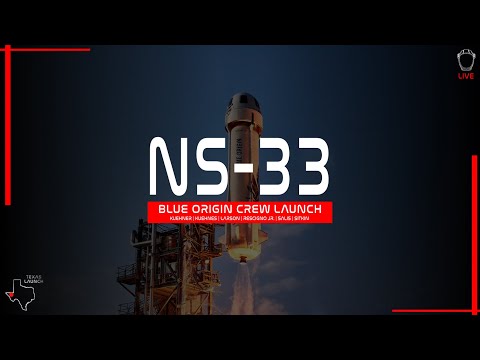
Watch as Blue Origin launches the NS-33 Crew on a suborbital New Shepard mission from Launch Site One in West Texas. The crew of six will include Allie Kuehner and her husband, Carl Kuehner, Leland Larson, Freddie Rescigno, Jr., Owolabi Salis, and James (Jim) Sitkin. For a full detailed mission briefing visit: https://tlpnetwork.com/launches/ns-33 Join our community Discord! https://discord.com/invite/xCm9UpDPE4 This coverage is made possible by our amazing community! Consider becoming a The Launch Pad Memb ...
LIFTOFF! Blue Origin NS-33 Crew Launch
The Launch Pad· 2025-06-21 04:32
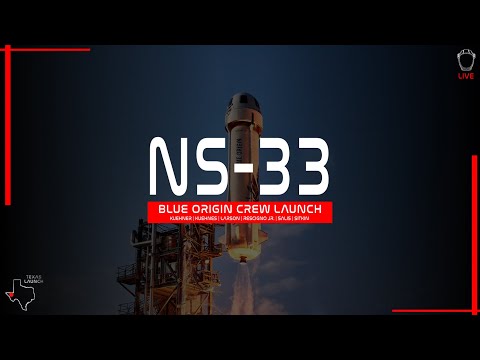
LIFTOFF! Watch as Blue Origin launches the NS-33 Crew on a suborbital New Shepard mission from Launch Site One in West Texas. The crew of six will include Allie Kuehner and her husband, Carl Kuehner, Leland Larson, Freddie Rescigno, Jr., Owolabi Salis, and James (Jim) Sitkin. For a full detailed mission briefing visit: https://tlpnetwork.com/launches/ns-33 Join our community Discord! https://discord.com/invite/xCm9UpDPE4 This coverage is made possible by our amazing community! Consider becoming a The Launch ...
Why AST SpaceMobile Stock Is Skyrocketing This Week
The Motley Fool· 2025-06-06 18:19
Core Viewpoint - AST SpaceMobile's shares have increased by 33.9% this week, driven by speculation of a potential partnership with Blue Origin and a public dispute between Elon Musk and Donald Trump [1][2][4]. Group 1: Stock Performance - AST SpaceMobile's stock rose 33.9% as of 2 p.m. ET this week, outperforming the S&P 500's 1.5% gain and the Nasdaq-100's 2.2% increase [1]. Group 2: Speculation of Partnership - A board member of AST SpaceMobile posted a picture with Jeff Bezos and the CEO, suggesting a possible closer relationship with Blue Origin, which could significantly benefit AST [2]. - AST SpaceMobile already has a contract with Blue Origin to launch 45 satellites, but a more formal partnership could be transformative for the company [2]. Group 3: Market Context - The public spat between Elon Musk and Donald Trump may create opportunities for AST SpaceMobile, especially if Musk's contracts with the government are threatened [4].


Why AST SpaceMobile Rallied Today
The Motley Fool· 2025-06-04 19:27
Core Viewpoint - AST SpaceMobile's shares increased by 13.1% due to speculation about potential discussions with Jeff Bezos' Blue Origin or Amazon, including a possible acquisition [1] Group 1: Company Developments - An Instagram post by AST board member Adriana Cisneros featuring AST CEO Abel Avellan and Jeff Bezos sparked speculation about a potential deal [2] - Blue Origin has a contract to launch 45 AST satellites, with an option for 15 more, which will provide mobile service to areas lacking terrestrial infrastructure [3] - AST has promising, patent-protected RF technology and agreements with major telecom carriers, but it is a pre-revenue company that may need to raise more capital [6] Group 2: Market Context - Amazon is beginning to commercialize its Project Kuiper initiative, which aims to deliver retail wireless broadband via satellites, having launched its first 27 commercial satellites in late April [4] - Scotiabank analyst Andres Coello suggested that AST's RF wireless service could complement Kuiper's broadband technology, making an acquisition plausible [5] - AST's current market cap is significantly lower than Amazon's projected investment in Project Kuiper, raising questions about a potential acquisition [5]

Where Will Intuitive Machines Be in 3 Years?
The Motley Fool· 2025-05-18 08:55
Core Insights - The space exploration industry has shifted from government dominance to private sector involvement, with companies like SpaceX and Blue Origin leading the way [1] - Intuitive Machines is a notable player in the commercial space sector, having successfully landed a lunar lander on the moon, marking a significant milestone for American space exploration [2][5] - The global space economy is projected to reach $1.8 trillion by 2035, presenting substantial growth opportunities for companies like Intuitive Machines [3] Company Overview - Intuitive Machines specializes in lunar exploration and infrastructure, providing transportation and delivery services to the moon [5] - The company has been involved in NASA's Commercial Lunar Payload Services (CLPS) program, with its lunar lander Odysseus completing the first mission to collect scientific data [6] - The IM-2 mission utilized the Athena lunar lander to analyze the moon's surface, although it faced challenges during landing [7][8] Future Prospects - Intuitive Machines has secured multiple contracts with NASA, including a $30 million contract for a lunar terrain vehicle and a potential $4.82 billion contract for deploying lunar relay satellites [10][11] - The company plans to launch additional missions, including IM-3 and IM-4, scheduled for 2026 and 2027 respectively [12] - Analysts project Intuitive Machines' revenue to grow to $545 million by 2028, although significant losses are anticipated, with earnings per share expected to be negative $3.23 [13] Market Position - The stock of Intuitive Machines has experienced volatility, currently down 55% from its 52-week high, trading at approximately 4.7 times forward sales [15] - Compared to other emerging space companies, Intuitive Machines has a lower valuation, with competitors trading at much higher multiples [15] - Despite being early in its growth trajectory, Intuitive Machines has made notable progress and continues to receive trust from NASA, which could support its future growth in the expanding space economy [16]


President Trump Just Cut the Budget on Boeing's and Lockheed's Most Important Space Program
The Motley Fool· 2025-05-17 11:07
Core Insights - The Trump administration's proposed budget for fiscal year 2026 includes a significant 24% cut to NASA's funding, reducing it from $24.8 billion to $18.8 billion, which may impact major space companies' revenue streams [3][4] - The budget proposal suggests the termination of the Space Launch System (SLS) program, which has been criticized for its high costs and delays, with a projected cost of $4 billion per launch and being 140% over budget [6][8] - The proposed budget allocates $7 billion for lunar exploration under Project Artemis and $1 billion for Mars missions, but cuts funding for the Mars Sample Return mission [5][6] Impact on Companies - The termination of the SLS program threatens an estimated $82 billion in contracts for major contractors like Boeing, Lockheed Martin, and Northrop Grumman, which were expected to benefit from Project Artemis [8] - Conversely, the budget cuts could create opportunities for more cost-effective space contractors like SpaceX and Blue Origin, which are positioned to take over roles currently held by traditional aerospace companies [9][11] - SpaceX's Starship and Blue Origin's New Glenn rocket are projected to offer lunar missions at significantly lower costs, with Starship estimated at less than $3 billion per trip and New Glenn at $3.4 billion [9][10] Long-term Industry Outlook - The proposed changes indicate a shift towards more budget-conscious space operations, potentially sidelining established companies in favor of newer, more efficient competitors [11][12] - While this transition may not be favorable for current investors in traditional aerospace stocks, it could lead to a more sustainable and cost-effective future for the space industry [12]


Why Viasat Stock Was Racing Higher This Week
The Motley Fool· 2025-05-16 12:25
Core Viewpoint - Viasat's stock has seen a significant increase of 17% due to its partnership with Blue Origin for space exploration initiatives [1] Group 1: Partnership and Collaboration - Viasat announced a collaboration with Blue Origin to demonstrate its InRange launch telemetry relay service [2] - The partnership includes plans for two future launches that will integrate InRange with Blue Origin's New Glenn heavy-lift rocket [2] Group 2: Technology and Services - The InRange launch telemetry relay service enables real-time data transmission and communication between launch vehicles and mission control, which is crucial for successful launches [4] - This demonstration is part of Viasat's work with NASA, aimed at developing advanced networking solutions through its Communications Services Project [4] Group 3: Market Impact and Reputation - Blue Origin, founded by Jeff Bezos, attracts significant media attention, and Viasat's involvement is expected to generate positive publicity [5] - Although no specific date has been set for the New Glenn launches, Viasat's association with Blue Origin and NASA is likely to enhance its reputation in the industry [6]


Viasat, Blue Origin Partner to Demonstrate Telemetry Relay for NASA
ZACKS· 2025-05-15 17:00
Core Viewpoint - Viasat, Inc. is collaborating with Blue Origin to demonstrate its InRange launch telemetry relay service, which aims to enhance launch communication capabilities and support NASA's transition to commercial satellite communications solutions [1][4]. Group 1: Collaboration and Technology - Viasat is partnering with Blue Origin to showcase its InRange launch telemetry relay service using the Glenn rocket [1]. - The InRange solution is designed to provide continuous relay connections between launch vehicles and ground systems via Viasat's global L-band satellite network, enabling real-time data transmission during flight [3]. - This technology addresses limitations of traditional ground-based telemetry systems, which require direct line of sight and can lead to communication gaps during launches [2][3]. Group 2: Strategic Alignment with NASA - The partnership aligns with NASA's Communications Services Project, which seeks to develop commercial alternatives to the existing Tracking and Data Relay Satellite (TDRS) system [4]. - Viasat's efforts will support NASA's Launch Services Program, which has historically managed telemetry data reception and distribution [4]. Group 3: Future Launch Plans - Viasat's Space and Mission Systems team will collaborate with Blue Origin on two planned launches using the New Glenn vehicle, with the first launch expected later this year [5]. - The second mission, a full demonstration of the InRange service, is currently scheduled for 2026 [5]. Group 4: Market Position and Financial Outlook - Viasat has faced soft demand trends in some markets and intense competition in its communication service business [6]. - As NASA phases out the TDRS system, the demand for commercial alternatives is expected to rise, potentially providing Viasat with a competitive edge and leading to increased revenues [7]. - Viasat's stock has declined by 41.6% over the past year, contrasting with the industry's growth of 42.2% [8].