ITC

Search documents
Sensex sinks 504 points amid weak global trends
Rediff· 2026-02-05 11:46
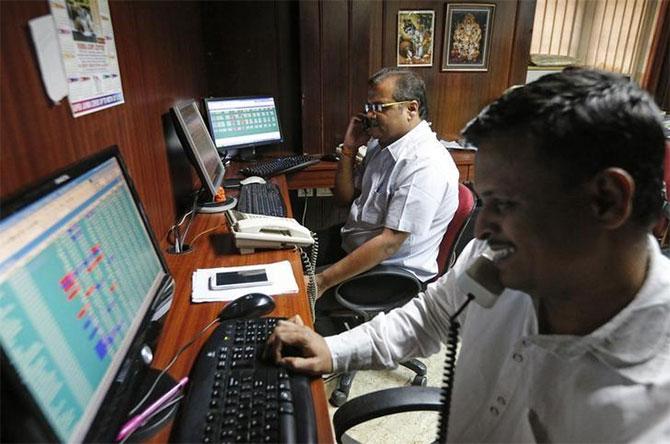
Market Performance - Indian equity markets experienced a tight trading range, indicating a cautious wait-and-watch phase among investors due to the absence of fresh domestic triggers [1][11] - The benchmark indices Sensex and Nifty ended lower, with the BSE Sensex dropping 503.76 points or 0.60% to close at 83,313.93, and during the day, it fell as much as 666.07 points or 0.79% to 83,151.62 [3][4] - The NSE Nifty declined by 133.20 points or 0.52% to finish at 25,642.80 [4] Major Gainers and Losers - Major laggards from the Sensex firms included Eternal, Bharti Airtel, Bharat Electronics, ITC, Infosys, Reliance Industries, ICICI Bank, and Asian Paints [5] - Gainers included Trent, Tata Steel, State Bank of India, and Bajaj Finance [5] Global Market Influence - Asian markets showed a negative trend, with South Korea's Kospi down nearly 4%, while Japan's Nikkei 225 and Shanghai's SSE Composite also ended lower, contrasting with Hong Kong's Hang Seng index which settled higher [8] - Concerns over a broad-based tech sell-off in international markets and heightened US–Iran tensions contributed to a risk-off sentiment, adding pressure to Indian equities [10] Investor Sentiment and Future Outlook - Market participants are focusing on the upcoming RBI policy meeting, reflecting a cautious sentiment in the absence of new domestic catalysts [11] - The overall market sentiment remained stable, but benchmarks struggled to maintain momentum at higher levels, indicating a lack of follow-through buying despite previous positive trends [12] - Investors are awaiting clearer signals from global macro developments and trends in foreign institutional flows to determine the market's next decisive move [13]

Markets cheer India-US trade deal: Sensex jumped over 3K points
Rediff· 2026-02-03 05:53
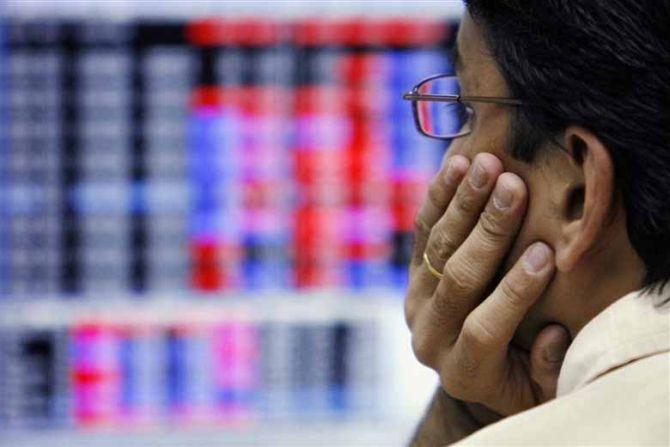
Core Viewpoint - The stock market benchmark indices in India, Sensex and Nifty, experienced significant gains following the announcement of a trade deal between India and the US, which will reduce the reciprocal tariff on Indian goods from 25% to 18% [1][4][5]. Market Performance - The 30-share BSE Sensex surged by 3,656.74 points to reach 85,323.20 in early trading [3] - The 50-share NSE Nifty increased by 1,219.65 points to 26,308.05 [3] - By the end of the trading session, the BSE benchmark rose by 4,205.27 points or 5.14% to 85,871.73 [3] - The Nifty climbed by 1,252.8 points or 4.99% to 26,341.20 [4] Sector Performance - Key firms from the Sensex, including Adani Ports, Bajaj Finance, Eternal, Bajaj Finserv, InterGlobe Aviation, and Reliance Industries, saw their stock prices increase significantly, ranging from 7.2% to 3.7% [4][5] - ITC was noted as the only laggard among the blue-chip stocks [4][5] Economic Impact - The trade deal with the US, along with a potential EU-India trade deal and a growth-oriented budget, is expected to enhance market sentiment and stimulate economic activity [6] - The Chief Investment Strategist at Geojit Investments Limited indicated that the stock market is likely to boom as it anticipates and discounts these developments [6] Broader Market Trends - Asian markets, including South Korea's Kospi, Japan's Nikkei 225, Shanghai's SSE Composite, and Hong Kong's Hang Seng, also showed positive trading trends [7] - Foreign institutional investors sold equities worth ₹1,832.46 crore, while Domestic Institutional Investors (DIIs) purchased stocks worth ₹2,446.33 crore [7] - Brent crude oil prices decreased by 0.51% to $65.96 per barrel [7]

Investors lost Rs 9.40 lakh cr in Budget Sunday crash
Rediff· 2026-02-01 12:47
Core Viewpoint - The market capitalization of BSE-listed companies experienced a significant decline of Rs 9,40,581.75 crore, dropping to Rs 4,50,61,658.60 crore (USD 4.90 trillion) in a single day due to the proposed increase in Securities Transaction Tax (STT) on derivatives by Finance Minister Nirmala Sitharaman [1][5]. Market Reaction - The BSE Sensex fell by 2,370.36 points or 2.88 percent, closing below the 80,000-mark at 79,899.42 during afternoon trading [4]. - The benchmark index ended at 80,722.94, down 1,546.84 points or 1.88 percent, marking a notable decline similar to the drop on February 1, 2020 [5][7]. Impact of STT Increase - The STT on futures contracts is set to increase from 0.02 percent to 0.05 percent, while the STT on options premium and exercise will rise to 0.15 percent from 0.1 percent and 0.125 percent respectively [6][9]. - This increase in STT is viewed negatively by active traders and the derivatives ecosystem, as it raises transaction costs and may reduce speculative volumes, impacting liquidity in futures and options [6][8]. Investor Sentiment - The proposed tax changes aim to moderate excessive derivatives activity and boost revenue, but they could dampen retail participation during bullish market phases and affect short-term broking revenues [8]. - The overall market sentiment was negative, with 2,375 stocks declining, while only 1,759 advanced and 175 remained unchanged on the BSE [12]. Sector Performance - Among the major companies, State Bank of India and Adani Ports saw declines of 5.61 percent and 5.53 percent respectively, while Tata Consultancy Services, Infosys, Sun Pharma, and Titan were among the gainers [11][12]. - Various indices experienced significant drops, with BSE PSU Bank falling by 5.60 percent and the metal sector declining by 3.85 percent [12].
STT hike on Futures drags markets down; Sensex crashes 2,370 points
Rediff· 2026-02-01 11:22
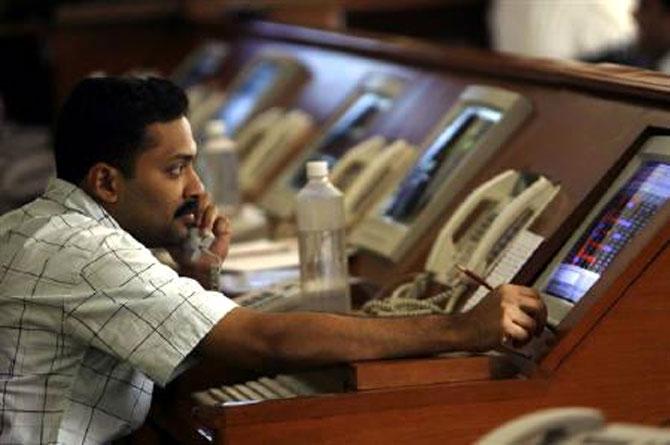
Core Viewpoint - The Finance Minister's proposal to increase the Securities Transaction Tax (STT) on futures to 0.05% is expected to have a structurally negative impact on the capital market ecosystem, particularly affecting futures and options (F&O) driven businesses [1][11]. Market Reaction - The benchmark stock indices, Sensex and Nifty, experienced significant declines, with Sensex dropping by nearly 2% and settling at 80,722.94, down 1,546.84 points or 1.88% [2][3]. - The NSE Nifty fell by 495.20 points or 1.96%, closing at 24,825.45, with an intraday low of 24,571.75, a drop of 2.95% [3][7]. Impact on Trading and Liquidity - Higher transaction costs due to the increased STT are likely to reduce trading volumes, dampen short-term momentum, and lower profitability for active market participants [12][16]. - Foreign Institutional Investor (FII) participation in derivatives may decline as post-tax trading efficiency diminishes, which could negatively impact overall market liquidity [13][8]. Sector Performance - Among the 30 Sensex firms, State Bank of India and Adani Ports saw significant losses of 5.61% and 5.53%, respectively, with other companies like Bharat Electronics, ITC, Tata Steel, UltraTech Cement, and Reliance Industries also among the laggards [6][7]. - Conversely, Tata Consultancy Services, Infosys, Sun Pharma, and Titan were noted as gainers during this period [8][7]. Long-term Outlook - While the proposed STT increase is seen as a short-term dampener for capital market entities, some analysts suggest it may have positive implications in the long term [9]. - The budget also aims to support sectors affected by global trade tariffs and focuses on emerging areas such as data centers, semiconductors, and biopharma, which may provide some resilience to the market [10].

Adjustment of F&O contracts of ITC due to dividend
Zerodha· 2026-02-01 03:23
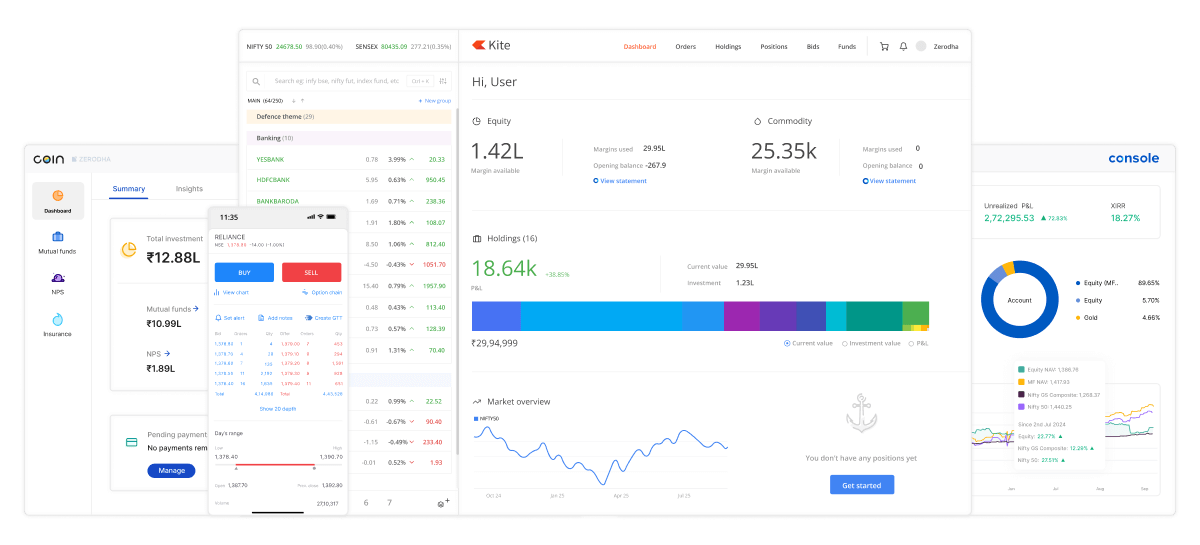
Core Viewpoint - The adjustment of ITC's futures and options contracts is due to extraordinary dividends, impacting strike prices and settlement procedures starting February 04, 2026 [1]. Adjustment for Futures Contracts - All positions in ITC futures contracts will be marked-to-market on the last cum-dividend date, February 03, 2026, based on the daily settlement price [2] - Open positions will be carried forward at the daily settlement price less ₹6.50, the dividend amount, for the respective futures contract [2] - Daily mark-to-market settlement of futures contracts will continue as per normal procedures from February 04, 2026 [3] Example of Futures Contracts Adjustment - If 1 lot (1600 quantities) of ITC February futures is bought at ₹323 on February 03, 2026, and the daily settlement price is ₹326, a mark-to-market profit of ₹3 per share is realized [4] - On February 04, 2026, the position will be carried forward at ₹319.50, and if the closing price is ₹322, a mark-to-market profit of ₹2.50 per share will be achieved [4] Adjustment for Options Contracts - The full value of the dividend, ₹6.50, will be deducted from all cum-dividend strike prices on the ex-dividend date [5] - Existing positions in strike prices will continue to exist in the corresponding new adjusted strike prices [5] Example of Options Contracts Adjustment - The strike price of the ₹325 Call Option will be reduced to ₹318.50 on February 04, 2026, with positions continuing in the ₹318.50 Call Option [6] - The lot size of the F&O contracts will remain unchanged [6] - Holders of ITC equity shares in their Demat account as of February 04, 2026, will be entitled to receive the dividend, credited to their primary bank account within 30 to 45 days from the record date [6]
Dragged by metal, IT stocks Sensex ends down 297 points
Rediff· 2026-01-30 11:35
Market Performance - Benchmark equity indices Sensex and Nifty ended lower, with Sensex declining by 296.59 points or 0.36% to settle at 82,269.78 and Nifty dropping by 98.25 points or 0.39% to end at 25,320.65 [3][5] - The decline was attributed to weakness in metal and IT stocks, as well as caution ahead of the upcoming Budget presentation on February 1 [5][6] Sector Performance - Tata Steel experienced the largest decline among Sensex firms, falling by 4.57%, while other laggards included ICICI Bank, Power Grid, HCL Tech, Tech Mahindra, Infosys, and Kotak Mahindra Bank [4] - Conversely, Mahindra & Mahindra, State Bank of India, ITC, and Bharat Electronics were among the gainers [4] Foreign and Domestic Investment - Foreign institutional investors sold equities worth Rs 393.97 crore, while domestic institutional investors purchased stocks worth Rs 2,638.76 crore [4][5] Economic Outlook - India's economy is projected to grow by 6.8-7.2% in the upcoming fiscal year, maintaining its status as the world's fastest-growing major economy despite global trade risks [7]
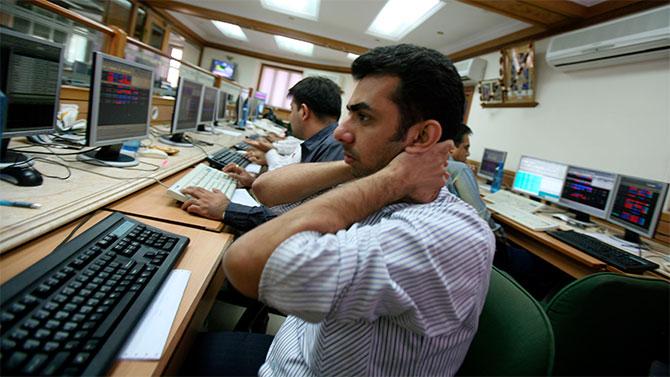
Sensex closes 296 points lower at 82,269, Nifty skids 98 points to 25,320; stock markets dragged lower by metal, IT stocks
BusinessLine· 2026-01-30 11:05
Benchmark equity indices Sensex and Nifty ended lower on Friday, snapping a three-day rally, dragged by metal, IT stocks and caution ahead of the Budget presentation on February 1. Fresh foreign fund outflows and weakness in the rupee also added to the bearish trend in the equity markets. The 30-share BSE Sensex declined 296.59 points or 0.36 per cent to settle at 82,269.78. During the day, it tumbled 625.34 points or 0.75 per cent to 81,941.03. The 50-share NSE Nifty dropped 98.25 points or 0.39 per cent ...

Stock markets snap 3-day rally dragged by metal, IT stocks
The Hindu· 2026-01-30 10:53
Market Performance - Benchmark equity indices Sensex and Nifty ended lower, with Sensex declining by 296.59 points or 0.36% to settle at 82,269.78, and Nifty dropping by 98.25 points or 0.39% to end at 25,320.65, snapping a three-day rally [1][2] - The decline was influenced by selling pressure in metal and IT stocks, with Tata Steel experiencing the largest drop of 4.57% among Sensex firms [2] Foreign Investment Activity - Foreign institutional investors sold equities worth ₹393.97 crore on January 29, 2026, while domestic institutional investors purchased stocks worth ₹2,638.76 crore [3] Economic Outlook - India's economy is projected to grow by 6.8-7.2% in the upcoming fiscal year, maintaining its status as the fastest-growing major economy despite global trade risks and volatility [5] Market Sentiment - The Indian equity markets exhibited volatility ahead of the Union Budget, with cautious sentiment due to persistent foreign fund outflows and rupee depreciation [4][7] - Analysts noted that market participants are balancing pre-Budget positioning against external headwinds, contributing to a cautious market environment [7]
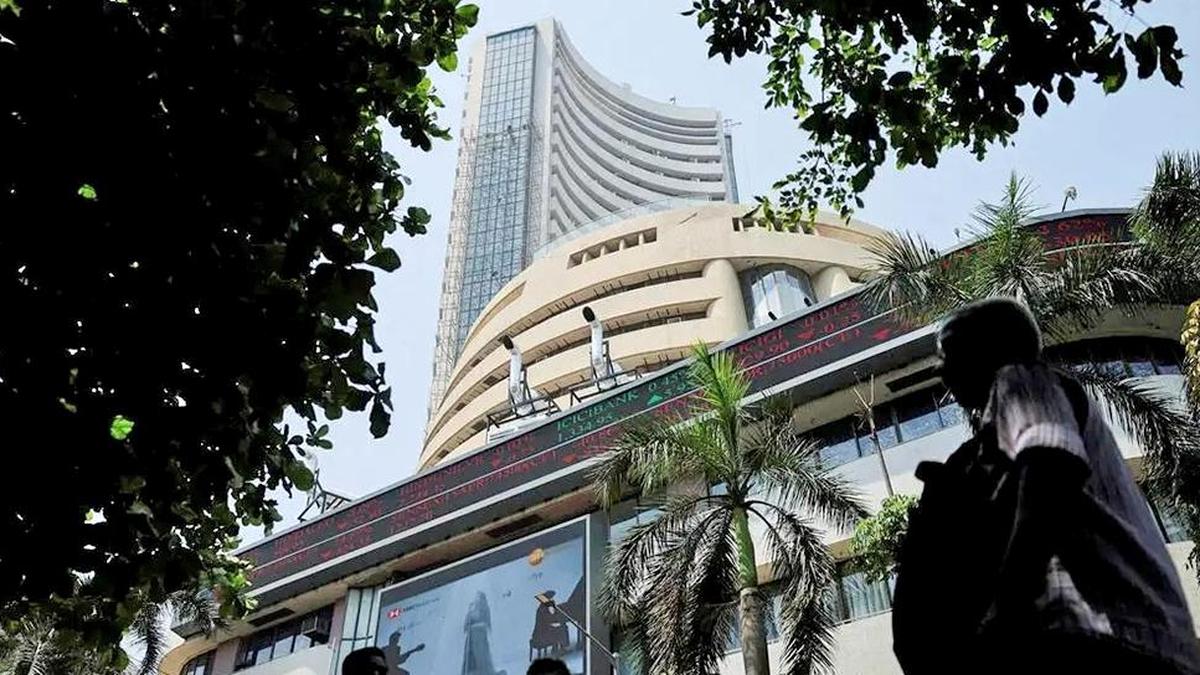
Metal stocks drag markets lower in pre-budget trading
BusinessLine· 2026-01-30 07:43
Benchmark indices remained under pressure in afternoon trade on Friday, weighed down by sustained selling in metal stocks ahead of the Union Budget presentation on Sunday. The Sensex was trading at 82,175.62, down 390.75 points or 0.47 per cent from its previous close of 82,566.37, while the Nifty declined 126.35 points or 0.50 per cent to 25,292.55 against Thursday’s close of 25,418.90. Metal stocks continued to lead the losses, with Tata Steel plunging 5.60 per cent to ₹191.00 and Hindalco falling 5.52 pe ...

Sensex bounces back on buying in metal, bank stocks
Rediff· 2026-01-27 11:55
Market Performance - The 30-share BSE Sensex increased by 319.78 points, or 0.39%, closing at 81,857.48, with a daily high of 82,084.92 and a low of 81,088.59 [3] - The 50-share NSE Nifty rose by 126.75 points, or 0.51%, ending at 25,175.40 [3] - Key gainers included Adani Ports, Axis Bank, Tata Steel, Tech Mahindra, NTPC, State Bank of India, UltraTech Cement, and Bharat Electronics [3][6] Company Highlights - Axis Bank's net profit for the December quarter grew by 4% to Rs 7,010.65 crore, compared to Rs 6,742.99 crore in the same period last year, leading to a stock price increase of over 4% [4][6] - In contrast, companies such as Mahindra & Mahindra, Kotak Mahindra Bank, Asian Paints, Eternal, and ITC experienced declines [4][6] Trade Agreement Impact - India and the European Union finalized a significant free trade agreement, described as the "mother of all deals," which is expected to positively influence investor sentiment amid global trade disruptions [5][7] - The finalization of the India-EU bilateral trade agreement provided some support to Indian equities, despite a broader risk-off environment due to US tariff policies [7] Investor Activity - Foreign portfolio investors sold equities worth Rs 4,113.38 crore, while domestic institutional investors purchased stocks worth Rs 4,102.56 crore, indicating mixed investor sentiment [8]