Amazon

Search documents
Global economy faces widening strains as West Asia war intensifies
BusinessLine· 2026-03-07 11:01
Economic Impact - The war in West Asia is causing significant economic fallout, affecting global supply chains and leading to soaring fuel costs and shipping rates due to the closure of the Strait of Hormuz [1][2] - The conflict is straining companies exposed to the region, resulting in shortages of crucial components, higher costs, and thinner profit margins, which may further squeeze consumers already facing financial difficulties [2][3] Market Reactions - Financial markets are reflecting inflation concerns, with stocks, bonds, and safe-haven assets like the US dollar showing volatility due to the economic uncertainties stemming from the conflict [3] - The International Monetary Fund has noted that the resilience of the global economy is being tested, with many countries facing increased uncertainty and depleted financial buffers [4] Supply Chain Disruptions - The conflict has disrupted not only traditional goods trade but also the digital economy, with drone strikes damaging data centers operated by major companies like Amazon [5] - A significant portion of global fertilizer exports (approximately 7%), precious metals (6%), aluminum (5.3%), and cement (4.4%) are at risk of disruption due to the conflict [12] Shipping and Logistics - Container shipping lines have suspended bookings for routes linking Asia to West Asia, leading to congestion in ports and increased wait times for vessels [20][21] - Congestion levels at major ports like Nhava Sheva have surged from 10% to 64%, indicating severe bottlenecks in the supply chain [21] Air Cargo and Travel - Air cargo rates are expected to double or triple for flights transiting West Asia, with a significant reduction in global air freight capacity due to the conflict [14] - Major airlines are resuming limited operations, but disruptions in tourism and business travel are already evident, with hundreds of flights canceled [15][16] Industry Responses - Companies are adapting to the situation by adjusting logistics and supply chain strategies, with some executives expressing cautious optimism about long-term stabilization despite current challenges [10][13] - DHL is deploying trucks to move cargo to open airports, indicating a shift in logistics strategies to cope with regional restrictions [23]



Billionaire Stanley Druckenmiller Sells Sandisk Stock and Buys an AI Stock Up 223,000% Since Its IPO
The Motley Fool· 2026-03-07 09:15
Group 1: Stanley Druckenmiller's Investment Moves - Billionaire Stanley Druckenmiller, known for his hedge fund Duquesne Capital, achieved an average annual return of 30% without a single down year from 1981 to 2010 [1] - Druckenmiller sold his entire position in Sandisk, a stock that has increased by 1,470% since its spin-off from Western Digital [8] - He initiated a new position in Amazon, which has seen a staggering increase of 223,000% since its IPO in 1997 [8] Group 2: Sandisk Overview - Sandisk specializes in NAND flash technology, producing storage products for various applications including personal computers and data centers [4] - The company experienced a 61% revenue increase to $3 billion in the January quarter, largely due to strong sales in the data center segment, with non-GAAP earnings rising 404% to $6.20 per diluted share [5] - Despite its recent success, Sandisk is viewed as lacking a competitive edge, with analysts noting that flash memory chips are commodities that do not command pricing power [6] Group 3: Amazon Overview - Amazon holds a dominant position in e-commerce, retail advertising, and cloud services through AWS, which is the largest public cloud provider [9][10] - The company is leveraging artificial intelligence to enhance efficiency in its operations, including inventory management and fulfillment processes [10] - Analysts project Amazon's earnings to grow at 19% annually through 2028, making its current valuation of 30 times earnings appear reasonable [13]

Amazon, Google And Microsoft Keep Anthropic AI For Clients Despite Pentagon Risk Label - Amazon.com (NASDAQ:AMZN), Alphabet (NASDAQ:GOOG)
Benzinga· 2026-03-07 04:49
Core Insights - The Pentagon has mandated that defense vendors must certify they are not using Anthropic's chatbot Claude for Department of Defense work, impacting major cloud providers like Amazon, Google, and Microsoft [1][3] Group 1: Company Actions - Amazon has invested $8 billion in Anthropic, whose Claude AI operates on AWS Bedrock [1] - Alphabet, Google's parent company, holds a $3 billion stake in Anthropic and has expanded its partnership by providing access to up to 1 million custom tensor processing units (TPUs) [2] Group 2: Regulatory Context - Anthropic refused to comply with the Department of Defense's requested terms of use, leading to a federal ban on the use of its technology by federal agencies as instructed by President Donald Trump [3] - Despite the ban, Anthropic's models were reportedly used by the U.S. in a military operation against Iran [3] Group 3: Market Position - Amazon, Google, and Microsoft are identified as leading providers of cloud infrastructure, which positions them strategically in the market despite regulatory challenges [1]



We Got Hooked on Fast, Free Shipping. Now Retailers Are Taking It Away.
WSJ· 2026-03-07 01:00
Core Viewpoint - FedEx and UPS have increased their delivery charges, prompting companies to explore alternatives such as 'no rush' delivery options and additional fees, which have surprisingly proven effective in slowing down delivery times [1] Group 1 - FedEx and UPS have raised their prices, leading to a shift in delivery strategies among companies [1] - Companies are implementing 'no rush' delivery options as a response to increased shipping costs [1] - The effectiveness of these strategies indicates a potential change in consumer behavior regarding delivery expectations [1]
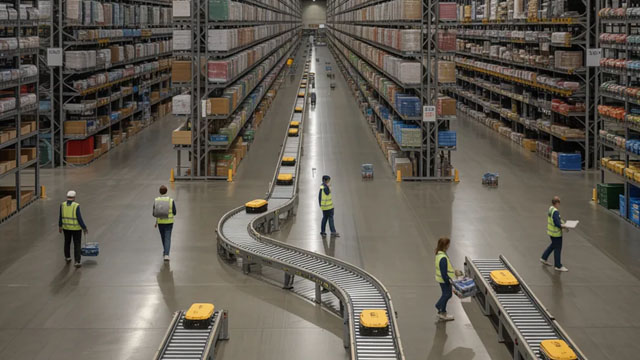
Amazon says customers can keep using Anthropic's Claude on its cloud for non-defense workloads
CNBC· 2026-03-06 19:41
Core Viewpoint - Amazon will continue to provide Anthropic's AI technology to its cloud customers, with the exception of projects involving the Department of Defense [1] Group 1 - The announcement follows a federal agency's decision to label Anthropic as a "supply chain risk," prompting the company to challenge this designation in court [2] - AWS customers and partners can still utilize Anthropic's Claude for workloads not related to the Department of War, while support is being offered for transitioning to alternatives for DoW-related workloads [3]

The Big 3: AMZN, AAOI, CVX
Youtube· 2026-03-06 18:00
Group 1: Market Overview - The S&P 500 has been fluctuating between 6,700 and 6,900, indicating a bullish sentiment despite a lack of positive news [3][4] - Oil prices are nearing $90 per barrel, the highest level in two and a half years, contributing to market volatility [2] Group 2: Chevron - Chevron is highlighted as a key stock due to its significant exposure to Venezuela and the ongoing geopolitical risks in the Middle East [5][6] - The stock has shown resilience, with an intraday high of $192.41, although it is currently trading lower despite rising oil prices [9][15] - Technical indicators suggest that Chevron remains above relevant moving averages, but there are signs of a potential slowdown in momentum [10][12] Group 3: Applied Opto Electronics - Applied Opto Electronics has experienced a remarkable year-to-date increase of 214%, with a recent surge of over 9% in a single day [18][15] - The company is positioned well in the data center sector, benefiting from the growing demand for fiber optics and interconnects [17] - Technical analysis shows a strong upward trend, but caution is advised due to potential quick pullbacks following rapid price increases [20][21] Group 4: Amazon - Amazon's stock has seen a significant pullback following earnings, but it is now showing signs of recovery after breaking out of a previous trading range [24][25] - The stock is currently trading around $215, with potential resistance levels identified at $220 and $227 [29][33] - Technical indicators suggest improving momentum, with the possibility of reaching new 52-week highs if positive market sentiment continues [31][32]

9 Best Stocks to Buy According to Billionaire Bill Ackman
Insider Monkey· 2026-03-06 17:49
Core Viewpoint - The article discusses the top 9 stocks recommended by billionaire investor Bill Ackman, highlighting his investment strategies and recent performance of his fund, Pershing Square Capital Management [1][5]. Group 1: Fund Performance - Pershing Square Capital Management has experienced an 11.10% decline in 2026 as of February 24, contrasting with a 1% gain in the broader market [2]. - The fund has faced selling pressure in stocks such as Uber, Amazon, and Howard Hughes Holdings, and exited its position in Hilton Worldwide Holdings after a seven-year holding period due to valuation concerns [2][3]. Group 2: Economic Outlook - Ackman maintains an optimistic view on the economic outlook for 2026, citing potential gains of 20% to 30% or more from high-growth stocks [4]. - Key drivers for this optimism include the $1.2 trillion infrastructure bill, the CHIPS Act, pro-business policies, deregulation initiatives, and stable inflation, which may enable potential rate cuts [4]. Group 3: Stock Holdings - As of February 2026, Ackman holds nine equity positions, including a new investment in Meta Platforms [3]. - Hertz Global Holdings, Inc. (NASDAQ:HTZ) represents 0.50% of the total portfolio, valued at over $78 million, despite a 16% decline in 2026 and a nearly 55% drop from its 52-week high [10][11]. - Seaport Entertainment Group Inc. (NYSE:SEG) accounts for 0.64% of the portfolio, with a year-to-date gain of over 15% as of March 5, 2026, outperforming its peers [16][17]. Group 4: Company Insights - Hertz Global Holdings has achieved an 84% utilization rate in Q4 2025 and is viewed as an emerging comeback story with a revived fleet [12]. - Seaport Entertainment Group is working on developing the Balloon Museum to enhance foot traffic and diversify revenue streams, indicating a strategic focus on immersive experiences [19][20].


AI ‘Man Camps’ Offer Golf, Free Steaks to Lure Workers in Texas
Insurance Journal· 2026-03-06 17:00
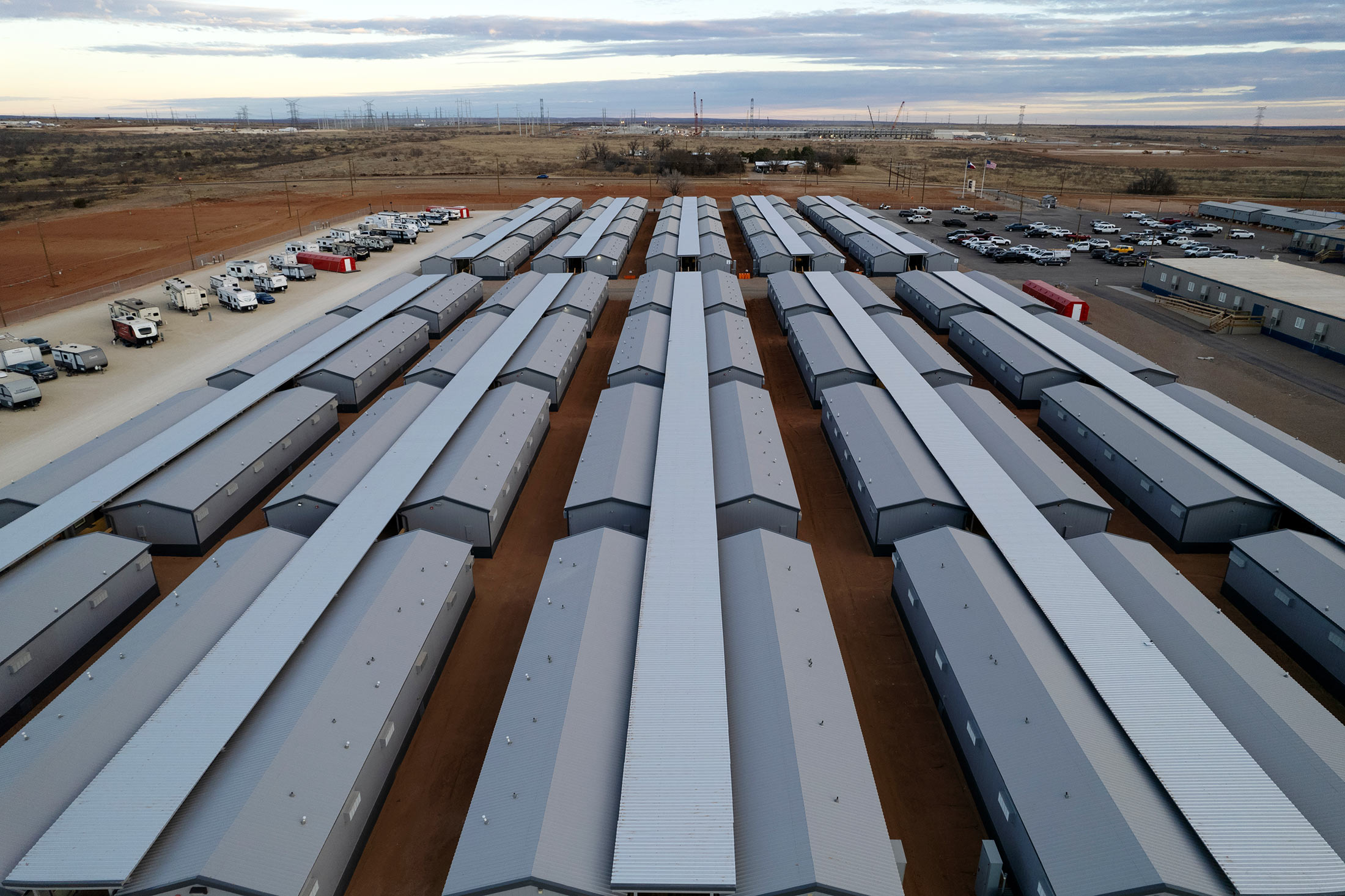
Core Insights - The competition for workers in data center construction is intensifying, leading companies to offer attractive amenities to attract skilled labor [2][3][20] - The data center development boom is projected to involve $700 billion in planned projects and $160 billion already underway in the US [4][7] - Target Hospitality is positioning itself as a key player in this niche, with significant contracts expected to generate $331 million over two years [7][8] Group 1: Industry Trends - The rise of artificial intelligence is driving the demand for data centers, pushing construction into rural areas lacking adequate housing and infrastructure [2][20] - Temporary housing solutions, reminiscent of the shale oil boom, are being utilized to accommodate the influx of workers needed for data center projects [3][13] - The construction trades are expected to grow by 6% from 2024 to 2034, with electrician roles projected to expand by 9% during the same period [18] Group 2: Company Strategies - Target Hospitality is developing "workplace hubs" in Texas and Nevada, offering amenities such as game rooms and quality meals to attract workers [5][14] - The company has signed contracts to build and operate temporary housing for data center workers, including a $43 million agreement for a 250-bed community [8][10] - Other companies, like Civeo, are also entering the data center housing market, emphasizing their ability to quickly establish temporary camps [24][25] Group 3: Economic Impact - The influx of data center projects is transforming local economies, as seen in Dickens County, where local sales tax receipts nearly tripled in three years [10] - The construction of data centers is creating significant employment opportunities, with some electricians earning over $150,000 annually [6][18] - The demand for temporary housing is expected to continue growing, with companies like Corporate Mobile Housing securing long-term contracts to support ongoing projects [26][30]
Alibaba's AI Just Handled 200 Million Orders — Amazon And OpenAI Are Still Building The Cart
Benzinga· 2026-03-06 16:00
Group 1: Core Insights - Alibaba's Qwen AI app processed nearly 200 million orders during a two-week Lunar New Year campaign, significantly increasing its daily active users from about 17 million to 73.5 million [1] - The scale of Alibaba's AI transaction capabilities is notable compared to other companies still in the experimental phase of AI assistants [1][2] - Alibaba's structural advantage lies in its control over various components necessary for completing transactions, including Taobao, Alipay, Fliggy, Amap, and Damai [3] Group 2: Current Challenges and Future Directions - The Qwen AI system is not yet fully seamless, as it sometimes provides buying guides instead of directing users to specific product listings, indicating ongoing integration efforts with Alibaba's product catalog [4] - The trend suggests that companies whose AI assistants can facilitate actual purchases may dominate the future of digital commerce [4]


US agency to hold self-driving safety forum with CEOs of Waymo, Zoox, Aurora
Reuters· 2026-03-06 14:50
Group 1 - The National Highway Traffic Safety Administration (NHTSA) is organizing a national autonomous vehicle safety forum with CEOs from Waymo, Zoox, and Aurora to discuss the deployment of robotaxis and regulatory barriers [1] - The forum aims to address safety issues while exploring future guidance on the safe development, testing, and deployment of self-driving vehicles [1] - The meeting will also cover the use of remote assistance in robotaxis, indicating a focus on enhancing safety and operational efficiency in autonomous vehicle technology [1] Group 2 - Causeway Capital Management has increased its stake in Wizz Air to 5.04%, making it one of the top shareholders of the European budget airline [1] - The investment reflects a strategic move by activist investors in the airline sector, potentially influencing company decisions and direction [1] - The broader market context includes ongoing economic uncertainties, such as the impact of geopolitical events on investor sentiment and market stability [1]