SAP

Search documents
金十图示:2025年05月29日(周四)全球主要科技与互联网公司市值变化
news flash· 2025-05-29 03:08
Market Capitalization Changes - The market capitalization of major global technology and internet companies has shown varied changes as of May 29, 2025, with notable fluctuations in percentage terms [1][3][4]. - Companies like Tencent and Alibaba experienced declines of 2.3% and 2.33% respectively, while Oracle saw an increase of 1.2% [3][4]. Company Performance - Notable performers include Palantir with a slight increase of 0.3% and Adobe maintaining a stable position with a market cap of $1.76 billion [4][5]. - Companies such as AMD and Uber reported declines of 1.48% and 0.83% respectively, indicating a challenging market environment for these firms [3][5]. Sector Insights - The semiconductor sector remains under pressure, with companies like Intel and Micron showing declines of 0.88% and 0.21% respectively, reflecting ongoing challenges in the industry [5][6]. - Conversely, companies like SK Hynix and Keyence reported slight increases, suggesting some resilience within specific segments of the technology sector [5][6]. Emerging Trends - The data indicates a mixed outlook for the technology sector, with some companies like Shopify and Spotify showing positive growth trends, while others face headwinds [4][7]. - The overall market sentiment appears cautious, with several companies experiencing minor fluctuations in their market valuations [3][4].


金十图示:2025年05月27日(周二)全球主要科技与互联网公司市值变化
news flash· 2025-05-27 03:05
| | 1737 | | 407.69 | | --- | --- | --- | --- | | ROOKIng Holdings | 1735 | -0.17% | 5332.8 | | (Booking.com) | | | | | DD Holdings (Pinduoduo) | 1692 | -0.47% | 119.24 | | 德州仪器 | 1601 | 2.17% | 176.3 | | 高通 | 1596 | + -1.35% | 145.38 | | S 索尼 | 1540 | 1 0.79% | 25.53 | | Schneider Electric | 1431 | 1.82% | 252 | | arm Arm Holdings | 1344 | -1.62% | 127.18 | | Spotify | 1340 | 2.68% | 653.82 | | Shopify | 1302 | .72% | 101.51 | | 22 自动数据处理 | 1303 | -0.17% | 321.09 | | MercadoLibre | 1271 | -3.77% | 2507.83 ...

SAP SE (SAP) Annual Financial Analyst Conference (Transcript)
Seeking Alpha· 2025-05-22 19:36
Group 1 - The conference serves as a platform for the executive team to share updates on strategy, product roadmap, and financial performance [3][5] - The company aims to accelerate revenue growth while maintaining operating leverage, despite a challenging macroeconomic environment [4] - Recent innovations, such as the launch of BDC in February, highlight the company's commitment to efficiency and innovation across its portfolio [4] Group 2 - The event is attended by various financial analysts from major investment firms, indicating strong interest in the company's performance and strategy [2] - The conference is part of a broader initiative to engage with investors and showcase technological advancements [3] - The company emphasizes the importance of direct communication with stakeholders to better understand opportunities within its portfolio [3]


SAP Jumps 21% YTD: Where Will the Stock Head From Here?
ZACKS· 2025-05-22 13:40
Core Viewpoint - SAP stock is currently near its 52-week high, raising questions about whether to hold or sell, with a focus on evaluating the company's strengths and weaknesses [1] Group 1: Cloud Business Performance - SAP's cloud business is a significant driver of growth, with a cloud backlog increasing by 28% to €18.2 billion in Q1 [2] - Cloud revenues rose 27% year-over-year to €4.99 billion, with Cloud ERP Suite revenues growing 34% to €4.25 billion, making up 85% of total cloud revenues [2] - The launch of SAP Business Data Cloud aims to unify enterprise data and has already resulted in 20 deals in Q1 [4] Group 2: Revenue Predictability and Growth Outlook - 86% of SAP's total revenues are now classified as predictable, enhancing long-term earnings visibility [3] - Management projects cloud revenues for the year to be between €21.6 billion and €21.9 billion, reflecting a year-over-year increase of 26-28% [8] Group 3: AI Investments and Future Prospects - SAP is optimistic about the impact of generative AI on future revenues, with over 1,300 skills integrated into its AI co-pilot [9] - The company plans to invest heavily in AI, with more than 30,000 developers focused on enhancing its AI capabilities by 2025 [9] Group 4: Challenges and Market Conditions - SAP faces challenges with declining software license revenues, which fell 10% year-over-year to €0.18 billion, and a 1% decline in services revenue to €1.07 billion [10] - The company is navigating a volatile macroeconomic environment, increasing costs, and stiff competition in the cloud sector [10] Group 5: Investment Strategy and Analyst Outlook - Analysts have raised earnings estimates for SAP over the past 60 days, with increases of 1.9% for the current quarter and 3.3% for the current year [11][13] - Despite a strong growth outlook, SAP's premium valuation with a forward P/E ratio of 41.06X compared to the industry's 31.72X suggests caution for new investors [15]

SAP & Accenture Unveil ADVANCE to Boost Cloud-First Transformation
ZACKS· 2025-05-21 12:16
Core Insights - SAP SE has partnered with Accenture to launch ADVANCE, a cloud transition solution for companies with annual revenues up to $5 billion, enabling rapid implementation in six to twelve months [1][2] - ADVANCE offers preconfigured, industry-specific solutions that integrate SAP Business Suite with Accenture's operational expertise, streamlining finance, procurement, supply chain, and workforce management [2][4] Product Features - ADVANCE packages reduce system complexity and operational costs by incorporating preconfigured industry processes and best practices [5] - The offering emphasizes speed and agility, providing industry-tailored accelerators for quick business outcomes and transparent pricing for efficient budget management [6] - Integration of AI agents and predictive analytics allows businesses to adapt to market changes and enhance decision-making [7] Financial Performance - SAP's cloud revenues reached €4.99 billion, a 27% year-over-year increase, with Cloud ERP Suite revenues growing 34% to €4.25 billion, accounting for 85% of total cloud revenues [9] - For the year, SAP anticipates cloud revenues between €21.6 billion and €21.9 billion, reflecting a 26-28% increase year-over-year [12] Market Outlook - SAP maintains a positive growth outlook despite global uncertainties, with expectations for cloud and software revenues between €33.1 billion and €33.6 billion, indicating an 11-13% year-over-year increase [12][11] - The company's stock has performed well, with a 54.3% increase over the past year compared to the industry's 9.6% growth [13]


慧博云通拟收购宝德计算67.91%股份 标的营收百亿昇腾服务器市场列第三
Chang Jiang Shang Bao· 2025-05-20 23:32
Core Viewpoint - Huibo Yuntong (301316.SZ) plans to deepen its layout in the Xinchuang field by acquiring 67.91% of Baode Computing through a combination of share issuance and cash payment, aiming to extend its business from software technology services to an integrated software and hardware model [1][2][3] Group 1: Acquisition Details - The acquisition involves purchasing shares from 59 parties, including Leshan High-tech Investment, while the controlling shareholder's 32.09% stake will not be included in the transaction [2] - The fundraising for the acquisition will be capped at 100% of the transaction price, with a share issuance price set at 20.26 yuan per share, which is at least 80% of the average trading price over the previous 20 trading days [2][3] Group 2: Financial Performance - Baode Computing is a leading provider of information technology infrastructure, with projected revenues of 9.27 billion yuan in 2023 and 10.008 billion yuan in 2024 [1][3] - Huibo Yuntong reported revenues of 1.743 billion yuan in 2024, a year-on-year increase of 28.30%, while net profit decreased by 20.45% [5] - In Q1 2025, Huibo Yuntong's revenue reached 506 million yuan, up 37.46%, but net profit fell by 72.13% [5] Group 3: R&D and Client Base - The company has significantly increased its R&D personnel by 70.47% to 866 by the end of 2024, reflecting its commitment to innovation [4][6] - Major clients include ByteDance, Xiaomi, Samsung, SAP, and Bank of China, contributing to 30.17% of total annual sales [6] - R&D expenses have grown consistently, reaching 109 million yuan in 2024, with year-on-year increases of 51.57%, 15.17%, and 19.34% from 2022 to 2024 [5][6] Group 4: Market Reaction - Following the acquisition announcement, Huibo Yuntong's stock hit the daily limit up of 20% on May 20, reaching 34.8 yuan per share, with a total market capitalization of 14.059 billion yuan [7]
关税政策致美元贬值 跨国企业盈利呈现两极分化
智通财经网· 2025-05-20 13:37
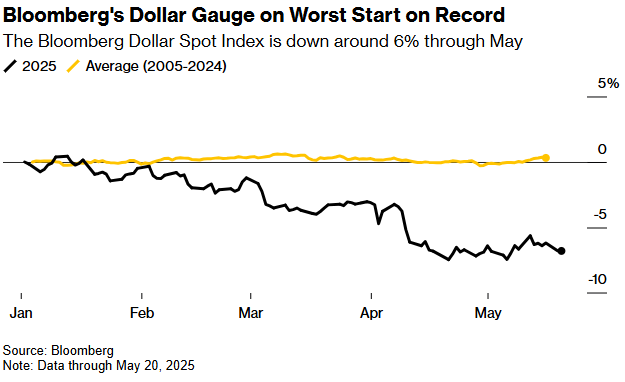
智通财经APP获悉,北美一季度财报季中,美元贬值成为为数不多的意外利好。与年初金融机构普遍预 测相悖,彭博美元指数近月来持续走弱,年内累计跌幅已超6%,创下20年以来最差表现。市场分析指 出,美国关税政策不确定性引发的资金外流,是本轮美元承压的核心动因。 但汇率影响呈现结构性分化特征。德国软件巨头SAP警示,随着美元对冲合约到期,2026年以美元计价 的利润将承压。这种分歧折射出企业套保策略与收入地域结构的差异——美元走弱对进口成本高企的企 业构成利好,却会侵蚀出口导向型公司的利润空间。 彭博行业研究首席外汇策略师奥黛丽·柴尔德-弗里曼指出,尽管5月中美贸易谈判释放积极信号,但"美 元仍面临关税政策持续扰动、双边资本流动波动等结构性利空"。 汇率波动直接改写跨国企业盈利剧本。Meta Platforms(META.US)与微软(MSFT.US)等科技巨头最新财报 显示,外汇波动将带来数亿美元额外收入;麦当劳(MCD.US)修正业绩指引,称美元贬值将使每股收益增 加5美分,与此前预估的20-30美分负面影响形成反转。宝洁公司(PG.US)披露,外汇因素对全年收入的 冲击较年初预测缩减三分之一至2亿美元;爱彼迎( ...
SAP Reimagines How Enterprises Run With Business AI
Prnewswire· 2025-05-20 13:10
Core Insights - SAP SE has introduced innovations and partnerships aimed at enhancing business productivity by up to 30 percent through the use of Business AI [1][2] - The generative AI assistant Joule is designed to provide personalized answers and streamline workflows across various applications [2][3] AI Innovations - Joule can assist users throughout their workday, providing real-time insights and anticipating needs while adhering to ethical AI guidelines [3] - A collaboration with Perplexity enhances Joule's capabilities to answer complex business questions using structured and unstructured data [4] - An expanded library of Joule Agents is introduced to optimize business processes across various functions such as customer experience and supply chain management [5] AI Development and Applications - SAP has launched an AI Foundation that serves as an operating system for developing and scaling AI solutions, allowing for quicker creation of effective AI prompts [6] - New intelligent applications in SAP Business Data Cloud are designed to continuously learn and optimize business processes using critical data [7] Strategic Partnerships - SAP is partnering with Palantir to support joint customers in their cloud migration and modernization efforts, facilitating a harmonized data foundation [8] Cloud Solutions - SAP Business Suite packages are introduced to simplify cloud solution adoption for customers, allowing for customization to meet specific business needs [9] - A new solution leveraging Joule aims to accelerate cloud transition, potentially delivering up to 35 percent faster time to value [10]

Angles for SAP from insightsoftware Now Supports SAP Business Technology Platform (BTP) to Remove IT Blockers and Simplify Data Access
GlobeNewswire News Room· 2025-05-19 14:06
Core Insights - insightsoftware announced the full integration of its Angles for SAP solution with SAP Business Technology Platform (BTP), enhancing data access and reporting capabilities for supply chain and operations teams [1][2] - The integration supports a hybrid cloud approach, which 90% of organizations plan to adopt by 2027, emphasizing the need for clean and context-aware data [2] - Angles for SAP provides advanced analytics and reporting without the need to rebuild data models, driving efficiency gains and improvements in operational metrics [3] Company Overview - insightsoftware is a global provider of solutions for the Office of the CFO, focusing on transforming financial data into actionable insights for better decision-making [4] - The company emphasizes the importance of accessible financial data in developing actionable business strategies, with solutions spanning financial planning, accounting, and operations [4] Product Features - Angles for SAP enhances SAP investments by offering advanced analytics, prebuilt semantic models, and AI-driven insights, all deployable through SAP BTP [3] - Customers using Angles for SAP have reported significant operational improvements, including up to 50% efficiency gains, 16% reductions in stock levels, and 20% improvements in production efficiency [3]

MIGNOW Announces Entry into U.S. Market to Accelerate SAP S/4HANA Migration Through AI Automation
GlobeNewswire News Room· 2025-05-19 13:00
Core Insights - MIGNOW has officially expanded into the U.S. market with a new operational hub in Miami, aiming to automate up to 80% of the migration effort from SAP ECC to SAP S/4HANA, significantly enhancing speed, accuracy, and cost efficiency [1][2] - The company plans significant expansion in 2025, including new hires in sales, consulting, and engineering to better serve enterprise clients [2] - MIGNOW's platform is recognized for its innovation in digital transformation, cutting migration timelines by up to 5 times and reducing project costs by approximately 70% compared to traditional methods [2][4] Company Operations - MIGNOW is already active in the U.S., supporting projects with organizations like NIKON and IvyTech, and has a global client base that includes major enterprises such as Carrefour and Besi [3] - The company maintains strategic partnerships with SAP, AWS, and Intel, which aid in co-developing integrated solutions for enterprise customers [3] Market Context - The expansion into North America coincides with the impending end-of-life for SAP ECC in 2027, creating urgency for U.S. enterprises to modernize their systems [4][5] - MIGNOW's latest platform release includes features like Clean Core automation and intelligent impact analysis, designed to make migrations faster and easier to maintain [4] Client Engagement - MIGNOW is a Platinum Sponsor at the SAP Sapphire Annual Conference, indicating its commitment to engaging with the SAP community and showcasing its solutions [6] - The company has a portfolio of renowned clients, including Nike and Carrefour, and has received accolades such as the SAP Innovation Awards for its contributions to digital transformation [9]