
美元贬值

Search documents
美债危机的解决路径,强美元
Sou Hu Cai Jing· 2026-02-27 13:44
Group 1 - The U.S. is increasingly reliant on allies to support its over $30 trillion debt, revealing significant structural vulnerabilities [1] - In 2025, allied nations are projected to net purchase $463.9 billion in U.S. Treasury bonds, the highest in eight years, while opposing nations are accelerating sales, reducing holdings by $125.2 billion, the largest decline in six years [1] - This financing model's sustainability is questionable due to the heavy reliance on a single bloc for support [1] Group 2 - A reversal in allies' willingness or ability to purchase U.S. debt could lead to a liquidity crisis in the Treasury market, potentially triggering systemic financial risks [2] - The strong dollar is viewed as the only viable path for the U.S. to address its debt crisis and avoid economic collapse [3] - The current high debt structure means that fluctuations in the dollar's exchange rate directly influence Treasury yields, impacting the survival of the U.S. real economy [3] Group 3 - A significant depreciation of the dollar would lead to a substantial decline in the real returns for international investors holding U.S. debt, necessitating higher nominal yields to compensate for currency losses and inflation expectations [4] - This scenario would sharply increase borrowing costs for the U.S. government and capital-intensive core industries, such as technology, finance, and defense, potentially crippling them [4] - A high-interest rate environment could suppress investment and innovation, leading to a vicious cycle of economic decline and worsening debt [4] Group 4 - To avoid systemic collapse, a strong dollar is essential, as it would attract global capital back to the U.S., increasing demand for Treasury bonds and lowering yields [5] - A low-interest rate environment is crucial for maintaining low financing costs for the government and providing affordable funding for domestic industries [5] - The necessity for a significant dollar appreciation is framed as a fundamental understanding to resolve current challenges [5] Group 5 - The mechanism for achieving dollar appreciation may seem counterintuitive, as traditional views suggest that interest rate cuts lead to currency depreciation [6] - However, during a global deflationary period, the opposite may occur, with the dollar appreciating despite rate cuts [7] - In a deflationary environment, cash becomes king, and the dollar's liquidity value is amplified, driving capital into dollar assets and increasing its value [8] Group 6 - Under specific macroeconomic conditions, the dollar index could rise to levels between 130 and 150 [9] - This appreciation is not based on absolute strength in the U.S. economy but rather on relative global recession and the stability of the U.S. financial system [10] - The unique economic structure of the U.S., including a significant trade deficit and dominance in high-tech and financial services, provides greater currency resilience compared to manufacturing-dependent countries [10] Group 7 - The path to resolving the U.S. debt crisis through dollar appreciation relies heavily on the continued support of global capital, particularly from allied nations [10] - The withdrawal of non-allied countries has altered the holding structure of U.S. debt, increasing dependence on allies [10] - Domestic political unpredictability, including tariff policies and interventions in central bank independence, threatens the foundation of this strategy [10]
6.831,人民币兑美元汇率再创三年新高
Sou Hu Cai Jing· 2026-02-26 13:05
Core Viewpoint - The steady appreciation of the RMB against the USD reflects a positive outlook from international capital towards the Chinese economy, which is expected to accelerate foreign investment inflows into A-shares and Hong Kong stocks, thereby boosting market performance [2]. Group 1: RMB Exchange Rate Trends - As of February 26, the offshore RMB against the USD reached 6.8369, while the onshore RMB was at 6.8395, marking a continuous rise since the Spring Festival [3]. - The RMB has been on an upward trend since breaking the 7.0 mark in December 2025, with significant appreciation observed post-holiday [3][4]. - The offshore RMB hit a high of 6.8619 and the onshore RMB reached 6.8654 on February 25, both exceeding 130 basis points in increase [3]. Group 2: Factors Influencing RMB Strength - Key reasons for the RMB's strength include the stabilization of China-US trade relations since November 2025 and improvements in the external environment for China [4]. - The investigation into the Federal Reserve Chairman by the U.S. Department of Justice has put pressure on the USD, contributing to the appreciation of non-USD currencies, including the RMB [4]. Group 3: Economic Implications - The continuous appreciation of the RMB has led to a rapid release of previously accumulated settlement demand, with bank settlement surpluses reaching $99.93 billion and $88.76 billion in December 2025 and January 2026, respectively [4]. - The positive sentiment towards the Chinese economy is bolstered by advancements in technology sectors such as humanoid robots and semiconductor chips, enhancing international capital confidence [5]. - The appreciation phase of the RMB is typically associated with strong stock market performance, suggesting a potential influx of foreign capital into A-shares and Hong Kong stocks [5]. Group 4: Market Predictions - Analysts from CITIC Securities indicate that the current RMB appreciation cycle is distinct from previous ones, driven by improved overseas earning capabilities of Chinese companies and global skepticism towards the USD [5]. - Goldman Sachs has revised its 12-month forecast for the USD/RMB exchange rate from 6.85 to 6.70, suggesting a controlled appreciation strategy for the RMB [5].

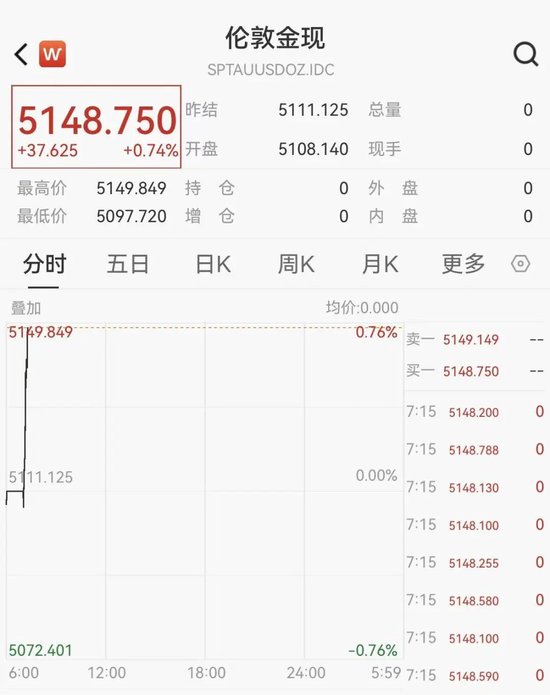
黄金开盘突破5140美元,白银拉升近2%
Xin Lang Cai Jing· 2026-02-22 23:28
Core Viewpoint - Gold and silver prices have seen a significant increase, with gold reaching $5148.75 per ounce, up 0.74%, and silver rising nearly 2% [1][5]. Group 1: Market Performance - As of 7:15 AM, spot gold was priced at $5148.75 per ounce, reflecting a daily increase of 0.74% [5]. - London silver opened at $86.150, marking an increase of 1.87% from the previous close of $84.569 [7]. Group 2: Future Price Predictions - ANZ Bank forecasts that gold prices will reach $5800 per ounce in the second quarter of this year, driven by central bank and investment demand, expanding fiscal deficits, declining U.S. real interest rates, and geopolitical risks [2][6]. - UBS has a more aggressive prediction, suggesting that gold could peak at $6200 per ounce by mid-year [2]. - Jefferies has raised its 2026 gold price forecast from $4200 to $5000, citing inflation and dollar depreciation as key factors [3][8]. - Peter Schiff predicts that gold prices could soar to $7000, driven by increased gold purchases by central banks and the expanding U.S. fiscal deficit [3][8].
【环球财经】巴西股市创历史新高 美最高法院裁决提振市场信心
Xin Lang Cai Jing· 2026-02-21 05:57
Group 1 - The U.S. Supreme Court ruled on February 20 that the Trump administration's large-scale tariff policy was illegal, leading to a significant rise in Brazil's main stock index, the Ibovespa, which closed at a historic high of 190,534.42 points, up 1.06% [1] - The Ibovespa index reached a peak of 190,726.78 points during the day, with a trading volume of approximately 36.16 billion reais, and recorded a cumulative increase of 2.18% for the week despite reduced trading days due to the Carnival holiday [1] - Analysts believe that the Supreme Court's ruling has a broad impact on the global trade environment, boosting investor confidence in risk assets, which is a key factor driving the rise in the Brazilian stock market [1] Group 2 - The Brazilian real strengthened significantly against the U.S. dollar, attributed to the general weakness of the dollar, which intensified the appreciation pressure on emerging market currencies, including the Brazilian real [1] - An IMF senior economist noted that the cancellation of tariffs reinforces the reallocation of global foreign exchange portfolios, benefiting the Brazilian real and stock market, although it may lead to increased exchange rate volatility due to uncertainties regarding future U.S. government actions [1] - Market predictions indicate that with an expected increase in foreign capital inflows and a stable domestic macroeconomic environment, Brazil's financial market has sufficient momentum to maintain a positive trend in the short term [2]

被判违法后,特朗普为何能宣布额外征收10%全球关税?还有牌?
Di Yi Cai Jing· 2026-02-20 23:25
Core Viewpoint - The Trump administration is planning to impose an additional 10% tariff on global goods based on the Trade Act of 1974, Section 122, following a Supreme Court ruling that deemed previous tariff policies illegal [1][4]. Group 1: Tariff Implementation - The additional 10% tariff will be implemented immediately, as stated by U.S. Trade Representative Lighthizer [1]. - The Section 122 allows the U.S. government to impose tariffs of up to 15% within 150 days, with the possibility of further investigations into specific industries [2][4]. - The administration is facing pressure to act due to existing trade agreements that could create disparities in tariff rates between countries with agreements and those without [4]. Group 2: Legal Framework and Options - The Trump administration has several legal avenues for imposing tariffs, including Sections 232, 301, and 201 of the Trade Act, as well as Section 338 of the Tariff Act of 1930 [1][6]. - Section 232 has already been used for tariffs on steel and aluminum, while Section 301 investigations are ongoing against countries like Brazil [6][7]. - Section 201 is a more traditional safeguard mechanism that allows for tariffs based on injury to domestic industries, with historical rates ranging from 30% to 50% [7]. Group 3: Economic Implications - The Treasury Secretary indicated that the use of Section 122 and potential enhancements of Sections 232 and 301 could maintain U.S. tariff revenue levels through 2026 [4]. - Experts suggest that tariffs are politically unpopular due to their impact on price levels and consumer affordability [5][6]. - There is a concern that the administration may exploit the legal framework to repeatedly implement Section 122 without clear prohibitions against such actions [5].

特朗普的天才2月19日,主意:美债瞬间清零,但我们真能承受结果吗,世界能接住吗?
Sou Hu Cai Jing· 2026-02-20 17:26
Core Viewpoint - Trump's financial strategy is characterized as a high-risk gamble aimed at alleviating the U.S. debt burden of $38 trillion through dollar devaluation, which is likened to a financial magic trick [1] Group 1: Military Expansion - Trump's aggressive military expansion plan includes a significant increase in defense spending, projected to exceed $1 trillion by 2026, which he believes will support the dollar's dominance by deterring creditors [3] Group 2: Extreme Financial Measures - A shocking aspect of Trump's strategy involves a potential 300% overnight devaluation of the dollar if the debt crisis remains unresolved, which would devastate the value of U.S. debt held globally, reducing it to 30% of its original value [5] - Such extreme devaluation could lead to a catastrophic impact on global financial markets, causing chaos in stock and foreign exchange markets and prompting capital flight [5][6] Group 3: Global Response - The global market is already sensing this potential risk, with major holders of U.S. debt, including China, gradually reducing their holdings, while other countries like Sweden and the UK are adjusting their asset allocations [8] - Trump is also contemplating a "Bretton Woods 3.0" system to re-establish a new world economic order based on U.S. resource wealth, targeting resource-rich nations like Venezuela and Iran, though this plan is fraught with uncertainty [8] Group 4: Long-term Implications - Ultimately, Trump's approach, while appearing ingenious, is viewed as a high-risk gamble that could lead to economic "suicide" by sacrificing decades of dollar credibility and undermining the global financial order [10] - A more prudent approach to resolving the debt issue is suggested, emphasizing patience and wisdom over drastic measures, as economic laws are more stringent than political rhetoric [12]

“黄金将取代美元” 专访“末日博士”彼得·希夫:金价飙升是美国新一轮危机的前兆 后续有望冲上7000美元
Mei Ri Jing Ji Xin Wen· 2026-02-19 13:50
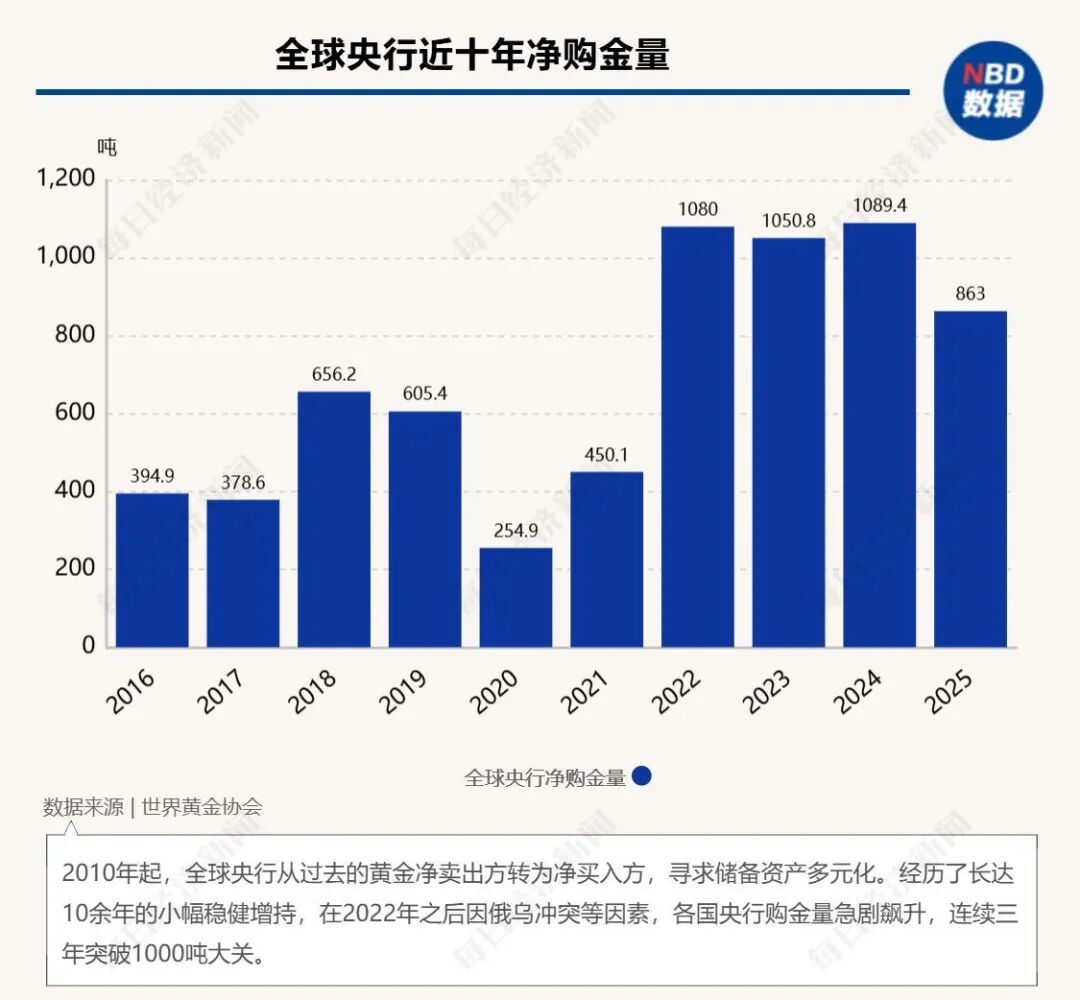
Group 1: Core Views - Peter Schiff predicts that gold prices will surge to $7,000, potentially replacing the US dollar as the new anchor asset due to central banks increasing gold reserves and the expanding US fiscal deficit [1][3] - Schiff warns of a composite crisis in the US that could exceed the severity of the 2008 financial crisis, driven by a combination of sovereign credit, US debt, and dollar crises [1][10] - He suggests that the new Federal Reserve chairman may become a puppet of Trump and labels cryptocurrencies as Ponzi schemes, advising investors to continue accumulating gold and silver [1][19] Group 2: Gold Market Insights - The primary driver behind the recent surge in gold prices is the increasing accumulation of gold by central banks globally, which is expected to continue into 2024 and 2025 [3] - There is a notable recovery in private investment demand, particularly in the silver market, which has lagged behind gold's performance [5] - Schiff believes that gold's role will gradually replace the dollar as the global monetary system's anchor asset, with a potential price target of $6,000 to $7,000 [7][9] Group 3: Economic Crisis Predictions - Schiff anticipates a financial crisis in the US by 2026, characterized by a combination of dollar and sovereign debt crises, with a severity far greater than that of 2008 [10][14] - The current fiscal situation in the US is significantly worse than in 2008, with rising debt levels and a loss of market confidence in the government's ability to manage its fiscal responsibilities [14] - Schiff emphasizes that the upcoming crisis will be marked by a lack of confidence in US Treasury bonds, which could lead to severe economic repercussions [14][15] Group 4: Federal Reserve and Monetary Policy - Schiff expresses skepticism about Kevin Walsh, the newly nominated Federal Reserve chairman, suggesting he will act as a puppet for Trump rather than a true anti-inflation advocate [16][17] - He believes that Walsh's policies will be influenced by political motives rather than independent economic judgment, particularly regarding interest rate decisions [18] Group 5: Cryptocurrency Critique - Schiff categorizes cryptocurrencies as a massive bubble and a decentralized Ponzi scheme, warning that the US government's leniency towards this sector could ultimately harm the economy [19][23]
“末日博士”彼得·希夫:金价将冲上7000美元
Mei Ri Jing Ji Xin Wen· 2026-02-19 12:31
Group 1: Core Views - Peter Schiff predicts that gold prices will surge to $7,000, potentially replacing the US dollar as the new anchor asset, driven by central banks increasing gold reserves and the expanding US fiscal deficit [1][4][11] - Schiff warns of a composite crisis in the US that could exceed the severity of the 2008 financial crisis, stemming from a convergence of sovereign credit, US debt, and dollar crises [1][12][15] Group 2: Gold Market Insights - Central banks globally are increasingly replacing dollar assets with gold, which is a primary driver of the current gold price increase [4][10] - There is a notable recovery in private investment demand, particularly in the silver market, which has lagged behind gold [6][10] - Schiff believes that the current rise in gold prices is just the beginning, with a potential target of $6,000 being reasonable, and even $7,000 being achievable given past price increases [8][10] Group 3: Economic Crisis Predictions - Schiff indicates that the upcoming crisis will be characterized by a combination of dollar and sovereign debt crises, with a significant loss of confidence in the US government's ability to manage its fiscal responsibilities [12][15] - The current fiscal situation in the US is worse than in 2008, with a substantial increase in debt and ineffective policy responses exacerbating the economic landscape [15][16] Group 4: Federal Reserve and Leadership - Schiff expresses skepticism about Kevin Walsh, the newly nominated Federal Reserve Chair, suggesting he will act as a puppet for former President Trump rather than an independent anti-inflation advocate [18][19][20] - The expectation is that Walsh will implement policies that align with Trump's interests, particularly in terms of monetary easing [19][20] Group 5: Cryptocurrency Critique - Schiff categorizes cryptocurrencies as a massive bubble and a decentralized Ponzi scheme, warning that the US government's leniency towards this sector could ultimately harm the economy [21][23]
专访“末日博士”彼得·希夫:黄金将取代美元,有望冲上7000美元,金价飙升是美国新一轮危机的前兆
Mei Ri Jing Ji Xin Wen· 2026-02-19 09:24
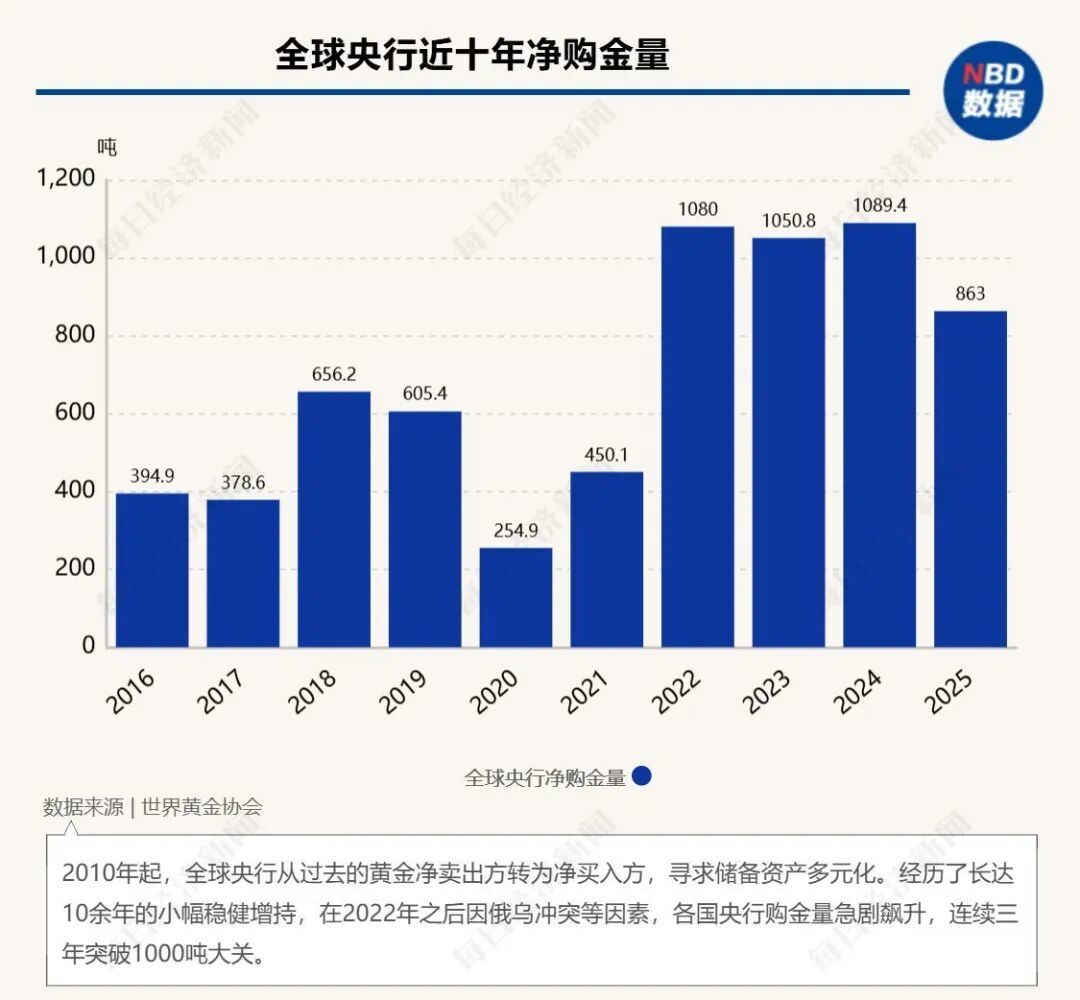
Core Viewpoint - Peter Schiff predicts that gold prices will exceed $5,000, warning of a complex crisis far greater than the 2008 financial crisis [1][10]. Group 1: Gold Market Insights - Schiff believes that the primary driver behind the recent surge in gold prices is the increasing trend of central banks replacing dollar assets with gold, with significant purchases expected from 2024 to 2025 [4][10]. - The recent recovery in private investment demand, particularly in the silver market, is noteworthy, as silver's price movements have lagged behind gold [6]. - Schiff forecasts that gold prices could reach $6,000, representing a 20% increase from current levels, and even suggests a possibility of prices hitting $7,000 in the future [7][10]. Group 2: Economic Crisis Predictions - Schiff warns of an impending financial crisis in the U.S. by 2026, characterized by a combination of a dollar crisis and a sovereign debt crisis, which he believes will be more severe than the 2008 crisis [10][13]. - The current fiscal situation in the U.S. is significantly worse than in 2008, with a much larger debt scale and a loss of market confidence in the government's ability to manage fiscal responsibilities [13][14]. - Schiff emphasizes that the upcoming crisis will be marked by a lack of confidence in U.S. Treasury bonds, which could lead to severe economic repercussions [13][14]. Group 3: Federal Reserve and Monetary Policy - Schiff expresses skepticism about Kevin Walsh, Trump's nominee for the Federal Reserve chair, believing he will act as a puppet for Trump rather than a strong anti-inflation advocate [15][16]. - He argues that Walsh's role will be to create a facade of credibility for the Federal Reserve, allowing for interest rate cuts that will be perceived as economically justified rather than politically motivated [17]. Group 4: Cryptocurrency Critique - Schiff categorizes cryptocurrencies as a massive bubble and a decentralized Ponzi scheme, warning that the U.S. government's leniency towards this sector could ultimately harm the economy [18][20].

黄金猛拉站上5000美元!瑞银:年中最高或触及6200美元
2 1 Shi Ji Jing Ji Bao Dao· 2026-02-19 07:16
Core Viewpoint - Gold and silver prices are experiencing upward momentum, with gold surpassing $5000 per ounce and silver exceeding $78 per ounce, driven by various economic factors and geopolitical risks [1] Group 1: Current Market Performance - As of February 19, gold is trading at approximately $5000 per ounce, reflecting a daily increase of 0.49% [1] - Silver has seen a rise of over 1%, currently priced at $78 per ounce [1] Group 2: Future Price Predictions - ANZ Bank forecasts that gold prices will reach $5800 per ounce in the second quarter of this year [1] - UBS presents a more aggressive outlook, predicting gold could peak at $6200 per ounce by mid-year, influenced by central bank and investment demand, expanding fiscal deficits, declining U.S. real interest rates, and geopolitical risks [1] - Jefferies has revised its 2026 gold price forecast from $4200 to $5000, emphasizing that in the context of inflation and dollar depreciation, investors and central banks have "essentially only one choice—hard assets" [1]