BYD

Search documents
Lear(LEA) - 2025 Q4 - Earnings Call Transcript
2026-02-04 15:02
Financial Data and Key Metrics Changes - Lear Corporation reported a 5% increase in revenue for Q4 2025, totaling $23.3 billion for the full year [4] - Core operating earnings were $1.1 billion, representing 4.6% of net sales for the full year [4] - Adjusted earnings per share increased by 1% to $12.80, marking the fifth consecutive year of growth [4] - Operating cash flow was $1.1 billion, with free cash flow at $527 million for 2025 [4][5] Business Line Data and Key Metrics Changes - In the Seating segment, sales for 2025 were $17.3 billion, a slight increase of 0.4% from 2024, with adjusted operating margins at 6.4% [34][35] - E-Systems sales decreased by 2% to $6 billion, with adjusted earnings at $293 million, or 4.9% of sales [36][37] - The company secured over $1.4 billion in E-Systems business awards, the strongest performance in over a decade [8] Market Data and Key Metrics Changes - Global vehicle production increased by 1% year-over-year, with production volumes flat in North America and down 2% in Europe, while China saw a 3% increase [30] - Lear expects more than 50% of its revenue in China to come from domestic automakers next year [22] Company Strategy and Development Direction - Lear's strategic priorities include extending leadership in Seating, expanding margins in E-Systems, and supporting sustainable value creation through disciplined capital allocation [5] - The company is focused on innovation and technology, particularly in modularity and automation, to enhance manufacturing efficiency and product design [56][59] - Lear aims to achieve a seating market share of 29%, supported by strong relationships with both traditional and domestic Chinese automakers [60] Management's Comments on Operating Environment and Future Outlook - Management expressed confidence in the company's ability to grow revenue, operating income, margins, and free cash flow in 2026 and beyond [47] - The company anticipates continued strong performance from its IDEA initiatives and digital transformation efforts, which are expected to drive future savings and operational improvements [64] - Management acknowledged the challenges posed by industry volatility but emphasized the company's solid foundation for growth [46] Other Important Information - Lear repurchased $325 million in shares during 2025, exceeding the initial target of $250 million, returning nearly $500 million to shareholders [10] - The company has a robust backlog of $1.325 billion, with significant contributions expected from new business awards in both Seating and E-Systems [24] Q&A Session Summary Question: Can you discuss the conquest win and its impact on seating share? - Management highlighted the significance of the conquest win as the largest in Lear's history, driven by innovation and technology, and expressed confidence in achieving a 29% seating market share [52][60] Question: What is the outlook for Net Performance in 2026? - Management indicated that they expect similar levels of Net Performance in 2026 as in 2025, with continued opportunities for savings from digital and automation initiatives [62][64] Question: How should investors think about earnings cadence throughout the year? - Management noted a strong start to the year, with expectations for Q1 revenues around $6 billion and operating income of approximately $260 million, despite some anticipated downtime [68][70] Question: Can you provide details on onshoring wins and their launch timing? - Management confirmed that the Orion award will benefit 2027, with limited additional onshoring activity expected until 2028 and 2029 [73][74] Question: What is the expected revenue impact of the large conquest win? - Management clarified that the large conquest win is outside the current backlog and is expected to launch in late 2028, potentially generating $400 million-$500 million in annual revenue [79][80]

Ford Reportedly In Talks With China's Geely To Explore European Manufacturing Partnership - Ford Motor (NYSE:F)
Benzinga· 2026-02-04 08:33
Group 1 - Ford Motor Co. is in discussions with Geely Automobile Holdings for a potential partnership involving the use of Ford's factory space in Europe for vehicle manufacturing [1] - The partnership talks include sharing vehicle technologies, particularly in automated driving, and are more advanced in European manufacturing [1][2] - A delegation from Ford was sent to China to further these discussions, following prior talks in Michigan between senior executives from both companies [2] Group 2 - Ford's 2023 partnership with Chinese battery-maker CATL to produce low-cost LFP EV batteries has faced criticism from U.S. lawmakers due to tariffs and security restrictions affecting Chinese automakers in the U.S. market [3] - The company is also exploring a potential battery partnership with BYD as part of its hybrid strategy, indicating active engagement in the electric vehicle sector [4] - Over the past year, Ford's stock has increased by 38.83%, closing at $13.73 recently [5]


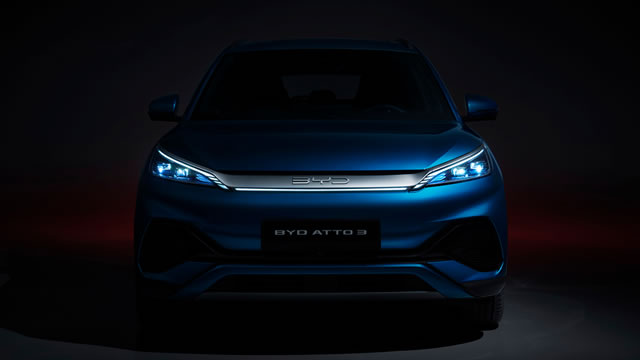
BYD Sales Slide in January Amid Rising EV Competition
ZACKS· 2026-02-03 17:30
Core Insights - BYD Company Limited reported a significant decline in January 2026 sales, with 210,051 new-energy vehicles sold, representing a drop of over 30.1% compared to January 2025 [1][9] - The decline in sales marks the fifth consecutive month of year-on-year sales decreases for the company [1][6] Sales Performance - The January sales included 205,518 passenger vehicles and 4,533 commercial vehicles, indicating broad-based weakness across key segments [1][2] - Passenger vehicle sales fell sharply by 30.7% year-over-year, while commercial vehicle deliveries showed modest growth of about 10.8% [9] Production and Exports - BYD produced 29.1% fewer vehicles than the previous year, continuing a production decline that has persisted since July 2025 [3] - Exports provided some support, with nearly half of BYD's sales coming from international markets, totaling approximately 100,482 vehicles shipped overseas [3][9] - The company reduced its 2026 export target from 1.5 million vehicles to 1.3 million [3] Market Challenges - The ongoing sales decline highlights increasing challenges for BYD as competition in China's electric vehicle market intensifies [2][5] - The global volume also declined, reflecting a broader weakening trend in the electric vehicle market [5][6]
BYD’s global sales plunge 30% in January
Yahoo Finance· 2026-02-03 09:29
Core Viewpoint - BYD Auto experienced a significant decline in global sales, indicating challenging market conditions for both domestic and international operations [1][2]. Group 1: Sales Performance - In January 2026, BYD's global sales dropped by 30% year-on-year to 210,051 units, compared to 300,538 units in January 2025, which had seen a 49% increase [1]. - This decline marks the fifth consecutive month of decreasing sales for BYD, which was the largest automaker in China in 2025 with total sales of 4,602,436 units [1]. - Sales of passenger battery electric vehicles (BEVs) fell by almost 34% year-on-year to 83,249 units and decreased by 56% month-on-month [3]. - Sales of passenger plug-in hybrid electric vehicles (PHEVs) also declined for the tenth consecutive month, down by nearly 29% year-on-year to 122,269 units and by 45% month-on-month [3]. Group 2: Export and Market Conditions - Overall exports fell by 51% year-on-year to 100,482 units in January 2026, and were down by almost 25% compared to December 2025 [4]. - Concerns are rising regarding a prolonged slowdown in China's domestic market following the reduction of incentives for new energy vehicles (NEVs) at the end of 2025 [2]. - The strong surge in exports seen in the previous year is expected to be unsustainable due to the withdrawal of incentives in several key overseas markets [2].
Trump Cuts India Tariffs in Russian Oil Deal & Musk's SpaceX-xAI Combine | Daybreak Europe 2/3/2026
Bloomberg Television· 2026-02-03 09:03
JOUMANNA: GOOD MORNING, YOUR TOP STORIES. ASIAN STOCKS BOUNCE BACK FROM THEIR WORTH SELLOFF IN MORE THAN TWO MONTHS. A REBOUND IN GOLD AND SILVER HELPING TO CALM MARKETS. MUSK MEGAMERGER. SPACEX AND XAI ARE SET TO COMBINE IN A TRILLION DOLLAR DEAL AS THE WORLD'S RICHEST MAN FUELS HIS INCREASINGLY COSTLY AMBITIONS IN AI AND SPACE EXPLORATION. PLUS, A NIFTY DEAL. PRESIDENT TRUMP SLASHES U.S. TARIFFS FOLLOWING AN AGREEMENT BY PRIME MINISTER MODI TO STOP BUYING RUSSIAN OIL. YOU HEARD IT IN THE HEADLINES, WE ARE ...

U.S. Markets Face Premarket Pressure Amid Fed Nominee Jitters and Tech Sell-Off
Stock Market News· 2026-02-02 11:07
Market Overview - U.S. stock futures are indicating a lower opening as investors react to global manufacturing concerns, uncertainty regarding the Federal Reserve's leadership, and a sell-off in precious metals and cryptocurrencies [1][2] - Major indexes are poised for declines following a weak close on Wall Street last Friday, with E-mini S&P 500 futures down approximately 0.7% and Nasdaq 100 futures falling roughly 1% [2] Current Performance of Major Market Indexes - The S&P 500 slipped 0.4% to 6,930.03, the Dow Jones Industrial Average fell 0.4% to 48,892.47, and the Nasdaq Composite dropped 0.9% to 23,461.82 [3] - The US500 index fell to 6,871 points, losing 0.99% from the previous session, while the Russell 2000 index declined 2.0% last week [3] Upcoming Market Events - Key economic data releases this week include the U.S. non-farm payrolls report, Manufacturing and Services PMI readings, ADP employment change, and weekly jobless claims [4] - The ISM manufacturing PMI has remained in contractionary territory since March 2025, heightening focus on these indicators [4] Corporate Earnings - Major tech companies reporting this week include Advanced Micro Devices, Amazon, Alphabet, Qualcomm, PayPal, and Super Micro Computer, with Palantir Technologies and The Walt Disney Company reporting today [5] - Analysts project moderate revenue growth for Disney, but there are risks of earnings per share slipping [12] Central Bank Decisions - The Reserve Bank of Australia, European Central Bank, and Bank of England are expected to set new policy rates, while the Federal Reserve recently left its benchmark interest rate unchanged at a range of 3.5% to 3.75% [6] Major Stock News - President Trump's nomination of Kevin Warsh as the next Federal Reserve Chair has introduced uncertainty into monetary policy expectations, impacting precious metals and strengthening the U.S. dollar [7] - Apple reported a record-breaking fiscal Q1 2026 with revenue of $143.8 billion, up 16% year-over-year, driven by iPhone sales and services growth [12] - Tesla shares fell 3.2% despite beating earnings estimates, facing pressure from competition and planning to double AI capital expenditures to $20 billion [12] - The healthcare insurance sector is under pressure due to a proposed minimal increase in Medicare payment rates for 2027, leading to significant declines in shares of UnitedHealth Group, Humana, and CVS Health Corporation [12] - Goldman Sachs saw a surprising 56% surge in 2025, benefiting from its trading desks and exiting consumer banking [12] - Nvidia slipped 2% in premarket trading amid broader tech sector pressure, with other tech companies like Samsung Electronics and SK Hynix also experiencing sell-offs [12]



Tesla's Direct China Rival Reports Strong Sales, But This Giant Is Tumbling
Investors· 2026-02-02 11:02
Tesla's Direct China Rival Xiaomi Reports Strong Sales, But This Giant Is Tumbling | Investor's Business DailyBREAKING: [Futures Fall, Bitcoin Dives To Lowest Since 2024]---Tesla's China EV rivals Xiaomi (XIACY), Li Auto (LI), XPeng (XPEV), Nio (NIO) and BYD (BYDDF) reported January sales on Sunday. Xiaomi and especially showed the best performances vs. a year earlier, while XPeng and especially BYD suffered significant declines. Tesla (TSLA) doesn't report monthly sales, but investors will get figures from ...

出行革命_自动驾驶与机器人出租车-Mobility Revolution_ Autonomous driving and robotaxi
2026-02-02 02:22
Summary of Key Points from the Conference Call Industry Overview - The automotive sector is undergoing significant transformation with advancements in electrification, automation, and informatization, potentially leading to a revolution in transportation similar to the introduction of the moving assembly line by Ford over a century ago [2][10] Autonomous Driving and Robotaxi Trends - The shift from rule-based systems to end-to-end (E2E) architectures and variable large architectures (VLA) is evident, with many companies pursuing hybrid designs that combine safety mechanisms with AI models [3] - Advanced Driver Assistance Systems (ADAS) and Autonomous Driving (AD) penetration is expected to rise significantly, with L2+ systems projected to reach approximately 34% penetration by 2035, up from 12% in 2025 [5] - The global robotaxi market is anticipated to grow to USD 67.3 billion by 2030, with China being the most scalable market due to supportive policies and deployment momentum [6] Key Players and Strategies - Major automakers are adopting diverse strategies for autonomous driving: - **Toyota** is pursuing a multi-pathway strategy, combining in-house development with partnerships [10] - **Honda** is focusing on developing its own E2E system while collaborating with Helm.ai [10] - **Nissan** is leveraging Wayve's E2E technology [10] - In China, companies like **Pony.ai**, **WeRide**, and **Apollo Go** are leading the robotaxi deployment, with significant partnerships enhancing their capabilities [45] Investment Implications - Japanese automakers are expected to launch software-defined vehicles (SDVs) starting with Toyota's RAV4 in 2025, followed by Honda's 0 Series and Sony Honda Mobility's AFEELA in 2026 [10] - The transition to SDVs presents both opportunities and risks for traditional auto parts suppliers, as automakers increasingly assert control over software layers, potentially eroding supplier revenues [11] - The Japanese government has set a target for 30% SDV penetration by 2030-2035, which may accelerate strategic initiatives across the sector [12] Market Ratings - **Outperform Ratings**: Toyota, Suzuki, BYD, Xiaomi, Li Auto, Grab, BMW, Ferrari, Renault, Aston Martin, Hesai, Tuopu - **Market-Perform Ratings**: Honda, Denso, XPeng, NIO, Volkswagen, Mercedes, Stellantis, Volvo Cars, Continental - **Underperform Ratings**: Nissan, Mazda, Subaru, Black Sesame, Daimler Truck [12][15][17][26] Additional Insights - The integration of advanced technologies in the automotive sector is leading to a shift in competitive dynamics, with traditional OEMs partnering with tech companies to enhance their offerings [14] - The development of autonomous driving capabilities is closely linked to the operational design domain (ODD), which defines the conditions under which autonomous vehicles can operate [41][42] - The future of tyre technology is also evolving, with tyres expected to function as sensors that communicate data to vehicles, enhancing predictive maintenance and driving performance [18]


中国汽车制造商 2026 展望:5 大积极因素、5 大风险及 5 只推荐买入个股-China Auto Manufacturers 2026 Outlook 5 Positives 5 Negatives and 5 Stocks to Buy
2026-01-30 03:14
Summary of China Auto Manufacturers Conference Call Industry Overview - **Industry**: China Auto Sector - **Outlook for 2026**: The sector is expected to face both positives and negatives, with a cautious outlook for the first half of the year. Key Positives 1. **Surging LiDAR/ADAS/Robotaxi Penetrations**: Increased adoption of advanced technologies is anticipated to drive growth in the sector [1] 2. **Export Growth**: Projected export growth of 19% YoY, with New Energy Vehicles (NEV) expected to grow at 49% YoY [1] 3. **Commercial Vehicle Demand**: Demand for commercial vehicles is in a favorable position due to overseas demand and a stabilizing domestic market [1] 4. **End of Price Cuts**: The trend of price cuts in passenger vehicles (PV) is expected to come to an end, stabilizing margins [1] 5. **Market Concentration Improvements**: Gradual improvements in market concentration and utilization rates are expected, with overall NEV sales per model projected to increase slightly [1] Key Negatives 1. **Cost Inflation**: Anticipated cost inflation may erode auto maker net profit margins (NPM) by 2-5 percentage points [1] 2. **Cautious Outlook for 1Q/2Q**: A very cautious outlook for the first two quarters, with EV retail sales expected to slow to 4% and 0% YoY respectively [1] 3. **Lower PV Wholesale/Retail Forecasts**: FY26 wholesale and retail forecasts for PV have been lowered to -3.8% and -9.6% YoY, with internal combustion engine (ICE) vehicles expected to decline by 25% YoY [1] 4. **High ICE Inventories**: Concerns over high ICE inventories leading to destocking issues [1] 5. **Earnings Forecast Cuts**: Valuations have bottomed, but consensus earnings forecasts are expected to be cut soon [1] Stock Recommendations - **Stocks to Buy**: 1. **BYD**: Strong export and domestic consolidation potential [11] 2. **Pony/WeRide**: Benefiting from the China robotaxi upcycle [11] 3. **Hesai**: Growth in L3 policy, exports, and new robotic business [11] 4. **Weichai**: Data center-related energy supply solutions [11] 5. **Minth**: Data center cooling solutions and robot parts [11] Market Trends - **Pricing and Consolidation**: No significant price cuts are anticipated in 2026 due to anti-involution regulations and rising raw material costs, which may drive industry consolidation [3] - **Global PV Market Shares**: China's PV export sales are projected to maintain strong growth, with NEV exports driving this growth [4] - **Earnings Visibility**: Companies like Seres, Li Auto, SAIC, Changan, and GAC are expected to underperform due to margin dilution and negative sales outlooks for ICE vehicles [2] Additional Insights - **High Beta Rally**: Potential high-beta rallies may favor tech and ADAS/robotaxi companies over traditional NEV makers due to decelerating growth [5] - **Commercial Vehicle Outlook**: Positive outlook for commercial vehicle manufacturers like Sinotruk, driven by decent orders growth and potential policy stimulus [14] - **Inventory Levels**: High inventory levels for PVs and NEVs indicate a cautious market environment, with end-2025 ICE inventories reported as high to very high [22] This summary encapsulates the key points from the conference call, highlighting the current state and future outlook of the China auto sector, along with stock recommendations and market trends.
TSLA EV Slowdown, Full Speed on AI: Earnings Highlight "Critical" 2026 Ahead
Youtube· 2026-01-29 19:00
Core Viewpoint - Tesla is experiencing a challenging quarter with declining revenues and auto unit sales, while competition in the EV market is intensifying [2][3] Financial Performance - Tesla reported its first year of declining revenues, down 3%, and auto unit sales decreased by 9%, with profits declining by 4% to 6% [2] - The energy division showed significant growth of 27%, generating $12.8 billion, which is a positive aspect for the company [3] Strategic Changes - Tesla is ending production of the Model S and Model X to focus on the development of Optimus robots, indicating a shift towards being recognized as a technology company [3][10] - The company plans to produce a new generation of vehicles (Gen 3) by the end of 2026, aiming for large-scale sales by 2027 [10] Valuation Concerns - Tesla's stock is trading at a high premium, with a price-to-earnings (PE) ratio of nearly 290, significantly higher than competitors like Nvidia, which has a PE of 45 [9][12] - Concerns have been raised about the disconnect between Tesla's high valuation and its lack of earnings growth, leading to a downgrade of the stock to a sell rating [4][5] Capital Expenditure Guidance - Tesla's capital expenditure (capex) guidance for the year is projected to be well over $20 billion, significantly higher than the previous year's $8.5 billion and above market expectations of around $11 billion [7][8] Competitive Landscape - Increased competition from companies like Volkswagen, Hyundai, and BYD is impacting Tesla's market position, with BYD now holding the number one position in EV sales [2][3] - The competitive threats are mounting from both traditional automakers and new entrants in the robotics and autonomous driving sectors [14][15]