HDFC Bank

Search documents
TCS, Infy, HCL, Wipro, Coforge stocks crashes 5% as AI concerns lead IT sell-off
BusinessLine· 2026-02-13 04:46
Market Overview - Indian equity markets opened sharply lower, with the Sensex falling 790.71 points to 82,884.21 and Nifty declining 254.95 points to 25,552.25, influenced by a global tech sell-off due to concerns over AI disruption to traditional business models [1][5] IT Sector Performance - The Nifty IT index experienced a significant decline of 4.72 percent, dropping to 31,594.70, marking its sharpest single-day decline in ten months [2] - Major IT companies faced substantial losses, with Infosys down 6.11 percent to ₹1,301.30, TCS down 4.59 percent to ₹2,624.00, HCL Technologies down 4.38 percent to ₹1,411.50, and Wipro down 3.55 percent to ₹211.31 [2][6] - The sell-off in IT stocks was attributed to a sharp decline in US technology stocks, with the Nasdaq falling 2.03 percent as investors reassessed the impact of AI startups on established tech companies [2] Broader Market Trends - The broader market showed mixed signals, with select financial stocks like Bajaj Finance and SBI Life Insurance witnessing buying interest, while Hindalco faced significant selling pressure, declining 5.78 percent to ₹908.70 [7][8] - Foreign Institutional Investors continued to buy equities worth ₹108 crore, while Domestic Institutional Investors invested over ₹276 crore, providing some support to the markets [9] Investor Sentiment - Concerns over AI-led disruption and fading optimism regarding near-term global rate cuts are expected to weigh on market sentiment [5] - Experts advised caution, suggesting that panic selling in IT stocks may not be prudent and that investors should consider accumulating high-quality growth stocks, especially those with strong Q3 results [8]

Stock market today: Which are top 10 gainers and losers on NSE & BSE on February 12? Check list
The Times Of India· 2026-02-12 11:13
Core Insights - The benchmark equity indices in India experienced a decline, primarily driven by a significant sell-off in technology stocks due to global uncertainties and concerns regarding AI-led disruptions in IT services [9][8] - The BSE Sensex fell by 558.72 points, or 0.66%, closing at 83,674.92, while the NSE Nifty dropped by 146.65 points, or 0.57%, ending at 25,807.20 [9] - Major technology companies such as Tech Mahindra, Infosys, and Tata Consultancy Services (TCS) saw declines of nearly 6% each, marking them as significant laggards on the Sensex [9][7] Company Performance - Tech Mahindra experienced a decline of 5.99%, Infosys fell by 5.84%, and TCS decreased by 5.49% [9][7] - Other companies that ended in the red include HCL Technologies (-4.87%), Wipro (-4.67%), Mahindra & Mahindra (-2.23%), and Hindustan Unilever (-2.17%) [9][7] - In contrast, Bajaj Finance was among the top gainers, increasing by 3.12%, followed by Shriram Finance (2.47%) and Eicher Motors (2.22%) [9][7] Sectoral Analysis - The Focussed IT sector saw the most significant decline, dropping by 5.40%, followed closely by the broader IT sector, which fell by 5.29% [9][8] - Broader market indices also reflected negative sentiment, with the BSE MidCap Select Index decreasing by 0.48% and the SmallCap Select Index slipping by 0.28% [9][8] Market Sentiment - Investor sentiment was dampened by concerns over AI's impact on service-intensive sectors, leading to a structural transformation in IT services that may challenge traditional outsourcing models [8][9] - Geopolitical tensions, particularly between the US and Iran, are contributing to a cautious approach among investors in the near term [8][9]
SBI’s market cap surges past TCS; becomes fourth most valuable company
BusinessLine· 2026-02-11 16:01
Government-owned lender State Bank of India (SBI) became the country’s fourth most valuable company, its market capitalisation surpassing that of Tata Consultancy Services, and hitting ₹10.9 lakh crore. The shares of the bank rose 3.2 per cent on Wednesday with over 2.9 crore shares being traded. Its market cap has been steadily rising and in the current fiscal so far has increased 58 per cent. Over the same period TCS’ market cap has fallen 17.8 per cent to ₹10.5 lakh crore.One-year gainsOver a one-year pe ...
SBI pips TCS to become fourth most valued firm amid sharp IT stock slide
Business· 2026-02-11 10:45
Group 1 - State Bank of India (SBI) has become the fourth-most valued company in India by market capitalization, surpassing Tata Consultancy Services (TCS) [1] - SBI's shares increased by 3.4% to a record high of ₹1,183, resulting in a market capitalization of ₹10.92 trillion [1] - TCS shares have decreased by 36% from their peak of ₹4,552, closing at ₹2,909, which values the company at ₹10.5 trillion [1] - The top three most valued companies in India are Reliance Industries (₹19.87 trillion), HDFC Bank (₹14.26 trillion), and Bharti Airtel (₹11.5 trillion) [1] Group 2 - Bharat Heavy Electricals' (BHEL) offer for sale (OFS) was oversubscribed, with demand for 220.8 million shares against 174 million shares available [2] - The floor price for the OFS was set at ₹254 per share, with most bids at ₹256 [2] - BHEL's shares fell by 5.6% in secondary market trading, closing at ₹260.7 [2] - The Government of India is selling a 5% stake in BHEL, which is expected to generate over ₹4,400 crore for the exchequer [2] - Citibank, ICICI Securities, and Nuvama are the investment banks managing the transaction [2]
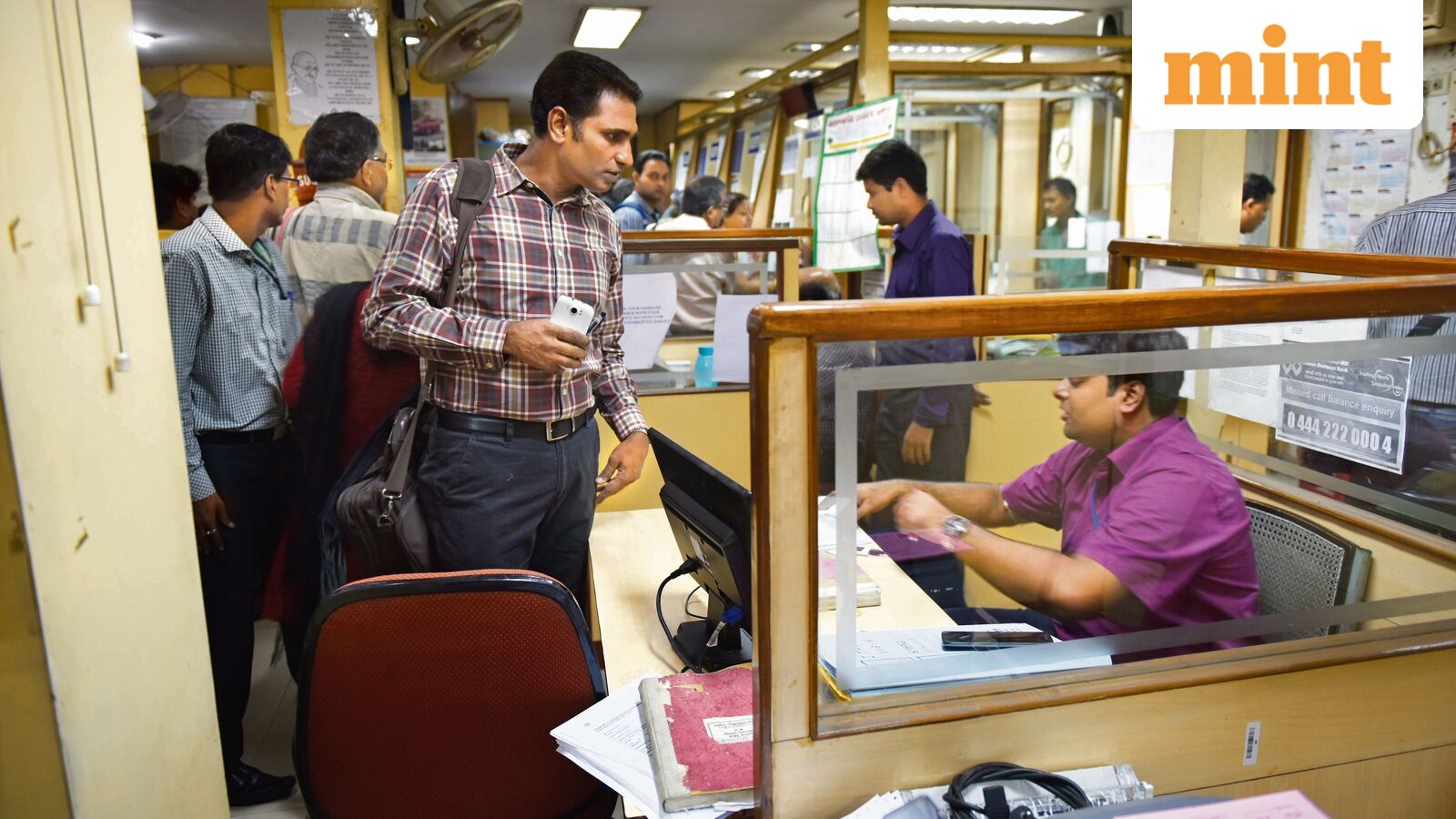
Will banks be closed on 12 February? Unions call for strike, services may be affected
MINT· 2026-02-11 09:26
Bank strike: Bank of Baroda (BoB) has informed the stock exchanges that multiple bank unions have called for a strike on 12 February on various issues and demands and notified of potential disruption in services due to it.According to the filing, the All India Bank Employees' Association (AIBEA), All India Bank Officers' Association (AIBOA), and Bank Employees Federation of India (BEFI) have jointly called for a countrywide strike on Thursday, 12 February 2026.Will banks across India be closed on 12 Februar ...
The Great Integration: Technology, talent and transformation in Asia
The Economic Times· 2026-02-11 07:10
Group 1: Economic and Business Insights - The 1980s were characterized by a strong American work ethic and significant career opportunities, with a notable appeal in its music, intellectual strength, and economic power [1] - Indian economic reforms began in the 1980s, leading to a foreign exchange crisis in the early 1990s and subsequent major reforms [2] - Japan's economic narrative in the 1980s was dominated by its real estate valuation, which at one point suggested the Imperial Palace grounds were worth more than all of California's real estate [2] - General Electric (GE) was a leading company with a market cap of $600 billion in 2000, emphasizing management principles that remain relevant today [14] Group 2: Shifts in Business Strategy - The transition from operational efficiency to strategic focus and then to cultural importance reflects the evolution of business practices as companies scale [3] - The concept of SOAR thinking (strengths, opportunities, aspirations, results) is presented as a more applicable framework than traditional SWOT analysis in real-world business scenarios [4] - The rise of Asia, particularly Hong Kong, is noted as a significant shift in career opportunities, surpassing Europe by the late 1990s [5] Group 3: Technological Developments - The 2000s saw the emergence of niche markets, exemplified by Google disrupting the advertising market and the valuation of Chobani yogurt at $20 billion in 2025 [6] - Bill Gates' observation about underestimating long-term technological changes highlights the transformative impact of innovations like electric cars and artificial intelligence [7] - The rise of artificial intelligence is accompanied by concerns of overcapacity in AI infrastructure, reminiscent of the early internet bubble's telecom investments [12][15] Group 4: Investment and Market Trends - The acquisition of CG Power during the uncertainty of Covid-19 exemplifies antifragile thinking, with the asset now valued at approximately $11 billion [11] - The potential for significant losses in AI infrastructure investments is noted, as the market may be oversaturated with players [12][15] - The concept of "grindcore," combining hard work and hustle, is introduced as a new mindset for success in the tech industry [13]


量化洞察 2 月更新:中国市场正发生风格轮动-Quantitative Insights February Update Style rotation happening in China
2026-02-11 05:57
Summary of Key Points from the Conference Call Industry Overview - The report focuses on the Asia ex Japan market, particularly highlighting the performance of various sectors and companies within this region, including China, Taiwan, Korea, and ASEAN countries [1][2][3]. Core Insights 1. **Style Rotation in China**: In early February, there was a notable style rotation in China, with a rebound in Low Risk and Value stocks, while Momentum stocks began to unwind from their peaks [1]. 2. **Earnings Revision Trends**: Earnings revisions are increasing in Taiwan, while Korea experienced a dip in mid-January but has since rebounded. In China and ASEAN, earnings revisions have plateaued after declining from their peaks [2]. 3. **Market Concentration**: The top five companies in the MSCI AC Asia ex Japan index now account for 33% of the index weight, the highest concentration since 2000. This high concentration could lead to increased volatility in Value and Price Momentum as these holdings unwind [3][52]. 4. **Sector Performance**: The Information Technology sector shows the best earnings momentum across the region, while the performance of Value and Price Momentum remains volatile [2][24]. 5. **Crowding Scores**: The report highlights crowding scores for various sectors, indicating that defensive sectors are less crowded compared to cyclical sectors, which are more crowded on the long side [38][39][48]. Additional Important Insights 1. **Earnings Momentum**: Year-to-date, both price and earnings momentum have performed well compared to other factors, although Price Momentum faced volatility in late January and early February [1][18]. 2. **Regional Contributions**: Korea and Taiwan were significant contributors to the total return in MSCI AxJ, accounting for 84% of the +8.2% total return in January [30]. 3. **Stock Connect Flows**: There was a net inflow of US$8.9 billion into Hong Kong via Southbound Connect in January, indicating renewed interest in the market [77]. 4. **Sector Contributions**: The report provides detailed sector contributions to long-short factor returns, with Financials and Consumer Discretionary showing notable performance in the Asia ex Japan region [19][21]. 5. **Investment Strategies**: The report discusses the effectiveness of AH Pairs Trading strategies, indicating that a relative approach can yield robust performance [81][84]. Conclusion The Asia ex Japan market is experiencing significant shifts in style and sector performance, with a focus on the implications of market concentration and earnings revisions. Investors should be aware of the potential volatility stemming from concentrated holdings and the performance of key sectors like Information Technology and Financials.
HUDCO, NaBFID and SIDBI to tap bond market for Rs 13,500 cr
The Economic Times· 2026-02-11 00:51
Group 1 - NaBFID plans to raise ₹4,000 crore through a 10-year bond sale, with investor focus on this issuance amid high benchmark government security yields at 6.75% [5] - The expected pricing for NaBFID's bonds is around 100 basis points over the sovereign yield, indicating a competitive rate below the state bond rate [5] - HUDCO is anticipated to secure a rate of approximately 7.75%-8% for a three-year bond tenure [5] Group 2 - Corporates raised ₹26,752 crore in January 2023, a decrease from ₹29,798 crore in December 2022, reflecting a tightening in market borrowings [3] - Wholesale loans by banks have increased, with SBI reporting a 3.4% year-on-year growth in its corporate loan book, while HDFC Bank and ICICI Bank reported growths of 10.3% and 5.6% respectively [5]

Banks ease pace of hiring as tech, AI shoulder more tasks
The Economic Times· 2026-02-10 19:28
Core Insights - Hiring activity in Indian banks has slowed down due to increased adoption of technology, automation, and AI-led efficiencies, reducing the need for incremental headcount additions [7] - HDFC Bank added approximately 5,000 employees in the quarter, bringing its total headcount to around 215,000, while Axis Bank and Kotak Mahindra Bank experienced declines in their employee counts [7] - The overall trend indicates a cautious approach to hiring and a shift towards productivity-led growth across the banking sector [7] Group 1: Employment Trends - HDFC Bank's recruitment fell sharply in 2024-25 to 49,713 from 89,115 in 2023-24, with net additions dropping to 994 employees compared to 40,305 in the previous year [7] - Axis Bank's headcount decreased to about 101,000 at the end of December from around 102,000 a year earlier, while Kotak Mahindra Bank's headcount declined to about 112,000 from 114,000 [7] - ICICI Bank's headcount also saw a reduction, declining to 130,957 in 2024-25 from 141,009 a year earlier, with a net reduction of 6,723 employees [7] Group 2: Factors Influencing Hiring - The slowdown in hiring is attributed to digitisation and productivity gains, leading to more efficient headcount utilisation [5][6] - Banks are increasingly relying on digital onboarding, automated credit underwriting, AI-driven customer service, and centralised operations, which reduces the need for large frontline and back-office teams [5] - Hiring is becoming more selective, focusing on technology, risk, analytics, and compliance rather than bulk onboarding [6]
January retail inflation likely to hit 2.4-3%: Business Standard poll
Business· 2026-02-10 17:34
Core Insights - The National Statistics Office (NSO) is set to release retail inflation estimates for January, marking the first report using 2024 as the base year, with differing estimates based on old versus new CPI methodologies [1] Inflation Estimates - Estimates using the old CPI weightings suggest a January inflation rate of 2.5-2.6 percent, while the new series estimates range from 2.45-3.2 percent, indicating a projected increase in retail inflation [2] Factors Influencing Inflation - The expected rise in headline inflation is attributed to the food basket exiting deflation, an increase in core CPI, and higher precious metal prices [3] - The new CPI series reduces the weighting of food & beverages from 45.86 percent to 36.75 percent, which may lessen food inflation's impact on the overall inflation figure [3] Changes in Weightings - The new weightings emphasize urban CPI and services, with a significant increase in the weighting for restaurants and accommodation services from 0.01 percent to 3.35 percent [4] - Transport and information & communications are also expected to see increased weightings by 2.43 and 1.38 percentage points, respectively, while food and beverages, education services, and clothing and footwear will see reductions [5] RBI Projections - The Reserve Bank of India's Monetary Policy Committee has slightly revised its inflation projection for 2025-26 to 2.1 percent, citing rising precious metal prices, and has increased its Q4FY26 inflation projection to 3.2 percent [6] Expert Opinions - Economists have varying expectations for January's inflation rate, with estimates around 2.6 percent based on the old base, but caution against making definitive assessments under the new series until more data is available [7] - Some economists predict the new CPI series could push January inflation closer to 2.9 percent due to the reduced weighting of food & beverages, while high gold and silver prices are expected to add significant upward pressure on inflation [8]