Toyota Motor

Search documents
Better Artificial Intelligence Stock: Nebius Group vs. CoreWeave
Yahoo Finance· 2025-10-21 08:35
Core Insights - The demand for computing power driven by artificial intelligence (AI) has led to significant sales growth for companies like Nebius Group and CoreWeave [1][2] - Nebius shares have increased over 300% this year, while CoreWeave's stock has more than tripled since going public at around $40 per share [1] CoreWeave's Performance - CoreWeave transitioned from cryptocurrency mining to providing AI-optimized infrastructure, resulting in second-quarter sales soaring to $1.2 billion from $395.4 million year-over-year [4] - Major clients such as OpenAI, Toyota Motor, and Microsoft have significantly increased their commitments to CoreWeave, with OpenAI raising its investment from $11.9 billion to $22.4 billion [5] - CoreWeave forecasts full-year sales between $5.2 billion and $5.4 billion, a substantial increase from $1.9 billion in 2024 [5] Financial Obligations and Expansion - CoreWeave's remaining performance obligations reached $30.1 billion in Q2, nearly double the $16.2 billion from the previous year [6] - The company incurred operating expenses of $1.2 billion in Q2, up from $317.7 million the previous year, due to investments in expanding data center capacity [6] - To finance its expansion, CoreWeave accumulated over $10 billion in debt, including a $1.8 billion senior notes offering and a $2.6 billion secured debt financing facility [7] Industry Demand - The global demand for AI computing capacity is driving triple-digit sales growth for both CoreWeave and Nebius Group in the second quarter [8] - Both companies are racing to expand their data center footprints while taking on significant debt to meet the escalating demand for AI compute [8]


Hino Motors and Mitsubishi Fuso to merge production operations in Japan
Yahoo Finance· 2025-10-10 15:42
Core Insights - Hino Motors and Mitsubishi Fuso Truck and Bus, subsidiaries of Toyota Motor and Daimler Truck respectively, are consolidating their production facilities in Japan as a preparatory step for their merger and the formation of a new holding company named Archion [1][2] Group 1: Production Consolidation - The consolidation will reduce the number of domestic truck production sites from five to three, focusing on the Kawasaki Plant, Koga Plant, and Nitta Plant [2] - Mitsubishi Fuso will close its Nakatsu plant, while Hino will transition its Hamura plant to Toyota [2] Group 2: Leadership and Structure - Archion's leadership includes Karl Deppen as CEO, Hetal Laligi as CFO, and Satoshi Ogiso as Chief Technology Officer [3] - Both Toyota and Daimler Truck hold a 25% stake in Archion, indicating strong backing for the new entity [3] Group 3: Strategic Goals - The merger aims to create synergies for more competitive products, cost-efficient operations, and faster time-to-market for new launches [5] - Savings from integration and improved efficiencies will be redirected towards investments in the CASE domain (Connected/Autonomous & Automated/Shared/Electric) [5] Group 4: Technological Development - Archion plans to develop a range of products across all zero-emission vehicle segments, leveraging the technological capabilities of Toyota and Daimler Truck [6] - The collaboration aims to accelerate the development of CASE technologies and enhance the future of commercial mobility [6]
5 Reasons to Buy BYD Stock Like There's No Tomorrow
The Motley Fool· 2025-08-22 08:50
Core Viewpoint - BYD Company (BYDDY) is presented as a compelling investment opportunity due to its strong market position, diversified product offerings, self-sufficiency, profitability, and growth potential in the electric vehicle (EV) sector [2][4][5]. Group 1: Company Overview - BYD is primarily a manufacturer of affordable electric vehicles, with significant sales in China and a global presence [4]. - In the previous year, BYD sold 4.25 million cars, including nearly 2.5 million hybrids and approximately 1.8 million all-electric vehicles, generating $108 billion in revenue, a 23% increase year-over-year, with a net income of $5.6 billion [4]. Group 2: Competitive Position - BYD has emerged as the largest player in the global EV market, controlling about 20% of the total market, surpassing Tesla in battery-powered vehicle sales [7]. - The company’s diverse product range includes hybrids, all-electric vehicles, buses, forklifts, high-speed trains, energy storage solutions, and lithium-based batteries supplied to major automakers like Ford, Toyota, and Tesla [9][10]. Group 3: Self-Sufficiency and Profitability - BYD's vertical integration allows it to manufacture nearly all components required for its vehicles, including batteries, which enhances flexibility and profitability [11][13][14]. - The company reported a net income of $5.6 billion, reflecting a 34% increase from the previous year, positioning it favorably for future investments and financial maneuverability [15]. Group 4: Growth Potential - The global EV market is projected to grow at an annualized rate of 25.3% through 2035, with BYD expected to benefit significantly from this trend, particularly in China where hybrids and battery-powered vehicles are anticipated to make up 80% of new car sales by 2030 [17][18]. - Despite a decline in interest in EVs among U.S. consumers, international demand remains strong, indicating a robust growth trajectory for BYD [17]. Group 5: Investment Considerations - BYD is relatively underappreciated in the U.S. market, with limited ownership among U.S. investors, presenting a unique opportunity for diversification [19]. - Notably, Berkshire Hathaway holds a $2.4 billion stake in BYD, underscoring the company's potential and credibility in the investment landscape [20].

Toyota Motor June-quarter profit beats estimates — but drops 11% as U.S. tariffs bite
CNBC· 2025-08-07 05:16
Core Insights - Toyota Motor reported higher-than-expected operating profit for the June quarter despite facing challenges from U.S. tariffs [1] - The company's operating profit dropped 11% year-on-year, marking the third consecutive quarterly decline [1] - Net income attributable to Toyota fell 37% to 841.3 billion yen [2] Financial Performance - Revenue for the quarter was 12.25 trillion yen, slightly above the estimate of 12.19 trillion yen [4] - Operating profit was reported at 1.17 trillion yen, significantly higher than the expected 881.41 billion yen [4] Market Dynamics - Strong global demand was noted, with record worldwide sales reported in the first half of the year [2] - Japanese carmakers, including Toyota, have been reducing prices to maintain market share in the U.S. following the implementation of a 25% tariff on imported vehicles [2] - In June, the value of Japan's car exports to the U.S. fell by 25.3% year-on-year, although export volumes increased by 4.6% [3] Trade Relations - A new trade deal announced by President Trump is expected to reduce tariffs on Japanese vehicles to 15%, although the timeline for this change is unclear [3] - Auto exports to the U.S. are crucial for Japan's economy, accounting for approximately 24% of its global auto shipments in 2024 [3]

X @Bloomberg
Bloomberg· 2025-07-31 09:40
Major suppliers to Toyota Motor are assessing price hikes and changes to logistics to mitigate the impact of President Donald Trump’s tariffs on cars and auto parts imported to the US. https://t.co/Ohw4HDwDUx ...
Robotaxi 已落地 7 城,20 城在路上!一文讲透全球自动驾驶投资机会
Zhi Tong Cai Jing· 2025-07-03 11:15
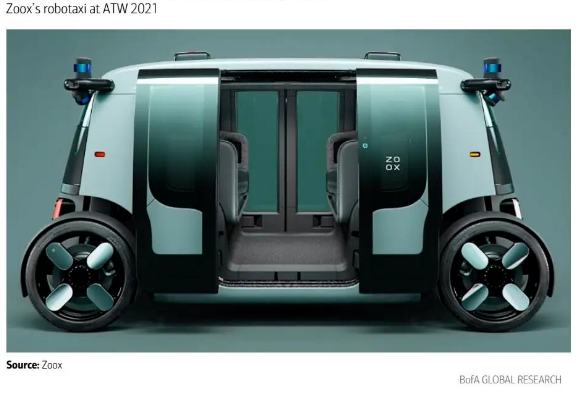
Core Insights - The autonomous vehicle (AV) market is projected to reach a potential size of $1.2 trillion by 2040, covering various sectors including automotive, trucking, logistics, agriculture, and mining [1][7] - Currently, commercial AV deployment is scaling, with 7 cities globally offering commercial robotaxi services and an additional 20 cities set to launch soon [1][7] - The report encompasses companies with a combined market capitalization of approximately $10 trillion, highlighting their strategies in AV technology development and market share competition [1][3] Market Overview - The AV market is expected to grow from $137 billion in 2024 to $1.2 trillion by 2040, with significant compound annual growth rates (CAGR) across various sectors [7] - The automotive sector alone is anticipated to reach $686.89 billion by 2040, with a CAGR of 14.6% from $78.08 billion in 2024 [10] - The trucking sector is projected to grow to $353.52 billion by 2040, with a CAGR of 14.5% [10] Key Companies and Their Roles - Major players in the OEM sector include companies like Caterpillar, Deere, Daimler Truck, and Toyota, all of which are investing in AV technologies and partnerships [4][9] - Chinese companies such as Xiaomi and XPeng are also significant, with Xiaomi focusing on LiDAR technology and XPeng developing the XNGP system for nationwide deployment [8][10] - In the software domain, companies like Google (Waymo) and Baidu (Apollo Go) are leading in AV commercialization, with Waymo planning to provide 250,000 paid rides weekly by 2025 [8][10] Technology and Innovation - The semiconductor sector plays a crucial role in AV development, providing essential capabilities such as AI training and sensor processing [11] - Key semiconductor companies include Nvidia, Qualcomm, and Mobileye, with Nvidia expected to generate $1.7 billion in automotive revenue by 2025 [11] - LiDAR technology is dominated by companies like Hesai and RoboSense, with significant revenue growth projected in the coming years [8][11] Future Projections - By 2030, it is estimated that 10% of Deere's revenue will come from recurring sources related to AV solutions in agriculture and construction [9] - Daimler Truck's Torc system is expected to contribute $1.5 billion in profit by 2035, representing 30% of its adjusted EBIT in 2024 [9] - Horizon Robotics anticipates that 97% of its revenue will come from AV-related solutions by 2024, with significant market share growth expected by 2030 [9][10]




BASF and Toyota Team Up to Develop Body&Paint Program for Europe
ZACKS· 2025-06-11 16:06
Core Insights - BASF SE has entered a strategic partnership with Toyota Motor to develop the Toyota Body&Paint program for Europe, aiming for a long-term collaboration for the Toyota and Lexus brands [1][8] Group 1: Partnership Details - BASF Coatings will provide premium automotive refinish solutions in Europe under the Glasurit and R-M brands, along with consultancy services and access to the cloud-based platform Refinity [2][8] - The collaboration is designed to enhance quality standards and support Toyota's sustainability targets in the European market [2][8] Group 2: Market Expectations - The European markets are anticipated to see global standards in refinish repair works through continuous improvements and a focus on new business opportunities [3] Group 3: Stock Performance - BASFY stock has increased by 2.3% over the past year, contrasting with a 24% decline in the industry [5]


Tesla shares tumble as Trump, Musk escalate attacks: ‘Elon's politics continue to harm stock'
New York Post· 2025-06-05 17:11
Core Viewpoint - Elon Musk's criticism of President Trump's tax legislation has led to a decline in Tesla's stock, indicating potential strain in their relationship, which has historically benefited Musk's business empire [1][4][5]. Group 1: Stock Performance - Tesla shares dropped over 5% on a day with no significant news, suggesting that Musk's rhetoric is impacting investor sentiment [1][4]. - Overall, Tesla shares are down 22% this year, despite being the most valuable automaker globally with a market value of $1 trillion [17]. Group 2: Legislative Impact - The House version of the budget bill proposes ending the $7,500 electric vehicle subsidy by the end of 2025, which could negatively affect Tesla's demand [13]. - Analysts predict Tesla could face a $1.2 billion hit to its full-year profit and an additional $2 billion setback to regulatory credit sales due to Senate legislation targeting California's EV sales mandates [14]. Group 3: Market Dynamics - Musk's alignment with the Trump administration has alienated some potential Tesla buyers, particularly Democrats, and his recent criticisms may further impact Republican buyers [6][7][16]. - Despite the challenges, Tesla remains the most valuable automaker, significantly surpassing competitors like Toyota, which has a market value of about $290 billion [17].

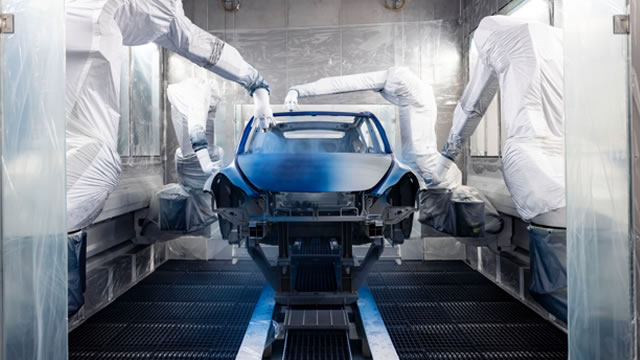
Toyota Industries' shares nosedive on $33 billion buyout plan — steepest fall in 10 months
CNBC· 2025-06-04 02:45
Group 1 - Toyota Industries Corp. shares fell by as much as 13% following Toyota Group's announcement of a 4.7 trillion yen ($33 billion) deal to take the company private, with a tender offer of $26 billion at 16,300 yen per share, significantly lower than the previous closing price of 18,400 yen [1] - The deal involves the creation of a new holding company, with Toyota Fudosan investing approximately 180 billion yen, Akio Toyoda investing 1 billion yen, and Toyota Motor investing around 700 billion yen in non-voting preferred shares, alongside loans from major banks [2] - This transaction reflects a broader trend in Japan where companies are under pressure to reduce long-standing cross-shareholding arrangements, as urged by the Financial Services Agency [3] Group 2 - Akio Toyoda's investment is seen as symbolic, aimed at enhancing unity within the Toyota group, although it does not provide him full control over Toyota Industries [4] - In April, Toyota indicated it was considering a potential $42 billion buyout of Toyota Industries, exploring various investment options, including partial investment [5] - A special committee engaged in negotiations to secure a better deal, but the final offer of 16,300 yen was below the midpoint of the valuation range provided by independent financial advisers, and requests for an improved offer were declined [6] Group 3 - Toyota Industries, the founding company of Toyota Motor, manufactures a diverse range of products, including forklifts, engines, electronic components, and stamping dies [7]

Trump's 25% auto tariffs are in effect. What investors need to know
CNBC· 2025-04-03 11:54
Core Viewpoint - The implementation of President Trump's 25% tariffs on imported vehicles is expected to significantly impact the automotive industry and investor sentiment, with potential long-term effects on earnings and market dynamics [1][2][3]. Industry Impact - The tariffs apply to vehicles not assembled in the U.S., affecting 46% of the approximately 16 million vehicles sold domestically in the previous year [2]. - Analysts express concerns that prolonged tariffs could lead to a recession in the automotive sector, with significant negative implications for company earnings [2][3]. - The tariffs are anticipated to increase vehicle prices, with estimates suggesting new vehicle prices could rise by as much as $10,000 if costs are fully passed on to consumers [20]. Company-Specific Effects - Automakers such as Volvo, Mazda, Volkswagen, and Hyundai are identified as most at risk, with over 60% of their U.S. sales being imported [11]. - General Motors (GM) is projected to face the highest exposure to tariffs, with estimates indicating a potential 79% drop in earnings before interest and taxes (EBIT) and an 81% decline in earnings per share (EPS) [13]. - Ford is expected to see a 16.5% hit to EBIT and a 23% decline in EPS due to the tariffs [14]. - Tesla, Rivian Automotive, and Lucid Group are positioned more favorably as their vehicles are assembled in the U.S., insulating them from the tariffs [15][16]. Market Dynamics - U.S. auto sales in the first quarter exceeded expectations as consumers rushed to purchase vehicles before the tariffs took effect [17]. - S&P Global Mobility forecasts that U.S. light-vehicle sales could decline to between 14.5 million and 15 million units annually if tariffs remain in place, down from approximately 16 million in 2024 [18]. - Entry-level vehicles, which typically have lower profit margins, are particularly vulnerable to price increases due to the tariffs [18][19]. Supply Chain Considerations - The concept of a fully U.S.-sourced vehicle is deemed unrealistic, as even domestically assembled vehicles rely on a global supply chain for parts [7][8]. - Automakers are awaiting clarity on potential tariffs for auto parts, which could further complicate their supply chain and financial outlook [6][10].