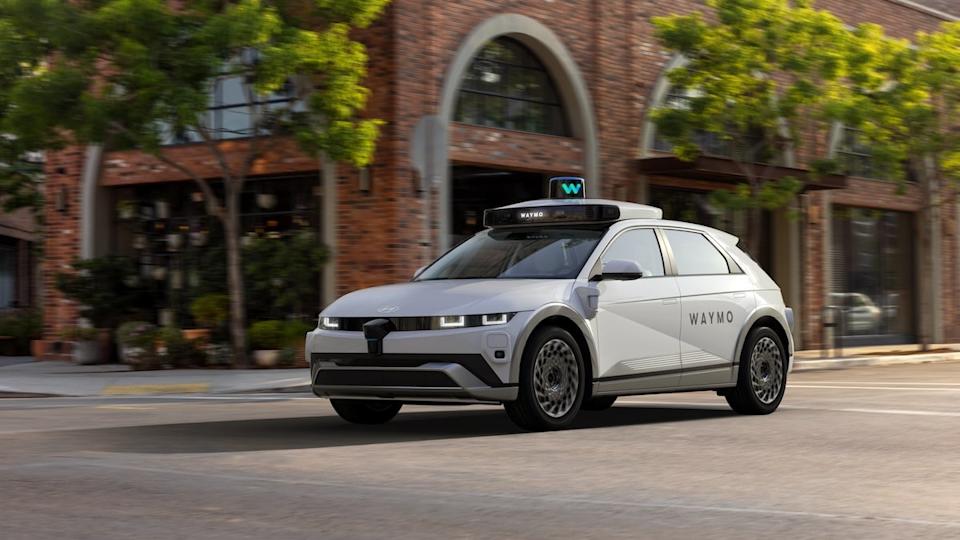
Waymo

Search documents
Tesla takes a swipe at Waymo after it denies its robotaxis are driven by remote workers in the Philippines
Business Insider· 2026-02-19 16:30
Core Insights - The competition between Tesla and Waymo in the robotaxi sector is intensifying, with both companies engaging in regulatory disputes to influence California's autonomous vehicle regulations [1] Group 1: Tesla's Position - Tesla emphasized that it employs only US-based human helpers for its robotaxis, contrasting with Waymo's use of remote workers from the Philippines [1][3] - The company highlighted that its ride-hailing service was unaffected by a December 2025 power outage in San Francisco, which had stranded Waymo vehicles [2][3] - Tesla argued that having domestically-based remote operators enhances reliability, familiarity with local road rules, and reduces cybersecurity risks [4] Group 2: Waymo's Challenges - Waymo has faced scrutiny for its practice of using remote workers, particularly during a Senate hearing where concerns about safety and cybersecurity were raised [5] - The company defended its remote assistance program, stating that its agents provide support rather than directly driving the vehicles, with around 70 agents available at any time [6] - Waymo's agents in the Philippines are required to have local driver's licenses and receive training in US road laws, with complex scenarios managed by a US-based specialist team [7] Group 3: Regulatory Environment - Lawmakers are increasingly pressing for investigations into the use of foreign-based remote assistance operators in the robotaxi industry, reflecting growing concerns over safety and operational practices [8] - Both Tesla and Waymo are actively working to expand their robotaxi services in various US cities, with Waymo planning tests in Sacramento and Boston, while Tesla has begun offering autonomous rides in Austin [9]




纽约州撤回无人驾驶出租车提案 Waymo扩张恐将受挫
Xin Lang Cai Jing· 2026-02-19 15:50
Core Viewpoint - The withdrawal of the proposal by New York Governor Hochul to allow commercial autonomous taxi services outside New York City is a setback for Waymo, which is looking to expand its autonomous fleet this year [1] Group 1: Proposal Withdrawal - New York Governor Hochul has retracted a proposal that would have permitted companies like Waymo to apply for licenses to test autonomous taxi services outside of New York City [1] - The proposal was initially introduced in a policy preview report last month, indicating a potential expansion for autonomous vehicle services in the state [1] Group 2: Company Response - Waymo expressed disappointment over the governor's decision but remains committed to bringing its services to New York and plans to work with state legislators to advance the issue [1]
纽约州撤回无人驾驶出租车提案,Waymo扩张恐将受挫
Jin Rong Jie· 2026-02-19 15:46
美国纽约州州长霍楚尔撤回了一项提案,该提案原本允许在纽约市以外地区提供商业无人驾驶出租车服 务,这对Alphabet(GOOG.O)旗下的Waymo公司来说是一个打击,因为该公司正寻求在今年积极扩大其 无人驾驶车队。霍楚尔上个月在一份政策预览报告中提出的这项提案,将允许Waymo等自动驾驶汽车 公司申请许可,试运行无人驾驶服务。州长办公室证实已决定撤回该计划。Waymo表示:"虽然我们对 州长的决定感到失望,但我们致力于将我们的服务带到纽约,并将与州立法机构合作推进这个问题。" ...
Uber, Latest Victim of Disruption Panic, Still Has Role in Robotaxis
WSJ· 2026-02-19 10:30
Core Insights - Waymo is experiencing significant momentum in the autonomous vehicle sector, indicating strong advancements and potential market leadership [1] - Uber's scale and market position are being undervalued amidst a broader AI-driven selloff, suggesting potential investment opportunities [1] Group 1: Waymo's Position - Waymo's advancements in technology and market presence are becoming increasingly evident, positioning the company as a leader in the autonomous driving space [1] - The growth trajectory of Waymo reflects a robust response to market demands for innovative transportation solutions [1] Group 2: Uber's Valuation - Despite its large scale and established market presence, Uber's valuation is not fully reflecting its potential in the AI and autonomous vehicle markets [1] - The current market conditions may present a buying opportunity for investors looking to capitalize on Uber's undervalued status [1]

Uber Has Big Plans for Lots More Robotaxis and EV Charging Stations
CNET· 2026-02-18 22:20
Core Insights - The robotaxi industry is expected to experience significant growth, with Uber investing over $100 million to establish autonomous vehicle charging stations in major US cities [1][4] - The robotaxi market is projected to grow from an estimated $610 million last year to $147.25 billion by 2033, indicating rapid industry expansion [2] - Uber aims to operate autonomous vehicle fleets in at least 10 cities by the end of 2026, expanding its global presence [3] Investment and Infrastructure - Uber's charging stations will be located at new autonomous vehicle depots, which will also handle cleaning, maintenance, and inspections [3] - The company plans to develop DC fast charging (DCFC) stations in priority cities, which can provide a full charge in under an hour [4] - Partnerships with charge point operators will lead to the addition of over 1,000 chargers in cities like New York, Los Angeles, and London, enhancing infrastructure for both autonomous and human-driven EVs [5][6] Community and Environmental Impact - The addition of charging stations in low-income areas is expected to benefit ride-hail drivers by reducing operational costs and improving community health [7]
Meta Deepens Nvidia Ties As Uber Plans To Spend $100M to Build Robotaxi Charging Stations
Bloomberg Television· 2026-02-18 18:38
Mata is among the top two customers for in video chips. So it's more to do with the fact that not only are they using the GPUs from NVIDIA, they're also using the CPUs now. And Intel and AMD used to own that market of server CPUs.And what NVIDIA is saying is will give you a better throughput, a better performance if you end up using our GPU cluster complement or CPU's. And I think overall, I mean, that's Metters way of making sure they get the supply from inferior because we heard that at least ten times fr ...


Meta Deepens Nvidia Ties As Uber Plans To Spend $100M to Build Robotaxi Charging Stations
Youtube· 2026-02-18 18:38
分组1 - Mata is a significant customer for video chips, utilizing both NVIDIA GPUs and CPUs, which were previously dominated by Intel and AMD [1] - NVIDIA claims that using their GPU cluster alongside CPUs will enhance throughput and performance, indicating strong demand for their chips [2] - Uber plans to invest over 100 million in robotaxi charging stations, which may alter its company profile given its scale of over 13 billion rides annually [3][4] 分组2 - Uber's scale is highlighted by its 10 million rides per day, compared to Waymo's 20 million rides in the past year, emphasizing Uber's operational advantage [5] - The challenge for robotaxi services is managing wait times, which Uber's scale helps mitigate, keeping effective prices low [6] - Uber faces competition from Chinese autonomous driving companies, particularly in the robotaxi sector, but maintains a strong position in markets outside of China [9][10]


Waymo defends use of remote assistance workers in robotaxi operations
Reuters· 2026-02-17 21:58
Core Viewpoint - Alphabet's self-driving unit Waymo has defended its use of remote assistance personnel amidst congressional inquiries, asserting that these personnel have never been utilized to operate robotaxis during on-road operations [1] Group 1 - Waymo's remote assistance personnel are a point of contention in discussions with Congress [1] - The company emphasizes that remote assistance has not been employed for the movement of robotaxis in real-world scenarios [1]

This 1 Underrated Factor Could Drive the Big Winner in the Robotaxi Race
Yahoo Finance· 2026-02-17 10:20
One company seems to be building a big lead in the U.S. market for robotaxis, and it might not be for a reason that most investors know about. Waymo, a subsidiary of Alphabet (NASDAQ: GOOG)(NASDAQ: GOOGL), uses LiDAR technology, along with cameras and radar, to build its autonomous capabilities, while its competitor Tesla (NASDAQ: TSLA) primarily uses computer vision with digital cameras. Waymo uses LiDAR -- Tesla does not LiDAR (light detection and ranging) uses laser beams and digital sensors to measu ...