Airbus

Search documents


Dassault Systèmes and Airbus Extend Strategic Partnership to Use Virtual Twins for Next-Generation Programs
Globenewswire· 2025-04-24 04:58
Core Insights - Dassault Systèmes and Airbus have extended their strategic partnership, focusing on the 3DEXPERIENCE platform for lifecycle management of all new Airbus programs for civil and military aircraft and helicopters [2][6] - The deployment will enhance collaboration among over 20,000 users across various business areas and suppliers, utilizing virtual twins to improve production efficiency and reduce costs [3][6] - The partnership aims to support Airbus's digital transformation, accelerating the development of next-generation aerospace products while ensuring quality, safety, and security [4][6] Company and Industry Summary - The 3DEXPERIENCE platform will be implemented company-wide at Airbus for all future generations of aircraft and helicopters, marking a significant milestone in digital transformation [6] - Airbus will leverage seven industry solution experiences from Dassault Systèmes, including "Program Excellence" and "Winning Concept," to streamline operations and enhance product lifecycle management [5][6] - The collaboration is expected to enable Airbus to utilize AI-powered generative experiences and advancements in material science, modeling, and simulation, thereby redefining the aerospace industry's future [4][5]
Is Boeing (BA) stock a buy after Q1 earnings?
Finbold· 2025-04-23 13:26
Core Insights - Boeing reported a narrower-than-expected loss of $0.49 per share for Q1 2025, compared to the anticipated loss of $1.24 per share, while revenue was slightly below expectations at $19.5 billion versus $19.66 billion [1][3][4] - The stock price increased by 5.07% in pre-market trading on April 23, reducing year-to-date losses to 3.52%, partly due to a $10.55 billion sale of its Digital Aviation Solutions unit to Thoma Bravo [1][4][7] Financial Performance - Boeing's Q1 2025 earnings per share (EPS) beat analyst expectations significantly, overshadowing the slight revenue miss [4] - The actual revenue reported was $19.5 billion, which was lower than the expected $19.66 billion [1][3] Analyst Sentiment - Analyst sentiment remains predominantly bullish, with 13 out of 19 analysts rating Boeing stock as a 'Buy' and an average price target of $194.35, indicating a potential upside of 13.8% from current levels [2][9][11] - The current ratings include 5 'Hold' ratings and 1 'Sell' rating [8] Market Outlook - Analysts have not yet published revised coverage following the earnings call, but the overall outlook remains positive, suggesting that Q1 results are unlikely to lead to reduced estimates [11] - Boeing operates in a duopoly with Airbus, indicating that its recovery is anticipated, though the timing remains uncertain [12]


Research Frontiers, Gauzy and Mercedes-Benz Debut SPD-SmartGlass in Innovative Dual Smart Glass configuration at Auto Shanghai 2025 in Mercedes Vision V’s Dynamic Luxury Van
Globenewswire· 2025-04-23 13:00
Core Insights - Research Frontiers Inc. announced the incorporation of its SPD-SmartGlass technology in the new Mercedes-Benz Vision V show car unveiled at Auto Shanghai 2025 [1][6] - Approximately 75% of the Vision V's glazing area utilizes SPD film, highlighting the growing demand for smart glass technology in the automotive industry [2][4] - The Vision V features a dual smart glass stack combining SPD and PDLC technologies, allowing for seamless transitions between different states of transparency [5] Company Overview - Research Frontiers is a publicly traded technology company specializing in SPD-Smart light-control film technology, which allows for instant and precise control of glass shading [7][8] - The company has licensed its technology to various well-known companies in the chemical, material science, and glass industries, with applications in numerous vehicles, aircraft, yachts, and buildings [8] Industry Trends - SPD-SmartGlass technology is increasingly adopted by leading automotive brands, including Cadillac, Ferrari, and McLaren, as well as in aircraft and luxury trains, showcasing its versatility [4] - The technology offers significant benefits such as reducing cabin temperatures by up to 18 degrees Fahrenheit (10 degrees Celsius), leading to smaller air conditioning systems and energy savings [7] - The automotive industry is moving towards electric, connected, and personalized mobility, with SPD-SmartGlass positioned as a key player in this transformation [6]


Boeing Investors: Here's What the Latest Big News From Delta Air Lines Means for You
The Motley Fool· 2025-04-19 18:32
Core Insights - Delta Air Lines' recent earnings call highlighted the impact of tariffs on the aerospace sector, particularly concerning Boeing and Airbus [1][2][3] Group 1: Delta's Earnings and Implications - Delta's management indicated a tariff-induced slowdown, which was anticipated by investors [2] - CEO Ed Bastian stated that Delta would not absorb tariffs on aircraft deliveries, emphasizing the difficulty of managing costs with a 20% tariff increase [3] - The implication is that Airbus may need to share tariff costs, or risk order delays or cancellations [4] Group 2: Broader Industry Impact - The approach taken by Delta could influence non-U.S. airlines to respond similarly to tariffs imposed on U.S. products [5] - Both Airbus and Boeing face increased costs due to tariffs, affecting their competitiveness [5][8] - Delta's management noted that tariffs are weakening end demand, leading to reduced capacity expansion plans [6] Group 3: Market Conditions and Future Outlook - Weakening demand could pressure airline ticket pricing, impacting airlines' ability and willingness to place aircraft orders [7] - Ongoing trade conflicts may lead to rising costs for Boeing while demand weakens, complicating its competitive position against Airbus [8] - Delta's revenue growth was 3.3%, below previous estimates, and management declined to update full-year guidance due to market uncertainty [10]
GE stock price forms giant megaphone pattern ahead of earnings
Invezz· 2025-04-18 05:15
Company Overview - GE Aerospace is a major industrial company in the United States with a market capitalization exceeding $193 billion, focusing on commercial and defense aircraft engines [2] - The company has undergone restructuring, resulting in a leaner and more profitable organization, benefiting from a robust order book [3] Business Performance - GE Aerospace generated orders of $15.5 billion in the fourth quarter, reflecting a 46% increase year-over-year, contributing to a revenue growth of 16% to $9.9 billion and a net profit increase of 37% to $2.3 billion [4] - For the year, the company reported over $50.3 billion in orders, a 32% increase from the previous year, with revenue rising by 9% to $38.7 billion and a profit margin widening to 19.7% [5] Market Dynamics - The performance of GE Aviation is closely tied to the number of aircraft orders, as its engines are utilized in various aircraft models, including Boeing and Airbus [4] - Analysts project GE's revenue for the first quarter to be $9.05 billion, with expectations of $39.4 billion for the full year and $43.56 billion for the next financial year [5] Impact of Tariffs - Donald Trump's tariffs on imports, particularly a 25% levy on steel and aluminum, are expected to impact GE's margins negatively [6] - The company is also affected by China's recent decision to halt shipments of rare earth elements, which are crucial for engine parts, potentially impacting its business [7] Stock Price Analysis - GE's stock price has recently rebounded, remaining above the 200-day moving average, indicating bullish control [10] - A significant megaphone pattern has formed in the stock price chart, which may lead to a strong bullish breakout, with a key level to watch being the year-to-date high of $213.95, an 18% increase from current levels [11]


Boeing is in the crosshairs of the US-China trade war
Business Insider· 2025-04-16 07:18
Core Viewpoint - President Trump's tariffs on China are negatively impacting Boeing, as China has ordered its airlines to halt deliveries of Boeing planes and parts, leading to a decline in Boeing's stock price [1][9]. Group 1: Impact on Boeing - Boeing's stock fell by 2.4% following reports that China ordered its airlines to stop taking deliveries of Boeing aircraft [1]. - China Southern Airlines has suspended the sale of 10 used Boeing 787-8 Dreamliner planes, which indicates a shift in their purchasing strategy [1][2]. - The airline's decision may be influenced by the 125% tariff on American products, which significantly raises the cost of new Boeing purchases [2]. Group 2: Market Share Concerns - China is a crucial market for Boeing, especially as it competes with Airbus and emerging Chinese manufacturers [3]. - Any restrictions on deliveries could lead to a loss of market share for Boeing, particularly if Chinese airlines turn to Airbus or domestic manufacturers for new orders [8]. - Boeing's 2024 annual report highlighted the potential negative impact of geopolitical tensions on its business in China [6]. Group 3: Future Orders and Deliveries - Boeing expressed concerns that inability to deliver aircraft to Chinese customers could result in reduced deliveries and lower market share [7]. - Major Chinese airlines, such as China Southern and Air China, are among the largest carriers globally, making their purchasing decisions critical for Boeing [7]. - Other international carriers, like Ryanair and Delta, have indicated they might delay Boeing deliveries if tariffs are imposed, further complicating Boeing's market position [9].
China halts Boeing jet orders
Fox Business· 2025-04-15 11:40
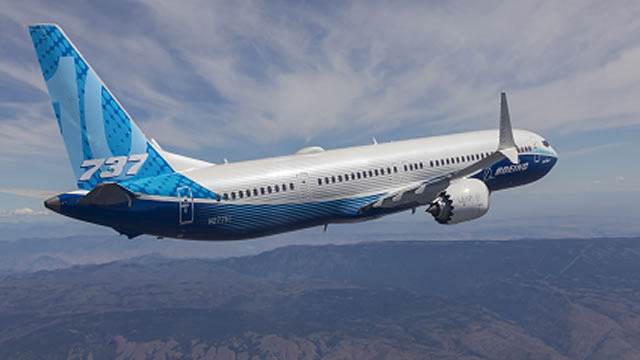
Core Viewpoint - Chinese airlines have been ordered to halt further deliveries of Boeing aircraft due to the U.S. imposing a 145% tariff on Chinese goods, which has negatively impacted Boeing's stock price and delivery plans in China [1][4][9]. Group 1: Impact on Boeing - Boeing's pre-market share price dropped by 3.72% following the news of the tariff [1]. - Year-to-date, Boeing has delivered 18 aircraft to nine airlines in China, with major airlines planning to take delivery of 45, 53, and 81 planes from 2025 to 2027 [1][4]. - The imposition of a 125% duty on U.S. imports by China could significantly increase the cost of Boeing jets for Chinese carriers, potentially leading them to consider alternatives like Airbus and domestic manufacturer COMAC [9]. Group 2: Chinese Government Response - The Chinese government has requested that local carriers stop purchasing aircraft-related equipment and parts from U.S. companies, which is expected to raise maintenance costs for Boeing jets operating in China [4]. - There are considerations by the Chinese government to provide assistance to airlines leasing Boeing jets that are facing increased costs due to the tariffs [4]. Group 3: Broader Trade Context - The ongoing tariff war between the U.S. and China has been exacerbated by President Trump's trade policies, with China retaliating by increasing levies on U.S. imports to 125% [7]. - Despite the tensions, Trump has indicated that a deal with Beijing could be possible, although no agreement has been finalized [7].

Why Boeing Stock Lost Ground Today
The Motley Fool· 2025-04-10 17:15
Core Viewpoint - Boeing's stock is experiencing significant volatility, with a recent decline of 6.4% as the market reassesses optimism following a temporary pause on tariffs [1] Group 1: Tariff Context - President Trump has implemented a 90-day pause on most new tariffs but maintains a 10% tariff on nearly all imports and has increased tariffs on Chinese imports to 145% [2] - The pause on tariffs may indicate a willingness to negotiate deals that could benefit U.S. companies in foreign markets [2] Group 2: Impact of Tariffs on Boeing - The 10% tariff will still impact Boeing, and investor sentiment regarding tariffs is likely to influence Boeing's stock price [3] - Increased tariffs are expected to raise Boeing's costs, particularly for raw materials like steel and aluminum, which will also affect suppliers who may pass on these costs [4] - Reciprocal tariffs from other countries, such as those from China, will make Boeing's planes less competitive compared to Airbus [4] Group 3: Supply Chain and Order Implications - Supply chains may face disruptions, as evidenced by Boeing supplier Howmet Aerospace declaring tariffs a force majeure event, impacting contract fulfillment [4] - Political factors may complicate Boeing's orders, potentially leading to delays and cancellations during tariff negotiations [4] - A global economic slowdown could further result in order cancellations as airlines reconsider their capacity expansion plans [4]