Freddie Mac

Search documents
Average rate on a 30-year mortgage falls again, dips to lowest level since early October
Yahoo Finance· 2025-09-18 16:04
Group 1 - The average rate on a 30-year U.S. mortgage decreased to 6.26% from 6.35% last week, with a year-ago average of 6.09% [1] - The average rate on 15-year fixed-rate mortgages fell to 5.41% from 5.5% last week, compared to 5.15% a year ago [2] - The decline in mortgage rates is attributed to expectations of the Federal Reserve cutting rates for the first time since last year, with a quarter-point cut already implemented [3] Group 2 - The average rate on a 30-year mortgage has been mostly declining since late July, influenced by the Federal Reserve's interest rate policy and economic expectations [2][3] - The Federal Reserve projected it would lower its benchmark rate two more times this year, reflecting concerns over the U.S. job market [3]
Mortgage Rates Continue to Move Down
Globenewswire· 2025-09-18 16:00
Core Insights - Freddie Mac reported a decrease in mortgage rates, with the 30-year fixed-rate mortgage (FRM) averaging 6.26% as of September 18, 2025, down from 6.35% the previous week [1][4] - The share of mortgage applications for refinancing reached nearly 60%, the highest level since January 2022, indicating a strong response from homeowners to the declining rates [1] Mortgage Rate Trends - The 30-year FRM averaged 6.26% on September 18, 2025, compared to 6.09% a year ago, showing a year-over-year increase [4] - The 15-year FRM averaged 5.41%, down from 5.50% the previous week and up from 5.15% a year ago [4] Freddie Mac's Mission - Freddie Mac aims to enhance liquidity, stability, and affordability in the housing market, supporting families in buying, renting, or maintaining their homes since 1970 [3]
Mortgage and refinance interest rates today, September 18, 2025: Refinancing highest since Jan. 2022 as rate fall again
Yahoo Finance· 2025-09-18 10:00
Core Insights - Mortgage rates have decreased for another week, with the 30-year fixed-rate mortgage at 6.26% and the 15-year fixed-rate mortgage at 5.41% [1] - The share of mortgage applications for refinancing has reached nearly 60%, the highest level since January 2022 [1] Mortgage Rates Overview - The current national average mortgage rates include: - 30-year fixed: 6.15% - 20-year fixed: 6.62% - 15-year fixed: 5.49% - 5/1 ARM: 6.82% - 7/1 ARM: 6.88% - 30-year VA: 5.75% - 15-year VA: 5.15% - 5/1 VA: 5.85% [4] - Another set of current rates shows: - 30-year fixed: 6.21% - 20-year fixed: 5.61% - 15-year fixed: 5.58% - 5/1 ARM: 6.97% - 7/1 ARM: 6.94% - 30-year VA: 5.78% - 15-year VA: 5.43% - 5/1 VA: 5.33% [5] Economic Impact on Mortgage Rates - The recent Fed quarter-point rate cut has not yet reflected in mortgage rates, and the "Fed effect" will be observed in the coming week [2] - The 10-year Treasury yield, which serves as a benchmark for mortgage rates, increased immediately after the Fed announcement, indicating potential volatility in mortgage rates [2] Refinancing Insights - The refinancing interest rates can be higher than purchase mortgage rates, which is a common trend [11] - The share of refinancing applications has surged, indicating a strong interest in refinancing among homeowners [1]
Will mortgage rates drop further after the Fed's rate cut? Not necessarily
ABC News· 2025-09-18 06:06
Core Viewpoint - The Federal Reserve's recent quarter-point rate cut does not guarantee a continued decline in mortgage rates, as various factors influence these rates beyond the Fed's actions [2][4][9]. Mortgage Rate Trends - Mortgage rates have been decreasing since late July, with the average 30-year mortgage rate at 6.35%, the lowest in nearly a year [2]. - A similar trend occurred last year, where rates fell to a two-year low of 6.08% shortly after the Fed's first rate cut in over four years [3]. - Despite the Fed's rate cuts last year, mortgage rates eventually rose, reaching over 7% by mid-January [4]. Influencing Factors - Mortgage rates are influenced by the Fed's interest rate policy, bond market expectations, and inflation [5][6]. - The 10-year Treasury yield, which has been easing since mid-July, is a key determinant for mortgage pricing [6][7]. - The Fed's actions can stimulate the economy but may also lead to inflation, which could increase mortgage rates [8]. Market Expectations - The futures market had anticipated more aggressive rate cuts than the Fed's recent projections indicate, creating a gap that could exert upward pressure on mortgage rates [9][10]. - Economists forecast that the average 30-year mortgage rate will remain between 6.3% and 6.4% by the end of the year, with no expectation for rates to drop below 6% [10]. Housing Market Impact - The decline in mortgage rates has provided some relief to the housing market, which has struggled since 2022, with home sales at their lowest in nearly 30 years [11]. - While lower rates improve purchasing power, high home prices, which have risen approximately 50% since the start of the decade, continue to hinder affordability [12]. - Further reductions in mortgage rates and slower home price growth are necessary to significantly improve market conditions [13]. Refinancing Considerations - Homeowners looking to refinance are taking advantage of the recent rate decline, leading to a surge in refinance loan applications [14]. - A common guideline for refinancing is to achieve at least a one percentage point reduction in the current rate to offset refinancing costs [15].


Could the Federal Reserve interest rate cut boost the US housing market?
BBC· 2025-09-17 23:02
Core Insights - The article discusses the potential impact of recent interest rate cuts by the Federal Reserve on the US housing market, highlighting that while mortgage rates have decreased, significant changes in borrowing costs may not be forthcoming [4][8][9] Mortgage Rates and Housing Market - The average rate on a 30-year mortgage fell to 6.35%, marking the largest weekly decline in a year and the lowest in 11 months [4] - Despite the Federal Reserve's interest rate cut, mortgage rates may not decrease significantly further as banks had already adjusted rates in anticipation of this cut [5][8] - Approximately 80% of mortgage borrowers have locked in rates below the current average, which contributes to a reluctance among homeowners to sell and thus limits housing supply [13][12] Buyer Sentiment and Market Activity - Some prospective buyers, like Aileen Barrameda, are motivated to enter the market despite high mortgage rates, anticipating future price increases [3][11] - Real estate agents report increased activity, with some buyers encouraged by recent declines in mortgage rates, although the overall market remains unaffordable for many [10][11] - Cautious optimism exists among lenders regarding the housing market, but the recent dip in mortgage rates is not expected to resolve underlying affordability issues [18][19]
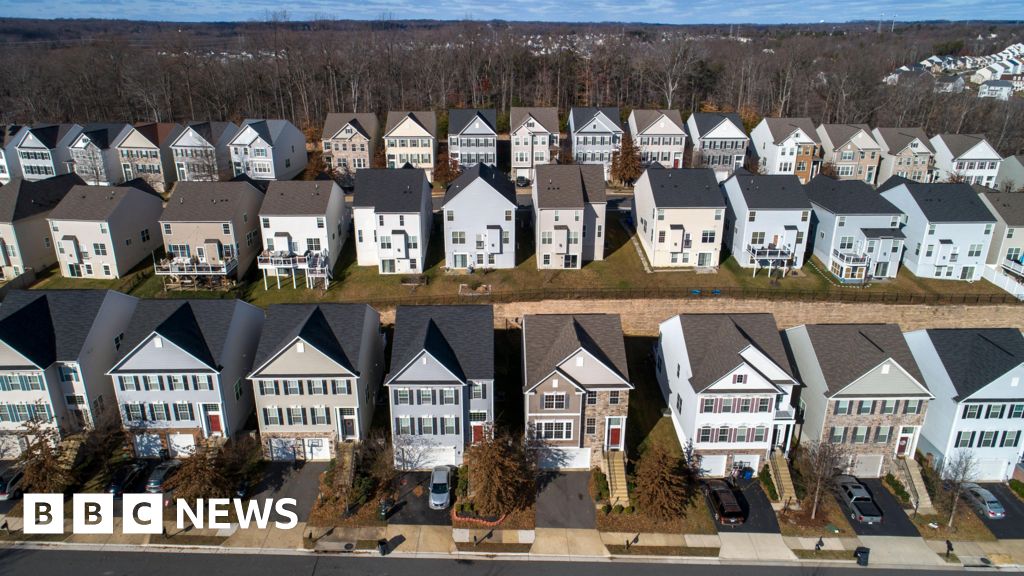
Americans are sprinting to refinance their mortgages as rates fall
Yahoo Finance· 2025-09-17 22:34
Core Insights - Refinance applications surged by 58% last week and 70% compared to the same week last year, indicating strong demand among homeowners [2][4][8] - The increase in refinancing activity is driven by a significant drop in home borrowing costs, as the market anticipates a Federal Reserve rate cut [4][6] - The share of adjustable-rate mortgages (ARMs) in refinancing activity rose to 12.9%, the highest level since 2008, reflecting a shift in borrower preferences [3][4] Mortgage Rates and Market Trends - The 30-year fixed mortgage rate decreased by 15 basis points to approximately 6.35%, marking the largest weekly drop in a year [5][8] - The 10-year US Treasury yield fell to around 4.02%, down from a peak of 4.8% in early 2025, influencing mortgage rates [4][5] - Overall mortgage activity increased by 9.2% in the week ending September 5, suggesting a positive outlook for the US housing market [6][8] Industry Sentiment - The National Association of Home Builders indicated that the housing market may be nearing a turning point as rates decline ahead of the expected Fed decision [7]
Cat fight: Bessent threatened to punch Pulte in the face, Pulte is already taking revenge
News & Analysis For Stocks, Crypto & Forex | Investinglive· 2025-09-17 21:32
Core Points - U.S. Treasury Secretary Scott Bessent listed two homes as his "principal residence" for mortgage purposes in 2007, which has drawn parallels to allegations of "mortgage fraud" made by President Donald Trump [1] - Mortgage specialists indicated that there is no evidence of misconduct in Bessent's paperwork, highlighting that such inconsistencies are not uncommon in the industry [2] - Bank of America did not rely on Bessent's claims and did not expect him to occupy both properties as primary residences [2] Industry Insights - The situation raises questions about the integrity of mortgage applications and the potential for misuse of property listings in securing loans [1][2] - The incident reflects broader concerns regarding accountability and transparency in financial dealings among high-profile government officials [1][2] - Speculation exists regarding potential motivations behind the leak of this information, suggesting possible retaliatory actions within the political landscape [3]

Bank of America: Mortgage rates could hit 5.0% under these conditions
Fastcompany· 2025-09-17 19:00
Core Viewpoint - The average 30-year fixed mortgage rate has recently declined, reaching a calendar-year low of 6.35%, with expectations for further decreases due to various market factors [2][3]. Group 1: Mortgage Rate Trends - The average 30-year fixed mortgage rate has edged down in recent months, influenced by a compression of the mortgage spread and a renewed investor interest in mortgage-backed securities (MBS) [3][4]. - The daily rate reported by Mortgage News Daily was 6.13%, indicating potential for further declines in the coming weeks [2]. Group 2: Economic Influences - Softer-than-expected labor market data and expectations of a shift in Federal Reserve policy from restrictive to neutral have contributed to downward pressure on mortgage rates [4]. - Analysts at Bank of America project that the average 30-year fixed mortgage rate could end 2025 at 6.25%, suggesting that much of the anticipated decline is already factored in [5]. Group 3: Future Projections - A path to a 5% mortgage rate could emerge if the Federal Reserve engages in MBS quantitative easing and yield curve control, potentially lowering the 10-year Treasury yield to 3.00%-3.25% [6]. - A significant economic downturn could lead to a flight to safety, increasing demand for Treasuries and further lowering mortgage rates [8]. - Bank of America believes that a drop to a 5% mortgage rate would likely occur in response to negative economic conditions or a change in central bank policy regarding MBS purchases [9].

Mortgages, Crypto And Bonds: Here’s How Consumers May Benefit From Lower Interest Rates
Forbes· 2025-09-17 18:13
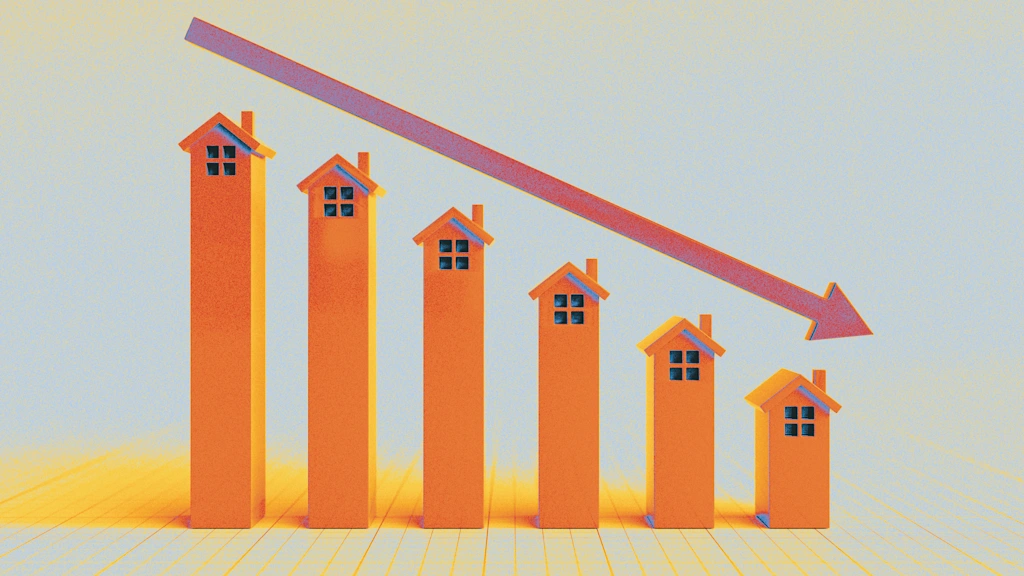
Core Viewpoint - The Federal Reserve has decided to lower interest rates for the first time in months, which is expected to lead to lower mortgage rates, bond yields, and potentially boost cryptocurrency prices in the coming weeks [1]. Interest Rate Changes - The Federal Reserve's policymaking panel has reduced interest rates from a range of 4.25% to 4.5% to a new range of 4% to 4.25% [2]. Impact on Mortgage Rates - Average 30-year fixed-rate mortgage rates decreased to 6.35% from 6.5%, marking the lowest level since October 2024. The 15-year fixed-rate mortgage rates also fell to 5.5% from 5.6% [3]. - Historical data shows that when the Fed lowered rates to near zero during the pandemic, 30-year mortgage rates reached record lows between 2.7% and 3% by the end of 2020 [3]. - Consumers who refinanced their mortgages in 2020 saved approximately $5.3 billion annually due to lower rates [3]. Treasury Bonds Response - Long-term Treasury yields are expected to decline as interest rates are lowered, which typically results in lower borrowing costs for consumers across various loan types [4]. - During the pandemic, 10-year Treasury yields fell to an all-time low of 0.5% when the Fed pushed rates to near zero [4]. Cryptocurrency Market Reaction - Lower interest rates may encourage investment in riskier assets like cryptocurrencies, as traditional savings accounts and bonds yield less [5]. - Historical trends indicate that the price of bitcoin surged from about $5,000 in March 2020 to around $69,000 by November 2021 as interest rates fell [5]. - The impact of new rate cuts on cryptocurrencies remains uncertain, especially as the industry has recently benefited from looser regulations [5]. Background Context - The decision to ease monetary policy follows pressure from President Donald Trump, who criticized Fed Chair Jerome Powell for being "TOO LATE" in implementing significant rate cuts [6]. - Wall Street had anticipated this interest rate reduction due to stronger-than-expected jobs data and rising inflation, which remains above the Fed's 2% target [6]. - The Fed's dual mandate includes maintaining full employment and stabilizing inflation, with recent signals indicating a potential adjustment in policy stance due to shifting economic risks [6].

Walker & Dunlop CEO on commercial real estate: Multifamily has held up particularly well
CNBC Television· 2025-09-17 17:45
Market Overview - Commercial real estate outstanding debt is $4 trillion [1] - Single-family real estate outstanding debt is $13 trillion, significantly larger than commercial real estate [1] - Multifamily real estate accounts for half of the commercial real estate debt [1] - Office buildings, retail, and hospitality sectors have $2 trillion in outstanding debt [1] Multifamily Sector - Multifamily real estate has performed well due to the constant demand for housing [2] - Fannie Mae and Freddie Mac consistently provide funding for multifamily properties, even when other lenders are hesitant [2] - 50% of the $2 trillion debt is with Fannie and Freddy [1]