Adyen

Search documents
Klarna Set to Take off With Lufthansa Group, Bringing Flexible Payments to Travellers Across Europe and the U.S.
Businesswire· 2025-11-27 13:00
Core Insights - Klarna has announced a multi-market partnership with Lufthansa Group to offer flexible payment options for travelers in Europe and the U.S. [1][2] - The integration allows customers to pay in full, pay later, or spread the cost over time, enhancing convenience and control for travelers [2][3] - The rollout of these payment options will begin in mid-November and expand across all Lufthansa Group Network Airlines by the end of Q2 2026 [3] Company Overview - Klarna is a global digital bank with over 114 million active users and processes 3.4 million transactions daily [5] - The company partners with over 850,000 retailers, including major brands like Uber, H&M, and Airbnb, to provide innovative payment solutions [5] - Klarna is listed on the New York Stock Exchange under the ticker symbol KLAR [5] Industry Context - The partnership reflects a growing demand for flexible payment solutions in the travel industry, as more travelers seek fairer payment options [3][4] - Klarna's collaboration with Lufthansa Group adds to its existing partnerships with leading travel brands such as Airbnb, Expedia, and Booking.com [4]


The merchant economy: How integrated payments are re-architecting banking
Yahoo Finance· 2025-11-18 10:14
Core Insights - The merchant economy is transforming banking by shifting focus from traditional banking services to integrated payment solutions that enhance customer relationships and provide actionable insights [6][65][74] Merchant Ecosystems - Merchant ecosystems create defensible scale for banks, offering continuous customer touchpoints and recurring fee income, while increasing switching costs for businesses that integrate their operations with a single provider [1] - Leading banks are repositioning themselves to occupy the operating layer of commerce, moving beyond merely financing transactions to integrating analytics and payment solutions into merchant platforms [2][6] Performance Metrics - The evaluation of merchant portfolios has shifted from cost-to-income ratios to metrics like throughput, retention, and share of wallet, indicating a new frontline of competition in merchant services [3][5] - The focus has moved from the number of accounts to the number of active terminals, reflecting the importance of transaction volume in retail banking [3] Technological Advances - Advances in cloud computing and data analytics enable real-time interpretation of transaction flows, turning them into actionable intelligence for banks [4][20] - The digitization of commerce post-pandemic has expanded acceptance networks, allowing small businesses to utilize various payment methods beyond traditional card rails [4] Strategic Shift in Banking - Merchant services have evolved from a back-office function to a strategic center of growth, with banks now required to orchestrate relationships rather than merely process transactions [11][12] - The role of relationship managers has transformed to focus on conversion rates and platform integration, emphasizing the need for multidisciplinary teams in merchant services [12][13] Instant Payments - Instant payments have become a defining standard in the merchant economy, reshaping liquidity management and customer experience for both banks and merchants [15][16] - The shift to real-time payments requires banks to manage liquidity dynamically, responding to new expectations from merchants for immediate transaction confirmation [17][20] Embedded Lending - Modern merchants view lending as an embedded service integrated into daily transactions, allowing for contextual lending that activates based on real-time cash flow [22][24] - The evolution of lending from traditional methods to algorithmic assessments based on live transaction data enhances credit decision-making and reduces risk [23][30] Data Utilization - Data generated from transactions serves as a new form of collateral, enabling banks to assess creditworthiness through behavioral risk analytics rather than traditional metrics [28][30] - The ability to turn transaction data into predictive insights allows banks to anticipate merchant needs and provide timely support [41][46] Partnerships and Ecosystem - The future of banking will rely on strategic partnerships, where banks collaborate with technology firms and other service providers to create integrated solutions for merchants [59][60] - The emerging value chain in merchant banking emphasizes horizontal collaboration over vertical integration, focusing on the orchestration of services rather than unilateral control [52][53] Reliability and Trust - Reliability is becoming a key differentiator in the banking sector, with merchants prioritizing consistent service and operational resilience over cost [71] - The relationship between banks and merchants is evolving into a compact of shared data, responsibility, and growth, fostering a more integrated approach to financial services [72][76]
Danish startup FlatPay joins the club of European fintech unicorns to track
Yahoo Finance· 2025-11-17 07:45
Core Insights - Flatpay has achieved unicorn status with a valuation of €1.5 billion ($1.75 billion) in just three years, positioning itself among European fintech leaders [1][3] - The company focuses on small and medium-sized businesses (SMBs) by offering a flat transaction rate for card payments, which has led to rapid customer growth from 7,000 to approximately 60,000 [2][3] - Flatpay aims to significantly increase its annual recurring revenue (ARR) from €100 million ($116 million) to between €400 million and €500 million by 2026, supported by a recent funding round of €145 million ($169 million) [4][5] Company Growth and Strategy - The newly raised capital will facilitate growth in existing markets (Denmark, Finland, France, Germany, Italy, and the U.K.) and potential expansion into new markets, with the Netherlands being a likely candidate [5] - Flatpay plans to double its workforce from 1,500 to 3,000 by the end of next year, emphasizing that employee growth is as crucial as revenue growth [6] - The company's sales strategy involves direct engagement with SMB owners, showcasing its solutions through in-person demonstrations [7]
Adyen (OTCPK:ADYE.Y) Conference Transcript
2025-11-13 12:02
Summary of Adyen Conference Call (November 13, 2025) Company Overview - **Company**: Adyen (OTCPK:ADYE.Y) - **Industry**: Payment processing and financial technology Key Points and Arguments Platform Foundations - Adyen has built a single global technology platform that allows customers to process payments worldwide, both online and in-person, since its inception [1][2] - The company has added banking licenses in the U.K., Europe, and the U.S. since 2017, providing end-to-end control over its services [1] Payment Volume and Fraud Management - Adyen processed EUR 1.3 trillion in payment volume over the last 12 months, which enhances its ability to analyze individual shopper behavior [2] - The company emphasizes the importance of real-time fraud detection, leveraging behavioral patterns to authenticate users dynamically [3][4] Data Utilization - Adyen possesses significant data on transaction behaviors, which aids in fraud detection and onboarding merchants [5][6] - The company can assign risk levels to different behavioral patterns, enhancing customer security [6][7] Market Dynamics - The complexity in the payments industry is increasing, driven by technology evolution and the rise of agentic commerce, which presents opportunities for Adyen to gain market share [9][11] - Adyen's unique single-platform structure allows it to innovate more rapidly than legacy competitors [15][18] Product Innovations - The Adyen Uplift product suite optimizes the payments conversion funnel, focusing on authorization rates, payment costs, and fraud management [12][19] - Two-thirds of new customers are adopting the Protect fraud tooling product, which utilizes machine learning for real-time fraud detection [20] Unified Commerce - Adyen is seeing a trend of digital customers moving into unified commerce, where both online and in-person payments are processed through one integration [24][26] - The company has successfully expanded into various verticals, including luxury retail, hospitality, and food and beverage, which are among its fastest-growing sectors [28][29] Addressable Market - The total payments market is estimated at EUR 34 trillion, with Adyen capturing a 5% share (EUR 1.3 trillion) of the addressable market of EUR 26 trillion [31][32] - The payments market is expected to double over the next decade, providing significant growth opportunities for Adyen [32] Financial Products and Growth Strategy - Adyen is expanding into financial products, with a revenue opportunity of EUR 127 billion expected to grow at 20% annually [32][44] - The company aims for a 20% growth framework over the next few years, supported by its long-term market potential and new product offerings [56][58] Profitability and Investment - Adyen targets an EBITDA margin of over 55% by 2028, balancing growth investments with operational efficiencies [61][62] - The company plans to invest heavily in its tech and commercial teams while leveraging automation to maintain operating leverage [62] Future Outlook - Adyen is focused on navigating the complexities of the payments landscape, positioning itself to thrive as consumer expectations and technological advancements continue to evolve [55][62] Additional Important Insights - The company is actively engaging with various stakeholders, including Visa, Mastercard, and tech companies, to shape the future of agentic commerce [53][54] - Adyen's strategy emphasizes a customer-first approach, ensuring that merchants maintain brand integrity and customer loyalty in evolving transaction environments [53][54]
Coinbase and BVNK nix acquisition talks
American Banker· 2025-11-12 20:12
Group 1: Coinbase and BVNK Acquisition - Coinbase and BVNK have called off their planned $2 billion acquisition, which was in the due diligence stage after entering exclusivity agreements in October [1] - The reason for the deal falling through was not immediately clear [1] Group 2: BVNK Overview - BVNK is a U.K.-based technology company providing traditional payment and stablecoin infrastructure, including cross-border payments and digital wallets [2] - The company collaborates with Worldpay for USDC stablecoin payouts and supports PayPal's stablecoin, PYUSD [2] Group 3: Coinbase's New Offerings - Coinbase has launched an interest-bearing savings account in the U.K., offering 3.75% annual interest with no minimum lockup and protection for balances up to 85,000 pounds [3] - This move is part of Coinbase's strategy to integrate more traditional financial services [4] Group 4: Visa's Stablecoin Initiatives - Visa has launched a pilot for stablecoin payouts on Visa Direct, allowing businesses to send U.S. dollar-backed stablecoin payouts directly to wallets [5][6] - The initiative aims to enhance the speed of wage access for creators and gig workers [6] Group 5: Bank of England's Regulatory Proposals - The Bank of England is seeking input on stablecoin regulations, proposing that issuers can hold up to 60% of backing assets in short-term U.K. government debt [7][8] - Proposed limits include $26,300 per stablecoin for consumers and $13.1 million for businesses, which have faced criticism from industry advocates [9] Group 6: Canada's Financial Innovations - Canada's recent budget focuses on stablecoin oversight, real-time payments, and cybersecurity, with plans for a Canadian stablecoin launch in 2026 [15][16] - The Bank of Canada will allocate approximately $12 million over two years for stablecoin oversight [17] Group 7: Adyen's Growth Strategy - Adyen has set long-term revenue growth targets of approximately 20% beyond 2026, with an expected adjusted EBITDA margin above 55% by 2028 [20][21] - The company reported net revenue of 598.4 million euros, a 20% year-over-year increase [23] Group 8: Revolut's Stablecoin Conversions - Revolut has introduced fee-free stablecoin conversions, allowing customers to swap up to $578,000 USD for USDT or USDC per month at a one-to-one ratio [24] - This initiative aims to enhance transparency in stablecoin conversions [25]



Adyen outlines new financial objectives amid industry expansion
Yahoo Finance· 2025-11-12 09:14
Core Insights - Adyen has set new financial objectives focused on profitability and revenue growth, identifying a significant long-term opportunity to gain market share in a rapidly growing industry [1][2] Financial Objectives - From 2026 onwards, Adyen anticipates approximately 20% annual net revenue growth, with updates to this objective as business opportunities become clearer [2] - The company maintains a forecast for annual net revenue growth in the low- to mid-twenties percentage range leading up to 2026 [2] - By 2028, Adyen aims to achieve an EBITDA margin exceeding 55% [2] Capital Expenditure and Strategy - Planned capital expenditure will be capped at 5% of net revenue [3] - The CFO emphasized the importance of staying close to customers and disciplined execution to expand market share in a fast-growing market [3] Competitive Positioning - Adyen is gaining ground against American rivals by expanding operations in North America and Asia, contrasting with challenges faced by European firms like Worldline and Nexi [3] - The company competes effectively with major US payments companies such as PayPal and Stripe, leveraging its payments platform and a pricing structure that favors higher transaction volumes with lower fees [4]
Adyen sets new targets, outpacing European rivals
Reuters· 2025-11-11 14:37
Core Viewpoint - Adyen, a Dutch payment processing company, has set new financial targets focused on enhancing profitability and ensuring steady revenue growth [1] Financial Targets - The company aims for stronger profitability and consistent revenue growth, indicating a strategic shift towards improving financial performance [1]


Adyen (OTCPK:ADYE.Y) 2025 Investor Day Transcript
2025-11-11 13:00
Summary of Adyen's Capital Markets Day Conference Call Company Overview - **Company**: Adyen - **Industry**: Fintech Key Points and Arguments Industry Context - The fintech industry is undergoing significant changes due to advancements in AI, increased fraud levels, and evolving regulations, necessitating a resilient response from companies like Adyen [1][2][32] - Adyen is positioned to be one of the largest fintechs globally, leveraging its foundational technology to adapt to these changes [2] Foundational Layers of Adyen's Platform 1. **Single Tech Stack** - Adyen operates on a single tech stack, allowing for efficient transaction routing and rapid adaptation to new trends [3][6] - This vertical control enhances flexibility and speed, minimizing reliance on third parties [6][7] 2. **Global Banking Infrastructure** - Adyen has established its own banking licenses, eliminating dependencies on third-party banks, which enhances predictability and resilience [22][24] - The company has full-stack banking licenses in Europe, the U.K., and the U.S., allowing for direct control over transactions and services [24][25] - This infrastructure enables instant payouts and efficient data management, leading to faster money movement and better intelligence [26][27] 3. **Dynamic Identification** - This new foundational layer addresses the challenges posed by AI-driven fraud and regulatory complexities [32][34] - Dynamic identification leverages behavioral data to enhance fraud detection and improve onboarding processes, reducing false positives by 42% and increasing conversion rates by up to 6% [41][52] - The approach is continuous and contextual, allowing for adaptive risk assessments based on real-time data [39][40] Product Innovations - **Adyen Uplift**: An AI-powered engine that optimizes the payment conversion funnel, balancing risk and cost effectively [50][52] - **Dynamic Identification Applications**: - Enhances merchant onboarding by reducing manual verification steps and accelerating the process [59][61] - Improves credit assessment by using behavioral signals to evaluate creditworthiness in real-time [62][63] - Addresses policy abuse and fraud through comprehensive data analysis, revealing patterns that traditional systems miss [56][57] Market Position and Future Outlook - Adyen's unique position allows it to redefine trust in global commerce, setting a new standard for compliance and risk management [46][64] - The company emphasizes a merchant-first approach, ensuring that innovations benefit merchants without disintermediation [18][19] - Adyen is committed to continuous investment in its infrastructure and technology to maintain its competitive edge and support future growth [31] Additional Insights - The fintech landscape is characterized by a need for robust infrastructure to mitigate risks associated with third-party dependencies [23][30] - Adyen's focus on building a solid foundation enables it to adapt to changing market demands and regulatory environments effectively [15][16] Conclusion Adyen's Capital Markets Day highlighted the company's strategic focus on building a resilient and adaptable fintech platform through its foundational layers. By leveraging its unique technology stack, banking infrastructure, and dynamic identification capabilities, Adyen is well-positioned to navigate the complexities of the evolving financial landscape while delivering value to its customers.
X @Bloomberg
Bloomberg· 2025-11-11 09:00
Growth Expectation - Adyen expects annual net revenue growth of about 20% after 2026 [1] Industry Focus - The payment processor provides investors with a new benchmark to evaluate growth [1]
聊下OWLS,被Visa盯上的稳定币清算公司
Sou Hu Cai Jing· 2025-11-04 04:20
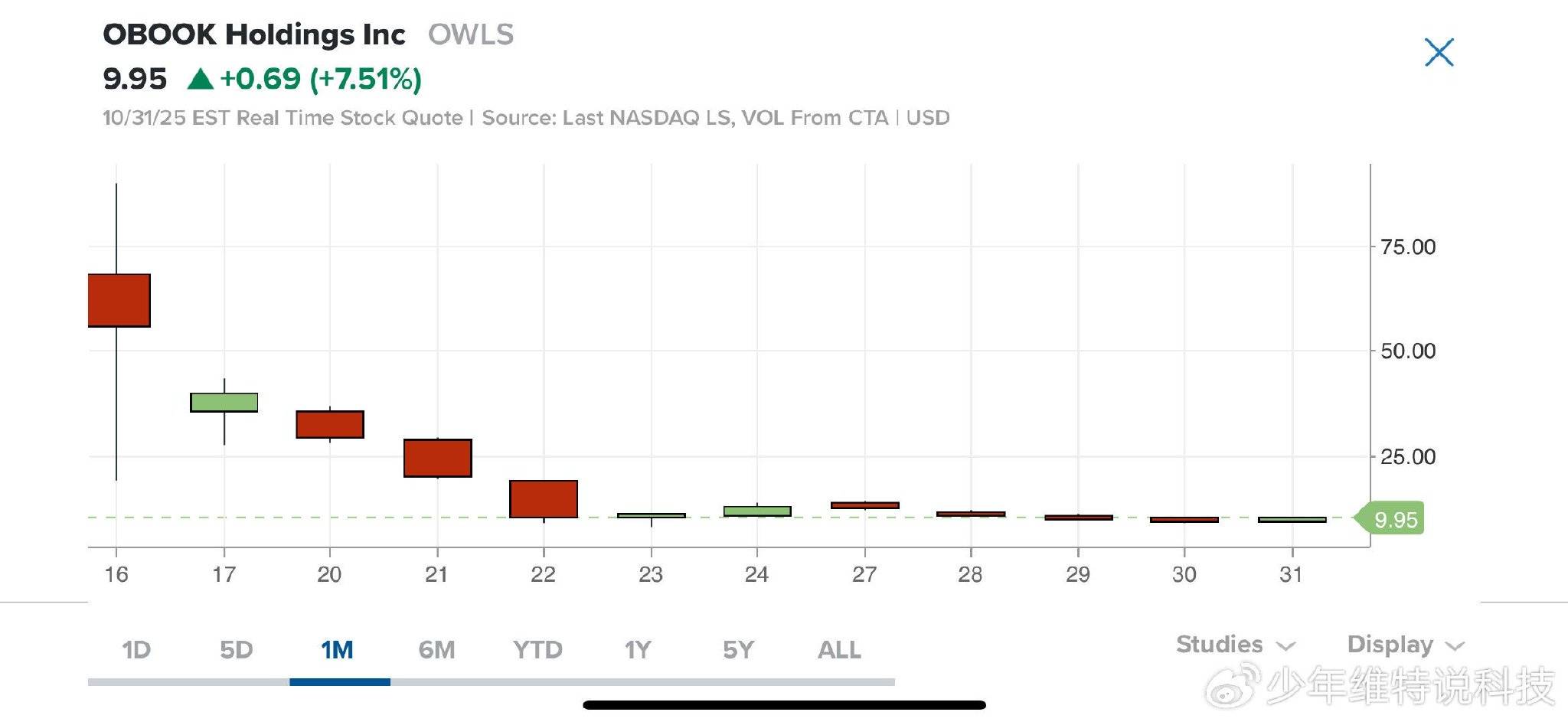
Core Viewpoint - The stablecoin sector is experiencing significant developments, with Coinbase negotiating a $2 billion acquisition of BVNK, which has seen its valuation increase from $750 million to $2 billion in just one year. Additionally, OwlTing Group has gone public, marking a notable entry into the financial technology space focused on stablecoin settlement [1][4][6]. Group 1: Company Developments - OwlTing Group, founded in 2010, transitioned from blockchain traceability and travel e-commerce to financial technology, launching OwlPay and OwlPayHarbor for stablecoin settlement [4]. - OwlTing's stock debuted at a reference price of $10, surged to $68, and closed at $55.55, giving it a market cap of approximately $4.9 billion, although it has since fallen to around $1 billion [4][5]. - The company has obtained Money Transmitter Licenses (MTL) in 40 U.S. states and has registered in Japan, the EU, and Southeast Asia, positioning itself as a compliant cross-border settlement network operator [4][5]. Group 2: Financial Performance - For the fiscal year 2024, OwlTing reported revenues of $7.57 million, an 18% year-over-year increase, but incurred a net loss of $10.27 million [5][22]. - The primary revenue source for OwlPay is B2B settlement services, accounting for about 60% of total revenue, with a take rate between 1% and 3% [22]. Group 3: Market Trends and Opportunities - The stablecoin market is projected to reach a total market value of approximately $261 billion by 2025, with stablecoin payment volumes expected to grow significantly [7][10]. - Visa has integrated OwlPay into its global network, allowing OwlTing to leverage over 8.5 billion payment endpoints, covering more than 190 regions and 160 currencies [5][23]. - The global cross-border third-party payment market is estimated to reach $1 trillion by 2029, with stablecoins providing a more efficient and cost-effective solution for businesses [11][14]. Group 4: Competitive Landscape - The stablecoin clearing sector is evolving, with different companies like BVNK, Bridge, and OwlTing representing various approaches to integrating stablecoins into traditional financial systems [23]. - OwlTing's model focuses on building a compliant cross-border clearing network, distinguishing itself from traditional financial institutions and other fintech players [23][25]. - The company aims to connect blockchain and global payment systems, similar to how PayPal connected the internet with the dollar system two decades ago [30].