
派拉蒙全球

Search documents
‘BATMAN TO ANTIFAMAN': Netflix deal 'only benefits Democrats,' political commentator argues
Youtube· 2025-12-08 03:30
Core Viewpoint - The potential acquisition of Warner Brothers and HBO by Netflix raises concerns about the impact of Netflix's programming style on these brands, particularly regarding perceived "woke" content and its implications for traditional media narratives [1][2][3]. Group 1: Acquisition Concerns - Netflix's interest in acquiring HBO Max and CNN is viewed skeptically, with fears that it may lead to the imposition of a specific ideological agenda in programming [2][4]. - The deal is not finalized, and there is competition from other entities, notably Paramount, which is also interested in acquiring Warner Brothers and CNN [4][5]. - David Ellison, associated with Paramount, is seen as a strong contender due to his successful track record in producing profitable films like "Top Gun: Maverick" [5]. Group 2: Ideological Implications - There are allegations that Netflix's programming, influenced by significant Democratic donors, promotes ideologies that some view as inappropriate for children, including themes related to gender identity [3][8]. - Concerns are raised about the preservation of iconic intellectual properties (IPs) like "Lord of the Rings" and "Superman," with fears that they may be altered to fit a new narrative [6][7]. Group 3: Regulatory and Market Dynamics - The potential deal is suggested to be scrutinized under antitrust laws, with calls for regulatory bodies to prevent excessive market control by large media entities [4][7]. - The discussion highlights a broader concern about the impact of consolidation in the media industry on independent creators and smaller media companies [8].


827亿美元的加冕:奈飞并购华纳背后的好莱坞权力重构
Xin Lang Cai Jing· 2025-12-08 03:20
Core Viewpoint - The announcement of the $82.7 billion merger between Netflix and Warner Bros. Discovery marks a significant shift in the entertainment industry, representing a challenge to traditional Hollywood structures and the beginning of a new era in the streaming age [1][8]. Group 1: Merger Details - The merger involves a purchase price of $27.75 per share, with a total enterprise value of $82.7 billion, highlighting the strategic calculations behind Netflix's acquisition [3][10]. - Warner Bros. will undergo a "hard fork," separating its struggling linear TV assets like CNN and TNT Sports into an independent entity called "Discovery Global," while Netflix will acquire Warner's extensive IP library, including franchises like Harry Potter and DC Universe [3][10]. - This "good bank/bad bank" strategy allows Netflix to eliminate traditional media liabilities and focus on future-oriented content engines [3][10]. Group 2: Industry Implications - The merger reflects a shift in the media landscape, where traditional cable television, once a cash cow, is now seen as a sinking ship due to the trend of cord-cutting [3][10]. - Netflix's co-CEO Ted Sarandos aims to acquire a core asset capable of producing blockbuster content, positioning the company to avoid marginalization in a competitive landscape dominated by Disney and Amazon [3][10]. Group 3: Content Strategy - The integration of Netflix and HBO's content strategies signifies a merging of algorithm-driven mass content with HBO's curation of high-quality programming, creating a comprehensive "super bundle" for users [4][11]. - Netflix's global subscriber base has surpassed 300 million, while Warner Bros. Discovery's streaming users are around 130 million, creating a combined market presence that poses a significant challenge to competitors like Disney+ and Amazon Prime Video [6][13]. Group 4: Regulatory Challenges - The merger may face regulatory scrutiny due to potential vertical monopolies, despite the separation of CNN to mitigate news monopoly concerns [7][14]. - The high breakup fee of $5.8 billion indicates both companies' awareness of possible regulatory hurdles, with the merger potentially leading to an 18-month approval process [7][14]. - Regardless of the regulatory outcome, the merger signifies the end of an era dominated by traditional Hollywood studios, paving the way for a new order led by tech giants [7][14].

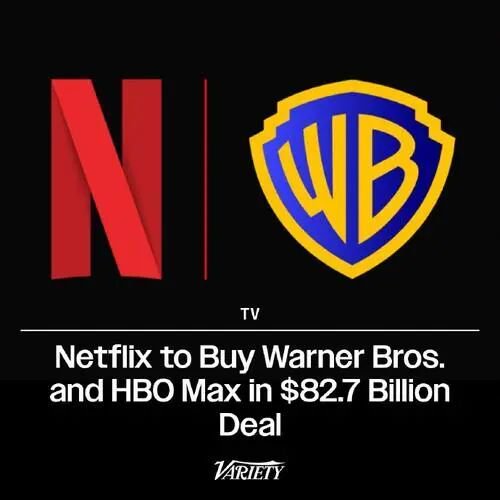
Donald Trump Praises Ted Sarandos, Confirms Meeting But Says Netflix-WB Would Have “A Great Big Market Share”
Deadline· 2025-12-08 00:04
Core Viewpoint - The merger between Netflix and Warner Bros. Discovery is expected to significantly increase market share for Netflix, with President Trump expressing strong support for Netflix co-CEO Ted Sarandos and the potential impact of the merger on the industry [1][3]. Company Summary - Netflix has agreed to acquire Warner Bros. for $27.75 per share, consisting of cash and stock, surpassing competing bids from Paramount Skydance and Comcast [2][4]. - The deal has an enterprise value of $82.7 billion and a total equity value of $72 billion, with Netflix financing the cash portion through a commitment letter with Wells Fargo for up to $59 billion in senior unsecured bridge term loans [4][5]. - Netflix will pay a breakup fee of $5.8 billion if the merger fails to receive regulatory approval, emphasizing its position as a player in a vast global video market [5]. Industry Summary - The merger is anticipated to close within 12-18 months, pending regulatory approval and the separation of Warner Bros.' studio and streaming assets from its linear television businesses [4]. - Paramount accused Warner Bros. Discovery of an unfair sale process favoring Netflix and claimed it was the only bidder with a clear path to regulatory approval [6][7].
Shaking up streaming: What a Netflix-Warner Bros Discovery tie-up means for Asia
Youtube· 2025-12-08 00:02
Core Viewpoint - Netflix is making a significant acquisition by agreeing to buy Warner Brothers Discovery Studios and its streaming unit for $82.7 billion, which could reshape the Hollywood landscape and enhance Netflix's content offerings [1][3]. Group 1: Acquisition Details - The acquisition is valued at $82.7 billion, with Netflix offering $27.75 per share for Warner Brothers Discovery [1]. - The deal aims to expand U.S. production, increase original content spending, and unlock billions in cost savings [3]. - The acquisition is expected to close in approximately 12 to 18 months, although regulatory concerns may delay this timeline [3][4]. Group 2: Regulatory and Antitrust Concerns - There are significant antitrust concerns regarding the acquisition, with bipartisan political figures expressing worries about competition and potential price increases for consumers [5][6]. - Concerns have been raised about job losses in Hollywood due to consolidation, as overlapping roles may be eliminated [6][7]. Group 3: Market Implications - The deal could have implications for the streaming market in Asia, which is already fragmented and faces cultural and linguistic diversity challenges [8]. - The acquisition may indicate that Netflix is seeking to buy growth rather than relying solely on organic growth, suggesting potential limitations in its current growth trajectory [8]. Group 4: Consumer Behavior - There is a growing trend of subscription fatigue among consumers, with many now subscribing to multiple streaming services, leading to a decline in Netflix's viewership [10][11].

交易总价达827亿美元,产业格局或将重塑,网飞宣布收购华纳兄弟
Huan Qiu Shi Bao· 2025-12-07 22:44
Core Viewpoint - Netflix announced the acquisition of Warner Bros. Discovery's core business for $27.75 per share, with an overall enterprise value of $82.7 billion, including an equity value of $72 billion, aiming to redefine storytelling for global audiences [1] Group 1: Acquisition Details - The acquisition will merge Netflix, the largest streaming platform, with Warner Bros., which owns HBO Max, combining their television and film departments, including DC Studios and popular IPs like Harry Potter and Friends [1] - The deal has been in negotiation for several months, with Netflix emerging as the winner among several industry giants due to its financial stability and Warner's board preference for a stable partner [1] - The transaction is expected to take time to finalize, requiring Warner to divest its cable network business and regulatory approval, with completion anticipated no earlier than Q3 2026 [1] Group 2: Industry Impact - The merger could significantly alter the Hollywood landscape, leaving only Disney, Paramount, Sony, and Universal as the remaining traditional studios if Warner Bros. disappears [1] - Concerns have been raised regarding potential job cuts, reduced pay, and diminished working conditions in the industry, with the American Writers Guild urging to block the merger [2] - The Cinema Alliance, representing thousands of theaters, opposes the deal, fearing it poses an unprecedented threat to global exhibition formats [2] Group 3: Netflix's Commitments - To alleviate concerns from theater operators, Netflix has committed to ensuring Warner films will continue to be released in theaters, adhering to existing contractual agreements [2] - Netflix's CEO expressed a desire to enter traditional filmmaking, leveraging Warner's extensive IP library to reshape the century-old entertainment industry [2]
奈飞吞下华纳,环球影城尴尬了
3 6 Ke· 2025-12-07 22:43
Core Viewpoint - Netflix announced a historic acquisition of Warner Bros for $72 billion, which will significantly reshape the streaming and theme park landscape [1][2]. Group 1: Acquisition Details - Warner Bros shareholders will receive $27.75 per share in cash and Netflix stock as part of the acquisition agreement [2]. - The acquisition includes valuable assets such as HBO's extensive library and iconic franchises like Harry Potter and Friends [3][16]. Group 2: Impact on Theme Parks - The acquisition grants Netflix control over Warner Bros' theme parks globally, including major attractions in Abu Dhabi, Madrid, and the Gold Coast of Australia [4][3]. - These parks operate on a light-asset rental model, allowing Netflix to receive substantial brand licensing fees annually [4]. Group 3: Competitive Dynamics - The acquisition alters the financial dynamics for Universal Studios, which has been paying royalties to Warner Bros for the Harry Potter franchise, now shifting to Netflix [5][12]. - Netflix's growing influence in the theme park sector positions it as a formidable competitor against Disney and Universal Studios, potentially changing the competitive landscape [19][17]. Group 4: Future Plans - Netflix is expanding its presence in the theme park industry with projects like Netflix House, which will feature immersive experiences based on its popular shows [13][14]. - The integration of Warner Bros' IPs into Netflix's offerings could enhance its competitive edge against traditional theme park operators [18][19].

Netflix co-CEO reportedly discussed Warner Bros. deal with Trump
TechCrunch· 2025-12-07 20:46
Group 1 - Netflix is pursuing an $82.7 billion acquisition of Warner Bros, raising questions about federal regulatory approval [1] - Paramount was initially seen as the leading candidate for the acquisition due to CEO David Ellison's ties to the Trump administration [1] - Netflix co-CEO Ted Sarandos met with President Trump, who suggested that Warner Bros. should sell to the highest bidder, indicating potential non-opposition to the deal [2] Group 2 - Warner Bros. CEO David Zaslav was hesitant to sell and was surprised by Paramount's interest in acquiring the studio [3] - Warner Bros. is open to considering other bids, which has led to a competitive bidding process that Netflix ultimately won [3] - Paramount may still pursue a hostile bid for Warner Bros. despite Netflix's acquisition [3]

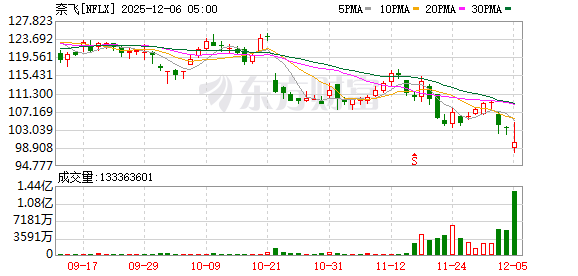
Netflix Stock Up 13%. Why $82.7 Billion $WBD Buy Makes $NFLX A Sell
Forbes· 2025-12-07 16:05
Core Viewpoint - Netflix has announced a significant acquisition deal worth $82.7 billion for parts of Warner Brothers Discovery, which will be financed through $59 billion in debt, raising questions about the potential return on investment for Netflix shareholders [3][4][5]. Acquisition Details - The deal will provide Warner Bros. Discovery shareholders with $27.75 per share, comprising $23.25 in cash and $4.50 in Netflix stock [3]. - Netflix views this acquisition as a "rare" opportunity to enhance its content library and production capabilities, particularly with the inclusion of HBO Max [4][7]. - The acquisition excludes WBD's TV and network operations, focusing instead on the film and TV studio business [4]. Financial Implications - The total bid of $82.7 billion includes $72 billion in stock and cash, along with the assumption of approximately $10.7 billion in WBD debt, which is more than double WBD's market capitalization of $30 billion prior to deal speculation [9]. - Netflix anticipates annual cost savings of $2 billion to $3 billion by the third year post-acquisition and expects the transaction to positively impact earnings per share by the second year [12]. Risks and Challenges - The deal faces significant regulatory scrutiny, with potential antitrust concerns due to the combined market share of Netflix and HBO, which could exceed 45% globally [11][25]. - High financial burdens are associated with the deal, including a potential $5.8 billion breakup fee if the acquisition does not proceed, and an estimated $2.65 billion in annual interest expenses from the new debt [11]. - Cultural differences between Netflix's data-driven approach and Warner Bros.' traditional studio system may hinder integration and synergy realization [10][18]. Market Reactions and Analyst Opinions - Analysts express skepticism regarding the benefits of the acquisition, suggesting that Netflix shareholders may be worse off in the long run compared to if the deal had not occurred [13][14]. - There are three potential scenarios for the deal's outcome: regulatory rejection, disappointing results post-completion, or successful integration leading to market dominance [15][17][20]. - Industry stakeholders, including movie theater owners and writers, have voiced opposition to the deal, citing concerns over job losses and reduced competition in the market [22][24].
当奈飞“吃下”华纳兄弟
Bei Jing Shang Bao· 2025-12-07 14:48
Core Viewpoint - The acquisition of Warner Bros. by Netflix represents a significant shift in the entertainment industry, solidifying Netflix's position against competitors like Disney and Paramount, while also raising concerns among traditional cinema operators about the future of theatrical releases [2][3][6]. Group 1: Acquisition Details - Netflix has agreed to acquire Warner Bros. Discovery's film and television studios, including HBO Max and HBO streaming services, for a total equity value of $72 billion and an enterprise value of approximately $82.7 billion [3]. - Warner Bros. shareholders will receive $23.25 in cash and $4.5 in Netflix common stock per share [3]. - The deal is contingent upon Warner Bros. completing its plan to divest its cable channel assets, including CNN, TBS, and TNT, allowing Netflix to focus on film production and HBO Max [3][4]. Group 2: Industry Impact - The acquisition is expected to increase Netflix's user base to 450 million, enhancing its competitive edge in the streaming market [2]. - Analysts suggest that this acquisition could lead to a "seismic shift" in the entertainment industry, with potential implications for subscription pricing and market competition [3][7]. - The deal poses a significant threat to traditional cinema operators, with concerns that it may reduce the number of films available for theatrical release and shorten the release window [6][7]. Group 3: Financial Performance - Warner Bros. is projected to generate $39.32 billion in total revenue for the fiscal year 2024, a decrease of approximately 5% year-over-year, with its studio segment revenue also declining by 5% to $11.61 billion [4]. - Netflix anticipates a revenue growth of about 16% in 2024, reaching $39 billion, with a total subscriber count of 301.6 million [5]. Group 4: Regulatory Concerns - The acquisition is expected to undergo antitrust scrutiny, with the U.S. Department of Justice likely to investigate how this merger could strengthen Netflix's dominance in the industry [8]. - Netflix's combined market share with HBO Max in the U.S. streaming market is approximately 30%, which raises regulatory concerns as mergers exceeding this threshold are presumed illegal [8]. - Netflix has stated its confidence in obtaining approval for the acquisition, arguing that it will benefit consumers and innovation [8].
Netflix收购华纳兄弟:重塑娱乐产业格局
Jing Ji Guan Cha Bao· 2025-12-07 03:32
Core Viewpoint - Netflix's acquisition of Warner Bros. Discovery for $72 billion marks a significant shift in the global entertainment industry, potentially reshaping Hollywood and the streaming market [1] Group 1: Transaction Overview and Strategic Significance - The total enterprise value of the acquisition is $82.7 billion, encompassing Netflix's platform and Warner Bros.' extensive film and television production assets, including HBO and HBO Max [2] - Netflix aims to enhance global storytelling and entertainment offerings by integrating Warner Bros.' iconic IPs like "Friends" and "Harry Potter" with its original content [2] - The acquisition allows Netflix to maintain Warner Bros.' existing operational model, particularly in theatrical releases, while leveraging Warner's production capabilities to increase content output [2] Group 2: Potential Challenges and Employee Reactions - Some Warner Bros. employees express caution regarding the acquisition, particularly in the tech team, fearing job security due to Netflix's established technology platform [3] - Despite concerns, some employees appreciate Netflix's culture, viewing it as more appealing compared to competitors, indicating mixed sentiments about job security post-acquisition [3] Group 3: Netflix's Acquisition Motivation: Filling IP Gaps - Netflix's acquisition addresses its relative weakness in traditional IP compared to competitors like Disney, enhancing its content depth and user engagement [4] - The deal provides access to high-value IPs such as "Frozen" and strengthens Netflix's global content library, potentially increasing subscriber loyalty and platform attractiveness [4] Group 4: Regulatory Scrutiny and Industry Competition - The acquisition requires approval from the U.S. Department of Justice, the Federal Trade Commission, and Warner Bros. shareholders, making regulatory review a critical factor for completion [5] - The deal may pressure other major Hollywood companies and streaming platforms, particularly competitors like Paramount and Comcast, as Netflix solidifies its leadership in content production and IP control [5][6] Group 5: Future Outlook: Reshaping the Entertainment Industry - This acquisition signifies a pivotal moment in the entertainment industry, as streaming evolves from a supplementary role to a dominant force [7] - If approved, Netflix will not only expand its market share but also emerge as a key player in the global cultural industry, potentially leading to further industry consolidation and competition [7] - The transaction may herald a wave of similar large-scale acquisitions driven by capital market dynamics, technological advancements, and changing consumer demands [7]