Costco

Search documents
Costco Leans Into Memberships Amid Tariff Uncertainty
PYMNTS.com· 2025-03-07 00:58
Core Insights - The Trump administration's tariffs on Canada and Mexico create uncertainty for Costco, but the company is well-prepared to handle potential impacts due to its strong supplier partnerships and nimble operations [1][2]. Financial Performance - Costco's second-quarter net sales increased by 9.1% to $62.53 billion, with net sales for the first 24 weeks of fiscal 2025 rising by 8.3% to $123.52 billion [4]. - Comparable sales grew by 6.8%, with U.S. sales up 8.3% and Canadian sales up 4.6%. eCommerce sales surged by 20.9% [5]. - February sales rose by 8.8% to $19.81 billion [5]. Membership and Customer Engagement - Membership income increased by 7.4%, with renewal rates at 90.5% globally and 93.0% in the U.S. and Canada [6]. - Paid memberships rose by 6.8% to 78.4 million, while total cardholders grew by 6.6% to 140.6 million. Executive memberships accounted for 36.9 million cardholders, representing 73.8% of worldwide sales [7]. Digital Growth - Digital metrics showed significant improvements, including a 13% increase in site traffic, a 10% rise in average order value, and a 19% increase in logistics deliveries [8]. - A new digital multi-vendor mailer is enhancing member engagement by allowing more targeted marketing [9]. Store Expansion - Costco plans to open 28 new stores by the end of fiscal 2025, currently operating 897 warehouses, including 617 in the U.S. and Puerto Rico, and 109 in Canada [7].



Costco (COST) Q2 Earnings: Taking a Look at Key Metrics Versus Estimates
ZACKS· 2025-03-07 00:00
Core Viewpoint - Costco reported a revenue of $63.72 billion for the quarter ended February 2025, marking a 9% year-over-year increase, with an EPS of $4.02 compared to $3.71 a year ago, indicating strong financial performance despite a slight EPS miss against consensus estimates [1] Financial Performance - Revenue of $63.72 billion exceeded the Zacks Consensus Estimate of $63.22 billion by 0.79% [1] - EPS of $4.02 was below the consensus estimate of $4.09, resulting in an EPS surprise of -1.71% [1] - Membership fees revenue was reported at $1.19 billion, slightly below the average estimate of $1.21 billion, but showed a year-over-year increase of 7.4% [4] - Net sales revenue reached $62.53 billion, surpassing the average estimate of $62.08 billion, reflecting a year-over-year growth of 9.1% [4] Comparable Sales Metrics - Total comparable sales increased by 9.1%, outperforming the eight-analyst average estimate of 6.6% [4] - U.S. comparable sales rose by 8.3%, exceeding the average estimate of 6% [4] - Comparable sales in Canada increased by 4.6%, falling short of the average estimate of 6.1% [4] - Comparable sales for Other International markets were reported at 1.7%, significantly below the average estimate of 5.7% [4] Warehouse Metrics - Total number of warehouses worldwide was reported at 897, slightly below the average estimate of 903 [4] - In the U.S. and Puerto Rico, the number of warehouses was 617, compared to the estimated 620 [4] Stock Performance - Costco shares returned +0.5% over the past month, while the Zacks S&P 500 composite declined by -3.5% [3] - The stock currently holds a Zacks Rank 2 (Buy), suggesting potential outperformance against the broader market in the near term [3]

Costco says it's been buying up extra inventory as tariff uncertainty looms
Business Insider· 2025-03-06 23:43
Core Insights - Costco reported strong quarterly revenue of over $62.5 billion, a 9.1% increase from $57.3 billion year-over-year, primarily driven by increased store visits [1] - Despite the revenue growth, the company missed earnings per share expectations, resulting in a 1.5% decline in stock price during after-hours trading [1] Financial Performance - Net sales for the quarter exceeded $62.5 billion, reflecting a 9.1% increase compared to the same period last year [1] - The company added 1 million new paid memberships, raising the renewal rate to 93% in the US and Canada [3][5] Operational Insights - CEO Ron Vachris indicated that the company would work to minimize cost increases due to tariffs, noting that less than one-sixth of products sold in the US are imported from China, Mexico, and Canada [2] - CFO Gary Millerchip mentioned that uncertainty around tariffs led to increased inventory purchases, which contributed to higher supply chain costs during the quarter [2] Customer Engagement - Foot traffic data showed a 7.7% increase in visits to Costco, significantly outpacing increases at Walmart and Target [3] - Web and app sales also saw an uptick, with 43 million visits recorded to the new warehouse inventory tool during the fiscal second quarter [3] Future Plans - The company plans to open 12 additional US locations, including its 900th warehouse, along with two in Canada and four in other international markets [4]

Costco (COST) Lags Q2 Earnings Estimates
ZACKS· 2025-03-06 23:25
Core Insights - Costco reported quarterly earnings of $4.02 per share, missing the Zacks Consensus Estimate of $4.09 per share, but showing an increase from $3.71 per share a year ago, resulting in an earnings surprise of -1.71% [1] - The company posted revenues of $63.72 billion for the quarter ended February 2025, surpassing the Zacks Consensus Estimate by 0.79% and increasing from $58.44 billion year-over-year [2] - Costco shares have increased by approximately 14.4% since the beginning of the year, contrasting with a -0.7% decline in the S&P 500 [3] Earnings Outlook - The current consensus EPS estimate for the upcoming quarter is $4.25, with expected revenues of $62.76 billion, and for the current fiscal year, the EPS estimate is $18.03 on revenues of $273.31 billion [7] - The estimate revisions trend for Costco is currently favorable, leading to a Zacks Rank 2 (Buy) for the stock, indicating expected outperformance in the near future [6] Industry Context - The Retail - Discount Stores industry, to which Costco belongs, is currently ranked in the top 34% of over 250 Zacks industries, suggesting a positive outlook for stocks within this sector [8] - Another company in the same industry, Dollar Tree, is expected to report quarterly earnings of $2.18 per share, reflecting a year-over-year decline of -14.5% [9]

Costco reports mixed second-quarter earnings
CNBC· 2025-03-06 21:41
Core Insights - Costco reported an earnings miss but exceeded revenue expectations for the second quarter [1][3] Revenue Performance - Second-quarter revenue increased by 9% to $63.72 billion, up from $58.44 billion in the same quarter of fiscal 2024 [1] - Net sales for the quarter rose by 9.1% to $62.53 billion, compared to $57.33 billion in the year-ago period [1] Net Income and Earnings Per Share - Net income for the second quarter was $1.79 billion, or $4.02 per share, compared to $1.74 billion, or $3.92 per share, during the second quarter of fiscal 2024 [2] - Earnings per share were $4.02, which was below the expected $4.11 [3] Comparable Sales - Quarterly comparable sales increased by 6.8% year over year, with an 8.3% increase in the U.S. [2] - E-commerce comparable sales rose by 20.9% year over year [2]

Trade Deficit Widened in January
ZACKS· 2025-03-06 16:45
Economic Overview - Pre-market indexes are showing declines, with the Dow down 414 points, S&P 500 down 71, Nasdaq down 326, and Russell 2000 down 32 points [1] - The European Central Bank (ECB) has lowered interest rates by 25 basis points, with the Deposit Facility now at +2.50%, indicating confidence in controlling inflation [2] - German bund yields increased by 30 basis points to around +2.85%, the highest since 1990, reflecting significant economic behavior in the EU [3] Labor Market Insights - Initial Jobless Claims for last week were reported at 221K, lower than the anticipated 235K, and down from the previous week's 242K, suggesting stability in the labor market [4] - Continuing Claims rose to 1.897 million, approaching the psychological level of 1.9 million, which may indicate concerns about the robustness of the U.S. labor market [5] Productivity and Costs - Q4 Productivity was revised up by 30 basis points to +1.5%, marking the ninth consecutive upward movement in U.S. productivity [6] - Unit Labor Costs were revised down to +2.2%, lower than previous quarters, indicating a favorable trend of increased productivity alongside reduced costs [6] Trade Balance - The U.S. Trade Deficit reached a record low of -$131.4 billion, exceeding expectations of -$128.7 billion, influenced by anticipated trade tariff changes [7] Market Expectations - Following positive earnings reports from Macy's, Burlington Stores, and Cracker Barrel, upcoming earnings from Broadcom and Costco are anticipated, along with data on Wholesale Inventories for January [8]


ECB Cuts, Jobless Claims Mixed, Trade Deficit Hits Record
ZACKS· 2025-03-06 16:25
Economic Indicators - The European Central Bank (ECB) lowered interest rates by 25 basis points, with the Deposit Facility now at +2.50%, signaling confidence in controlling inflation despite trade war concerns [2] - Initial Jobless Claims for last week were reported at +221K, lower than the anticipated +235K, indicating stability in the labor market [4] - Continuing Claims rose to 1.897 million, approaching the psychological level of +1.9 million, which may raise concerns about the robustness of the U.S. labor market [5] - Q4 Productivity was revised up to +1.5%, marking the ninth consecutive upward move, while Unit Labor Costs were revised down to +2.2%, indicating improved productivity and lower costs [6] - The U.S. Trade Deficit reached a record -$131.4 billion, significantly higher than the previous month's -$98.4 billion, influenced by anticipated trade tariff changes [7] Company Earnings - Earnings reports from Macy's, Burlington Stores, and Cracker Barrel exceeded expectations, while upcoming reports from Broadcom and Costco are anticipated [8]

Market Update: Economic Clues from Costco, Taiwan Semi, and Brokers
See It Market· 2025-03-06 15:54
Market Overview - The S&P 500 has experienced a dip due to tariff concerns and inflation worries, with the Cboe Volatility Index (VIX) rising above 20 [1] - Despite a strong fourth-quarter earnings season, investor confidence has been shaken, as indicated by the American Association of Individual Investors (AAII) survey showing a high number of net bears [4][5] Consumer Sentiment - The University of Michigan's Consumer Sentiment index fell by 10%, reflecting household concerns over potential inflation from tariffs [3] - The Conference Board reported a significant drop in household confidence, the largest since 2021, indicating a disconnect between CEO confidence and consumer sentiment [3] Corporate Earnings and Economic Indicators - The fourth-quarter earnings season showed the best bottom-line growth for the S&P 500 since 2021, driven by companies like NVIDIA [2] - Costco reported a strong 9.8% increase in January sales, suggesting resilience in consumer spending despite broader economic concerns [7][8] - Taiwan Semiconductor's revenue report is anticipated to provide insights into the semiconductor industry's health, following NVIDIA's mixed earnings reaction [9] Upcoming Reports and Expectations - Upcoming earnings reports from major firms, including Costco and Taiwan Semiconductor, are expected to provide critical data on consumer behavior and industry performance [12] - Asset managers like Invesco and T. Rowe Price are set to release AUM reports that could reflect market trends and investor sentiment [10][11]

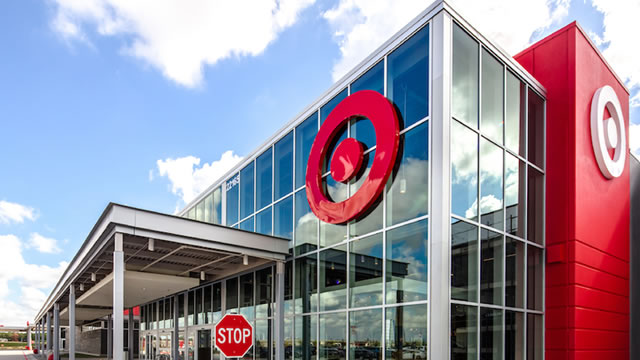
Why Now Might Be the Best Time to Buy Target Stock
MarketBeat· 2025-03-06 13:22
Core Viewpoint - Target's stock is showing signs of bottoming out, but recovery may take time due to industry-wide headwinds impacting stock prices [1][2] Financial Performance - Target reported Q4 revenue of $30.92 billion, down over 3.0% year-over-year, but exceeded consensus by 30 basis points due to strong comp sales and digital performance [3] - Comp sales increased by 1.5%, driven by an 8.7% rise in digital sales, while same-day delivery surged by 25% year-over-year [4] - Adjusted earnings were $2.41, down nearly 20% year-over-year, but $0.16 above analyst expectations, with earnings strength anticipated to improve in 2025 [5] Guidance and Market Outlook - The company forecasts a solid 2024 with top-line growth near 1% and wider margins, but expects a weak Q1 due to February's softness [6] - The stock price fell post-Q4 release due to cautious guidance, but soft Q1 figures are not expected to undermine the company's financial strength [6] Shareholder Value - Target is focusing on improving balance sheet strength, maintaining a high-yielding dividend of 3.84%, and executing share buybacks [7][8] - The company has a 54-year track record of dividend increases, with a recent annual dividend of $4.48 and a payout ratio of 50.56% [9][10] Market Position and Trends - Analysts indicate a market bottom for Target, with a Hold rating and a consensus price target suggesting a 50% upside from current levels [10] - Institutional buying activity has ramped up, reaching multi-year highs in Q1 2025, indicating positive sentiment [11] Stock Valuation - Target's stock may reach the $100 level, which is seen as a potential bottom and an attractive entry point, trading under 11x its 2025 earnings [12] - The rebound could begin as early as Q2 2025, contingent on the FQ1 earnings report and guidance update [13]

Trade War Fears Surge: Sector ETFs & Stocks to Watch Out For
ZACKS· 2025-03-05 17:15
Core Viewpoint - The escalation of trade tensions due to new tariffs imposed by the U.S. on Canada, Mexico, and China is expected to significantly impact various sectors, leading to increased costs for consumers and potential disruptions in the global economy [1][4]. Automobiles - The automobile sector will be heavily affected, with Canada and Mexico accounting for approximately 47% of U.S. auto imports and 54% of car part imports [6]. - U.S. carmakers could see a reduction of 10-25% in their annual EBITDA due to the new tariffs, with potential increases of up to $12,000 in the price of new cars [7]. - ETFs like First Trust S-Network Future Vehicles & Technology ETF (CARZ) are likely to face pressure [7]. Agriculture - The agricultural export sector, valued at $191 billion, is threatened by the tariffs, particularly affecting imports of grains, meats, and dairy products from Canada and Mexico [8]. - The tariffs are expected to increase grocery prices, especially since Mexico is a key supplier of various produce to the U.S. [9]. - The Invesco DB Agriculture Fund (DBA) is anticipated to experience rough trading conditions [9]. Homebuilding - Tariffs will raise the costs of building materials, leading to a projected increase of 4-6% in homebuilding costs over the next year, which will negatively impact profitability [10]. - Companies like D.R. Horton (DHI), Toll Brothers (TOL), and Lennar (LEN), along with ETFs such as iShares U.S. Home Construction ETF (ITB) and SPDR S&P Homebuilders ETF (XHB), will be affected [10][11]. Aerospace - The aerospace industry will face increased production costs due to retaliatory tariffs from major buyers like China, Mexico, and Canada [12]. - Companies such as Boeing (BA) and Airbus, along with suppliers like Spirit AeroSystems and Hexcel, will see higher raw material costs [12]. - The iShares U.S. Aerospace & Defense ETF (ITA) is likely to be negatively impacted [12]. Retail - Major retailers, including Walmart (WMT), Target (TGT), Best Buy (BBY), and Costco (COST), are expected to face higher prices due to tariffs on consumer goods sourced from China and Mexico [13]. - Over 80% of toys sold in the U.S. are made in China, making retailers vulnerable to increased costs [14]. - Walmart's grocery business could also see rising costs, as Mexico supplies a significant portion of U.S. fruit and vegetable imports [14]. Energy - The energy sector will experience increased costs due to a 10% tariff on Canadian energy exports, which could raise prices for heating, electricity, and fuel for American consumers [15]. - ETFs like United States Natural Gas Fund (UNG) and Energy Select Sector SPDR Fund (XLE) are expected to be adversely affected [15].