Hyundai

Search documents
Hyundai and Boston Dynamics Push Humanoid Robots Forward
The Motley Fool· 2026-01-14 02:33
Core Viewpoint - The introduction of Boston Dynamics' Atlas humanoid robot by Hyundai at CES 2026 is generating excitement among investors, with potential implications for the automotive industry and factory productivity [2][3][5]. Group 1: Product Announcement and Capabilities - Boston Dynamics unveiled the Atlas humanoid robot, which is fully electric and set to begin production immediately, with plans to deploy it across Hyundai's global network starting in 2028 [2][6]. - Hyundai aims to produce 30,000 Atlas robots annually at a U.S. factory, anticipating that humanoids will become the largest segment of the Physical AI market [6]. - The Atlas robot features human-scale hands with tactile sensing, advanced rotational joints, the ability to lift up to 110 pounds, and can learn tasks in under a day [6]. Group 2: Market Potential and Strategic Partnerships - Hyundai plans to introduce Atlas in processes with proven safety and quality benefits, expanding its applications to component assembly and complex operations over time [7]. - Successful deployment of humanoid robots could benefit not only Hyundai but also partners like Toyota, as well as companies like Nvidia and Google DeepMind involved in robotics research [7]. Group 3: Investor Sentiment and Caution - Investor enthusiasm is high regarding the potential for humanoid robots to enhance factory productivity, but historical failures in the humanoid robot market warrant caution [3][8]. - Previous attempts to introduce humanoid robots, such as SoftBank's Pepper and 1X's NEO, faced significant challenges and ultimately did not succeed in the market [9][10]. - Research from Morgan Stanley suggests that while the humanoid robot market could reach $5 trillion by 2050, adoption may be slow until the mid-2030s, indicating that investors should be patient [13].


Hyundai Announces 2026 IMSA Racing Program in Pursuit of Seventh-Consecutive Manufacturers' Title
Prnewswire· 2026-01-13 17:33
Core Insights - Hyundai is enhancing its racing strategy for the 2026 season by introducing a third driver for the Rolex 24 at Daytona, aiming to recognize outstanding drivers from outside IMSA [1] - The team is confident in its ability to defend its Manufacturer, Team, and Driver Championships with a mix of returning veterans and new talent [1] Team Lineup - Bryan Herta Autosport (BHA) will feature eight returning drivers across four entries, including key veterans like Harry Gottsacker, Mason Filippi, Bryson Morris, and Mark Wilkins, who has a history of race victories with BHA [3] - New additions to the team include Andre Castro, who had a successful 2025 season, and international talent Josh Buchan, who won a TCR World Tour event at the Macau Grand Prix [4][5] Season Overview - The 2026 season will kick off with the Roar Before the Rolex 24 from January 16-18, followed by the BMW M Endurance Challenge at Daytona on January 23 [8] - The Elantra N TCR cars will maintain a dynamic livery featuring Performance Blue and the signature N logo, symbolizing Hyundai's racing identity [7] Philanthropic Initiatives - Hyundai Hope on Wheels will continue its campaign by donating $100 for every lap led by a Hyundai vehicle, with a goal to support pediatric cancer research [9] - The initiative has raised nearly $80,000 in 2024 and 2025 combined, with additional donations tied to podium finishes and race wins [11] Corporate Background - Hyundai Motor America is committed to a technology-rich lineup of vehicles and is investing $26 billion in the U.S. from 2025 to 2028, which includes significant operations and facilities across the country [12]

Root (NasdaqGS:ROOT) FY Conference Transcript
2026-01-12 21:32
Summary of Root (NasdaqGS:ROOT) FY Conference Call - January 12, 2026 Company Overview - **Company Name**: Root - **Founded**: 2015 - **Public Listing**: 2020 - **Industry**: Insurtech (Insurance Technology) - **Core Business**: Car insurance based on driver behaviors using mobile technology and data science - **Market Position**: Largest insurtech in the U.S. with strong underwriting records [1] Key Points and Arguments Business Model and Growth - Root leverages mobile technology and data science to offer personalized insurance rates based on driver behavior rather than demographics [1][5] - 50% of Root's business comes from direct sales, with additional revenue from embedded products (e.g., Carvana Insurance) and independent agents [6][7] - The company has reached profitability and emphasizes creating better customer experiences through technology [7] Distribution Channels - **Direct Channel**: Grew by 100% in 2023 due to competitors pulling back on advertising; Root uses advanced bidding algorithms to target customers effectively [10][11] - **Embedded Channel**: Experiencing rapid growth, with a partnership with Hyundai to integrate insurance into vehicle purchase processes [11][34] - **Independent Agents**: Fastest-growing segment, tripling year-over-year; Root's technology simplifies the insurance quoting process for agents [12][18] Competitive Advantages - Root's technology allows for real-time pricing adjustments and efficient data processing, significantly reducing the time agents spend on quotes [20][18] - The company can update pricing models more frequently than competitors, enhancing its ability to respond to market changes [23][36] - Root's closed-loop system and modern API infrastructure provide a significant edge over traditional insurers still using outdated systems [24][25] Market Opportunities - The U.S. auto insurance market is valued at $300 billion, with Root currently holding less than 1% market share, indicating substantial growth potential [41] - Root plans to expand its partnerships with OEMs and financial services companies to further penetrate the market [40][41] Strategic Focus - Root prioritizes disciplined growth over short-term earnings targets, ensuring that new business ventures meet internal return thresholds [15][39] - The company aims to enhance its technology for daily pricing updates and expand its national footprint, having recently gained approval in New Jersey [36][41] Future Outlook - Continued investment in technology and partnerships is expected to drive growth, with a focus on improving customer experience and operational efficiency [34][41] - Root anticipates further market share gains as it scales its operations and enhances its product offerings [41][42] Additional Important Insights - Root's approach to AI is not limited to chatbots; it utilizes advanced predictive algorithms for underwriting and risk assessment [30][32] - The company is exploring new marketing channels, including connected TV and social media, to enhance brand visibility and customer acquisition [35] This summary encapsulates the key insights from the conference call, highlighting Root's innovative approach to the insurance market, its growth strategies, and the competitive advantages it holds in the insurtech space.

These autos quality for Secretary Bessent's $10,000 auto loan relief program
Yahoo Finance· 2026-01-10 16:33
Core Viewpoint - The U.S. government is introducing a significant tax break for car buyers, aimed at making new vehicle purchases more affordable, particularly for U.S.-assembled vehicles [3][4]. Group 1: Tax Break Details - The new tax rule allows eligible taxpayers to deduct $10,000 per year in auto loan interest for cars purchased during Trump's second term [3]. - The tax deduction is designed to lower monthly costs and enhance car ownership affordability for families [4]. - The tax credit applies solely to vehicles assembled in the U.S., thereby supporting domestic manufacturing [4][5]. Group 2: Eligibility Criteria - Vehicles eligible for the $10,000 tax credit must be U.S.-assembled and purchased between 2025 and 2028 [5]. - Individual buyers earning over $100,000 and couples earning over $200,000 will see the benefits phase out [6]. - Eligible vehicles include new cars, SUVs, vans, pickup trucks, and motorcycles weighing under 14,000 pounds, purchased for personal use [9]. Group 3: Market Impact - The tax credit is expected to influence the sales of U.S. automakers, as it incentivizes the purchase of domestically assembled vehicles [4][8]. - Popular imported models, even if sold by U.S. automakers, will not qualify for the tax break, potentially affecting their sales [8].
Toyota Motor Corporation (TM) Discusses Achievements and Highlights at Tokyo Auto Salon Special Talk Show Prepared Remarks Transcript
Seeking Alpha· 2026-01-09 18:34
Group 1 - The event featured a discussion about the previous year's achievements and predictions made by Morizo, highlighting the success of Morizo's Dream garage at the Tokyo Auto Salon and the regaining of the WRC Triple Crown [3][4] - A congratulatory message from Hyundai to Toyota Gazoo Racing was noted, emphasizing the competitive spirit between the two companies in motorsports [4]


Humanoid robots take over CES in Las Vegas as tech industry touts future of AI
CNBC· 2026-01-09 13:00
Core Insights - The CES trade show in Las Vegas showcased advancements in humanoid robots, indicating a significant year for physical artificial intelligence [3][4] - Nvidia announced new vision language models for humanoid robots, highlighting the potential for robots to achieve human-level capabilities [4][5] - The market for general-purpose robotics is projected to reach $370 billion by 2040, with applications in various sectors [7] Company Developments - Nvidia introduced Gr00t, a vision language model for humanoid robots, and emphasized partnerships with companies like Boston Dynamics and Caterpillar [4][5] - AMD showcased the GENE.01 robot, which utilizes its chips and AI technology, and plans to deploy it in industrial settings [10] - Qualcomm presented a new line of robot chips called Dragonwing, aimed at enhancing robot capabilities through vision language models [14] Industry Trends - The humanoid robotics sector is experiencing rapid growth, with 40 companies mentioning humanoid robots at CES [9] - Generative AI technologies, such as those used in ChatGPT, are being leveraged to enhance robot functionalities [6][13] - Experts caution that while humanoid robots are gaining attention, practical commercial implementation remains a significant challenge [8][12]


Manufacturing And Automotive Giants Continue Their Shift From Grease To Code At CES 2026
Forrester· 2026-01-09 10:22
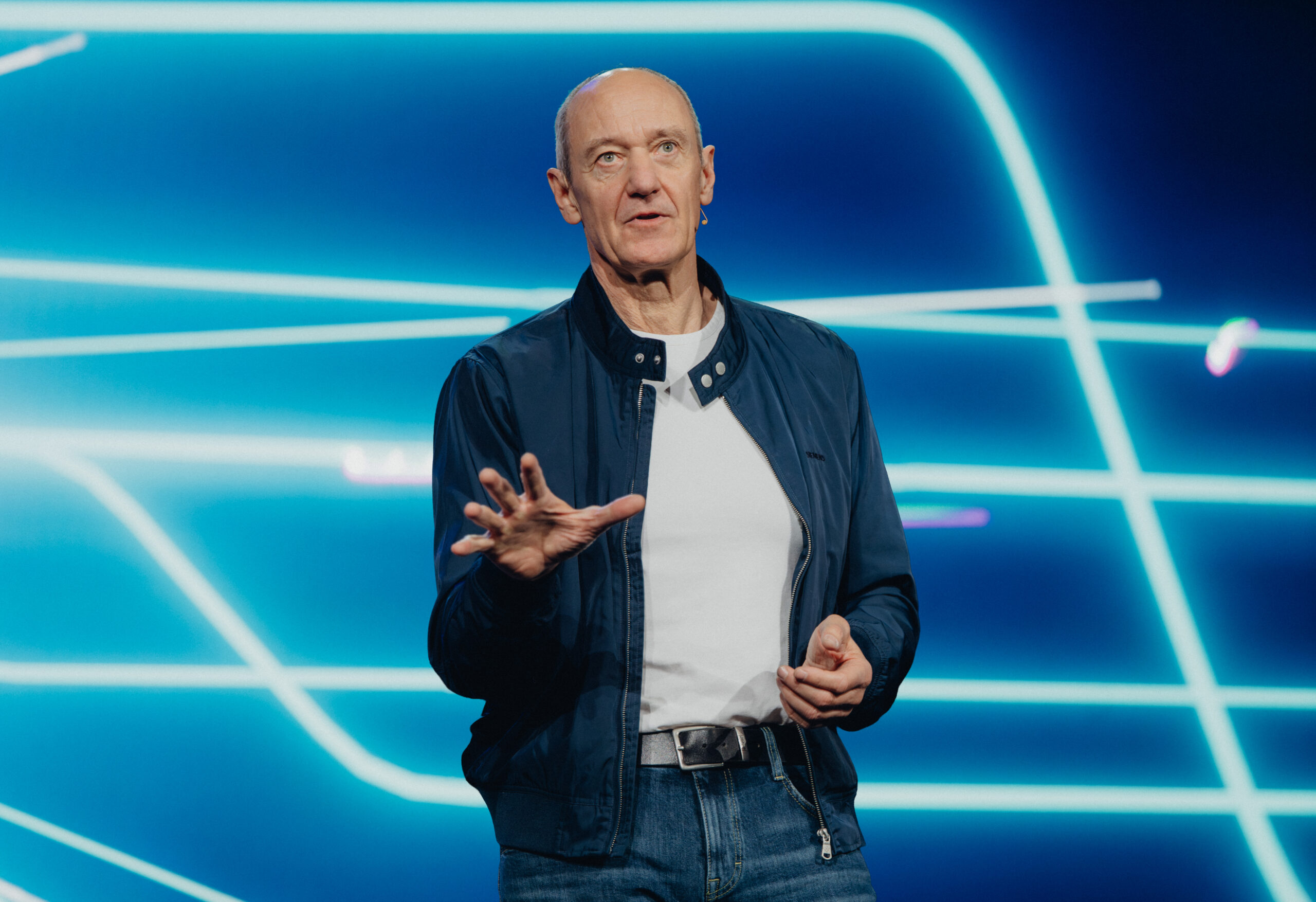
Core Insights - The Consumer Electronics Show (CES) has evolved beyond its original focus, showcasing a wide range of technologies including smart manufacturing, AI, and digital tools [1] Siemens - Siemens CEO Roland Busch delivered a keynote at CES, emphasizing the company's advancements in industrial AI and its partnership with NVIDIA [3][4] - The introduction of Siemens' Digital Twin Composer aims to enhance the integration of software and IoT capabilities with NVIDIA's Omniverse platform, facilitating the creation and maintenance of digital twins [5] - Siemens announced a collaboration with Sony to combine industrial design software with high-resolution extended reality headsets, and also introduced Meta's Ray-Ban AI Glasses for routine maintenance tasks on the shop floor [6] - The launch of Siemens' Industrial Copilot, in partnership with Microsoft, includes nine new AI copilots designed to address specific industrial challenges [7] Bosch - Bosch announced a $2.9 billion investment in AI research and development over the next two years, focusing on embodied AI and enhancing existing technologies for the automotive sector [8][9] NVIDIA - NVIDIA's CEO Jensen Huang highlighted the company's advancements in AI models for training robots and autonomous vehicles, emphasizing the open-source nature of their tools [10] Industry Trends - Other manufacturers, such as Hyundai and Hexagon, are also investing in AI and robotics, with Hyundai planning to deploy humanoid robots in its factories by 2028 [11] - Microsoft has emerged as a key strategic partner for many companies in the AI and cloud space, overshadowing competitors like AWS and Google [12] - The shift from traditional manufacturing to digital tools and AI is essential for industrial firms to remain competitive in a rapidly changing market [13]

CES 2026: What is the next big thing in tech?
The Economic Times· 2026-01-09 09:08
Entertainment - The competition in the TV market for 2026 is between Micro RGB and advanced OLED technologies, with a focus on achieving brightness levels that replicate natural light [1] - Samsung introduced a 130-inch Micro RGB smart television featuring a Timeless Frame design, powered by advanced AI technologies to enhance color and contrast [2] - LG showcased its OLED evo W6, a wireless Wallpaper TV that is only nine millimeters thick, featuring Hyper Radiant Color Technology and support for gaming technologies [3] Robotics - LG's CLOiD functions as an in-home secretary, managing tasks by analyzing the owner's schedule and environment, utilizing advanced vision-language technologies [4] - Boston Dynamics unveiled the Atlas humanoid robot, which boasts 56 degrees of freedom and tactile sensing capabilities [5] - Switchbot's Onero H1 is a humanoid housebot designed for household tasks, equipped with functional hands and advanced vision-language technology [7] Automotive & Mobility - The Afeela 1 prototype, a collaboration between Sony and Honda, is set to launch in late 2026 with a starting price of $89,900 [9] - Mercedes-Benz introduced the electric GLC, featuring an 800-volt charging system, 483 horsepower, and an estimated range of up to 713 kilometers, with sales expected in the second half of 2026 [10] - Verge Motorcycles announced the TS Pro model, the first production bike utilizing solid-state batteries, allowing for a 10-minute recharge and a range of approximately 370 miles [11] Health and Wellness - Sensura presented a non-invasive glucose monitoring platform consisting of a handheld device for quick checks and a wearable for continuous monitoring [13] - The Withings Body Scan 2 is a smart scale with 12 electrodes, measuring over 60 metrics, and is expected to launch in 2026 pending regulatory approval [14] - The SmartSleep system by a Chinese startup is an AI-driven mattress that adjusts firmness in real-time based on body pressure and movement [16] AI Companions - Fuzozo, an AI companion by Robopoet and Tuya Smart, features a cellular edition for constant online interaction [18] - Loona DeskMate is a robot-shaped wireless charger that transforms an iPhone into a desktop AI assistant, providing reminders and companionship [19] - The trend of developing robots for emotional support is a response to the global loneliness epidemic [17]



Secretary Bessent drops U.S. auto loan deduction bombshell
Yahoo Finance· 2026-01-08 15:50
Core Insights - The U.S. Treasury Secretary announced a significant tax break aimed at improving vehicle affordability for buyers, indicating a shift in focus from previous statements regarding the affordability crisis [1][5] Group 1: Affordability Challenges - The U.S. auto industry is facing significant affordability pressures, with monthly finance payments reaching a record high of $776 in December [3] - Despite predictions of major price increases due to tariffs, actual price increases have been muted, yet affordability remains a critical issue [3][4] Group 2: Market Performance - Retail consumers spent $620 billion on new vehicles in the previous year, marking a nearly 6% increase from the prior year, driven by concerns over potential price hikes [2] - Major automakers reported year-over-year sales increases: GM sold 2.83 million vehicles (+5.1%), Toyota 2.52 million (+8.4%), Ford 2.18 million (+5.6%), Hyundai 1.84 million (+7.9%), and Honda 1.42 million (+0.6%) [7] Group 3: Government Initiatives - The Treasury's new tax plan allows eligible taxpayers to deduct $10,000 per year in auto loan interest for vehicles purchased during Trump's second term, aimed at making car ownership more affordable [5][7] - The tax cut is designed to support American workers by applying solely to U.S.-assembled vehicles, thereby strengthening domestic manufacturing [7]
Tesla stock will crash to $25, warns Wall Street expert
Finbold· 2026-01-08 11:48
Core Viewpoint - Wall Street experts are generally not optimistic about Tesla stock, with Gordon Johnson of GJL Research being particularly bearish, forecasting a 95% decline in stock price from $429.97 to $25.28, despite this being an upgrade from a previous target of $19.05 [1][2]. Group 1: Delivery Performance and Market Position - Tesla lost its position as the world's largest EV manufacturer to BYD in 2025, with Tesla's sales at 1.63 million compared to BYD's 2.26 million [4]. - The disappointing delivery figures have contributed to the bearish outlook on Tesla's stock [8]. Group 2: Promises and Technology Development - Elon Musk has a history of making promises regarding technological advancements, such as full self-driving capabilities, which have not materialized as expected, leading to skepticism about Tesla's future [3][5]. - GJL Research criticizes Tesla's reliance on an optics-only approach for self-driving technology, noting that companies like Hyundai are not interested in licensing this technology [6][7]. Group 3: Market Perception and Valuation - GJL Research suggests that Tesla should be valued as a traditional car manufacturer rather than a technology and AI leader, indicating a shift in how the market should perceive the company [9]. - Despite the bearish forecasts, Tesla's stock has shown resilience, rallying 8.87% over the past year, closing at $429.97 on January 7 [8].