
Instacart

Search documents
PubMatic (NasdaqGM:PUBM) Conference Transcript
2025-12-09 20:22
Summary of PubMatic Conference Call - December 09, 2025 Company Overview - **Company**: PubMatic (NasdaqGM:PUBM) - **Industry**: Digital Advertising and Advertising Technology - **Founded**: Approximately 20 years ago, led by technology co-founders - **Focus**: AI-driven ad tech, delivering value to buyers, publishers, data owners, and commerce media networks [3][5][6] Key Points and Arguments Macro Environment - **Q3 Performance**: PubMatic reported solid Q3 results, exceeding guidance on both revenue and earnings, with significant growth in CTV (Connected TV) and merchant revenues [10][11] - **Revenue Breakdown**: CTV business accounts for nearly 20% of revenues, growing double digits; merchant revenues represent about 10% and grew over 80% [10][11] - **Market Sentiment**: Some consumer discretionary verticals showed muted seasonality in October, but overall confidence remains due to a diverse set of ad verticals [10][12] Industry Dynamics - **Blurring Lines**: The distinction between buy-side and sell-side is diminishing, with advertisers focusing more on performance, transparency, and control [13][14] - **Curation and AI**: PubMatic is leveraging AI to enhance curation capabilities, providing an efficient platform for buyers to access valuable data sets [17][18] Diversification Strategy - **DSP Relationships**: PubMatic is diversifying its exposure to various Demand-Side Platforms (DSPs), focusing on performance buyers and mid-tier DSPs, which grew 25% year-over-year [20][21] - **Trade Desk Relationship**: The relationship with The Trade Desk has stabilized, with PubMatic being the first sell-side platform to participate in their Price Discovery initiative [22] Regulatory Environment - **Google Trial**: The ongoing trial against Google is seen as a potential positive for PubMatic, with expectations for behavioral remedies that could create a more level playing field [23][24][25] AI Initiatives - **AI Leadership**: PubMatic is positioned as a leader in AI capabilities, with significant improvements in infrastructure and product offerings [27][28][31] - **Activate Product**: The Activate platform has seen 100% year-over-year revenue growth, allowing buyers to execute campaigns efficiently [34][35] CTV Business - **Market Position**: PubMatic works with over 90% of the top 30 global streamers, with CTV revenues growing over 50% in the last quarter [36][37] - **Innovative Offerings**: New formats like pause ads and a live sports marketplace are contributing to growth in the CTV segment [36][37] Investment Focus - **Future Investments**: CTV, Activate, and AI initiatives will be prioritized for investment in 2026, with a balanced approach to resource allocation [38][39] - **Growth Expectations**: Anticipated re-acceleration of growth in the second half of 2026, particularly excluding the Trade Desk and political advertising impacts [42][43] Additional Important Insights - **Customer Feedback**: Positive feedback from clients like Mars Petcare highlights the effectiveness of the Activate platform [35] - **Unified Platform**: PubMatic emphasizes a unified platform approach, allowing seamless execution of campaigns across various data sources [18] This summary encapsulates the key insights and strategic directions discussed during the PubMatic conference call, highlighting the company's performance, market dynamics, and future growth opportunities.

Instacart CFO vies for more partnerships and enterprise customers
Yahoo Finance· 2025-12-09 10:01
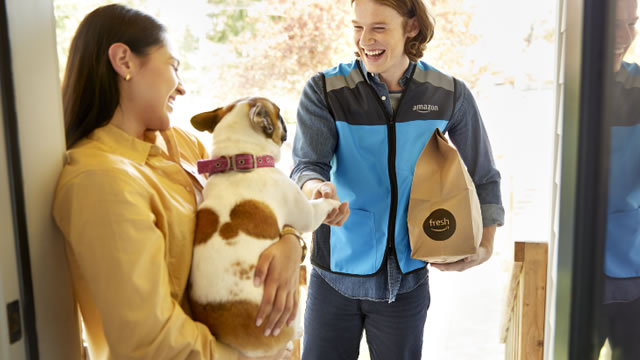
This story was originally published on CFO.com. To receive daily news and insights, subscribe to our free daily CFO.com newsletter. Amazon’s recently reported plans to offer “ultrafast” grocery delivery may well have been a shot across the bow at Instacart, which has carved a lucrative niche in the space. The e-commerce giant’s plans to deliver groceries in 30 minutes or less sent Instacart’s stock tumbling 5% earlier this month. But the grocery delivery company so far appears to be taking it all in stri ...
Pinterest and Walmart Plan to Make Recipes Shoppable
PYMNTS.com· 2025-12-08 19:09
Core Insights - Pinterest and Walmart are launching a pilot program for a shoppable recipe experience in the U.S. that will be rolled out in the coming weeks [1][2] - This collaboration allows Pinterest users to discover recipes, add ingredients to their Walmart online cart, and check out through Walmart's platform [2][3] Group 1: Collaboration Details - Users can select alternate products, view real-time pricing, and choose a store for pickup or delivery [2] - Pinterest's vice president of product marketing emphasized that this collaboration makes it easier for users to turn inspiration into real-life moments [3] Group 2: Strategic Direction - Pinterest's CEO stated that the company has evolved into an "AI-powered visual-first shopping assistant," enhancing user decision-making journeys [4] - The platform's recent integrations, such as with Wix and Instacart, aim to streamline the shopping experience by allowing direct purchases from Pinterest [5][6]


X @TechCrunch
TechCrunch· 2025-12-08 18:01
You can buy your Instacart groceries without leaving ChatGPT https://t.co/IVGWfDqddc ...
豪掷110亿美元!IBM(IBM.US)收购数据流平台Confluent(CFLT.US) 加码AI实时数据处理
Zhi Tong Cai Jing· 2025-12-08 14:05
Core Viewpoint - IBM announced the acquisition of data streaming platform Confluent for approximately $11 billion, aiming to enhance its capabilities in real-time data processing for AI applications [1][2]. Group 1: Acquisition Details - The total enterprise value of the acquisition is about $11 billion, including debt, with a per-share price of $31, corresponding to an equity value of approximately $9.3 billion [1]. - The acquisition is expected to be completed by mid-2026 and is one of IBM's largest strategic investments to date [1]. - Confluent's stock price surged nearly 30% to $29.08 following the announcement, although it remains slightly below the offer price [1]. Group 2: Strategic Importance - This acquisition is part of a broader trend in the industry, where companies are increasingly focusing on real-time data streaming capabilities to support AI systems [2]. - IBM's CEO, Arvind Krishna, has been actively reshaping the company's business model around AI, with software revenue now accounting for nearly half of the total revenue [2]. - The acquisition builds on a five-year partnership between IBM and Confluent, indicating a long-standing collaboration prior to the deal [2]. Group 3: Market Context - Confluent's platform is positioned at the forefront of the data field, enabling real-time data collection and analysis, which replaces traditional batch processing methods [1]. - Prior to the acquisition announcement, Confluent's stock had declined by 17% this year, significantly down from its IPO high of $94.97 in November 2021 [3]. - IBM recently completed a $6.4 billion acquisition of HashiCorp and had previously considered acquiring Informatica, which was ultimately acquired by Salesforce [3].


Amazon Considers Parting Ways With US Postal Service
PYMNTS.com· 2025-12-04 15:34
Core Viewpoint - Amazon is reportedly preparing to sever its relationship with the U.S. Postal Service, which could significantly impact the Postal Service's financial health as Amazon accounts for $6 billion, or 7.5%, of its revenue for the year [2]. Group 1: Amazon's Delivery Strategy - Amazon's expansion of its own delivery service aims to make it the most prevalent delivery service in the U.S. [2] - The company is testing ultra-fast delivery of groceries and essential items in 30 minutes or less in Philadelphia and Seattle [6]. - Amazon is focusing on speeding up delivery times to compete with rivals such as Walmart, Target, Uber Eats, and Instacart [7]. Group 2: Impact on the U.S. Postal Service - The Postal Service plans to auction access to its facilities, which would force Amazon to compete with national retail brands and regional shipping companies [3]. - Losing Amazon as a customer could be disastrous for the Postal Service, which has faced multibillion-dollar losses for much of the last decade [6]. - Industry groups are collaborating with lawmakers on a rescue package for the Postal Service amid these financial challenges [6]. Group 3: Ongoing Negotiations - Amazon has been in discussions with the Postal Service regarding a new service agreement but has not reached a consensus [5]. - Despite the potential for severing ties, there is still hope for an agreement as the Postmaster General met virtually with Amazon's CEO [5]. - Amazon expressed surprise at the Postal Service's decision to hold an auction after nearly a year of negotiations, indicating ongoing discussions to extend their long-standing partnership [4].

Walmart Inc. (WMT) Presents at UBS Global Technology and AI Conference 2025 Transcript
Seeking Alpha· 2025-12-03 22:53
Core Insights - Walmart is focusing on transforming its business into a state-of-the-art organization that includes traditional profit and loss (P&L) as well as new revenue streams such as retail media, data monetization, and membership [1][2] Group 1: Leadership and Strategy - Seth Dallaire, the Executive Vice President and Chief Growth Officer at Walmart, has a strong background in both technology and retail, having previously worked at Amazon and Instacart [1][2] - Dallaire's role encompasses broad responsibilities aimed at driving growth and innovation within Walmart [1] Group 2: Retail Experience - The retail experience at Walmart is being enhanced, with a focus on customer recognition and interaction within stores, which has evolved significantly over the past five years [2]

Instacart Sues New York City to Block New Grocery Delivery Laws
PYMNTS.com· 2025-12-03 01:42
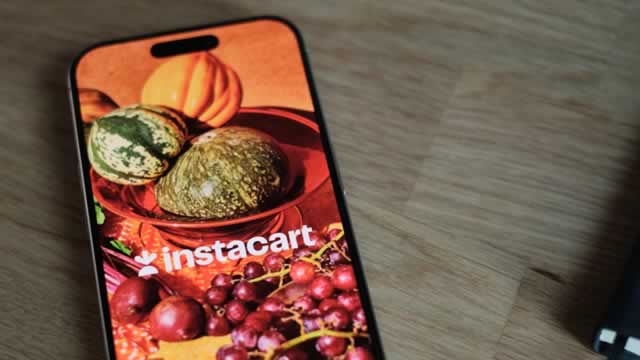
Core Viewpoint - Instacart is suing New York City over new laws governing grocery delivery workers' pay and tips, claiming these laws threaten earnings opportunities and could increase delivery costs for consumers [1][2][3]. Summary by Sections Lawsuit Details - The lawsuit targets Local Law 124, Local Law 107, and other grocery delivery laws set to take effect on January 26, which require companies to provide grocery delivery workers with the same minimum pay as restaurant delivery workers, offer consumers a tipping option of at least 10%, and implement additional recordkeeping and disclosures [2]. Impact on Instacart - Instacart claims that the new laws could eliminate earnings opportunities for 40% of its shoppers in New York City, increase grocery delivery costs for consumers, and reduce sales for local grocers [3]. - The company referenced a similar law affecting restaurant delivery workers in 2023, which resulted in about 40% of those workers losing access to work [3]. Company Position - Instacart advocates for a compensation model that reflects the realities of flexible work, emphasizing fairness, respect, and opportunity for its workers [4]. - The company argues that New York City's laws violate federal law that preempts cities from regulating prices, routes, and services for motor carriers, as well as state law governing this area [4][5]. City Council's Perspective - The New York City Council stated that the new laws provide "critical protections" for food and grocery delivery workers, aiming to expand protections against exploitation in the growing delivery sector [5][6]. - Council Speaker Adrienne Adams emphasized the importance of fair workplace safety and pay standards for contracted delivery workers [6].

Instacart sues New York City over worker pay, tipping laws
Reuters· 2025-12-02 17:50
Core Viewpoint - Instacart has initiated legal action against New York City to prevent the enforcement of five laws that impact the grocery delivery sector, particularly those related to minimum pay for app-based workers and customer disclosures [1] Group 1: Legal Action - Instacart is suing New York City to block the enforcement of five specific laws [1] - The lawsuit targets regulations that govern minimum pay for app-based workers [1] - The company is also contesting laws that require disclosures to customers [1]

Kroger announces more closures and cuts ahead of the holidays
Yahoo Finance· 2025-11-28 17:33
Core Insights - The shift towards online grocery shopping is significantly impacting Kroger's business, leading to store closures and job cuts [1][5][10] Online Grocery Sales Growth - U.S. online grocery sales surged by 104% during the pandemic and are expected to grow at an annual rate of 12.3% through 2029, with over 148 million Americans projected to shop for groceries online by 2025 [2] Fulfillment Center Closures - Harris Teeter, owned by Kroger, will close two fulfillment centers in Virginia and Maryland, affecting a total of 171 employees, with closures expected by February 1, 2026 [3][4] - Kroger plans to close five additional fulfillment facilities across various states in January 2026 as part of a strategy to streamline operations and enhance delivery efficiency [5] Restructuring and Financial Impact - The closures are part of a broader restructuring plan aimed at increasing e-commerce profitability, with Kroger anticipating a $400 million increase in e-commerce operating profit by 2026 [9] - The company expects to incur approximately $2.6 billion in impairment charges in the third fiscal quarter of 2025 due to these closures and underperformance of its automated fulfillment network [10] Customer Impact - The closure of fulfillment centers in Florida will eliminate Kroger's grocery delivery program in the state, while customers in other affected markets will lose local access to delivery services [11][12] - Harris Teeter customers in Virginia and Maryland will still have access to delivery services through third-party partners [14] Future Plans and Partnerships - Kroger is expanding its partnerships with delivery services like Instacart, DoorDash, and Uber Eats to enhance delivery coverage and improve its retail media business [17] - The company is also piloting store-based fulfillment in busy regions to improve fulfillment capabilities and the in-store experience [18] Sales Performance - In the second quarter of fiscal 2025, Kroger reported a total sales increase of 0.08%, with same-store sales rising by 3.4%, driven in part by a 16% increase in e-commerce sales [19]
