Oracle

Search documents
Investors in Oracle Corporation Should Contact Levi & Korsinsky Before April 6, 2026 to Discuss Your Rights – ORCL
Globenewswire· 2026-02-12 22:00
NEW YORK, Feb. 12, 2026 (GLOBE NEWSWIRE) -- Levi & Korsinsky, LLP notifies investors in Oracle Corporation ("Oracle" or the "Company") (NYSE: ORCL) of a class action securities lawsuit. CLASS DEFINITION: The lawsuit seeks to recover losses on behalf of Oracle investors who were adversely affected by alleged securities fraud between June 12, 2025 and December 16, 2025. Follow the link below to get more information and be contacted by a member of our team: https://zlk.com/pslra-1/oracle-corporation-lawsuit-su ...



The Gross Law Firm Reminds Shareholders of a Lead Plaintiff Deadline of April 6, 2026 in Oracle Corporation Lawsuit - ORCL
Prnewswire· 2026-02-12 20:00
Core Viewpoint - The Gross Law Firm is notifying shareholders of Oracle Corporation regarding a lead plaintiff deadline for a class action lawsuit related to alleged misleading statements and financial risks associated with the company's AI infrastructure strategy [1]. Summary by Relevant Sections Class Action Details - Shareholders who purchased Oracle shares from June 12, 2025, to December 16, 2025, are encouraged to contact the Gross Law Firm for potential lead plaintiff appointment [1]. - The deadline for seeking lead plaintiff status is April 6, 2026 [1]. Allegations - The lawsuit alleges that Oracle's management made materially false and misleading statements regarding: 1. The AI infrastructure strategy leading to significant increases in capital expenditures without corresponding near-term revenue growth [1]. 2. Increased spending creating serious risks related to Oracle's debt, credit rating, free cash flow, and project funding [1]. 3. Misrepresentations about the company's business operations and future prospects [1]. Next Steps for Shareholders - Shareholders who register will be enrolled in a portfolio monitoring system to receive updates on the case [1]. - Participation in the class action has no cost or obligation for shareholders [1].

Deadline Approaching: Oracle Corporation (ORCL) Shareholders Who Lost Money Urged To Contact Law Offices of Howard G. Smith
Businesswire· 2026-02-12 19:28
Core Viewpoint - The article highlights the upcoming deadline of April 6, 2026, for investors to file a lead plaintiff motion in a case concerning Oracle Corporation securities purchased between June 12, 2025, and December 16, 2025 [1] Group 1 - The law offices of Howard G. Smith are reminding investors about the deadline to participate in the ongoing case [1] - The case is specifically for investors who suffered losses in Oracle Corporation (NYSE: ORCL) during the specified class period [1]

Portnoy Law Firm Announces Class Action on Behalf of Oracle Corporation Investors
Globenewswire· 2026-02-12 17:32
Core Viewpoint - Oracle Corporation is facing a class action lawsuit from investors who purchased securities between June 12, 2025, and December 16, 2025, due to significant stock price declines following announcements related to its AI and cloud computing initiatives [1]. Group 1: Legal Action - The Portnoy Law Firm is advising Oracle investors about a class action lawsuit, with a deadline for filing a lead plaintiff motion set for April 6, 2026 [1]. - Investors can contact attorney Lesley F. Portnoy for legal rights discussions and to join the case [2]. Group 2: Financial Developments - On September 10, 2025, Oracle announced a $300 billion, five-year cloud computing contract with OpenAI to supply computing power [3]. - Reports on November 13, 2025, indicated Oracle was seeking to raise an additional $38 billion in debt sales to fund its AI buildout, which led to a stock price drop of $9.42 per share, or 4.15%, closing at $217.57 per share [3]. - During a December 10, 2025 earnings call, Oracle's Executive Vice President disclosed an expected fiscal 2026 capital expenditure increase of about $15 billion, resulting in a further stock price decline of $24.16 per share, or 10.83%, closing at $198.85 per share on December 11, 2025 [3].

U.S. Department of the Air Force Accelerates Cloud Modernization with Oracle
Prnewswire· 2026-02-12 13:00
Core Insights - The U.S. Department of the Air Force has awarded Oracle an $88 million contract for Oracle Cloud Infrastructure services as part of the Air Force Cloud One program, reinforcing Oracle's role in the Department of War's cloud modernization efforts [1] - The Cloud One program allows Department of War customers to utilize Oracle's secure and resilient cloud technologies across various classification levels, enhancing mission capabilities [1] - Oracle's AI Database 26ai will enable users to securely integrate organization-specific and public information for advanced AI workflows, supporting autonomous operations [1] Group 1 - The contract is a firm-fixed price task order valued at $88 million, aimed at providing OCI services for the Air Force Cloud One program [1] - Oracle's technologies are designed to meet high standards of security, compliance, and reliability, essential for defense operations [1] - The task order will cover OCI offerings utilized by Cloud One and its government customers, with work scheduled to continue until December 7, 2028 [1] Group 2 - Oracle's commitment to the Department of War's mission is highlighted through its next-generation database services and analytics, which are seen as transformative for the Cloud One strategy [1] - OCI provides dedicated support for sensitive workloads, including Top Secret SCI and Special Access Program, ensuring that operations are conducted by cleared U.S. citizens [1] - The contract will be executed at contractor-designated facilities across the United States, emphasizing the geographical scope of the project [1]

AI vs SaaS:先卖再问,市场只“卖对了一半”?
华尔街见闻· 2026-02-12 09:55
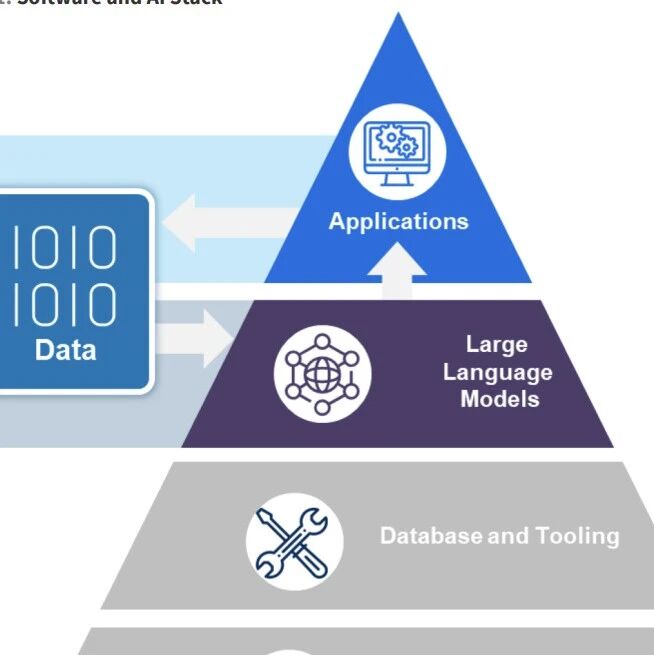
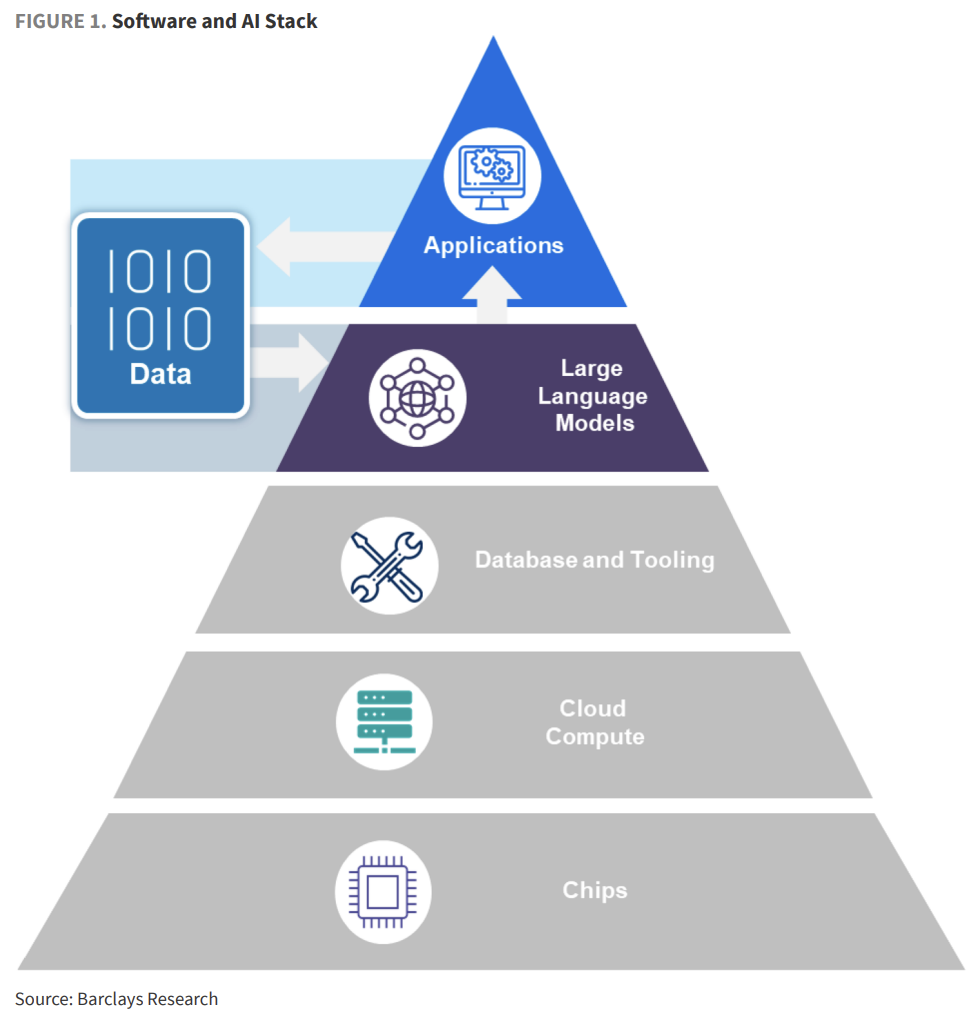
Core Viewpoint - Barclays highlights a critical technological distinction: AI tools are indeed encroaching on the application layer of SaaS companies, but they cannot shake the foundational "system of record" infrastructure, which is the core moat for companies like Salesforce and SAP [1][2]. Group 1: Impact of AI on SaaS Companies - The recent release of products like Claude Cowork by Anthropic has led to a significant decline in enterprise software stocks, with Salesforce and Workday dropping over 40% in the past 12 months [2]. - Investors are confused about the boundaries of AI capabilities, leading to a panic sell-off as they believe new AI tools will completely replace traditional SaaS software, resulting in a zero valuation for legacy companies [2][3]. - Barclays' report argues that a simplistic "one-size-fits-all" logic does not apply to most enterprise software companies [3]. Group 2: AI Capabilities and Limitations - Generative AI excels in pattern recognition and "draft generation," but its probabilistic nature poses fundamental limitations, particularly in scenarios requiring absolute accuracy [5]. - Traditional software operates on deterministic rules, ensuring consistent outputs, while AI software is probabilistic and cannot guarantee the same level of consistency [5][6]. - This indicates that AI operates at a higher level of abstraction and is not a direct replacement for traditional software [6]. Group 3: Mispriced Software Companies - Barclays identifies three categories of enterprise software companies that have been mispriced during the sell-off, starting with system of record companies like Salesforce, which provide critical data requiring certainty [9]. - SAP's position is even more secure, as it manages essential business data and workflows that cannot be handled by advanced generative AI models [9][10]. - The report suggests that AI will not replace these systems but will increase their importance, as AI agents will create more data touchpoints, raising the complexity that system records need to manage [10]. Group 4: Additional Misjudged Investment Opportunities - Besides system of record companies, Barclays points out two other categories that have been misjudged: beneficiaries of AI agents and AI computing providers [11]. - Companies like JFrog, Snowflake, and MongoDB may see increased usage due to the demand for more code and data driven by AI expansion [11]. - There is a logical contradiction in the market's reaction; if AI is powerful enough to disrupt the software industry, the demand for computing power should surge, yet companies like Oracle and CoreWeave have also faced significant sell-offs [11]. Group 5: Reevaluation of Software Sector Valuations - The market correction is deemed necessary for the application layer of enterprise software, which has long enjoyed inflated valuations due to controlling both infrastructure and interface [15]. - If AI technologies can overlay on system records, they may begin to erode the pricing power of SaaS companies [15]. - Barclays concludes that the era of easy high profits for bloated application layers may be over, but this does not signify the end of the entire industry [15][16]. Group 6: Market Sentiment and Future Outlook - The indiscriminate nature of the current sell-off indicates that investors with limited understanding of the software industry are making decisions based on extreme viewpoints [16]. - As understanding of AI capabilities and SaaS business models deepens, the market may reprice companies incorrectly categorized as "AI victims" [16].
Oracle Health Clinical AI Agent, Clinical Note Helps UK Doctors Spend More Time on Patient Care
Prnewswire· 2026-02-12 09:15
Core Insights - Oracle Health has launched its Clinical AI Agent, Clinical Note, in the UK after a successful pilot program at several NHS Trusts [1] - The AI solution aims to reduce documentation time for caregivers, allowing them to focus more on patient interaction [1] Company Overview - Oracle Health's Clinical AI Agent is designed for use in both NHS and private practices [1] - The technology utilizes an ambient voice and screen-driven assistant to assist in drafting patient notes [1] Industry Impact - The introduction of the Clinical AI Agent is expected to significantly enhance efficiency in clinical documentation processes [1] - By minimizing administrative tasks, the AI solution aims to improve the overall quality of patient care [1]

AI vs SaaS:先卖再问,市场“卖对了一半”?
Hua Er Jie Jian Wen· 2026-02-12 08:24
Core Insights - The recent release of Anthropic's products has triggered a significant sell-off in enterprise software stocks, revealing an overreaction in the market regarding AI threats [1][3] - Barclays highlights that while AI tools are encroaching on the application layer of SaaS companies, they do not threaten the foundational "system of record" infrastructure, which is crucial for companies like Salesforce and SAP [1][3] Group 1: Market Reaction and Misunderstandings - The release of Claude Cowork by Anthropic has been described as the tipping point for the decline in enterprise software stocks, with Salesforce and Workday seeing over a 40% drop in the past year [3] - Investors are confused about the capabilities of AI, mistakenly believing that new AI tools will completely replace traditional SaaS software, leading to a devaluation of established companies [3][12] - Barclays' report argues that the simplistic view of AI as a total replacement for software does not apply to most enterprise software companies [3] Group 2: AI Capabilities and Limitations - Generative AI excels in pattern recognition and initial draft generation but has fundamental limitations due to its probabilistic nature, making it less effective in scenarios requiring absolute accuracy [4][5] - Traditional software operates on deterministic rules, ensuring consistent outputs, while AI software functions probabilistically, lacking guaranteed consistency [5][6] Group 3: System of Record Companies - Barclays identifies three categories of enterprise software companies that have been mispriced during the sell-off, starting with system of record companies like Salesforce and SAP, which provide critical data requiring certainty [7][8] - SAP's position is particularly strong, as it manages essential business data and workflows that generative AI cannot handle effectively [7][8] - The report suggests that AI will not replace these systems but will instead increase their importance as AI creates more data touchpoints [8] Group 4: Misjudged Investment Opportunities - Besides system of record companies, Barclays points out two other categories that are misjudged: beneficiaries of AI agents and AI computing providers, which may see increased demand due to AI expansion [9] - There is a contradiction in the market logic; if AI is powerful enough to disrupt the software industry, the demand for computing power should rise, yet companies like Oracle and CoreWeave have also faced sell-offs [9] Group 5: Application Layer Challenges - The market's panic is not entirely unfounded, as SaaS companies have struggled with poor user interfaces, high prices, and security vulnerabilities, leading to customer dissatisfaction [10] - Companies like Klarna are moving away from traditional SaaS products in favor of smaller firms, utilizing AI tools to build their own applications, which highlights a genuine threat to the SaaS model [10] Group 6: Future Market Dynamics - The current market correction is seen as necessary, as SaaS companies have enjoyed inflated valuations by controlling both infrastructure and interface [11] - The emergence of AI technologies that can operate above system records may erode the pricing power of SaaS companies, indicating a shift in the profitability landscape [11] - As understanding of AI capabilities and SaaS business models deepens, the market may begin to re-evaluate companies incorrectly labeled as "AI victims," while those relying on poor application layers may face continued valuation pressure [12]
Oracle Corporation Sued for Securities Law Violations - Contact The Gross Law Firm Before April 6, 2026 to Discuss Your Rights – ORCL
Globenewswire· 2026-02-11 22:00
Core Viewpoint - The Gross Law Firm has issued a notice to shareholders of Oracle Corporation regarding a class action lawsuit due to alleged misleading statements and financial risks associated with the company's AI infrastructure strategy [1][3]. Group 1: Allegations - The complaint alleges that during the class period from June 12, 2025, to December 16, 2025, Oracle's management made materially false and misleading statements [3]. - It is claimed that the company's AI infrastructure strategy would lead to significant increases in capital expenditures without corresponding near-term revenue growth [3]. - The increased spending is said to pose serious risks to Oracle's debt and credit rating, free cash flow, and ability to fund its projects [3]. Group 2: Class Action Details - Shareholders who purchased shares of Oracle during the specified class period are encouraged to register for the class action, with a deadline of April 6, 2026, to seek lead plaintiff status [4]. - Participants will be enrolled in a portfolio monitoring software to receive updates throughout the case lifecycle [4]. - There is no cost or obligation for shareholders to participate in this case [4]. Group 3: Law Firm Background - The Gross Law Firm is a nationally recognized class action law firm dedicated to protecting the rights of investors affected by deceit and illegal business practices [5]. - The firm aims to ensure companies engage in responsible business practices and seeks recovery for investors who suffered losses due to misleading statements [5].

Oracle Unveils AI Agents for Fusion Apps: Will it Boost Prospects?
ZACKS· 2026-02-11 17:21
Core Insights - Oracle has introduced new AI agents within its Fusion Cloud Applications to enhance supply chain efficiency and decision-making [1][2] - The company reported a 14% year-over-year revenue increase in Q2 fiscal 2026, with cloud revenues rising 34% [3][8] - Oracle maintains its full-year revenue guidance at $67 billion and anticipates third-quarter cloud revenue growth of 40-44% [4] Product Developments - New AI agents include a Planning Cycle Agent, Component Replacement Agent, and others focused on inventory, logistics, order management, and maintenance [2] - The AI agents are integrated at no additional cost for existing customers and are supported by a marketplace of over 32,000 certified AI agent experts [2][5] Financial Performance - Total revenues for Oracle reached $16.1 billion, with cloud revenues at $8.0 billion and SaaS revenues at $3.9 billion [3][8] - Non-GAAP earnings per share increased by 54% to $2.26, while Remaining Performance Obligations (RPO) surged 438% to $523 billion [3] Competitive Landscape - Oracle faces competition from Google and Microsoft, both of which are integrating AI into their cloud applications [5] - Microsoft has launched autonomous AI agents across its Dynamics 365 suite, while Google is expanding its Vertex AI capabilities [5] Stock Performance and Valuation - Oracle's stock has decreased by 37.8% over the past six months, underperforming the sector [6] - The current Price/Earnings ratio for Oracle is 28.15x, above the industry average of 26.41x, indicating a premium valuation [12]