
Vanguard

Search documents
I retired at 60 and have an untouched $700k nest egg. Are RMDs going to skyrocket my taxes owed?
Yahoo Finance· 2025-12-18 12:15
Core Insights - The article discusses the importance of planning for long-term care and Required Minimum Distributions (RMDs) for retirees, particularly focusing on a case study of a retiree named Alice [1][3][4]. Long-Term Care - A significant percentage of older adults will require long-term care, with 80% of 65-year-olds expected to need it at some point [1]. - The median annual costs for long-term care in 2023 are reported as follows: $116,800 for a private nursing home room, $75,500 for a home health aide, and $64,200 for an assisted living facility [7]. - Long-term care insurance is suggested as a way to mitigate these costs, with average annual premiums of $1,200 for single males and $1,900 for single females like Alice [8]. Required Minimum Distributions (RMDs) - Alice will need to start taking RMDs from her traditional IRA once she turns 73, which is a requirement to ensure retirement funds are not left untouched indefinitely [3][12]. - Failing to take RMDs can result in a 25% tax penalty on the amount that should have been withdrawn [12]. - Strategies to minimize RMDs include converting traditional IRA funds to a Roth IRA, which is not subject to RMDs, although this requires paying income taxes on the converted amount [15][16]. Financial Planning - The article emphasizes the need for a tailored financial strategy, potentially involving the assistance of a financial advisor to navigate the complexities of RMDs and long-term care planning [15][17]. - It also mentions the back-door Roth IRA method as a long-term planning strategy for high-net-worth individuals, allowing for tax-free growth without RMDs [19][20]. - The importance of understanding tax implications and the potential impact on financial situations is highlighted, as RMDs can affect tax brackets and Medicare premiums [14].
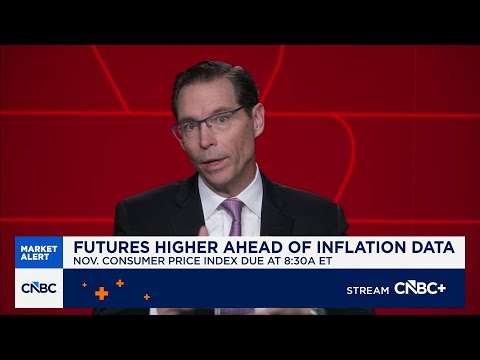
CPI data will leave Fed in a cutting bias, says Vanguard's Joe Davis
Youtube· 2025-12-18 12:09
Economic Outlook - Vanguard's economic outlook for 2026 indicates a mixed picture for inflation, with some components decreasing while others, particularly food prices and tariffs, exert upward pressure [1][2] - The Federal Reserve is expected to maintain a modest easing bias, reflecting ongoing economic challenges [3] Investment and Job Market - The potential for AI-related investments in the latter half of the year could provide upside risk to the US economy, despite current headwinds [4][5] - The labor market is currently in a holding pattern, influenced by factors such as an increase in retirements and slowed immigration, which has reduced the supply of new entrants [6][8] Inflation Dynamics - Tariffs are a significant factor in the inflation outlook, with expectations that inflation could rise above 2% due to tariff-related uncertainties [10][11] - The focus for 2026 is anticipated to shift more towards growth rather than inflation, suggesting a potential for non-inflationary growth similar to the late 1990s [11][12] Federal Reserve Policy - The Federal Reserve's approach should consider the potential for higher productivity and growth without necessarily increasing rates, as seen in historical contexts [12][13] - A scenario is proposed where higher growth could coexist with a 4% yield on 10-year Treasuries, indicating that the Fed needs to focus on capacity and productivity for future policy decisions [13][14]


CPI data will leave Fed in a cutting bias, says Vanguard's Joe Davis
CNBC Television· 2025-12-18 12:09
Economic Outlook & Inflation - Vanguard expects a mixed CPI picture with some components trending down, but pressures remain due to tariffs and food prices [2] - Tariffs and a less restrictive Fed than perceived could keep inflation above 2% [10] - The focus for 2026 is expected to shift from inflation to growth [11] Labor Market - The US labor market has effectively stalled and is in a holding pattern due to supply and demand factors [5][6] - Acceleration in retirements and slowed immigration have pushed down the break-even rate [7] - Job growth is strong in occupations with high AI exposure [7] - Younger worker job growth is at historical levels, contradicting some narratives [8] Investment & Growth - AI-related investment will be the ultimate factor influencing the US economy, particularly in the back half of the year, posing an upside risk [4][5] - Investment spending and business confidence will determine the risk to the economy in 2026 [9] - Higher productivity and innovation rates could lead to higher growth without higher rates, similar to the late 1990s [12][13] - A 4% 10-year Treasury yield is possible with stable inflation and a 2.5-3% GDP growth due to increased capacity, not just demand [13][14]
2 ETFs That Are Good Bets To Beat the S&P 500 in 2026
The Motley Fool· 2025-12-18 06:30
Core Viewpoint - The S&P 500 is a strong long-term investment, but there are ETFs that are expected to outperform it in the coming year [1][2] Group 1: iShares Russell 2000 ETF - The S&P 500 has significantly outperformed the Russell 2000 index since the end of 2022, nearly doubling its gains [4] - The iShares Russell 2000 ETF is expected to outperform the S&P 500 in 2026 due to the broadening of gains in a maturing bull market [6] - The Russell 2000 ETF is currently trading at a price-to-earnings ratio of 18.3, which is nearly 40% cheaper than the Vanguard S&P 500 ETF at 28.7 [7] Group 2: VanEck Semiconductor ETF - The VanEck Semiconductor ETF has increased by 44% year-to-date, significantly outperforming the S&P 500 [9] - Over the last decade, the VanEck Semiconductor ETF has surged by 1,180%, driven by the booming semiconductor sector [9] - The ETF is well-positioned for continued success, trading at a P/E ratio of 39.7, comparable to other tech-heavy ETFs [10] - Key holdings in the VanEck Semiconductor ETF include leading companies in the AI boom, such as Nvidia and Taiwan Semiconductor, which are experiencing substantial revenue growth [11]

X @THE HUNTER ✴️
GEM HUNTER 💎· 2025-12-18 06:25
GM CT say it back 🌄$VOOI launch coming today 13 UTC$ASTER dumped hard today again and VOOI launch may be the reason 👀 https://t.co/Hr3WMKL7Qn ...
Schwab Scraps its Premium Robo Advisor Platform
Yahoo Finance· 2025-12-18 05:03
Core Viewpoint - Schwab is shutting down its premium service, Schwab Intelligent Portfolios Premium, while continuing its core online-only service, Intelligent Portfolios, which has a $5,000 minimum and no fees. This reflects a trend among traditional banks moving away from hybrid robo-advisory services [2][4]. Group 1: Company Actions - Schwab's decision to close its premium service is the first major instance of a bank eliminating just its hybrid offering rather than discontinuing its entire robo-advisory service [2]. - The non-premium Intelligent Portfolios service has accumulated over $80 billion in assets since its launch in 2015, indicating its success compared to the premium tier [4]. Group 2: Industry Trends - The closure of Schwab's premium service follows similar moves by other banks like UBS and US Bank, highlighting a broader trend of traditional banking institutions reassessing their robo-advisory strategies [2][4]. - Hybrid offerings that combine human and digital advice are noted to be more challenging to scale, which may contribute to the decision to focus on the core digital-only service [3][4]. Group 3: Financial Insights - Schwab's basic service maintains a high cash allocation of around 10%, which is used to generate interest for the bank, rather than charging direct fees [4]. - The business model of generating cash through high allocations is critiqued for potentially holding back performance, suggesting a preference for a more transparent fee structure based on assets under management (AUM) [4].

3 Ultra-Safe Vanguard ETFs to Buy, Even if There's a Stock Market Sell-Off in 2026
The Motley Fool· 2025-12-18 04:15
Core Insights - The S&P 500 has shown significant growth, with an increase of over 15% in 2025, following gains of over 20% in both 2024 and 2023, compared to its historical average annual return of 9% to 10% [1][2] Group 1: ETF Performance and Characteristics - The Vanguard Total Stock Market ETF (VTI) is the largest ETF globally, surpassing $2 trillion in net assets, and includes thousands of companies not in the S&P 500, representing about 16% of the total U.S. stock market [5][6] - The Total Stock Market ETF is expected to perform similarly to the S&P 500 over the long term but may be more suitable for investors wanting full market participation [6][7] - The Vanguard Value ETF focuses on value stocks, which tend to perform better during market sell-offs, with major holdings in companies like JPMorgan Chase and Berkshire Hathaway, and offers a yield of 2.1% with a P/E ratio of 21.2 [9][10] - The Vanguard Consumer Staples ETF yields 2.2% and includes major companies like Walmart and Coca-Cola, which are expected to perform well during economic downturns due to their strong supply chains [12][13] Group 2: Market Trends and Investor Behavior - The S&P 500's rapid rise is attributed to strong earnings growth from key companies, including Nvidia, which, along with 19 others, constitutes about half of the index [2] - The consumer staples sector has underperformed in 2025, facing challenges from inflation and reduced consumer spending, but is expected to hold up during market sell-offs [11][13] - Investors are encouraged to use ETFs as part of a diversified portfolio, allowing for exposure to different sectors while managing risk [14]

4 Corporate Bond Options as Credit Spreads Tighten
Etftrends· 2025-12-17 21:28
Core Insights - The forecast for more rate cuts in 2026 may lead to tighter credit spreads, prompting fixed income investors to consider corporate bonds for additional yield alongside Treasuries [1] - The tightening of spreads indicates an improvement in bond fundamentals, making corporate bonds more appealing as they present a lower risk premium compared to government debt [2] Corporate Bond Options - The Vanguard Total Corporate Bond ETF Shares (VTC) is recommended for core corporate bond exposure, complementing a fixed income portfolio focused on Treasuries, with a tilt towards investment-grade bonds [3] - VTC tracks the Bloomberg U.S. Corporate Bond Index, offering a 30-day SEC yield of 4.8% as of November 30, with a low expense ratio of 0.03% [4] Short and Medium Duration Funds - The Vanguard Short-Term Corporate Bond Index Fund ETF Shares (VCSH) is highlighted as an ideal option for mitigating rate risk, tracking the Bloomberg Barclays U.S. 1-5 Year Corporate Bond Index, primarily including A and BBB rated investment-grade bonds [5] - The Vanguard Interim-Term Corporate Bond ETF (VCIT) serves as a balanced option between rate risk and yield, tracking the Bloomberg U.S. 5-10 Year Corporate Bond Index, with a low expense ratio of 0.03% [6] Long-Term Bonds - For investors willing to accept added rate risk, the Vanguard Long-Term Corporate Bond Index Fund ETF Shares (VCLT) is suggested as a viable alternative to long-term Treasury ETFs, noted for its low expense ratio and yield of 5.61% as of December 4 [7] - VCLT tracks the Bloomberg U.S. 10+ Year Corporate Bond Index, including investment-grade, fixed-rate, taxable securities with maturities greater than 10 years, also featuring a 0.03% expense ratio [8]

Vanguard highlights the 2 best stock investments for next 5-10 years
Business Insider· 2025-12-17 19:04
Core Viewpoint - Vanguard identifies value stocks and non-US developed market stocks as the top equity investments for the next five to ten years, moving away from the high-flying tech sector that has dominated recent market performance [1][2]. Investment Outlook - Vanguard's 2026 outlook report predicts US value stocks will yield an annual return of 7% over the next decade, while non-US developed market stocks are expected to return 6% per year [2]. - Non-US developed market stocks, which include countries like the UK, Japan, and Germany, have significantly outperformed US stocks, with a 30.3% increase in the Vanguard Tax Managed Fund FTSE Developed Markets ETF (VEA) compared to a 15% gain in the S&P 500 [6]. Sector Analysis - The report suggests that value-oriented sectors such as industrials, financials, and select consumer segments are better positioned to benefit from AI adoption, potentially leading to efficiency gains and earnings growth [4]. - Vanguard notes that both value stocks and non-US developed market stocks have not fully priced in the long-term benefits of AI, making them attractive investments [4]. Market Trends - A rotation towards value and non-US stocks is currently observed, with the Vanguard S&P 500 Value ETF (VOOV) and VEA increasing by 2.7% and 1.6% respectively, while the Vanguard Information Technology Index Fund ETF (VGT) has decreased by 1.4% [5]. - Vanguard acknowledges the ongoing AI investment cycle is only 30%-40% towards its peak, indicating potential risks for tech stocks amid growing competition and capital expenditure pressures [6][7]. Investment Vehicles - For investors interested in US value stocks and non-US developed market stocks, recommended funds include the iShares Core S&P US Value ETF (IUSV) and the Schwab International Equity ETF (SCHF), in addition to Vanguard's offerings [8].

Vanguard’s VTV Is Is Good For Many Investors, But VFVA Has A Lot More Potential
Yahoo Finance· 2025-12-17 18:42
Core Insights - The Vanguard Value ETF has been a reliable investment option, providing exposure to large, established US companies at reasonable valuations [1][3] - The shift in value investing focuses on identifying companies with improving fundamentals and strong cash flows rather than just cheap stocks [3][7] Performance Metrics - The Vanguard Value ETF currently yields 2.03% with a negative dividend growth of -1.67% [4][6] - Shareholders earn an annual dividend of approximately $3.90, indicating steady earnings and consistent dividends [6] Sector Composition - The ETF primarily tracks a broad value index composed of mega and large-cap companies, with significant representation from finance, healthcare, energy, and consumer staples [5] Investment Strategy - The Vanguard U.S. Value Factor ETF employs a factor-based selection strategy, targeting mid-cap stocks with improving fundamentals, offering more upside potential [4][8] - The traditional approach of the Vanguard Value ETF may not drive income-focused portfolios due to its negative dividend growth, despite providing steady cash [7]